
Wonder Egg Priority anime review discussions always start the same way. Everyone agrees the show looks incredible. Everyone agrees the first six episodes hit different. Then the conversation splits into two camps: people who think the ending ruins everything, and people who think the journey matters more than the destination. I am here to tell you both sides are right, which is why this show is so frustrating to talk about.
This was supposed to be the next big original anime. CloverWorks put their best animators on it. The director Shin Wakabayashi clearly had vision. The writer Shinji Nojima came from live-action drama. It had money, talent, and a premise about teenage girls fighting manifestations of suicide trauma in a surreal dream world. It should have been a classic. Instead it became a cautionary tale about what happens when production schedules fall apart and writers make up the plot as they go along.
What This Show Is Actually About
Ai Ohto is a fourteen-year-old hikikomori with heterochromia. Her only friend, Koito Nagase, killed herself. Ai blames herself because she thinks she did not do enough to stop the bullying. One night she buys a Wonder Egg from a machine in a weird garden dimension. Breaking the egg releases a girl who committed suicide. Ai has to protect this girl from monsters called See No Evils and Wonder Killers, which are grotesque representations of whatever trauma pushed the girl to suicide. If Ai saves enough of these girls, she gets to bring Koito back to life.
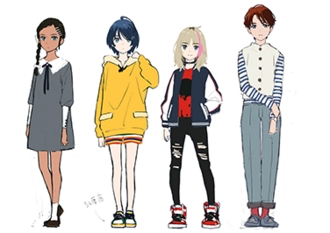
That is the pitch. It sounds like Madoka Magica mixed with Serial Experiments Lain but with prettier colors. The show introduces three other girls doing the same thing. Rika Kawai is a former junior idol who drove a fan to suicide by being cruel to her. Momoe Sawaki is a girl who looks boyish and struggles with how people perceive her gender after a female friend confessed romantic feelings then died. Neiru Aonuma is a stoic genius who runs a company and wants to save her sister who tried to kill her then killed herself. They meet in the dream world, bond over their shared pain, and fight monsters together.
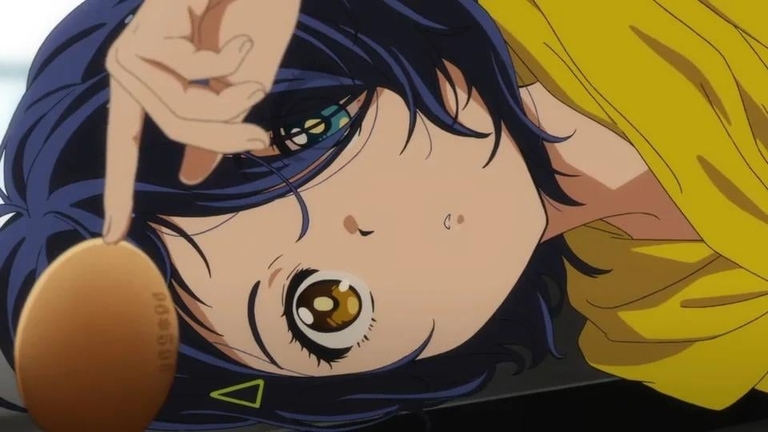
The setup is genuinely compelling. Each episode dives into a specific trauma. Bullying, sexual assault, parental abuse, the dark side of the idol industry. The show does not shy away from showing how ugly these things are. The Wonder Killers are disturbing visual metaphors. One is a teacher who molested his student, represented as a grotesque caterpillar thing. Another is an abusive father depicted as a giant faceless figure. The animation during these fights is movie quality. Fluid, expressive, brutal. You can tell the young animators at CloverWorks were pouring their souls into this.
The Visuals Carried This Show Hard
Let us be real about why people kept watching even when the story started wobbling. This anime is gorgeous. Every frame looks like a painting. The colors are bright and saturated but somehow moody at the same time. Ai has pink hair and yellow eyes that pop against the green backgrounds of the dream world. The character designs are distinct and memorable. Rika has her blonde hair and attitude. Momoe has her androgynous look with the flower in her hair. Neiru has her cool blue aesthetic.
The fight scenes are where the budget shows. The camera work is creative. They use 3D backgrounds with 2D characters in ways that actually look good. The Wonder Killers have these disturbing designs that mix body horror with surrealism. There is one that looks like a statue made of wax and teeth. Another is a giant hand with eyes on the fingers. The animation team was clearly inspired by directors like Naoko Yamada but brought their own energy to it. The show looks better than 90% of anime being made today, full stop.
The sound design hits too. The opening song is catchy but melancholy. The ending theme changes based on which character is featured that week. They even formed a real idol group called Anemoneria with the voice actors to perform insert songs. The music during the emotional scenes lands exactly when it needs to. When Ai cries, you feel it because the voice actress sells it and the music swells and the colors shift to this washed out grey palette. The production values were never the problem.
The Girls Who Deserved a Better Story
Ai Ohto works as a protagonist because she is not a typical magical girl. She is quiet, awkward, carries guilt like a backpack full of rocks. Her heterochromia is not just a cute character design choice. It symbolizes how she sees the world differently. She blames herself for Koito's death because she was too scared to stand up to the bullies. Her arc is about learning that she cannot save everyone but she can save herself. At least that is what the arc should have been.
Rika is the loudmouth of the group. She acts tough but she is hurting bad over Chiemi, the fan she mistreated. The show touches on how brutal the idol industry is to young girls. Rika was fourteen working in an industry that chewed her up and spat her out. Her relationship with her dead friend is complicated by the fact that she was cruel to her while she was alive. That is heavy stuff for a twelve episode anime.
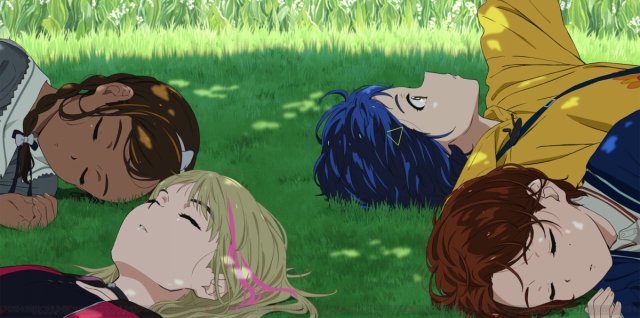
Momoe gets the most praise for her episodes. She presents masculine and gets hit on by both girls and boys who think she is a pretty boy. Her friend killed herself after Momoe rejected her confession. The show handles her gender presentation with surprising sensitivity for a while. She is not transgender, she is just a girl who likes dressing masculine, and the show respects that without making it her whole personality. Her episodes are the strongest because they focus on her humanity rather than her identity.
Then there is Neiru. She starts mysterious and cool. She runs a company at fourteen. She has scars from her sister attacking her. Her character goes off the rails in the final episodes when they reveal she is actually an AI or a robot or something. It makes no sense. It comes out of nowhere. The writing just throws this at you without building to it. It ruins her character because it retroactively makes her trauma less real. If she is not human, why do we care about her pain?
When the Mystery Box Became a Dumpster Fire
The first half of Wonder Egg Priority asks a lot of questions. What are the Wonder Eggs exactly? Who are Acca and Ura-Acca, the mannequin guides? Why do only girls get chosen for this? What is the dream world? How does saving strangers bring back your specific friend? These are good questions. Viewers love mystery boxes. We love theorizing. The problem is the answers we got were stupid.
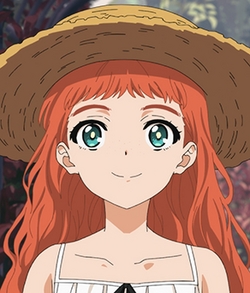
Halfway through the show introduces Frill. She is an AI created by Acca and Ura-Acca when they were scientists. They made her to be their daughter but she became jealous and started causing girls to commit suicide through the internet or something. It is never clear. Frill looks like a little girl in a straw hat. She is supposed to be the big bad behind everything. The reveal comes so late in the series that there is no time to develop it. It feels like the writer realized he needed an antagonist and pulled one out of thin air.
Apparently the writer was improvising the plot as he went. He had creative disagreements with the director. The production was a mess behind the scenes. This explains why episode eight is a recap episode in a twelve episode series. That is never a good sign. It means they ran out of time and needed to fill a slot. The show was supposed to end with episode twelve but they could not finish it. They had to air a special episode three months later to wrap things up.
The Special Episode That Broke the Fandom
That special episode is infamous now. It is not a sequel. It is the actual ending they could not finish in time. And it is bad. It retcons Koito into being a manipulative liar who made false assault allegations against a teacher. This destroys Ai's motivation because it suggests Koito was not a victim but a villain. The show spends eleven episodes making you care about Ai saving her friend, then reveals the friend was awful all along. It feels like a betrayal.
The special also doubles down on the Frill nonsense. There is talk of parallel universes. Neiru might be a robot. The girls might not have actually saved anyone because the egg girls were simulations or copies from other timelines. It is confusing in a bad way. Not confusing like Evangelion where there is depth if you look for it. Confusing like the writers gave up and threw ideas at a wall to see what stuck.
Some fans argue the show is still worth watching despite this ending. I see their point. The first nine episodes exist. They are good. But the finale leaves such a sour taste. It undermines the themes about taking female suicide seriously by having Acca and Ura-Acca say girls kill themselves over irrational impulses. It introduces a plot about AI revenge that has nothing to do with the grounded trauma of the early episodes. It is like the show forgot what made it special.
The Queerbaiting Problem Nobody Wants to Talk About
Momoe's episodes hint at queer themes. She gets confessions from girls. She struggles with her identity. Fans hoped the show would commit to lesbian representation or at least honest exploration of gender nonconformity. It does not. Momoe's arc ends with her accepting herself as a girl who dresses masculine, which is fine, but the show uses her trauma as shock value. Her friend killed herself because Momoe rejected her. It plays into the "bury your gays" trope where queer characters suffer and die.
The show is accused of queerbaiting because it flashes rainbow flags but does not follow through. Momoe never gets a girlfriend. The show suggests queer attraction leads to suicide. That is a harmful message whether intentional or not. When you combine this with the Koito retcon where she is framed as a liar about assault, the show starts to look hostile to the very demographic it pretends to care about. Critics on Anime-Planet called it hollow and superficial, and they are not wrong.
Is It Worth Watching or What
Here is my take. Watch Wonder Egg Priority. Watch episodes one through nine. Stop there. Pretend the show got cancelled. Imagine your own ending where the girls heal and grow and maybe save their friends. Do not watch the special episode unless you want to ruin the experience.
The early episodes are genuinely some of the best anime from that year. The one about the girl who was bullied for having an abortion is heartbreaking. The one about the artist who killed herself after her work was mocked hits hard. The animation alone makes it worth seeing. Just go in knowing the ending is a disaster.
If you are the kind of person who needs a satisfying conclusion, skip this one. If you can appreciate good moments even when the overall structure collapses, you will find something here. The characters are memorable. The art is stunning. The music slaps. But the story is a cautionary tale about ambition exceeding execution.
Wonder Egg Priority wanted to say something important about teenage mental health and suicide. It had the tools to do it. The Wikipedia page lists all the awards it was nominated for, including Best Animation, which it deserved. But writing matters. You cannot improvise a story this sensitive. You cannot throw in AI plot twists and parallel universes in the final act and expect it to land. The girls deserved better. The audience deserved better. The animators definitely deserved better than the crunch they suffered to produce visuals this good for a script this messy.
The show sits in this weird spot where I recommend it but with huge caveats. It is not boring. It is not generic. It tried to be something special and failed in spectacular fashion. That is more interesting than a show that plays it safe and succeeds at being mediocre. Just know what you are getting into. Do not get attached to the mysteries being solved. Do not expect the themes to pay off. Enjoy the pretty colors and the sad girls and the cool monster fights. Then when it starts to smell like burning rubber around episode ten, bail out or accept that you are watching a train wreck in slow motion.
Wonder Egg Priority anime review scores vary wildly for this reason. Some people give it a nine out of ten for the visuals and ambition. Others give it a four for the ending. I land somewhere in the middle. It is a beautiful disaster. A gorgeous, colorful, emotionally resonant disaster that will make you cry then make you angry then make you wonder what could have been if the production had just had six more months to figure out the script.