
Blue exorcist anime series review requests usually get the same tired response about watching the first season then stopping, or just reading the manga instead. That's garbage advice and misses the point entirely. This show has been kicking around since 2011, stumbling through anime-original endings, studio changes, and a watch order so broken it requires a flowchart, yet it keeps getting new seasons that people actually care about. There's something here that works, buried under all the production chaos, and pretending it's just another forgotten shonen from the early 2010s ignores the fact that Studio VOLN just finished adapting the Blue Night Saga with genuine emotional weight that rivals anything in the source material.
The problem is nobody tells you how to watch it without getting confused. The first season goes off the rails at episode seventeen, creating a filler ending that contradicts later canon, while season two pretends those last nine episodes never happened. Then you've got movies and OVAs that fit nowhere, plus newer arcs like Beyond the Snow Saga that assume you've pieced together the correct timeline. It's annoying and drives away new viewers who just want a straightforward story about two brothers trying to kill their dad, who happens to be Satan. But if you can get past the structural mess, you're looking at one of the most solid explorations of family trauma and inherited sin in the shonen genre.
The Broken Watch Order Nobody Explains Properly
Most guides tell you to just watch season one then season two. That's wrong and will ruin your experience. Here's what actually happened. The 2011 adaptation by A-1 Pictures started faithfully adapting Kazue Kato's manga, got through about fifteen episodes covering the cram school introduction and initial conflicts, then ran out of source material. Instead of waiting, they invented an original ending for episodes seventeen through twenty-five that wrapped up the Satan plotline in a rush job that felt like they were trying to hit a deadline with a sledgehammer.
Then five years later, they decided to adapt the Kyoto arc as season two, but the manga had moved past that filler ending and established new canon. So season two, called Kyoto Saga, retcons the last nine episodes of season one entirely. If you watch straight through, you'll see characters acting like major events from the finale never happened, because in the real story, they didn't. The correct viewing order is episodes one through sixteen of season one, then all of season two, then optionally the last nine episodes of season one if you want to see what not to do. Or just stop at sixteen and pick up the manga where the anime diverges.
Season 1 and Its Filler Ending
Those last nine episodes are a train wreck. Rin suddenly becomes friends with people who were trying to kill him, Satan possesses Yukio for no reason other than drama, and the resolution involves talking about friendship until the villain gives up. It's the kind of ending that gives anime-original content a bad name across the board. The pacing accelerates from zero to sixty in two episodes, skipping character development that the manga spent years building. You can tell the writers were making it up as they went, throwing ideas at the wall to see what stuck before the runtime ran out.
What's worse is it removes crucial foreshadowing for later arcs. Characters like Yuri Egin and the Illuminati get handled differently, creating continuity errors that still plague discussion boards. The animation by A-1 Pictures holds up fine during these episodes, with the blue flames looking appropriately nasty and Satan's presence carrying visual weight, but the story underneath is hollow. Some fans defend it as decent popcorn entertainment, and sure, if you turn your brain off, it's watchable. But knowing what comes later in the canon storyline makes those episodes feel like a weird dream the characters had that they never mention again because it was embarrassing for everyone involved.
Kyoto Saga Getting Back on Track
Season two fixes everything. It picks up after episode sixteen, ignores the filler entirely, and adapts the Kyoto arc properly. This is where Ryuji Suguro gets his moment to shine, dealing with his family trauma and the legacy of the Blue Night that destroyed his hometown. The stakes feel real again because they're grounded in character relationships instead of bombastic world-ending threats. You get to see the exorcist hierarchy functioning as an actual organization with politics and infighting instead of just a school setting.
The animation shifts slightly, maintaining the character designs but with a different color palette fitting the temple setting. More importantly, the writing respects the source material. Rin's struggle to control his flames while gaining acceptance from his classmates hits harder here because it isn't solved by a convenient speech about friendship. The conflict with the Impure King shows off the power system properly, with different exorcist classes like Tamer and Knight getting distinct moments to show why their specialized skills matter in a real fight.
The Darker Newer Arcs Beyond Kyoto
After Kyoto, the series kept going with Shimane Illuminati Saga, then Beyond the Snow Saga, and most recently Blue Night Saga. Studio VOLN took over from A-1 Pictures, and you can feel the difference in every frame. The newer seasons look more consistent but less flashy, with fewer sakuga moments and more focus on still frames during dialogue. Some people hate this, calling it cheap or limited, but it fits the darker tone these arcs carry. Beyond the Snow Saga dives into Bon working with Lightning to uncover conspiracy theories about the True Cross Order, while Yukio starts falling apart mentally and spiritually.
Then Blue Night Saga goes full flashback mode, showing how Rin and Yukio were born, why Shiro Fujimoto really raised them, and what their mother Yuri was actually like before she died. These episodes hit hard emotionally, especially the finale where Rin uses a magic key to travel back in time and gets to say goodbye to Shiro properly, thanking him for being his father. The music by Hiroyuki Sawano and Kohta Yamamoto carries these quiet moments, mixing orchestral swells with electronic beats that shouldn't work but totally do. Shura's origin story gets explored too, revealing her family curse and the snake demon trying to resurrect his human lover through offspring, which gets pretty dark and explicit compared to earlier seasons.
Rin and Yukio The Heart of the Matter
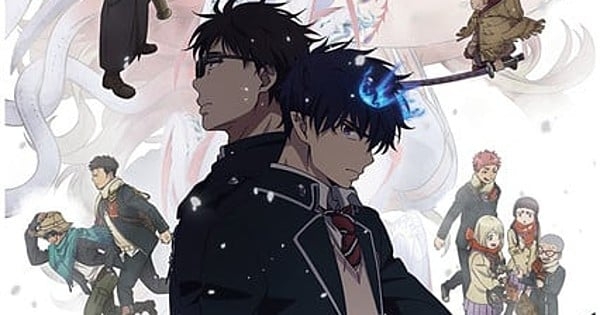
Forget the action scenes. Forget the demon lore about Gehenna and Assiah. This show lives or dies on whether you buy that these two brothers love each other while standing on opposite sides of a genetic nightmare. Rin is all heart, charging forward on emotion and refusing to accept that being Satan's son means being evil. Yukio is all head, calculating and terrified that he's already lost his humanity, hiding his own demonic powers while teaching exorcism classes. Their dynamic carries every single arc regardless of the quality of the adaptation.
When they fight, it hurts because you understand both sides completely. Rin feels abandoned by his twin's cold distance. Yukio feels burdened by having to protect the older brother who has more power but less control, all while dealing with Lucifer offering him deals and his own eyes turning demonic. The series keeps finding new ways to test this bond, from the Kyoto arc's trust exercises to Beyond the Snow where Yukio literally starts working with the enemy because he thinks it will save Rin from his own fate. It's messy and painful and exactly what you want from family drama mixed with supernatural horror.
Side Characters Who Carry Their Weight
The supporting cast isn't just filler around the brothers. Shiemi starts as a shy girl who can barely talk to boys and grows into someone ready to lead her own exorcist team, struggling with whether she wants to fight or heal. Izumo Kamiki's arc about her family curse and the Illuminati manipulating her through her sister hits incredibly hard, especially when she has to confront her mother issues. Ryuji Suguro, nicknamed Bon, deals with survivor's guilt from the Blue Night and his father's expectations, creating a rivalry with Rin that turns into genuine respect.
Even smaller characters like Konekomaru get moments to shine, overcoming his fear of Rin's flames to realize that demons and humans aren't so black and white. The series balances slice of life comedy with genuine horror in a way that makes the school setting feel necessary rather than just a backdrop. One episode you're watching Rin fail at cooking class because he can't control his fire, the next you're seeing a snake demon trying to breed with humans to resurrect his dead wife. That whiplash shouldn't work, but it creates a world that feels lived-in rather than just a stage for fights.
The Simple Power System
Don't expect Hunter x Hunter levels of complexity here. Exorcists have roles, Knights swing swords, Tamers summon familiars, Doctors heal injuries, Aria use bible verses to kill demons, and Dragoon use guns. That's pretty much it. Rin has the blue flames that burn anything, including himself if he loses control. It's straightforward shonen power scaling without intricate rules or convoluted limitations.
Some fans complain this makes battles predictable, and they're not wrong. You won't get strategic masterpieces where the hero outsmarts the villain using obscure mechanics or environmental tricks. Instead, the fights focus on emotional stakes and willpower. Rin wins because he refuses to give up on his friends, not because he found a loophole in the magic system. The simplicity lets the animation focus on impact and choreography rather than pausing to explain convoluted abilities, which works for this particular story about emotion over intellect.
Reddit discussion on shonen merits
Why It Keeps Getting Second Chances
Despite the filler, the studio change, the years between seasons, and the confusing watch order, Blue Exorcist endures because the characters feel like real people. The threats feel serious because the characters act like teenagers when they're not fighting, worrying about grades and crushes and whether they fit in with their peers. The religious symbolism mixes Christianity with Japanese folklore in a way that doesn't always make theological sense but creates a cool aesthetic for the exorcist uniforms and the demon designs.
The series asks serious questions about nature versus nurture. Can Rin be good if his biological father is literally Satan? Can Yukio remain human when he's been modified since birth? Is redemption possible for demons who have killed people? It doesn't always answer these questions satisfactorily, but it keeps asking them through different character perspectives. Mephisto Pheles remains an enigma throughout, helping the heroes while clearly having his own agenda that spans centuries, adding a layer of mystery that keeps you watching even when the plot slows down.
So is the blue exorcist anime series review consensus positive or negative? It's complicated and depends entirely on whether you watched it in the right order. If you watch it wrong, it's a disjointed mess with a terrible ending that wastes your time. If you watch it right, skipping the filler or treating it as an alternate universe, you get a solid shonen about family trauma and defying destiny through sheer stubbornness. The newer seasons prove the story has legs beyond the initial hype, exploring darker themes about institutional corruption and mental health while maintaining the core brotherly bond that made people care in the first place.
It's not a perfect show. The pacing drags in the middle of arcs, the power system never gets more interesting, and you definitely need a guide to watch it in order without getting confused. But Rin's smile when he finally accepts himself as both human and demon, or Yukio's breakdown when he realizes he can't handle everything alone, those moments land with weight that most shonen can't match. Watch the first sixteen episodes of season one, jump to Kyoto Saga, then continue with the newer material. You'll still be confused about some references to events that didn't happen in your timeline, but you'll get the heart of the story. And honestly, that's worth the headache of figuring out the watch order.