
Weathering With You anime movie analysis usually starts with the obvious. People love talking about how gorgeous the rain looks, how RADWIMPS nailed the soundtrack again, and yeah, okay, those things are true. But if you're just staring at the water droplets, you're missing the actual fight that broke out when this film dropped. Makoto Shinkai didn't just make another pretty movie about teens in love. He made something that asks whether saving one person you love is worth drowning a city, and he actually lets the teens win. That choice pissed off a lot of viewers who wanted martyrdom, not happiness.
The film follows Hodaka, a 16-year-old who runs away from home to Tokyo because he's suffocating, though the movie never explicitly spells out the abuse. He meets Hina, a girl who can pray the rain away, and they start a business selling sunshine while falling for each other. Standard Shinkai setup, right? Wrong. Because Hina learns she's the weather maiden, and the sky wants her as a sacrifice to stop the endless rain destroying Tokyo. She goes willingly. Hodaka says no, breaks the laws of nature to pull her back, and Tokyo spends the next three years underwater. That's the movie. That's why people fought about it.
The Visuals Are Just the Hook
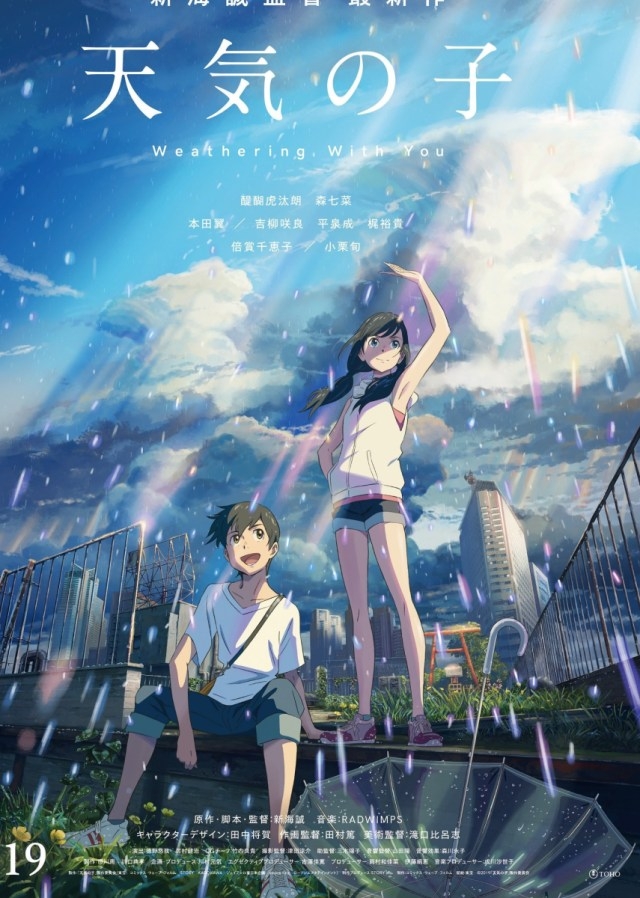
Let's get this out of the way because yes, the movie looks incredible. CoMix Wave Films has been refining their water animation since 5 Centimeters Per Second, and here they perfected it. The rain doesn't just fall, it behaves like a character. It sticks to skin, soaks through fabric, pools in gutters with disturbing accuracy. When Hina clears the sky, the light doesn't just appear, it explodes through moisture with this golden weight that makes you feel the humidity leaving the air. Some reviewers called it the most detailed water animation in the medium's history, and I'm not going to argue with that.
But here's the thing about Shinkai that newer fans miss. He's been doing gorgeous backgrounds since he was making Voices of a Distant Star on his home computer. The visuals are his baseline, not his achievement. What makes Weathering With You different is that he stopped trying to please everyone with a tidy ending. The animation serves the moral messiness. When Hodaka runs through the storm to reach Hina, the rain isn't pretty anymore. It's violent. It hurts. The water becomes this oppressive force trying to stop him from being selfish, and the movie makes you feel every drop hitting him while he refuses to stop.
It's Not Actually About Climate Change
People keep trying to read this as an environmental warning, like it's some lesson about global warming. That's a surface reading that misses the point entirely. Yes, Tokyo floods. Yes, there's endless rain. But the movie isn't saying we ruined the planet and now we pay. It's saying the planet has always been chaotic, and sometimes individuals get caught in systems that demand their destruction for the "greater good." Hina isn't melting ice caps. She's a 15-year-old orphan trying to feed her little brother when the world decides she needs to disappear so everyone else stays dry.
The climate change angle is a red herring. Shinkai uses weather as a metaphor for the cruelty of systems, both natural and human. The police chase Hodaka not because he's dangerous, but because he's a runaway minor who won't fit back into the machine. Social services wants to separate Hina from her brother because that's the rule, even though they're surviving fine alone. The rain is just another system that demands sacrifice. The movie asks why we accept that some people have to suffer for the comfort of others, and it has the guts to say maybe they don't.
The Ending That Broke the Internet
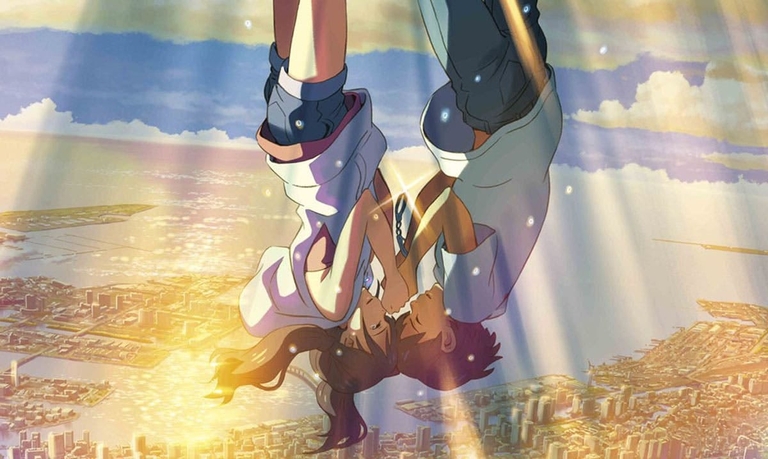
Okay, let's talk about the third act because this is where the split happened. Hina ascends to the sky realm above the cumulonimbus clouds, ready to be erased from existence to restore balance. Hodaka, armed with a gun he found earlier, fights through the storm, gets arrested, escapes, and climbs a derelict building to shoot a hole in the sky literally. He pulls Hina back down. Tokyo gets rained on for three more years. The end.
Viewers lost their minds. Some called it selfish. How could these kids doom millions to flooding for their romance? Others, like this detailed breakdown explained, pointed out that Hina never agreed to die, she was manipulated by external forces and social pressure into thinking she had to. The movie isn't celebrating selfishness. It's rejecting forced martyrdom. Hodaka doesn't save the world. He saves one person, and the world adapts. People move to higher ground. They build boats. Life continues, just wetter.
This is Shinkai at his most Buddhist and least Hollywood. In American cinema, the hero saves the girl AND stops the disaster. Here, saving the girl IS the disaster, and the movie treats that as acceptable. The final shot of adult Hodaka and Hina reuniting in a flooded but functioning Tokyo isn't nihilistic. It's hopeful. It says we survive change. We don't need to throw children into volcanoes to keep the crops growing.
Why Hodaka Makes the Right Choice
People hate this take, but Hodaka was correct. Hina was fifteen. She had a dependent brother. She was surviving on part-time jobs and expired supermarket food. The universe demanded she cease to exist so salarymen wouldn't need galoshes. That's not a fair trade, and the movie knows it.
The "selfish love" criticism assumes that the natural order is moral, which is garbage. The weather maiden system is ancient and arbitrary. It demands willing sacrifices, which means it relies on guilt-tripping children into thinking their lives matter less than convenience. Hodaka's choice to value Hina's existence over the status quo isn't teenage recklessness. It's a refusal to accept that love must always lose to bureaucracy, whether that's government paperwork or the literal sky.
Suga, the washed-up writer who helps Hodaka, gets this. He starts the movie avoiding his own daughter because the legal system says he's unfit. By the end, he's helping Hodaka commit literal crimes to save Hina because he realizes following the rules was killing him. The movie is full of adults who have accepted compromise, and kids who refuse to. That's not naivety. That's courage.
The McDonald's Problem
Not everything works perfectly here. The product placement is hilariously blatant. One review pointed out that the McDonald's scenes take you right out of the movie. Hodaka eats there, the logo is center frame, and it's so obvious you half expect Ronald to show up with weather powers. It breaks the spell every time.
There's also the gun. Hodaka finds a handgun in a trash can early on, and it becomes this Chekhov's gun that pays off when he uses it to threaten the yakuza and the police. Some viewers felt this was too convenient, too action-movie for a Shinkai film. I think it works because it shows how desperate he becomes, but I get the criticism. It shifts the tone from magical realism to thriller for about ten minutes.
How It Differs From Your Name
Everyone compares these movies because they're the two biggest Shinkai hits. Your Name is about connection across time and space, about fate bringing people together despite impossible odds. It's romantic and cosmic and ultimately optimistic about the universe helping lovers find each other. Weathering With You is the opposite. It's about how the universe is indifferent or actively hostile, and you have to fight it to keep what matters.
In Your Name, the characters save the town AND each other. Here, they choose. That makes this the braver film. Shinkai could have played it safe. He could have had Hina find a way to stop the rain without disappearing, or had Hodaka find a compromise. Instead, he let them be selfish and made them live with the consequences. This analysis hits the nail on the head about why this movie matters more than just being "Your Name with rain."
The romance also develops differently. Taki and Mitsuha spend most of Your Name not knowing each other directly. Hodaka and Hina share space, meals, and silence. Their relationship feels more grounded, more like actual teenagers awkwardly circling each other than star-crossed souls. When Hodaka pulls her from the sky, it hits harder because we've seen them exist together, not just swap bodies.
The Music Tells Half the Story
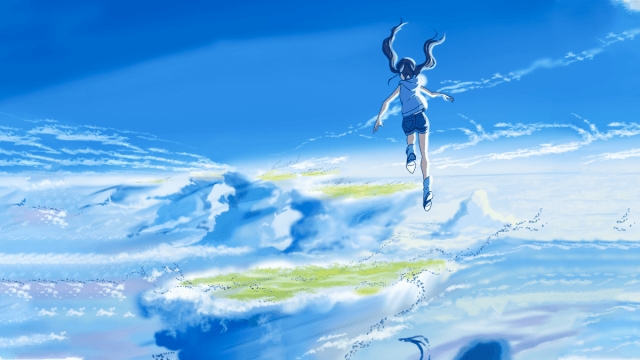
RADWIMPS returned for the soundtrack, and they're doing heavier lifting here than in Your Name. The song "Grand Escape" plays during the sky rescue, and it's this massive crescendo that makes Hodaka's climb feel like a genuine assault on heaven. The lyrics mix English and Japanese in this way that feels urgent, not pretentious. The score knows when to shut up too. There are long stretches of just rain noise and breathing, which makes the musical swells hit like trucks.
The audio design in general deserves mention. The way the rain changes pitch based on whether it's hitting concrete, canvas, or skin creates this immersive texture. When the sun finally breaks through at the end, the silence is deafening. You feel the lack of rain as powerfully as you felt its presence.
The Side Characters Matter More Than You Think
Natsumi, the college girl working with Suga, could have been just fanservice or comic relief. Instead, she represents the path not taken. She's drifting, changing jobs, avoiding commitment. She's what Hodaka might become if he doesn't fight for Hina. The yakuza guy who tries to recruit Hodaka shows the alternative survival method, the criminal economy that catches runaways. Even the cat, Rain, gets this personality through animation alone, judging the humans with every blink.
Suga's arc is the quiet heart of the film. He starts as this washed-up loser using Hodaka for cheap labor. By the end, he's risking his custody battle to help a kid commit a felony for love. His growth parallels Hodaka's, showing that adults can still learn to prioritize people over rules. When he tackles the cops to let Hodaka run, it's the most heroic moment in the film, and it's done by a chain-smoking failed writer.
Why the Three Year Jump Works
The epilogue confuses people. Hodaka gets sent home, serves probation, returns to Tokyo at nineteen to find it half-submerged. He finds Hina praying on a street corner. They reunite. Some viewers wanted immediate resolution, wanted to see the flood in real-time. The time jump is smarter than that. It shows that the world didn't end. Tokyo adapted. People built boats, moved to higher floors, kept living. The rain didn't destroy everything, it just changed the layout.
This reinforces the theme. The sacrifice wasn't necessary. The system adjusted. Hina gets to live, Hodaka gets to find her, and the city survives differently than before. It's not a tragedy. It's a transformation. The movie trusts its audience to understand that change isn't death, even when it's inconvenient.
Weathering With You anime movie analysis often gets bogged down in whether the ending is happy or sad, selfish or noble. That's the wrong question. The movie asks whether we're willing to accept a world that demands children disappear to keep things comfortable. It says no. It says fight. It says the weather is going to do what it wants, but we don't have to let it take the people we love. That's a harder message than Your Name's beautiful fate, and it's why this film sticks with you longer. The rain keeps falling, but so do we.