
The way people misunderstand weathering with you hina's fate drives me up the wall. Everyone wants to call Hodaka selfish for saving her, or they think Hina's sacrifice was the only noble option, but both readings miss what Shinkai's actually doing with this story. You've got people online arguing whether teenage love justifies drowning a city, or if Hina should have stayed up in that sky prison forever, and honestly, they're asking the wrong questions entirely.
Look, this isn't a math problem where you weigh one life against millions. The film keeps telling you that Tokyo used to be underwater anyway, that the weather does what it wants regardless of human comfort, but everyone gets so hung up on the morality play that they miss the point. Hina isn't just a weather machine that broke, she's a kid who got exploited by adults who wanted sunshine for their festivals and horse races without caring what it cost her. The ending where Tokyo floods three years later isn't a tragedy or a punishment. It's just the world returning to its natural state while two teenagers get to keep living their lives without one of them being turned into a cloud.
What the Sunshine Girl Curse Actually Does
Hina doesn't just die. She gets transparent. That's important. Every time she prays for clear skies, her body starts looking like water, like she's becoming the rain itself. The film shows this progression slowly, starting with her looking a little see-through, then eventually she can't even hold the ring Hodaka gives her because her fingers are basically mist at that point. It's not a quick death. It's a gradual dissolution where she loses her physical form and becomes part of the atmosphere.
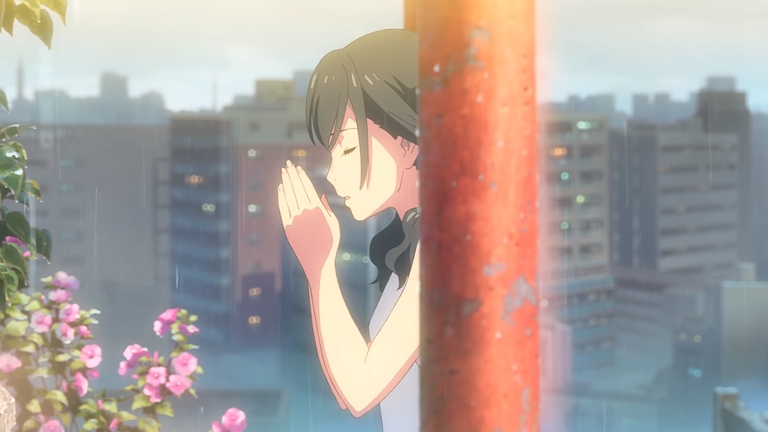
The legend says the weather maiden gets sacrificed to stop the rain, but sacrifice is such a loaded word here. It makes it sound like she dies, like there's a body to bury, but what really happens is she gets stuck in that sky world above the clouds, fully conscious, completely alone, watching the world get sunny while she fades into nothing. It's worse than death because she's aware of it. She's just floating there in that blue void, turning into water vapor, and nobody even remembers she existed because the world rewrites itself to account for her absence. Her little brother Nagi wouldn't remember having a sister. Hodaka would forget why he ever came to Tokyo. She becomes a ghost in the machine of the weather, forever alone, while everyone below enjoys the sunshine she bought with her existence.
The physical process is brutal to watch. During their last night in the hotel, before she disappears completely, Hina shows Hodaka her hand and light passes right through it. She's literally disappearing while she's still standing there, still talking, still conscious. The curse doesn't kill her quickly or painlessly. It unravels her slowly, piece by piece, until she's just a sentient weather pattern floating above the earth. That's the fate everyone thinks she should have accepted for the greater good.
The Business of Exploiting a Child
Before everything falls apart, Hodaka and Hina start this weird gig economy business where they charge people to clear the weather for weddings and festivals and corporate events. It's cute at first, them running around Tokyo making money to survive, but watch it again and it's disturbing. You've got adults paying a fifteen-year-old girl to manipulate the climate so they can have outdoor parties, and they're doing it through a website like she's some kind of app. She's literally draining her life force so some company can have a dry product launch, and everyone's treating it like a fun summer job.
This matters because when Hina decides to sacrifice herself to stop the endless rain, she's not just saving the city out of noble instinct. She's internalized the idea that her value is in her utility to others. She's been working since her mother died, lying about her age to get jobs, taking care of Nagi by herself, and now she's been reduced to a weather service. Of course she thinks she should disappear to fix the rain. She's been conditioned to think her needs don't matter compared to what adults want from her. The film shows you this explicitly when she says she doesn't want to cause suffering through her selfishness, but wanting to live isn't selfish. It's basic.
The clients they get range from desperate couples who need dry weather for their wedding day to rich jerks who want sunshine for their daughter's birthday party. None of them ask what it costs her. None of them care that she comes back from these prayers looking pale and tired and see-through. They just want their convenience, their perfect day, their dry clothes. Hina has been taught her whole life that she exists to serve others, that her labor, and now her literal body, belongs to anyone who can pay or plead.
Weathering With You Hina's Fate and the Gun Scene
Here's where people get stuck. They see the flooded Tokyo three years later and think Hodaka made the wrong call. They see streets turned into canals and millions displaced and they blame a sixteen-year-old kid for choosing his girlfriend over the greater good. But that's such a cheap reading of what happens.
The film gives you that scene where Hodaka points the gun at the screen and screams about how everyone pretends not to know. On the surface, he's yelling at the cops and Suga for ignoring Hina's sacrifice, but Shinkai confirmed in Q&As that he's also pointing that gun at you, the audience, for ignoring climate change while expecting some magical girl to fix it for you. That's the real kicker. Hina's powers weren't natural, they were a band-aid that let society keep ignoring the problem. Every time she cleared the sky for some company's outdoor event or a wedding, she was enabling the same system that made her and Hodaka homeless and desperate in the first place.
The gun isn't just a plot device. It's the film breaking the fourth wall to ask why we expect children to clean up environmental messes that adults made. Hodaka's screaming at a society that would let a girl vanish into the sky rather than invest in flood management or climate adaptation. He's angry that Hina's expected to be the solution because it's easier than changing infrastructure or accepting inconvenience. The police in that scene represent institutional apathy. They don't care that a child is dissolving into the atmosphere. They care that Hodaka skipped school and has an unregistered firearm. The system is broken, and Hodaka's pointing that weapon at everyone who maintains it.
Why the Flooded City Isn't the Villain
Tokyo being underwater in 2024 isn't presented as a tragedy in the way people think. Hodaka comes back and sees moss growing on buildings, boats replacing cars, and life continuing. The old lady, Taki's grandma, literally says Tokyo used to be a bay before humans drained it. The rain isn't destroying the city, it's returning it to its natural state.
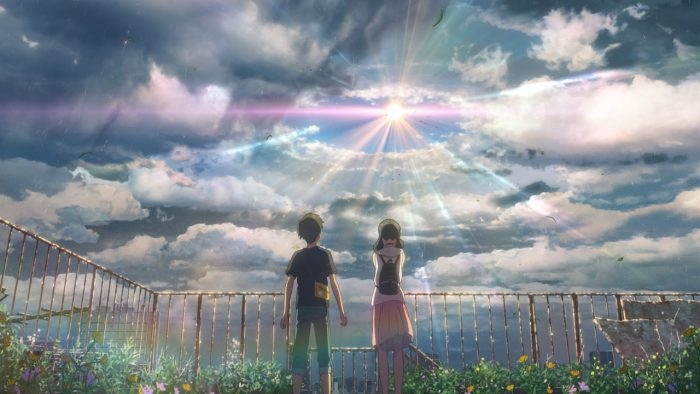
So when Hodaka brings Hina back and the rain resumes, he's not destroying civilization. He's just stopping the exploitation of a child for temporary convenience. The flooding is inconvenient for humans, sure, but the film keeps showing you that people adapt. Suga's business is thriving, his daughter is healthier in the humid air, and the city's still functioning, just wet. The alternative was letting Hina dissolve into the atmosphere so people could have dry commutes. That's the choice, and it's not as clear-cut as anime fans want it to be.
The film even shows you that the extreme weather might not be caused by climate change in the traditional sense, but by the world correcting itself. The priest character mentions that weather records only go back a hundred years, and Taki's grandma notes that Tokyo was water before it was land. The rain is ancient, older than the concrete. Expecting a teenage girl to hold back the ocean with prayer is absurd, and the film treats it as such. When Hodaka returns in 2024, he sees kids playing in boats, new ecosystems flourishing, and people getting on with their lives. The city didn't end. It just changed.
How This Ending Differs From Your Name
Everyone compares this to Your Name because it's Shinkai, but the endings work completely differently. In Your Name, Taki and Mitsuha save the town and get their happy ending with no real cost. The town is evacuated, everyone's safe, love wins. Weathering With You says that's not how reality works. You don't get to save the girl and save the world with no downsides.
Hodaka and Hina don't fix the weather. They don't become heroes. They just choose to live in the messed-up world as it is instead of accepting a system that demands children sacrifice themselves for the comfort of adults. That's why older Japanese critics hated this film. It goes against the whole cultural narrative of gaman, of enduring suffering for the collective good. Hodaka looks at the collective good and says it's not worth Hina's life, and the film agrees with him even while showing you the flooded streets.
In Your Name, the comet is an outside threat, an unnatural disaster that shouldn't happen. The rain in Weathering With You is natural, normal, the way things are supposed to be. Taki and Mitsuha avert a tragedy. Hodaka and Hina accept a reality. That's the crucial difference. One film is about preventing the worst. The other is about surviving what you can't control without destroying yourself in the process.
The Real Meaning of the Ring Scene
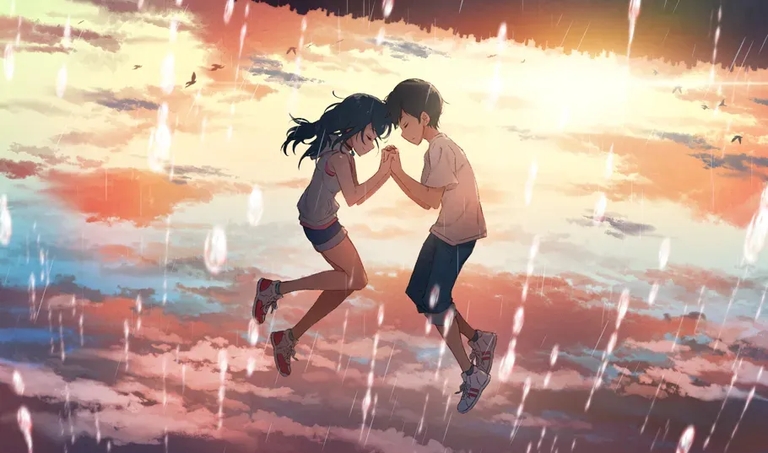
When Hina drops the ring in the sky world, that's her letting go of her human connections. She's accepted her fate as the sacrifice. But Hodaka catches it, and when he brings her back, the ring is still there in the puddle three years later. That physical object surviving while the city changes around it matters. It proves their choice was real, that they didn't just reset the timeline like in Your Name.
The film ends with them reuniting on that same staircase, looking out at the flooded Tokyo, and Hodaka says he's chosen this world. He's chosen her. The rain is still falling, the city is still half-sunk, and they're going to have to figure out how to live in that reality. There's no magic fix coming. That's the bravest part of the movie, honestly. It admits that sometimes you have to pick between two bad options and live with the consequences.
The ring becomes a symbol of persistence. While everything else changes, while the city transforms into something new and wet, the ring remains. It's proof that Hina exists, that she's solid, that she's not a weather pattern or a sacrifice or a service to be used. She's a girl wearing a ring given to her by someone who loves her, standing on solid ground even if that ground is a staircase above a flooded street.
Suga's Failure and Redemption
People forget that Keisuke Suga is supposed to be the adult in the room, and he fails completely. He knows Hina's disappearing, he knows Hodaka's desperate, but when the police show up, he tries to stop Hodaka from reaching the shrine. He tells himself he's protecting Hodaka from getting arrested, but really, he's protecting himself from being an accessory. He's the adult who should be saying this child shouldn't have to die for the weather, but instead he's the one holding Hodaka back until the last second.
When Suga finally helps, it's not out of nobility. He sees Hodaka's determination and realizes he's been cowardly. He helps Hodaka escape the police chase through the flooded streets because he recognizes that Hodaka's willing to do what he isn't: prioritize a specific living person over abstract social stability. Suga's arc mirrors the film's theme. He starts out exploiting Hodaka for cheap labor, just like everyone exploits Hina for weather, but he ends up accepting that his comfort isn't worth more than these kids' lives.
Nagi's Perspective Matters Too
Everyone focuses on Hina and Hodaka but forgets that if Hina had stayed in the sky, Nagi would have lost his sister and his memory of her. He'd be alone in the world with no explanation of why he was alone. The social services were already trying to separate them before she disappeared. Without Hina, Nagi goes into the system, probably gets adopted by strangers he doesn't know, and grows up without any memory of the sister who raised him. That's the cost of the noble sacrifice that everyone online seems to think was the right choice. It erases the only family he has left, and it does so without his consent.
Nagi is eight years old. He's already lost his mother. The film makes it clear that Hina is his primary caregiver, that they've been lying to authorities to stay together, and that separation would traumatize him. The sacrifice Hina almost makes doesn't just destroy her. It destroys her brother's entire world, and it does so in a way that makes him forget she ever existed. That's not a happy ending for anyone except the dry commuters below.
Conclusion
Weathering with you hina's fate isn't about whether she lives or dies. It's about whether she's allowed to be a person instead of a resource. The film keeps getting criticized for promoting selfishness, but that criticism assumes Hina owed the world her existence, that she was somehow responsible for the weather patterns humans created over centuries.
She was fifteen, working illegally to feed her little brother, and adults were lining up to pay her to change the climate for their parties. Expecting her to dissolve into the sky to fix their mess isn't noble, it's just more exploitation wearing a sacred mask. Hodaka saw that and chose to value her life over the convenience of dry streets. The flooded Tokyo isn't a punishment for that choice. It's just reality. The rain came back because it was always going to come back, and Hina got to be a seventeen-year-old girl standing on a staircase instead of a ghost in the clouds. That's the ending. It's messy, it's wet, and it's honest.