
People keep asking if Weathering With You anime film is just Your Name with rain instead of body swapping. It's not, and that's exactly why it annoys so many viewers who wanted another clean hit where everyone wins and the world gets saved. This thing is messier, angrier, and way less interested in making you feel comfortable about the choices the characters make. Shinkai made a movie where two teenagers basically doom a city because they want to be together, and he doesn't apologize for it or wrap it up with a neat bow.
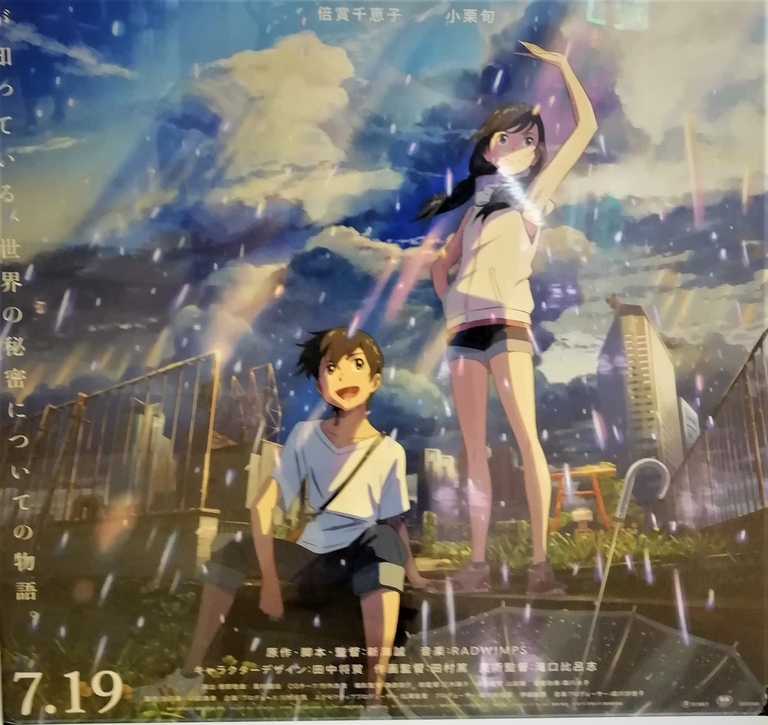
The film follows Hodaka, a sixteen year old kid who runs away from his island home to Tokyo because he feels suffocated by normal life. He meets Hina, a girl who can pray the rain away through some ancient shrine connection, and they start a business selling sunshine to people who need clear skies for weddings and festivals. That's the setup, but the execution is where Shinkai's style gets weird and complicated and forces you to sit with discomfort. You're watching something absolutely gorgeous while the story keeps making you ask if you should even be rooting for these kids or if they're being selfish brats who destroy their world for puppy love.
What Actually Happens Here
Hodaka hops a ferry to Tokyo during a summer that's seen nonstop rain for weeks. He's sixteen and carrying a gun he found in the trash, which already tells you this isn't going to be a gentle coming of age story where he learns to appreciate his parents. He gets a job writing for a sketchy occult magazine run by Keisuke, a washed up writer with his own problems and a sick daughter he can't see, and starts investigating weird weather phenomena around the city because the magazine pays for weird stories.
He finds Hina in Kabukicho trying to work as an escort to feed her little brother Nagi. She's an orphan, fifteen years old, lying about her age to survive because the system failed her. Hodaka saves her from a bad situation with that gun, which is a choice that feels realistic for a panicked kid but makes adult viewers nervous about the message being sent. They run off together and discover Hina can make the sun come out by praying at an abandoned building with a small shrine on top that she stumbled into while trying to escape her life.
They start a sunshine girl business using a website that looks like it was made in 2002. People pay them cash to clear the rain for weddings and festivals and cosplay photo shoots. It's cute for a while and you get to see them eating good food and laughing while the money comes in. Hina gets weaker every time she uses her power though, losing weight and becoming transparent, and eventually she learns the awful truth from a creepy shrine maiden at McDonald's: she's supposed to sacrifice herself to fix the weather permanently and become part of the sky.
She agrees to do it because she's been trained her whole life to put others first and thinks her brother will be fine without her. Hodaka says no, breaks every law of physics and society, uses that same gun to threaten cops and priests, rescues her from the sky using some questionable visual logic involving water tornadoes, and brings her back down to earth. The rain returns immediately and never stops. Three years later, Tokyo is half underwater, people are living on boats and raised walkways, and Hodaka and Hina reunite while walking through knee deep water to look at the ruin of the city they chose not to save.
That's the synopsis, but it doesn't capture how strange and uncomfortable the middle section feels when you're watching it. The movie keeps pushing you to ask if Hina's individual happiness matters more than millions of people's homes and businesses, and it refuses to give you the answer you want.
Shinkai's Visual Style Goes Harder Here
If you've seen any Shinkai film, you know he likes clouds and light effects. But Weathering With You anime film takes his obsession with light and water to another level that makes other anime look flat. The rain in this movie doesn't look like standard anime rain where it's just white lines falling down. It looks like someone filmed actual water droplets hitting glass and somehow painted over them frame by frame. Every puddle reflects neon signs perfectly. When the sun finally breaks through Hina's prayers, it hurts your eyes in the best way possible because you've been staring at grey and blue for forty minutes.
The guy uses light like a weapon against the viewer. He'll blind you with sunbeams during emotional moments just to make sure you're paying attention to the characters' faces. The city of Tokyo becomes a character too, all greys and blues and then sudden gold when Hina does her thing. I saw some data that said the animation team studied real rain physics for months to get the refraction and surface tension right, and it shows in every frame where water hits pavement.
The clouds are where he gets weird and mythological though. There are massive sky whales made of water swimming through them, ghost fish floating in the moisture, and Hina ends up floating above everything in a garden that shouldn't exist where the weather is born. It blends CGI with hand drawn stuff so smoothly you can't tell where one ends and the other begins. Unlike Your Name, which kept its fantasy elements grounded in rural shrines and traditional architecture, this movie goes full mythological in the sky sequences and doesn't explain the logic because it doesn't care if you think it's realistic.
That Messy Ending Everyone Fights About
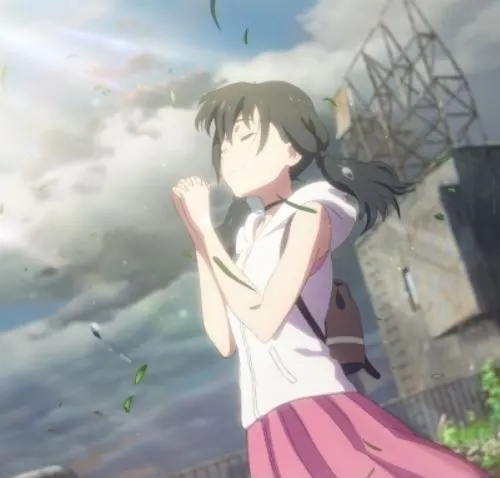
Here's where people split hard on this film and start yelling at each other online. In Your Name, the kids save the town AND get together. Everyone wins and the timeline is fixed. In Weathering With You, Hodaka chooses Hina over Tokyo and the movie treats this as a happy ending even though the city is ruined. The rain comes back, the city floods over three years, and the final shot is them reuniting while walking through water that used to be streets.
Some viewers call this the most selfish act in cinema history. Others call it the most honest depiction of teenage love ever animated. The film isn't subtle about the climate change metaphor. Tokyo is drowning because of what previous generations did to the environment, and Hina's sacrifice would just be a band-aid that lets adults keep polluting while a child dies to clean up their mess. Shinkai seems to be asking why a teenager should have to fix what adults broke, and whether it's fair to ask young people to sacrifice their lives for a world that didn't protect them. Hodaka literally screams that he doesn't care if the world stays crazy as long as she's alive, and the camera doesn't pull back to judge him for it.
That gun he carries becomes symbolic in this reading. He uses it twice: once to save Hina from exploitation by criminals, once to break the laws of physics and society to reach her in the sky. It's not glorified as a cool weapon. It's treated like a dangerous tool that a scared kid uses because he has no other options and the police are trying to separate them. The movie doesn't moralize about the gun or the flooding, which bothers people who want clear messages about right and wrong.
The soundtrack by Radwimps is doing heavy lifting here too. The songs start playing before you realize the scene is emotional, and suddenly you're crying about weather patterns and teenage stubbornness. It's manipulative but effective, using pop rock to sell you on the idea that love matters more than infrastructure.
Why It Isn't Just Your Name 2.0
Everyone compares these films because they came out three years apart and both made over a hundred million dollars at the box office. But Weathering With You anime film is deliberately smaller in scope and way less interested in being a crowd pleaser. Your Name was about saving hundreds of lives and rewriting time through sheer willpower. This one is about two kids who just want to survive together and don't have the energy to save anyone else.
Hodaka isn't Taki from Your Name. He's not confident or capable or good at talking to people. He's a runaway who makes bad decisions because he's desperate and fifteen. Hina isn't Mitsuha either. She's already given up on her own dreams to raise her brother and work crappy jobs. Their romance isn't sweet and gradual with montages. It's two traumatized teenagers clinging to each other because nobody else cares if they live or die, and they smell like rain and desperation.
The movie also hates the police and social services way more than Your Name did. Cops are constantly trying to separate the kids, to send Hodaka back to his abusive home, to put Hina's brother in foster care and split up the family. The system is portrayed as an obstacle to their survival rather than a help, which is a bold choice for a mainstream anime that could have played it safe. The final chase scene involves Hodaka running from the law while carrying Hina's unconscious body, and you're supposed to root for him to escape even though he's waving a gun around.
The ending confirms this difference in philosophy. In Your Name, the town is saved and the kids meet on the stairs in a perfect moment. Here, the city is ruined but the kids are together and alive. Shinkai picked love over civic duty and didn't blink or add a post-credits scene where the rain stops. Some reviews call this morally cloudy, but that's exactly what makes it memorable.
Real Places and Real Myths Mixed Together
Shinkai loves using real Tokyo locations to ground his fantasy, and this movie features Yoyogi Hall and the Kabukicho district prominently throughout the runtime. The shrine Hina prays at is based on real weather shrines in Saitama prefecture that people actually visit to pray for sunshine during rainy seasons. Even the abandoned building with the rooftop shrine exists in some form, though they moved it to Shinjuku for the story's convenience.
The sunshine girl myth comes from actual Shinto traditions about weather maidens and rain prayers. In old stories, these girls would be sacrificed to stop droughts or floods, drowned or left on mountains to appease the sky gods. Shinkai took that creepy historical fact and asked what would happen if the girl just said no and a boy with a gun helped her escape. The sky garden where Hina ends up draws from Japanese folklore about heaven being above the clouds, but rendered with Shinkai's signature light effects that make it look like a Studio Ghibli background painted on acid.
The film also references Your Name directly in ways that connect the films. Taki and Mitsuha make cameos working at their jobs, and the grandmother from that movie shows up talking about comets and disasters. It's fanservice but it also connects the films as a shared universe where teenagers keep having to deal with cosmic disasters caused by adult negligence.
The Problems People Won't Shut Up About
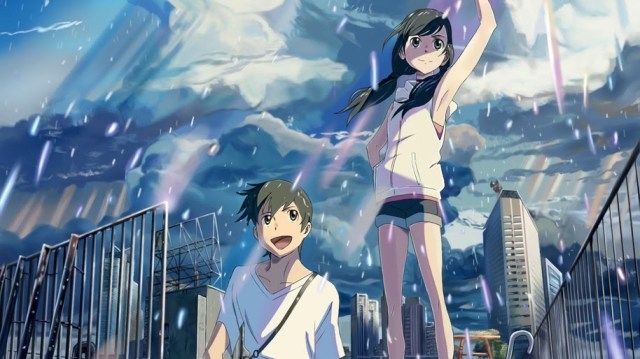
Yeah, there are plot holes and weird choices that break immersion if you're looking for them. The gun laws in Japan are incredibly strict, so Hodaka finding a working revolver in a trash can on a ferry is statistically bizarre and feels like a plot convenience. The police investigation into him is half-hearted at best, with detectives who give up chasing him because he runs fast, which isn't how law enforcement works. Keisuke's relationship with his daughter feels underdeveloped, like they cut twenty minutes of scenes to keep the runtime down and now his motivation is unclear.
Hina's mother dies off-screen from an illness and it's barely mentioned except as the reason Hina got her powers by praying at the shrine while desperate. Some viewers wanted more background on why Hodaka ran away beyond