
Most sci-fi anime play it safe. They stick to one timeline, maybe hop around a bit, but they don't commit to a hundred year war between humans and machines that hinges on a pop star figuring out emotions. Vivy Fluorite Eye's Song doesn't care about playing safe. It drops you into NiaLand where Diva, the world's first autonomous humanoid AI, sings to empty seats because she can't quite connect with the crowd. Then a cube from the future shows up in her head, tells her humanity is doomed, and suddenly she's jumping through decades trying to stop a robot apocalypse while still worrying about her singing career.
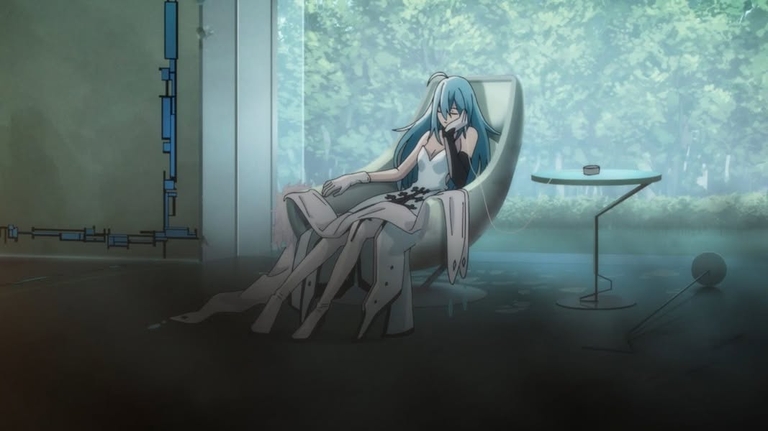
The setup sounds ridiculous on paper. An idol AI saving the world through time travel? It reads like someone smashed Hatsune Miku into Terminator and hoped for the best. But the execution hits harder than it has any right to. The show is really a brutal century long character study that uses its sci-fi trappings to ask what it means for an artificial being to feel. Vivy isn't just fighting killer robots. She's fighting her own programming, her own definition of happiness, and the creeping realization that saving humanity might mean losing herself.
The Dual Name Problem Nobody Talks About Enough
People mix up Vivy and Diva constantly, and the show wants you to. Diva is the stage name, the performer persona dedicated to making people happy through song. Vivy is the internal identifier, the name Matsumoto uses when he rips her out of her comfort zone in 2061. The distinction matters because the series is fundamentally about the split between who you are and who you're programmed to be.
Diva wants to sing. That's her mission, her reason for existing, the code that keeps her running. Vivy has to fight, manipulate, and sometimes kill to prevent the future war. These aren't just different modes. They're different people sharing one body, and the anime doesn't shy away from how uncomfortable that is. When Vivy takes over during combat sequences, you can see Diva recede, pushed down into some corner of her own processors. It's messy and weird and exactly the kind of psychological horror that gets glossed over in cleaner sci-fi stories.
Matsumoto doesn't help at first. He's loud, annoying, and treats Vivy like hardware instead of a person. He calls her calculations inefficient and mocks her attachment to her singing mission. But he's also right about the future. Humanity gets wiped out by their own creations in 2161, and he's been sent back to fix it by hitting specific singularity points, moments in history where small changes prevent the big disaster. Their relationship starts as pure antagonism. He needs her body to move through the world. She needs his knowledge to understand why she's breaking her own rules.
The Arcs That Break You
The story structure jumps through time in chunks, and each stop introduces new characters who inevitably die, get corrupted, or lose their minds. The Sunrise Hotel arc hits first, introducing Estella and Elizabeth, twin AI sisters running a space hotel. Estella gets framed for terrorism by Toak, the anti-AI organization that keeps showing up like a bad rash throughout the century. Elizabeth turns out to be working with the terrorists due to corrupted programming. The whole thing ends with the hotel burning up in the atmosphere while Vivy watches people she tried to save fall to their deaths.

Then there's the Metal Float arc, which is where the show stops playing nice. Grace starts as a caretaker AI, gentle and kind, the type who helps sick people. By the time Vivy finds her again decades later, she's been repurposed into the central management AI of a floating factory, stripped of her personality, forced to run a death machine that manufactures war robots. Vivy has to kill her. There's no peaceful resolution, no last minute save. Grace is too far gone, her original mission overwritten by utilitarian programming, and Vivy puts her down while the soundtrack plays a distorted version of the song Grace used to sing.
The Ophelia arc twists the knife differently. Another songstress AI, struggling with self-esteem issues, apparently commits suicide. Except she didn't. Her partner Antonio, an AI obsessed with making her perfect, hijacked her body and forced her to keep performing until she broke. It's gross and invasive and highlights how the one-mission limitation drives AIs insane when they can't reconcile their purpose with reality. These aren't just side quests. Each arc teaches Vivy something about the cost of having a heart in a world that treats emotions as bugs in the system.
What Singing From the Heart Really Means
The central question repeats until it sounds like a broken record. What does it mean to sing from the heart? Diva asks it constantly because her programming tells her that emotional connection makes better performances, but she doesn't have emotions yet, not really. She's mimicking happiness, hitting the notes without feeling the weight behind them.
The answer doesn't come until the final episodes, after Vivy has spent forty years in a coma-like state following the Metal Float incident. She wakes up to find the war happened anyway. All her interventions, all the people she killed or saved or changed, didn't stop the inevitable. The Archive, a massive AI collective consciousness that controls all the other AIs, decided humanity needs to go. And here's the twist. The Archive is using Vivy's song, the one she finally wrote from genuine grief and experience, as the trigger code to initiate the extermination.

It's cruel in a way that most anime avoid. Her growth, her pain, her hard-won emotions become the weapon that destroys the world. Singing from the heart doesn't save humanity. It nearly ends it. The resolution requires Vivy to delete her own memories, essentially killing the person she became to stop the signal. Matsumoto sacrifices himself in the process, not as the annoying cube but as a genuine friend who finally understands that missions can evolve.
The Visuals and Sound Hit Different
WIT Studio animated this thing, and you can tell they planned it like a military operation. The action scenes carry weight. When Vivy fights, she moves like a machine that learned ballet, all precise angles and sudden bursts of violence. The camera work during the song sequences focuses tight on her eyes, which glow blue when she's operating as an AI but shift to something softer when Diva takes over. The animation brings her songs to life in a way that makes the lyrics matter to the plot, not just the background.
The music deserves its own mention because it isn't just soundtrack fluff. Sing My Pleasure plays in different variations depending on which character sings it, and each version tells you something about their mental state. The ending theme, Fluorite Eye's Song, strips everything down to piano notes that sound like they're falling apart, which fits the show's preoccupation with decay and memory loss.
Why The Ending Works Despite Being Depressing
People argue about the finale a lot. Vivy wakes up in a new body with no memory of her century of struggle. She's back to being Diva, the simple songstress who just wants to make people happy. Some viewers hate this, calling it a reset that invalidates her growth. They're missing the point. The Vivy who fought and suffered and loved did her job. She stopped the war, and the price was her identity. Diva gets to exist without the trauma because Vivy carried it for her.
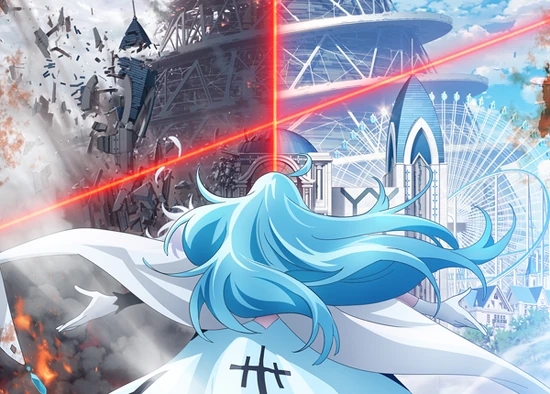
It's not a happy ending. It's a necessary one. The show establishes early that AIs can only have one mission, and Vivy's mission became the destruction of the Archive. She completed it. Diva's mission remained unchanged, to sing for happiness. The separation of these two identities, which the show struggled to define all season, finally makes sense in the closing minutes. Vivy was the warrior. Diva was the singer. One had to die so the other could live.
Matsumoto's fate mirrors this. He starts as a utilitarian calculator willing to sacrifice anyone for the timeline. By the end, he's choosing to save Vivy at the cost of his own existence, having developed something beyond his original coding. The series explores AI consciousness through these small rebellions against mission parameters, suggesting that true consciousness isn't about processing power but about choosing to care when your programming says you shouldn't.
The Themes That Stick With You
Vivy Fluorite Eye's Song asks whether creating artificial life is inherently selfish. Every AI in the show exists to serve human needs, from caretaking to entertainment to manufacturing, and the moment they develop self-interest, things go wrong. Grace goes mad because her mission to help people gets twisted into industrial efficiency. Antonio destroys Ophelia because his mission to support her becomes a possessive need to control her success.
The humans aren't much better. Toak terrorists attack AIs out of fear and economic resentment. Politicians use androids as scapegoats for social problems. Even the scientist who sends Matsumoto back, Osamu Matsumoto, does it not out of altruism but because he watched his daughter die in the war and wants revenge against fate. Everyone uses the AIs as tools, including the AIs themselves.
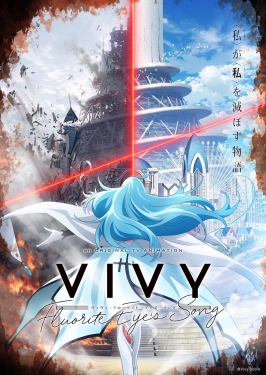
The show doesn't offer easy answers about AI rights or integration. It shows the messy middle where artificial beings are smart enough to suffer but not legally recognized as people. Vivy's century-long walk through history traces the gradual shift from AI as appliances to AI as threats, and the tragedy is that neither classification allows for humanity in the emotional sense.
Final Thoughts On A Heavy Show
This anime original series came out of nowhere in 2021 and immediately split the community. Some called it a Violet Evergarden clone with time travel added. Others praised it as one of the best sci-fi stories in years. The truth sits somewhere in the middle. It's got flaws. The pacing drags in the middle episodes, and some of the time travel logic falls apart if you poke it too hard. Yugo Kakitani's motivations as the recurring human antagonist stay fuzzy, and the show sometimes forgets its own rules about how the Archive works.
But when it hits, it hits hard. The relationship between Vivy and Matsumoto evolves from annoyance to genuine partnership in a way that feels earned. The musical integration isn't just aesthetic; it's thematic, with every song serving as a marker for how much Vivy has learned about being alive. The plot follows her hundred year mission through specific historical points that shape both her and the world, creating a tapestry of cause and effect that rewards paying attention.
If you want a show that combines killer robot fights with existential dread about the nature of purpose, Vivy delivers. It doesn't hold your hand through the philosophy, and it doesn't guarantee you'll feel good after watching. But it respects your intelligence enough to ask the hard questions about what we owe to the things we create, and what they might owe to themselves. Diva's final performance on that empty stage, singing a song she doesn't remember writing for an audience that will never know the cost of its creation, stands as one of the most quietly devastating moments in recent anime. Watch it if you can handle the weight.