
Twin Star Exorcists had no business being fifty episodes long. That's the first thing you need to know about this show. Most anime fans bailed after episode twenty when it became obvious Studio Pierrot was padding the runtime with filler arcs that went nowhere. But if you want the full Twin Star Exorcists plot summary and recap, the kind that covers every stupid decision and genuine emotional beat, you have to wade through all of it. Rokuro and Benio aren't just another shonen pair. They're two kids forced into an arranged marriage by a prophecy that says their child will be the ultimate exorcist who wipes out all Kegare forever. The anime starts strong with this premise, trips over its own feet around the halfway mark, and somehow limps to a conclusion that ignores half its own plot points.
The show follows Rokuro Enmado, a fourteen-year-old who quit being an exorcist after a tragedy at his training dorm left him with a cursed arm and dead friends. He wants to play soccer or do anything else with his life until Benio Adashino literally falls from the sky into his arms. She's a prodigy from a respected family who's obsessed with killing every impurity she can find because a Basara named Kamui murdered her parents. Head Exorcist Arima Tsuchimikado declares them the Twin Star Exorcists, moves them into a house together, and tells them they have to marry and have a baby. This setup works for about thirteen episodes before the writing starts to wobble and the animation budget evaporates.
The Hiinatsuki Tragedy and Rokuro's Cursed Arm
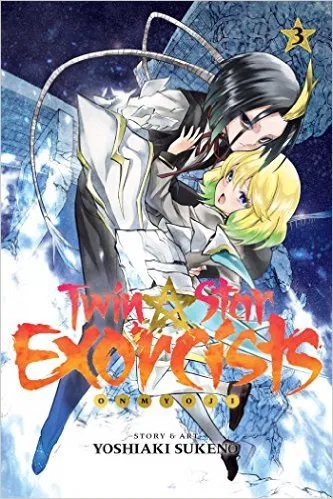
Rokuro didn't just decide one day that exorcism was boring. Two years before the show starts, every student at the Hiinatsuki Dormitory except him was turned into a Kegare by an experimental corruption technique. He had to kill his own friends with his own hands. The anime reveals this slowly, showing flashbacks of kids he grew up with turning into monsters while he screams and fights them with a power he didn't understand. His right arm isn't normal anymore. It's black and scaled and houses the power of the victims, which makes him incredibly powerful but also reminds him every day that he survived when everyone else died. This trauma is why he refuses to wear the traditional exorcist uniform and why he reacts so badly when Benio shows up talking about duty and destiny like they're fun concepts.
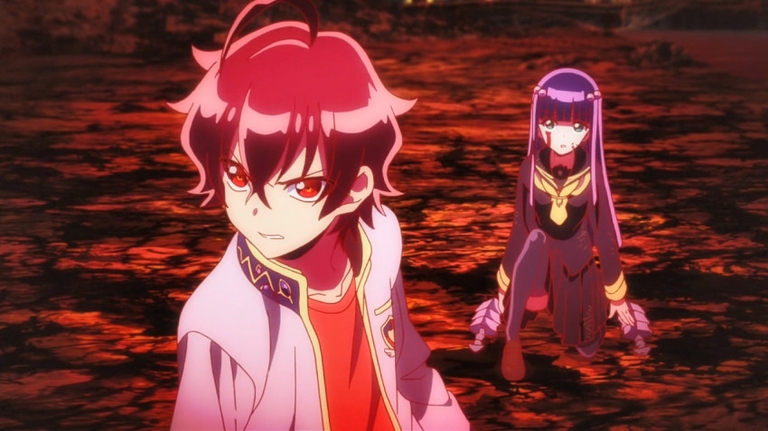
The corruption that hit Hiinatsuki wasn't an accident. It was caused by Yuto Ijika, Benio's older twin brother who everyone thought was dead. He faked his death, killed all those kids as an experiment, and has been working with the Basara to perfect a technique that turns exorcists into impurities. This reveal hits during the Yuto Arc around episodes fifteen through twenty-one, which is honestly the only part of the anime that approaches the quality of the manga. Yuto is a smug, cruel villain who treats Rokuro like a lab rat and Benio like a failed experiment. When he shows up in Magano, the parallel dimension where Kegare live, he immediately proves he's stronger than both Twin Stars combined by beating them near to death while explaining his philosophy that exorcists are just food for impurities.
The Yuto Arc and Benio's Lost Legs
The fight against Yuto is personal in a way the later battles never manage to recreate. Benio discovers her brother is alive, that he killed their parents, and that he's been orchestrating everything. She loses her legs in the battle, which should be a permanent injury, but Kamui the Basara shows up and offers her new legs made of impurity energy in exchange for her humanity. She takes the deal because she can't stand being helpless. This mirrors Rokuro's cursed arm perfectly. Both of them are using the power of the things they're supposed to destroy just to stay in the fight. The anime handles this parallel with a heavy hand but it works because the voice actors sell the desperation.
Mayura Otomi, the childhood friend who could have been a love interest, gets corrupted by Yuto during this arc too. Rokuro has to fight his best friend while she's possessed, and the show actually lets the moment breathe instead of rushing to a resolution. Seigen Amawaka, Mayura's father and one of the Twelve Guardians, sacrifices his arm to save her, which permanently sidelines him from being a top-tier fighter. These stakes feel real because they have consequences that last beyond the episode. Unfortunately, this is the last time the anime respects its own continuity.
Where The Anime Went Wrong
After episode twenty, Twin Star Exorcists diverges hard from the manga. The source material continues with complex political maneuvering between the exorcist houses and a slow burn romance that develops over years. The anime didn't want to wait. It introduced a two-year time skip that happens off-screen between episodes, brings in a toddler character named Sae who is apparently a fragment of the great impurity, and sends the cast on a road trip in a camper van possessed by a fox spirit to seal Dragon Gates around Japan. This is where most viewers checked out. The Dragon Gates arc is filler in the worst way. It invents new villains who run away every week, interrupts any romantic development with repetitive gags, and looks terrible because the animation budget was clearly diverted to other projects.
Studio Pierrot was adapting this while working on Naruto and Boruto. You can see the corners getting cut. Fight scenes that should be fluid turn into still frames with speed lines. Attack names get called out followed by video-game style cutaways that hide the actual animation. The Basara who should be terrifying end up standing around explaining their motives like they're reading from a script. Kuranashi, the main villain of the second half, has a plan to capture the Twelve Guardians that makes no sense when you think about it for more than five seconds. He hypnotizes random people to do it for him instead of just fighting them himself even though he's supposed to be stronger than all of them.
The Floating City and The Final Ten Episodes
The Floating City arc brings Yuto back from the dead through a double-cross involving Kuranashi, which should be exciting but lands flat because death clearly means nothing in this show anymore. The Twelve Guardians get captured one by one in ways that make them look incompetent. Rokuro and Benio fight through waves of generic Kegare while arguing about whether they're really in love or just following the prophecy. The show keeps teasing a confession between them and then interrupting it with earthquakes or phone calls or attacks, which stops being funny after the third time and becomes frustrating by the seventh.
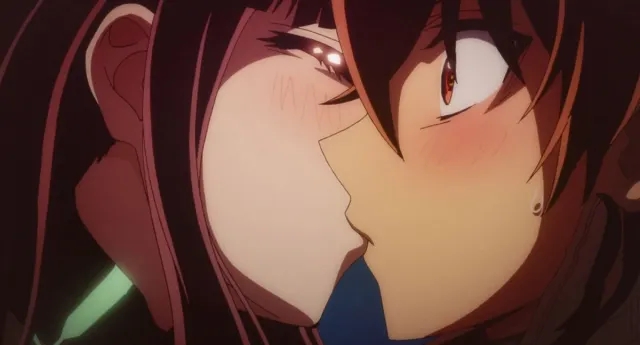
The final villain reveal is Abe no Seimei, the legendary exorcist who founded the Tsuchimikado clan. He wants to turn all of humanity into Kegare to prevent the birth of the Calamity King, which is a villain plan that sounds deep but falls apart when you realize it contradicts the entire premise of the first forty episodes. Rokuro turns out to be the vessel for the Calamity King because of course he does. Benio gets trapped in a crystal. Arima dies fighting Seimei but then doesn't actually die because this show refuses to commit to anything. The Reddit breakdown of the seven arcs points out that the final arc is where the power scaling completely breaks down, with Rokuro and Benio losing every fight until they suddenly win because of the power of love and a kiss that happens while the world is ending around them.
The Romance That Carried The Show
Despite all the production issues and filler nonsense, the relationship between Rokuro and Benio is the reason anyone stuck around. They start as polar opposites. He's a trauma-ridden dropout who cooks and cleans and wants a normal life. She's a battle-obsessed noble who can't boil water and thinks sleep is optional. Forcing them to live together creates genuine moments where they slowly break down each other's walls. Rokuro teaches Benio that being an exorcist isn't just about killing. Benio teaches Rokuro that running from his past doesn't erase it. When they finally synchronize their powers using the Resonance technique, it feels earned because they've spent twenty episodes learning to trust each other.
The problem is the anime keeps resetting their progress. After the time skip, they act like strangers again. The confession in episode forty-nine gets interrupted by Arima falling from the sky, which is played for laughs but just annoys the audience at that point. When they finally do kiss and admit their feelings, it's good, but it happens while Seimei is monologuing about the nature of sin and Kegare, which undercuts the emotional weight. The manga handles this differently), letting their relationship develop naturally over hundreds of chapters instead of cramming it into fifty episodes with filler in between.
Side Characters Who Deserved Better
Mayura gets shafted by the adaptation. In the manga, she becomes a legitimate exorcist with her own power system and plays a crucial role in the final battles. In the anime, she's reduced to a comedic third wheel who exists to create jealousy gags that go nowhere. Shimon Ikaruga, the young Guardian who starts as an antagonist, gets a solid arc where he learns to respect the Twin Stars, but then he vanishes during the filler sections only to show up at the end with no explanation of where he's been. Kinako, the fox spirit who possesses the camper van, is an anime-original character who serves no purpose except to sell merchandise to kids who like talking animals.
The villains suffer even more. Kamui starts as a terrifying force who kills Benio's parents and maims her, but by the end he's helping the heroes fight Seimei because the writers couldn't figure out what to do with him. The Basara are supposed to be the ultimate impurities, born from human sin and desire, but most of them get defeated by single attacks after talking too much. Yuto is the only villain who maintains a consistent threat level, and that's mostly because Vic Mignogna's English dub performance captures his smug cruelty perfectly, even when the animation fails to show it.
The Animation Disaster
You can't talk about Twin Star Exorcists without addressing how ugly it gets. The first six episodes look fine. Pierrot put their B-team on it but the art style is consistent and the Kegare designs are genuinely creepy, all teeth and shadow and distorted limbs. Then the budget runs out. Characters go off-model constantly. Rokuro's arm changes size and shape between shots. Fight scenes that should be the highlight of a shonen series turn into characters shouting attack names while the screen flashes. The Anime UK News review specifically calls out how the show uses "stylized video game cutaways" to hide the fact that they can't animate the action anymore. By episode thirty, you're watching still images pan across the screen while the voice actors grunt to simulate combat.
The openings are the only place the animation looks good. The first OP by Wagakki Band is full of sakuga that never appears in the actual episodes. The second OP by Vickeblanka has Rokuro and Benio dancing in a way that suggests a budget that simply doesn't exist in the show proper. It's false advertising. You think you're getting a beautifully animated supernatural romance and instead you get PowerPoint presentations about Dragon Gates.
What The Prophecy Actually Promised
The central hook of the series is the Miko prophecy. Arima declares that Rokuro and Benio must marry and conceive a child who will be the ultimate exorcist and cleanse the world of Kegare forever. This is treated like an absolute destiny that justifies forcing two fourteen-year-olds to live together and pressure them into a relationship. The anime keeps teasing this outcome with visions of the future and talks about the child's power. Then the finale happens and they never have the kid. The Calamity King is defeated through the power of love and Resonance, not through the birth of the Miko. The prophecy is technically fulfilled when they defeat the great impurity together, but the specific plot point about them having a baby is dropped completely. It's a classic case of the writers setting up a premise they didn't know how to pay off, so they just ignored it and hoped nobody would notice.
The Sound Design and Music
The soundtrack by Mikio Endo is a mixed bag. The battle themes use traditional Japanese instruments mixed with electronic beats that sometimes work and sometimes sound like someone dropped a drum machine down a flight of stairs. The real standout is the voice acting. Natsuki Hanae plays Rokuro with the perfect amount of exhaustion and hidden rage. Megumi Han makes Benio sound like she's always one second away from stabbing someone, which fits the character. In the English dub, Bryce Papenbrook matches Hanae's energy beat for beat, and Cassandra Lee Morris gives Benio a sharper, more aggressive tone than the Japanese version. The dub has issues with pronouncing names consistently, and Vic Mignogna's Yuto is controversial for reasons outside the performance itself, but overall the acting is one of the few things that stays consistent even when the animation falls apart.
Should You Watch It Or Just Read The Manga
If you want the Twin Star Exorcists story, read the manga by Yoshiaki Sukeno. The anime is a cautionary tale about what happens when a studio adapts a monthly manga into a year-long weekly series without enough material to fill the time. The first twenty episodes are solid and cover the Yuto arc faithfully. Everything after that is original content that ranges from boring to actively bad. The manga continues the story with actual political intrigue, better fights, and a romance that develops at a realistic pace. The anime's ending is a non-ending that resets the status quo so hard it breaks the timeline. The manga's ending, which finished years later, actually resolves the prophecy and shows the characters as adults.
That said, if you're a completionist or you want to see what a production disaster looks like in real time, the anime is available. Just know that you're signing up for thirty episodes of filler after a strong opening. The show had potential. The premise of two broken kids healing each other while fighting monsters is good. The execution just couldn't match the ambition, and Studio Pierrot's decision to pad the runtime with original arcs killed any chance it had at being remembered as anything other than a mess. Rokuro and Benio deserved better than a camper van road trip and a final boss who makes no sense. They deserved the story the manga told, not the one the anime invented to fill airtime.