
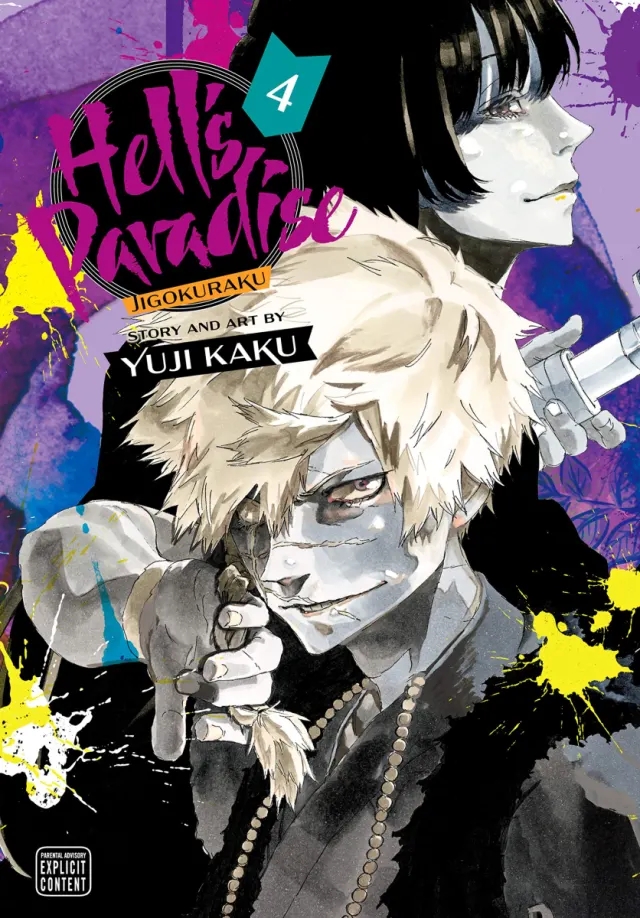
Hell's Paradise Jigokuraku Tensen lore and Gabimaru's journey starts with a simple setup that quickly turns into biological horror and emotional breakdowns. You think you're getting a story about a ninja who needs to find a magic potion so he can go home to his wife. Instead you get a crash course in Tao energy, plant-based immortality, and why feeling things is actually a combat advantage. Gabimaru the Hollow begins as the 58th bearer of that title, an Iwagakure assassin who survived execution ten times because his body wouldn't let him die. His wife Yui is the only thing that makes him want to live, which is why he accepts a suicide mission to Shinsenkyō island to retrieve the Elixir of Life. The island isn't empty. It's run by the Tensen, seven immortal beings who can switch genders at will and treat humans like fertilizer. Gabimaru has to fight them, understand them, and ultimately realize that the "hollow" part of his name is what's holding him back.
The island itself is a mess of contradictions. Beautiful landscapes filled with monsters. An elixir that grants eternal life but turns you into a tree if you mess it up. The Tensen look like they stepped out of a religious painting but fight like eldritch horrors. Gabimaru's quest forces him to team up with executioners, other criminals, and island natives who should be enemies but become something like family. By the end, the Elixir isn't even the point anymore. It's about whether a guy raised to be a weapon can learn to be a person before the flowers growing out of his chest consume him completely.
The mechanics of this world don't care about your power level in the traditional sense. You can't just train harder to beat the Tensen. You have to understand Tao, a life force that flows through everything, and you have to accept that your emotions affect it. This isn't a shonen where the protagonist screams louder and wins. Gabimaru has to stop screaming entirely and start feeling. It's weird and uncomfortable and exactly why this series stands apart from the "dark trio" it gets lumped in with.
Who Gabimaru Really Is Under the Mask
Gabimaru wasn't born a monster. He was born Saku to parents who tried to leave Iwagakure's ninja program. The chief killed them in front of the kid and decided to mold Saku into the next "Gabimaru the Hollow," a title passed down through generations of elite assassins. The training was brutal and designed to strip away humanity. Candidates fought to the death. The winner got the name and a life of killing. Saku won, became Gabimaru, and spent years murdering people without blinking. Details on his backstory show exactly how the village broke him down.
Then the chief gave him a wife. Yui. She was supposedly the chief's eighth daughter, though later in the story people question if she even exists. To Gabimaru, she was real. She treated him like a person instead of a weapon. She told him he deserved a normal life. This messed with his programming. He started sparing targets. He left apology notes at assassination sites. He asked the chief to let him retire. The chief said no, betrayed him to the authorities, and Gabimaru ended up on death row. The irony is that he couldn't die. His subconscious refused to let go because Yui was waiting.
This setup is crucial because Gabimaru's entire character arc is about rejecting the "Hollow" title. When he arrives on Kotaku island, he tries to solve everything with violence. It doesn't work. The Tensen regenerate instantly. The Dōshi, their worshippers, are nearly as tough. Gabimaru has to learn that the emotional walls he built to survive Iwagakure are now liabilities. He has to open up to Sagiri, to Mei, to the idea that he isn't just a tool. This is slow and painful and involves him losing his memory at one point and reverting to pure killer mode before clawing his way back.
The Tensen and Their Whole Deal
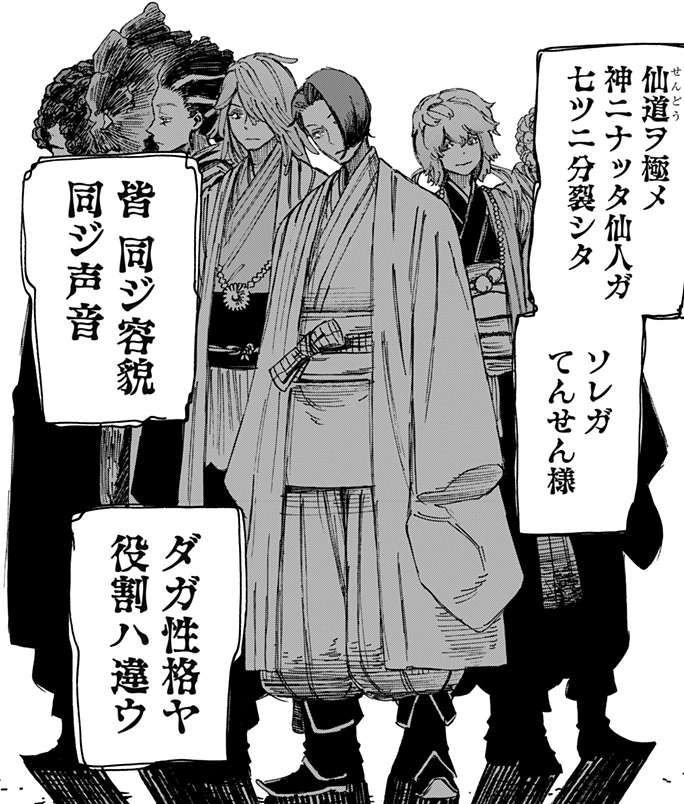
The Tensen are the seven rulers of Kotaku, also called Shinsenkyō. They live in Hōrai, a palace at the island's center, and they are technically synthetic humans created by Rien, the widow of a Chinese researcher named Jofuku. Rien spent centuries trying to perfect the Elixir of Life to revive her dead husband, and the Tensen are her experiments. They aren't quite human anymore. They're made from Tao puppets and Flower Tao, which gives them instant regeneration, gender fluidity, and the ability to transform into monstrous states called Kishikai.
Each Tensen represents a different aspect of training or being. Zhu Jin controls Wood Tao and acts as the island's aggressive defense system. Ran manipulates Water Tao and the palace architecture itself, turning the environment into a fluid weapon. Ju Fa uses Fire Tao in explosive, artistic displays of destruction. Tao Fa commands Earth Tao and focuses on physical dominance. Mu Dan wields Metal Tao, creating blades and barriers with scientific curiosity. Then there's Rien, who uses Flower Tao and is technically the mother of the others, and Gui Fa, who monitors the Banko in the palace basement. This review breaks down how each Tensen fight introduces new mechanics to the story.
They can switch between male and female forms at will, which isn't just a visual quirk; it reflects the Tao concept of balancing opposing forces. They view humans as nothing more than raw material for creating Tan, the true name of the Elixir. Tan is distilled from the Tao of living beings, and the process of extracting it turns humans into trees. This is called arborification. The Tensen are terrifying opponents because conventional attacks don't stick. Cut off a limb, it grows back like a vine. Kill them, and they respawn unless you destroy their tanden, the core of their Tao.
Tao Is Just Vibes But Deadly
Tao is the energy system that makes Hell's Paradise work, and it's less like chakra or ki and more like a spiritual read on the world. Everyone has a Tao attribute: Fire, Water, Wood, Metal, or Earth. These interact in a rock-paper-scissors way. Fire beats Wood but loses to Water. Metal cuts through everything but can be melted by Fire or rusted by Water. If you hit someone with an element they're weak to, you disrupt their Tao flow and can actually kill the Tensen permanently.
But using Tao isn't about hand signs or shouting attack names. It's about sensing the flow of life around you. Gabimaru has to learn to feel the presence of others, to read their intentions, to find the weak points in their armor. This requires him to be emotionally open. You can't sense Tao if you're closed off. The Iwagakure training that made him "Hollow" actually blocks his Tao perception. He has to unlearn years of emotional suppression to get stronger. The mythology behind the series connects this to real Taoist internal alchemy concepts.
There's also the risk of overuse. Push your Tao too hard and you suffer arborification. Your body starts sprouting flowers and turning into plant matter. Gabimaru deals with this later in the story when he uses Flower Tao to regenerate, nearly losing himself to the transformation. Tao exhaustion is another layer. Use too much and your body starts to fail. You get dizzy, your senses dull, and eventually you start arborifying on the spot. Sagiri has to perform Tao restoration on him, a technique that involves syncing their energies, which requires trust and emotional openness.
The Island Is a Laboratory, Not a Paradise
Kotaku looks like a tropical paradise but functions as a giant biological factory. Rien designed it this way based on the Chinese myth of Xu Fu, who was sent by Emperor Qin Shi Huang to find immortality. Jofuku, Rien's husband, was that historical figure, and he died of arborification trying to perfect the elixir. Rien has been running the island for a thousand years, turning unfortunate shipwreck survivors into trees to harvest their Tan.
The island's ecosystem is artificial. The Paradise Butterflies carry Tan samples. The Sōshin, the faceless monsters, are failed experiments. Even the "natives" like Hōko are humans who underwent partial arborification and became tree-guardians. Mei is different; she's a Tensen who failed to fully develop, leaving her as a child who can barely speak. She becomes Gabimaru's emotional anchor after he meets her, a replacement for the family he lost.
The Elixir of Life, Tan, isn't a potion you drink. It's a physical object that grants immortality by binding your Tao to Flower Tao. But it's incomplete. Rien keeps refining it, hoping to create enough to revive Jofuku. The Tensen protect the palace and the production process. They see themselves as gods or at least the next step in evolution, looking down on humans as cattle. This creates a weird dynamic where the antagonists aren't exactly evil in a mustache-twirling way. They just have completely alien morality after centuries of isolation.
The Supporting Cast Makes or Breaks the Mission
Gabimaru doesn't survive alone. Yamada Asaemon Sagiri is his executioner-turned-ally, a samurai who struggles with her own identity as a woman in a male-dominated field. She wields a blade but also serves as Gabimaru's emotional support, helping him recover his memories when he loses them and teaching him that vulnerability isn't weakness. Their relationship is platonic but deep, built on mutual respect and the shared understanding that the world has tried to force them into roles they don't want.
Then there's Yuzuriha, a kunoichi who uses seduction as a weapon but actually fights with Ninpo that involves secreting sticky substances. She's pragmatic to a fault, initially suggesting that Yui might be a hallucination or genjutsu. She represents the cynical shinobi worldview that Gabimaru is trying to escape. Despite this, she becomes a solid ally, even teaching the group espionage tactics for infiltrating Hōrai.
Chobei Aza, the Bandit King, starts as an antagonist. He's a brute who kills without thought, but after being captured by a Tensen and exposed to Tao, he becomes something more. He integrates Tao into his body through sheer willpower and chaos, becoming a hybrid threat. His relationship with his brother Toma drives him; everything he does is to protect family. This mirrors Gabimaru's motivation but shows a darker path. Where Gabimaru learns to trust others, Chobei tries to dominate the island's power for himself until he realizes cooperation is the only way to survive.
The Wife Question and Why It Doesn't Matter
Midway through the series, other characters start doubting Yui's existence. Iwagakure shinobi Shija claims Yui was a setup by the chief to control Gabimaru. Some fans theorized she was a genjutsu or a hallucination caused by the island. The story reveals she is real, living in a village waiting for Gabimaru, but the doubt serves a purpose. It forces Gabimaru to confront whether his quest is meaningful if the object of his quest might be fake.
The answer the story gives is that it doesn't matter if Yui was "real" in a physical sense. What matters is that the idea of her made Gabimaru human. She gave him the strength to refuse killing, to seek peace, to care about Mei and Sagiri. Even if she were a construct, the emotions she triggered were real and transformative. This is heavy Buddhist subtext about attachment and enlightenment. Gabimaru's love for Yui isn't just romantic motivation; it's the practice that allows him to understand Tao and defeat the Tensen.
When he finally reunites with her at the end, it's anticlimactic in the best way. No big speech. Just him coming home and falling asleep because he can finally rest. The Elixir plot resolves, the Tensen are defeated or redeemed, and Gabimaru gets to be Saku again, the boy who just wanted to live quietly.
How the Combat Evolves From Ninpo to Tao
Early fights in Hell's Paradise look like standard ninja action. Gabimaru uses Ninpō: Hibōshi, setting himself on fire to burn enemies. It's flashy and violent and completely ineffective against the Tensen. The turning point comes when he realizes he needs to stop fighting like an Iwagakure assassin and start fighting like someone who understands life.
The Tao system changes everything. Battles become about sensing intent, disrupting energy flows, and elemental matchups. When Gabimaru fights Ran, he can't win with physical attacks. He has to use Ran's own Water Tao against him, redirecting attacks and finding the exact moment to strike the tanden. It's more like a chess match than a brawl, though it's still drawn with the intensity of a brawl.
The Kishikai transformations raise the stakes. When a Tensen enters Kishikai, they become a monster that can only be stopped by destroying all their tandens simultaneously. This forces the characters to work together, coordinating attacks in ways they never had to before. Gabimaru's final fight against Rien involves the entire cast working in concert, using their specific Tao attributes to create openings.
Even the power-ups feel earned because they're emotional. Gabimaru doesn't get stronger by training in a mountain for a month. He gets stronger by accepting that he loves his wife, that he cares about his friends, and that he doesn't want to be hollow anymore. The Flower Tao he acquires is dangerous precisely because it threatens to consume his humanity, forcing him to balance power with self-control.
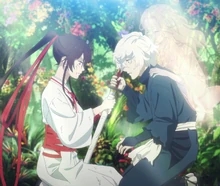
Why the Ending Works Despite Being Weird
The final arc of the manga throws a lot at the wall. Rien fuses with the Banko, a giant plant monster. Shugen, a psychotic executioner from the second landing party, tries to kill everyone. Zhu Jin goes on a rampage. It gets messy. Some readers felt the pacing stumbled here, introducing too many concepts too fast. But the resolution sticks the landing because it returns to the core themes.
Gabimaru doesn't kill Rien. He understands her. She just wanted her husband back, same as him. This empathy allows him to spare Jofuku's gilded body, which gives Sagiri the opening to defeat Rien non-lethally. Rien accepts her loss, heals the survivors, and crumbles away. It's not a big epic battle with sacrifices. It's a sad woman finally letting go after a thousand years of grief.
Gabimaru, Sagiri, and the survivors sail home. The Shogun's pardon is secured through Jikka's bureaucratic trickery. Gabimaru returns to Yui. The final scene shows Sagiri and Yuzuriha visiting him a year later, finding him asleep in the sun, at peace. It's quiet and domestic and exactly what a guy who fought immortal plant gods deserved.
The Mythology Behind the Madness
Yuji Kaku, the creator, pulled from real folklore. The Elixir of Life is based on the legend of Xu Fu, who sailed from China to find the immortal islands. The term Gabimaru uses for the elixir, "Tokijiku no Kagu no Mi," references the Nihon Shoki and the story of Tajimamori searching for the timeless fruit. The Tensen are named after concepts from Taoist internal alchemy. Even the gender-switching reflects the idea of balancing Yin and Yang.
This grounding makes the weird biology feel intentional rather than random. The island isn't just a video game level with seven bosses. It's a metaphor for spiritual refinement, with the Tensen representing different obstacles to enlightenment. Gabimaru's path from hollow killer to complete human mirrors the Taoist pursuit of the "Middle Way," avoiding extremes of emotion while still embracing feeling. More details on the Tensen lore and how it connects to Gabimaru's growth are worth checking if you want to dig deeper.
Hell's Paradise Jigokuraku Tensen lore and Gabimaru's journey ends up being about rejection. Rejecting the idea that you have to be a weapon to be strong. Rejecting the notion that immortality is worth any price. Rejecting the hollow safety of not feeling anything. The Tensen represent a dead end, beings who achieved eternal life but lost their humanity in the process. Gabimaru could have ended up like them, a monster regenerating forever in the dark. Instead he chose to feel pain, to love, to risk dying because living without that wasn't living at all. The Elixir was never the goal. The goal was learning that he was already enough, wife waiting or not.
The series sits in a weird spot between battle shonen and horror, mixing body horror with genuine emotional growth. It asks what makes us human and answers that it's not our bodies, since those can turn into trees, but our connections to each other. Gabimaru starts as the hollow one and ends as the most complete person on the island. That's the real magic of the story. Not the Tao, not the regeneration, but a guy learning to smile without faking it.