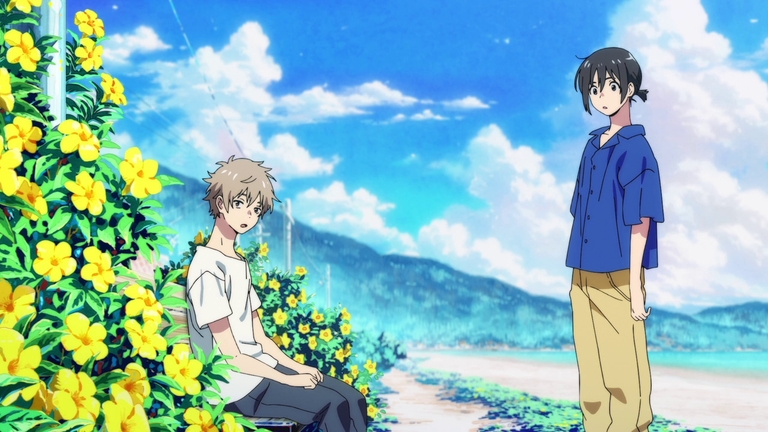
The Stranger by the Shore explained isn't just about two guys falling in love on a beach. It's about how shame eats you alive when everyone who was supposed to love you made you feel like a mistake. The film packs a ridiculous amount of emotional weight into just 58 minutes, which is both its biggest strength and its fatal flaw. If you walked away feeling like you missed something or that Mio's character made zero sense after the time skip, you're not alone. The movie has serious pacing issues that stem from trying to adapt a slow-burn manga into a one-hour runtime, but when it works, it really works.
Shun Hashimoto is a 27-year-old novelist living in Okinawa after running away from his family in Hokkaido. He's gay, his parents found out, and they didn't take it well. Now he sits on his balcony writing and watching the ocean, trying to convince himself that being alone is better than being rejected again. That's when he notices Mio Chibana, a high school kid who sits on the same bench every day staring at the water. Mio's mom just died, he's completely alone, and he's grieving in that quiet way where you don't make noise but you're screaming inside. They start talking, they bond over being lonely, and just when Shun lets his guard down, Mio tells him he's moving to the mainland to live in an orphanage. Classic.
What Actually Happens in The Stranger by the Shore
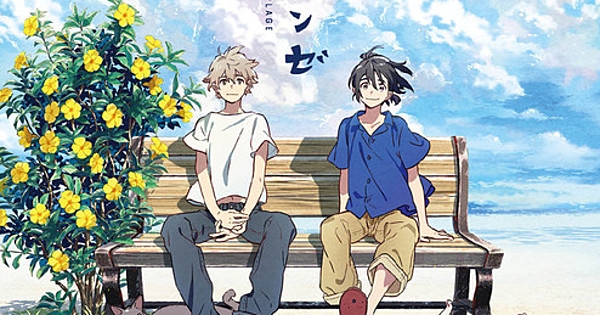
The plot seems simple on the surface but it's loaded with gaps that the manga fills in. Shun and Mio meet on that Okinawa beach and form a connection over several weeks. Shun is immediately attracted to Mio but holds back because one, Mio is still in high school, and two, Shun believes that getting close to anyone will just end in pain. Mio is withdrawn and sad but finds comfort in Shun's presence. They share meals, they sit in silence, and Shun starts teaching Mio how to cook. It's that domestic stuff that hits hard because both of them are starving for family.
Then Mio drops the bomb that he's leaving. Shun freaks out internally and pulls away, thinking this proves his point that attachment leads to loss. Mio gets angry at Shun's coldness, calls him creepy when Shun finally confesses his feelings, and leaves for three years. That's not a typo. Three years pass with barely any contact. When Mio returns at age 20, he's a completely different person. He's cheerful, he's forward, and he immediately tells Shun he's in love with him. This whiplash confuses a lot of viewers because the film never shows us what happened to Mio during those three years. Apparently he just... grew up? The manga explains this better but the anime leaves it feeling like a plot convenience.
Shun's Internalized Homophobia Is the Real Villain
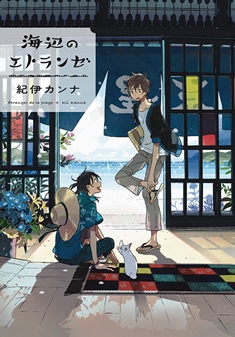
Here's where The Stranger by the Shore explained gets heavy. The antagonist isn't a person. It's Shun's own brain. He's been conditioned to believe that his existence is a burden to others. When he was younger, his parents arranged a marriage with his childhood friend Sakurako. On the wedding day, he came out and ran away. Since then, he's carried this weight that he's defective. The film shows this through flashbacks to his school days where classmates called him feminine, and through his dreams where he's drowning or being rejected.
There's this brutal flashback scene where Shun is living in Tokyo before moving to Okinawa. He's so desperate to be normal that he goes to a love hotel with a random guy, not even because he wants to, but because he thinks maybe if he just tries hard enough he can fix himself. He breaks down crying instead. That stranger ends up being kind to him, which somehow makes it worse because Shun feels he doesn't deserve kindness. This is the baggage he's carrying when Mio returns. He can't accept Mio's love because he genuinely believes that being with him will ruin Mio's life. He keeps pushing Mio to get a girlfriend, to be normal, to forget about him. It's frustrating to watch but it's also painfully realistic for people who grew up with shame.
Mio's Grief and the Development Problem
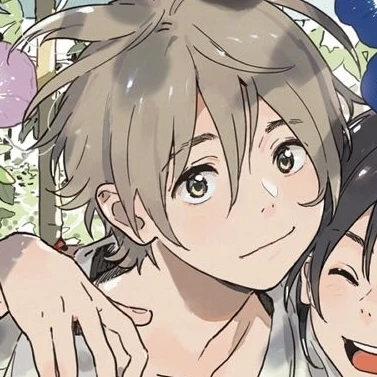
Mio starts as this heartbreaking figure. He's 17, both parents are dead, and he's sitting on that beach because he doesn't know where else to go. His mom died recently and he doesn't have anyone. The film does a great job showing his initial withdrawn state and how Shun slowly draws him out. They bond over simple things like cooking and the cats that hang around Shun's place. It's sweet and sad at the same time.
But then the three-year skip happens and Mio comes back as this confident, flirty guy who's totally sure of his sexuality and his feelings. It feels like a different character. The anime never shows us his growth during those years. Did he process his grief? Did he realize he was gay? Did he date other people? We get nothing. He just shows up and pursues Shun with this intensity that seems to come from nowhere. Some fans defend this by saying Mio knew what he wanted the whole time, but honestly, it reads like the animators ran out of time and had to skip the middle part of his arc. The manga apparently gives him more depth, but in the film, he becomes a plot device to force Shun's emotional breakthrough rather than a fully realized person.
Why the Ocean and Okinawa Matter
The setting isn't just pretty background. The beach and the waves work as a metaphor for the characters' emotional states. When Shun is feeling trapped or anxious, the water is rough or gray. When they're connecting, the sunset hits the water just right and everything glows. Okinawa itself represents escape for Shun. It's as far from Hokkaido as he can get literally and figuratively. It's warm, it's isolated, and nobody knows his business.
The film uses the tide coming in and out to mirror the push and pull of their relationship. Shun builds walls, Mio wears them down. Shun retreats, Mio follows. The water is always there, constant but changing, which is exactly what Shun needs to learn about relationships. They don't have to be perfect or static. They can ebb and flow. There's also this recurring visual of the two cats that hang around Shun's house. They represent Shun and Mio, independent but choosing to stick close to each other, wary but affectionate.
Sakurako and the Family Ghosts
Sakurako shows up in the last third of the film and throws everything into chaos. She's Shun's ex-fiancee, but she's not a villain. She knew Shun was gay when they were engaged and their relationship was always platonic on her end too. She comes to Okinawa to tell Shun his dad is sick and dying. This forces Shun to confront everything he ran from. What's interesting is that Sakurako is in love with Shun but not in a romantic way. She loves the idea of him or the memory of their childhood, but she also attacks him with a knife at one point when he refuses to come home, which Mio has to block. Yeah, it gets that intense.
She represents the life Shun thinks he should have lived. The straight life. The normal life. When she shows up, Shun's progress with Mio crumbles because he's reminded that his family still exists and still probably hates him. The film handles this messy by having Sakurako be both sympathetic and scary, which fits the tone of how family can be both loving and damaging when you're queer.
The Intimacy Scenes and What They Get Right
Despite the short runtime, the film doesn't rush the physical relationship. When Shun and Mio finally get together, it's awkward and hesitant and real. Shun has panic attacks during intimacy because his brain associates sex with shame and trauma. The film shows them talking through it, stopping when it gets too much, and trying again later. It's rare in any media to see gay intimacy portrayed with this much care and communication. Usually, it's either glossed over or made gratuitous. Here, it serves the character development. Shun learning to be vulnerable with Mio is the climax of his arc, not just the fact that they sleep together.
The scene where they finally consummate the relationship is shot with this soft focus and warm lighting that makes it feel safe. That's the key word. Safe. Shun has never felt safe being himself before, and Mio gives him that. It's not about the sex itself, it's about Shun accepting that he deserves to be loved without punishment.
The Runtime Problem Nobody Talks About
Let's be real. 58 minutes is not enough time for this story. The manga takes its time building the relationship over years, showing Mio's growth during the time skip, and developing the side characters. The anime feels like a highlight reel of the most emotional moments without the connective tissue. This is why Mio feels like a different person when he returns. We missed three years of his life and the film doesn't bother to fill us in. It assumes we know from the manga or it just doesn't care.
Studio Hibari did a gorgeous job with the animation. The colors are rich, the water looks amazing, and the character expressions are subtle and painful. But the pacing is rushed. Shun's breakdowns happen so fast that they don't always land with the impact they should. The ending where Shun decides to return to Hokkaido with Mio feels abrupt. Like, he spent the whole movie terrified of his family, then in five minutes he's ready to face them? It works emotionally because the music swells and the visuals are pretty, but logically it needs more buildup.
The Ending and Moving Forward
The film ends with Shun and Mio on a train to Hokkaido. Shun has decided to stop running from his past and Mio has agreed to go with him. It's not a happily ever after so much as a "let's face this together." The sequel manga, Stranger in the Spring Breeze, picks up here and shows them living with Shun's family, dealing with his dad's illness and his adopted brother Fumi who is in love with Sakurako. The film doesn't get into any of that. It just leaves them on the train, looking forward but holding hands.
For a story about healing from trauma, this ending works. It suggests that you don't have to be fully healed to move forward. You just need someone willing to sit next to you while you do the hard work. Shun isn't cured of his internalized homophobia by the end. He's just willing to try. That's actually more realistic than a magical fix.
The Stranger by the Shore explained comes down to this: it's a beautiful, frustrating, half-finished portrait of what it's like to believe you're unlovable and then find someone who doesn't care about your damage. It looks stunning, it hits hard emotionally, and it leaves you wanting way more than 58 minutes can give. If you're going to watch it, read the manga too. The film is just the appetizer, and you'll be hungry for the main course.