
The black butler public school arc analysis you're looking for needs to start with one hard fact: this arc is weirdly obsessed with British boarding school traditions that most modern viewers won't care about. Ciel Phantomhive goes undercover at Weston College to find a missing kid and ends up playing cricket for eleven episodes while Sebastian Michaelis poisons teenagers with laxative pies. People waited seven years for this adaptation after Book of the Atlantic, and what they got was a story that spends half its runtime explaining why rich boys need servants called fags and why stepping on the grass is a capital offense.
CloverWorks animated this instead of A-1 Pictures, and while the art looks crisp with brighter colors and detailed uniforms, the pacing feels like walking through mud. The mystery setup is solid enough. Ciel investigates Derek Arden, a fifth-year student related to Queen Victoria who vanished without a trace. The school operates outside government control, so Ciel has to enroll as a student in Sapphire Owl house while Sebastian poses as a housemaster to get inside. That's a classic Black Butler setup that should deliver tight suspense and clever schemes. Instead, the plot gets tangled in school traditions, social hierarchies, and a cricket tournament that kills the momentum dead.
Weston College Runs On Outdated Brutal Traditions
This school isn't Hogwarts despite the four house system. You've got Scarlet Fox for the charming social climbers, Sapphire Owl for the intellectuals, Green Lion for the athletes, and Violet Wolf for the artsy weirdos. Each house has a prefect leading it, forming the P4 that controls every aspect of student life. The power structure here depends entirely on the fag system, where new students serve as personal servants to upperclassmen. They carry books, polish shoes, and basically act as slaves in exchange for protection and social advancement.
Ciel becomes the fag to Clayton, who serves under Lawrence Bluewer of Sapphire Owl. This gives Ciel access to the Swan Gazebo, an exclusive meeting spot where the P4 hang out, but it also means he spends episodes running errands and getting bullied by Maurice Cole. Maurice acts as Edgar Redmond's fag and immediately sees Ciel as competition for attention. He sabotages Ciel's studies, spreads rumors, and tries to get him expelled through various petty schemes. The show treats this like high stakes drama but watching two thirteen-year-olds fight over who gets to carry a senior's books gets old fast. The historical accuracy of this system is documented well on the Kuroshitsuji Wiki, though the anime doesn't explain why anyone thought this was educational.

The P4 Are Pretty But Make Stupid Choices
Edgar Redmond, Lawrence Bluewer, Herman Greenhill, and Gregory Violet look like they stepped out of a fashion plate. Edgar leads Scarlet Fox with golden retriever energy and perfect hair, obsessed with beauty and social grace. Lawrence runs Sapphire Owl like a library archive, all glasses and books and nervous energy. Herman treats Green Lion like a military unit, demanding physical perfection and competitive spirit. Gregory haunts Violet Wolf like a ghost, painting disturbing pictures and speaking in riddles. Together they project this image of mature perfection that supposedly keeps Weston pure from corruption.
In reality, they're scared kids who committed murder and let a Shinigami turn the bodies into zombies because they didn't know what else to do. Herman cracks first when the truth comes out, admitting he killed Derek Arden with a cricket bat after discovering Derek was bullying younger students. Instead of reporting it, the other three prefects helped him hide the bodies in the Violet Wolf dormitory basement. They recruited Undertaker, who was posing as the Headmaster Johan Agares, to help them preserve the corpses using his Bizarre Doll techniques. These guys are supposed to be the smartest students in England, but they panicked like children and created a cover-up involving animated corpses rather than face expulsion.
Reddit users have pointed out how ridiculous it is that they never suspected Ciel. He's the Queen's Watchdog, famous in underground circles for solving impossible cases, and he shows up at their school asking questions about their missing classmate. The P4 buy his "normal student" act completely, even inviting him to their secret tea parties where they discuss sensitive topics in front of him. They project this image of wisdom and perfection but lack basic common sense when it comes to security. One frustrated fan detailed these logic gaps in a mini-rant about the plot points.
Maurice Cole And The Phonograph Trap
Before dealing with the Derek Arden mystery, Ciel has to handle Maurice Cole, the annoying pretty boy who acts as Edgar's fag. Maurice frames Ciel for cheating, spreads rumors that damage his reputation, and tries to isolate him from the other students. This subplot exists mostly to show Ciel operating without Sebastian's direct help, proving he can handle social manipulation on his own. Ciel sets up a phonograph recording device to catch Maurice admitting to his schemes, then exposes him in front of the entire school.
The takedown is satisfying but brief. Maurice represents the type of student who uses charm and good looks to hide cruelty, which thematically fits the arc's focus on surfaces versus reality. He's essentially a smaller version of Derek Arden, practicing the same bullying behaviors that eventually got Derek killed. The P4 express shock at Maurice's actions, which makes no sense given what they know about Derek, but it forces Ciel to realize that Weston's culture produces these monsters regularly.
Cricket, Sabotage, And The Laxative Pies
The middle section of this arc gets completely hijacked by sports. Ciel learns that the only way to meet the elusive Headmaster is to win the annual cricket tournament and earn an invitation to the Midnight Tea Party. Blue House never wins because they prioritize academics over athletics. Ciel decides to fix this through a combination of psychological warfare, strategic cheating, and Sebastian's demonic assistance.
The most talked about moment involves Sebastian sneaking into the Red House kitchen and replacing their meat pies with laxative-laced versions. During the match against Green House, the entire Red team has to abandon the field for the bathroom, forcing a forfeit. It's darkly funny but also means we don't get to see a real sports competition. Ciel uses techniques he learned from his father's old cricket manuals, mixing legitimate skill with underhanded tactics to secure the "Miracle of Sapphires" victory. Prince Soma Asman Kadar shows up unexpectedly as a student during this tournament arc, providing some comic relief and backup for Ciel. His presence doesn't really change the outcome but adds some chaos to the house dynamics. The cricket matches look gorgeous animated, with detailed fields and dramatic lighting, but they take up three episodes that could have been spent developing the actual mystery.
Setting Fire To The Violet Wolf Dormitory
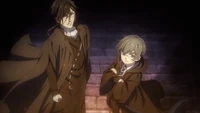
At one point, Ciel decides to smoke out information by setting the Violet Wolf dormitory on fire. He and Sebastian sneak through secret passages wearing brown cloaks, then ignite the building hoping to flush out Derek Arden or evidence of his whereabouts. The plan fails spectacularly. They don't find Derek, but they do confirm that the P4 are hiding something important in that building.
This scene shows Ciel returning to his roots as an arsonist, something he's done in previous arcs when investigations stall. It also establishes that the Violet Wolf house, led by the artistic and creepy Gregory Violet, has access to hidden tunnels and rooms that connect to the main school buildings. The fire causes a distraction but ultimately just makes Ciel look suspicious to anyone paying attention.
Undertaker's Master Plan Revealed
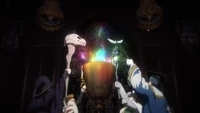
The real payoff comes during the Midnight Tea Party when Ciel finally confronts the Headmaster. It's Undertaker, the rogue Shinigami who's been haunting the series since season one. He's been using the alias Johan Agares while conducting experiments on the students. Derek Arden and several other missing boys aren't just dead, they've been turned into Bizarre Dolls using a new method involving film strips that capture future desires rather than past memories.
Undertaker explains that he's moving beyond the Bizarre Dolls from the Campania incident. Those used Cinematic Records, memories of the past, to animate corpses. His new method uses strips of film that capture future desires, potential that never got realized. This makes the dolls more stable and lifelike, allowing them to pass as living students for short periods. Derek Arden and Johann Agares both became test subjects for this process, their bodies preserved and puppeted while their souls were long gone. When Ciel exposes the truth, Undertaker tests Sebastian's combat abilities in a brief fight before escaping to continue his work elsewhere. The Mary Sue breakdown covers these plot details clearly for anyone who got lost in the exposition.
The Aestheticism Philosophy Really Works
Despite the plot holes and pacing issues, this arc nails the theme of aestheticism. The whole story operates on Oscar Wilde's principle of "art for art's sake," where beauty and sensory experience matter more than moral correctness. Sebastian embodies this perfectly, caring more about perfect tea service and visual elegance than the suffering around him. He maintains his beautiful appearance and refined manners while helping Ciel commit atrocities.
Ciel tries to adopt this philosophy as part of his undercover role, pretending to be a normal student concerned with grades and social standing. But he can't separate his art, his revenge, from his actual life. This tension between surface beauty and underlying rot drives every interaction. The P4 try to live as aesthetic ideals, perfectly groomed and mannered, but underneath they're guilty of murder and necromancy. Weston College itself looks like a gothic paradise with its stone towers and manicured lawns, hiding child abuse and zombie experiments in the basement. This dark academia aesthetic gives the arc its identity. Without this philosophical backbone emphasizing beauty over morality, the story would just be another boring school anime with a murder mystery tacked on. The Anime View wrote a solid analysis of the aestheticism themes that explains this better than the show does.

Vincent Phantomhive's Legacy
The arc adds some backstory about Ciel's father, Vincent Phantomhive, who also attended Weston College as a student and prefect of Blue House. Ciel finds old records and talks to alumni who knew his dad, learning that Vincent was a legendary figure who balanced academics with athletic prowess. This gives Ciel extra motivation to win the cricket tournament, proving he can live up to his father's reputation while maintaining his cover.
There's a specific moment where Ciel uses a cricket technique that his father invented, surprising older students who remember Vincent's playing days. It adds a layer of nostalgia and family legacy to the sports tournament sections, though it doesn't change the fact that we're watching anime characters play cricket for multiple episodes. The connection also explains why Ciel chose Blue House specifically, beyond just needing to be in the intellectual dorm to maintain his disguise.
Why The Finale Falls Flat
After building up the conspiracy for ten episodes, the ending arrives with a whimper. Ciel reports the P4's crimes to Queen Victoria, who orders them quietly expelled to avoid scandal. That's it. No prison time, no real consequences for covering up multiple murders and helping a rogue Shinigami create zombies. The boys get sent home to their rich families while the school covers up the deaths as accidents.
The justification given is that the P4 were young and influenced by Weston's toxic culture of tradition over human life. Herman acted in a fit of protective rage, and the others helped out of misguided loyalty. While that makes them sympathetic characters, it also undermines the horror of what they did. They killed a bully, yes, but then they desecrated his corpse and lied about it for months. Ciel lets them off easy because he understands killing for revenge, but the resolution feels toothless compared to the brutal justice he delivered in previous arcs.
Sebastian finds a mourning locket belonging to Ciel's grandmother, Cloudia Phantomhive, among Undertaker's belongings at the school. This hints that Undertaker had deeper connections to the Phantomhive family than previously revealed, possibly explaining his obsessive interest in Ciel's development. It adds another layer of personal violation to his crimes, suggesting he's been watching the family for generations. Undertaker escapes after a brief fight with Sebastian, continuing his trend of appearing just long enough to advance his experiments before vanishing into the shadows. The post-credits scene teases the Emerald Witch Arc, showing that the next story will involve werewolves and German forests. This makes the Public School Arc feel like a lengthy intermission, a side quest that reintroduces Undertaker but doesn't significantly change the status quo. CBR ranked the best moments of the arc if you want to skip to just the good parts.
Production Values And Studio Changes
CloverWorks took over animation duties from A-1 Pictures for this arc, and the visual shift is noticeable. The color palette is brighter and more saturated, fitting the school setting but losing some of the dark gothic atmosphere from earlier seasons. Character designs stay faithful to Yana Toboso's manga art, with particular attention to the detailed Victorian uniforms and Ciel's expressive eye. Sebastian looks slightly less menacing in this adaptation, more like a handsome teacher than a dangerous demon, which fits his cover role but might disappoint fans who prefer him threatening.
The voice acting remains top tier, with Daisuke Ono bringing that smooth, sinister edge to Sebastian and Maaya Sakamoto perfectly capturing Ciel's blend of childish voice and adult cynicism. The new cast members playing the P4 all deliver posh, arrogant performances that sell the "perfect gentleman" facade. The music emphasizes British boarding school pomp with plenty of strings and formal marching rhythms. Anime Rants gave a detailed review of the production quality that breaks down the sound design and voice work.
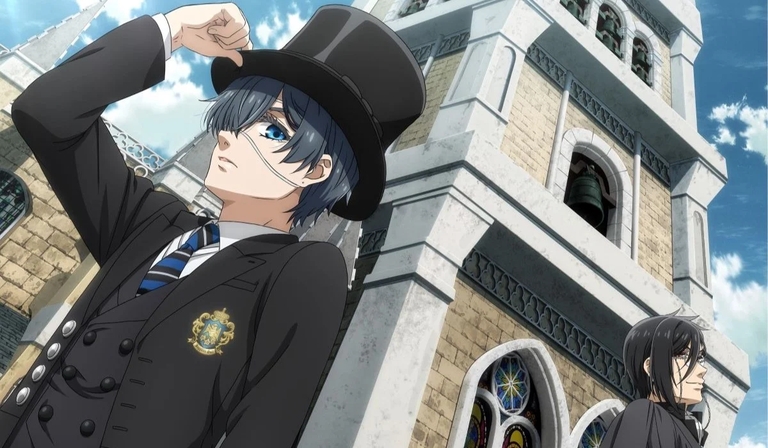
The black butler public school arc analysis comes down to whether you can tolerate boarding school tropes for the sake of a gothic mystery. If you love dark academia aesthetics and watching Ciel manipulate social hierarchies, there's plenty to enjoy here. The P4 make for interesting antagonists even when they're being stupid, and Undertaker's reveal as Headmaster provides a solid supernatural twist. But if you're looking for tight pacing and satisfying justice, this arc will frustrate you with its cricket detours and lenient ending.
Watch it for the pretty visuals and the philosophical themes about beauty masking corruption. Skip the middle episodes if you don't care about sports anime mechanics. The story serves its purpose as a bridge between the Atlantic disaster and the upcoming Emerald Witch Arc, reestablishing Undertaker as a threat while giving Ciel another chance to play dress-up. It's not the best Black Butler has to offer, but it's far from the worst, and it sets up future conflicts that really move the main plot forward.