
Any proper Sword of the Stranger anime movie analysis has to start with the animation because that's what separates it from every other samurai flick that came out in the 2000s. Studio BONES didn't just throw money at the screen. They let Yutaka Nakamura spend an entire year drawing the fight sequences by hand. That's twelve months of one guy obsessing over how swords actually clash, how bodies move when they get hit, and how snow looks when it gets kicked up by footwork. The result is something that still looks better than most seasonal anime coming out now, which is embarrassing for the industry but great for this movie.
The plot is stupid simple and that's why it works. A nameless ronin who won't draw his sword gets hired by a stubborn orphan kid named Kotaro. They're being hunted by Chinese warriors from the Ming Dynasty who need the kid's blood for some immortality ritual. There's a dog named Tobimaru who gets poisoned early on and that's basically the inciting incident. No ancient prophecies about saving the world, no harems, no power levels. Just 103 minutes of some of the best action direction ever put to cel.
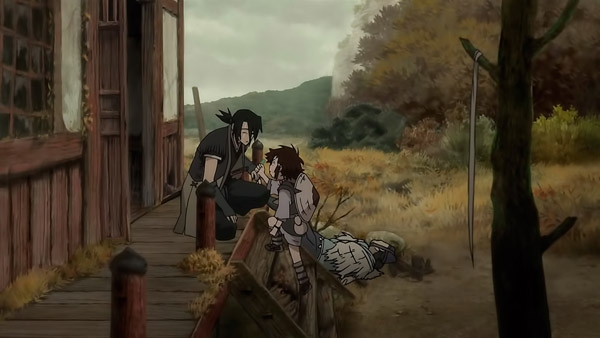
But here's the thing that separates this from cheap violence porn like Ninja Scroll. The movie understands that violence costs something. Every time Nanashi reaches for that sword he swore never to use again, you feel the weight of it. The guy has trauma from his past as a soldier where he followed orders and killed kids. He's not trying to be cool and mysterious by not drawing his weapon. He's terrified of what he becomes when the blade comes out. The movie earns its quiet moments before the steel appears, and there are plenty of them. Characters draw water from wells, fix dinner over fires, and wait out rain storms. These aren't boring filler scenes. They ground you in the physical reality of the setting so that when the swords do come out, your stomach drops.
The Animation Is Why You're Here
Let's be real. You didn't click on a Sword of the Stranger analysis to hear about the themes. You want to know if the fights live up to the hype. They do. They absolutely do. Yutaka Nakamura reportedly spent a full year animating just the action sequences, and you can see every frame of that labor. There's no CGI. No lazy still frames with speed lines. Just hand-drawn motion that obeys physics.
The fights hurt to watch in the best way. When someone gets cut, they bleed immediately and they don't get up. Swords don't spark when they clash. They scrape and clang and get stuck in bone. The camera doesn't shake or use quick cuts to hide bad choreography. Director Masahiro Ando blocks every fight like a stage play where you can see exactly where everyone is standing and why they're moving left instead of right. There's a duel early in the film where Nanashi takes on some bandits without even unsheathing his blade. He uses the scabbard to break jaws and the pommel to crack skulls. You can follow every hit because the animation isn't trying to confuse you into thinking it's fast. It actually is fast, but it's also clear.
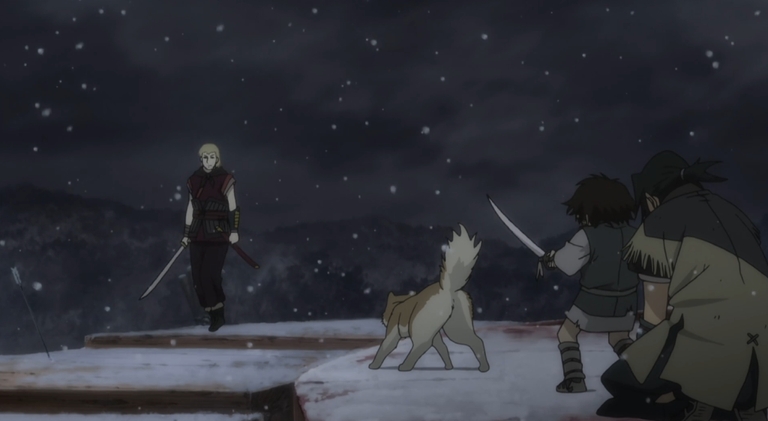
The final duel in the snow gets talked about the most and for good reason. Nanashi versus Luo-Lang on a snowy cliff while the sun sets. The soundtrack drops out completely. No music, no dialogue, just the sound of breathing and steel hitting steel. Apparently the choreography was developed organically by Ando and the animators without outside help, and it shows. It looks like two guys actually trying to kill each other rather than dancers performing a routine. Luo-Lang uses a weird European longsword technique against Nanashi's Japanese style, and you can see the difference in how they plant their feet. That's the kind of detail that separates good animation from great animation.
Nanashi and the Weight of His Sword
The ronin doesn't have a name. That's not just a cool title gimmick. It fits the archetype of the wandering stranger who comes into town, fixes things, and leaves. But unlike Yojimbo or Sanjuro, this guy isn't confident. He's broken. He has this weird red sword that he carries around but refuses to use, and when you find out why, it doesn't feel like a cheap twist. It feels like the logical conclusion of living in a war-torn country where soldiers follow orders without thinking.
Tomoya Nagase voiced Nanashi, and apparently Ando cast him specifically because he didn't sound like a typical samurai. Usually these characters have deep, gravelly voices that command respect. Nagase sounds tired. He sounds like a guy who hasn't slept well in years and just wants to keep walking until the map runs out. It makes the character feel real instead of mythic. When he finally does draw that sword for the final time, the sound design makes it feel like a violation of something sacred. The blade doesn't sing. It screams.
His relationship with Kotaro develops slowly and mostly through actions rather than speeches. They don't have a big heart to heart where they confess their feelings. They just travel together, share food, and slowly start standing closer to each other. It's the kind of bonding that actually happens when you're stuck with someone in dangerous territory. Some reviews call the bonding incomplete or weak, but I think that's missing the point. These are two damaged people who don't trust easily. The movie doesn't force them to become best friends. It just shows them learning to tolerate each other until tolerance turns into loyalty.
Kotaro The Kid You Love to Hate
Let's talk about the elephant in the room. Kotaro is annoying. He's stubborn, he's loud, he makes stupid decisions, and he talks back to the guy who's trying to save his life. Plenty of viewers find him whiny and entitled. I get it. But he's also eleven years old and watched his home burn down. Of course he's going to be difficult.
The movie doesn't try to make him cute or wise beyond his years. He acts like a real kid acts when they're scared and trying to pretend they aren't. He hires Nanashi with money he doesn't have. He refuses to explain why he's being chased until he absolutely has to. He yells at the dog when he's actually mad at himself. It's frustrating to watch, but it's honest. Most anime kids are either helpless moe blobs or genius tacticians. Kotaro is just a normal brat in a bad situation.
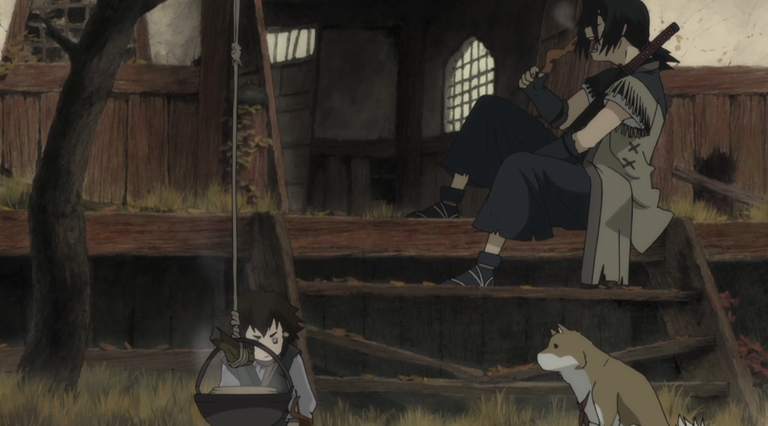
His growth, if you can call it that, is subtle. By the end he hasn't become a warrior or a sage. He's just learned that some adults can be trusted and that survival sometimes means letting someone else carry the load. That's enough. The scene where he finally calls Nanashi by a name instead of just yelling hey you is earned because it takes the whole movie to get there.
Luo-Lang and Villains Who Make Sense
Every action movie is only as good as its bad guy. Luo-Lang is a blonde European swordsman working for the Chinese Ming Dynasty for unclear reasons, which sounds like a mess on paper. But in practice, he works because he has a clear motivation. He wants to fight someone strong and then die. That's it. He's not trying to conquer Japan or become immortal. He just wants a worthy opponent and the release of death.
The villains in general are a strong point here. The Ming warriors aren't portrayed as cartoonish foreigners. They have their own internal politics, with Byakuran manipulating the Emperor's advisor for his own ends. There's corruption everywhere, from the Japanese lords selling out their own people to the monks who are supposed to be holy but end up just as greedy. No one is clean. The movie shows a Japan that's messy and violent and full of people just trying to get through the day without getting stabbed.
Luo-Lang's final confrontation with Nanashi isn't about good versus evil. It's about two killers recognizing each other. Luo-Lang sees that Nanashi is holding back, and it drives him crazy because he wants the full force of that red sword. When Nanashi finally unleashes it, Luo-Lang smiles because he's getting what he wanted. It's a weird, dark mirror of the mentor-student relationship between Nanashi and Kotaro. Luo-Lang wants Nanashi to be his best self at killing, while Kotaro wants Nanashi to stop killing entirely. That conflict is what gives the final fight its emotional weight.
The Soundtrack Knows When to Shut Up
Naoki Sato composed the music, and he mostly stays out of the way until he needs to be there. The score mixes taiko drums with orchestral strings, which sounds standard, but the important part is when he chooses silence. During that final duel, there's no music. Just the wind and the blades. That choice makes the fight feel cold and lonely and final.
Some critics think the soundtrack is repetitive or lacks emotional depth, and they're not totally wrong. Certain tracks get used too often. But I think the simplicity works for this story. It's not trying to manipulate your feelings with swelling violins every time someone looks sad. The music supports the action without overwhelming it.
The sound design in general is worth mentioning. Swords don't make movie sword noises. They make metal noises. When Nanashi punches someone, you hear the meat thud. The voice acting in the Japanese track is solid, with the note that the Chinese characters are played by Japanese actors using fake accents, which hasn't aged great. The English dub is serviceable but loses some of the texture. If you can handle subtitles, stick with the original audio.
Why This Movie Got Buried
Sword of the Stranger should be mentioned alongside Ghost in the Shell and Akira when people talk about great anime movies. It's not, and that's largely because of bad luck. It came out in 2007, right when the anime industry was shifting from DVD to streaming and nobody knew how to market theatrical releases. Bandai Visual USA shut down right before they could give it a proper American release, so it only screened in like two cities for one night.
It also has zero franchise potential. It's an original story, not based on a manga or light novel. There's no merchandise. No gacha game. No sequels. Reviewers note that as an original work not adapted from existing material, it's a rarity in an industry that prefers safe adaptations. That means it lives or dies on its own merits, and while it has a cult following now, it never got the mainstream push it needed to become a classic in the public consciousness.
The film is also really violent. Limbs get cut off. Blood sprays. A dog gets poisoned and almost dies. This isn't shonen anime violence where everyone walks away with scratches. People die badly in this movie. That limited its audience to adults, which in 2007 meant it got shoved into the niche market instead of the mainstream.
The Visuals Hold Up Better Than They Should
Fourteen years later, the animation still looks incredible. The backgrounds are hand-painted watercolors that look like actual paintings rather than digital assets. Environmental art like this is becoming a lost art in modern production, which makes this film even more precious now. When characters ride horses through forests or walk across bridges, you can see the brush strokes in the trees.
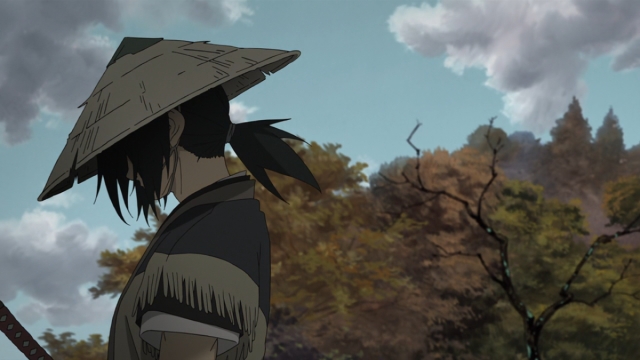
The character designs are simple but expressive. Nanashi has that iconic conical hat that shadows his eyes until he needs to show emotion. Kotaro has this red outfit that makes him easy to spot in the snow. Luo-Lang has blonde hair that glows in the dark during the final fight. These aren't complicated designs, but they read immediately. You always know who you're looking at and what their deal is.
Even the CGI, which usually ages like milk in anime, is used sparingly and mostly for backgrounds. You don't notice it because the camera spends most of its time focused on hand-drawn characters hitting each other. The integration is smooth enough that it doesn't pull you out of the movie.
Sword of the Stranger analysis usually ends with people telling you to watch it, so I won't break the pattern. It's a complete story with no plot holes and resolved character arcs. In an era where everything needs to set up a sequel or a cinematic universe, there's something refreshing about a movie that just tells one story and ends. Nanashi and Kotaro meet, travel together, fight some bad guys, and say goodbye. The animation is gorgeous. The fights are brutal. The pacing never drags even when people are just sitting around cooking dinner.
If you haven't seen it, fix that. If you saw it years ago, watch it again. It holds up better than almost anything else from that era because it wasn't trying to be trendy. It was just trying to show two guys with swords in the snow, and it nailed that perfectly.