
Steins Gate 0 Okabe Rintarou isn't the hero you remember from the original series. He's the version who gave up. While the first Steins Gate showed us a mad scientist laughing at the universe and bending time to save everyone he loved, this Okabe starts with him failing to save Kurisu and never getting over it. That's not just a plot point. It's the entire reason the true ending of the original story can exist at all. This broken man matters more than the heroic version because his suffering creates the roadmap that saves everyone.
This version of Okabe exists in the Beta attractor field. He tried to save Makise Kurisu once and accidentally stabbed her himself. He watched her bleed out on the floor of Radio Kaikan. Then he tried to accept it. He threw away the white lab coat. He stopped answering to Hououin Kyouma. He started wearing black shirts and blazers instead and tried to be a normal college student while the world marched toward World War III. Fans started calling him the Sad Scientist instead of the Mad Scientist, and that label sticks because it's painfully accurate. He's suffering from severe PTSD, taking anxiety medication, and having panic attacks whenever something reminds him of that day in the radio building.
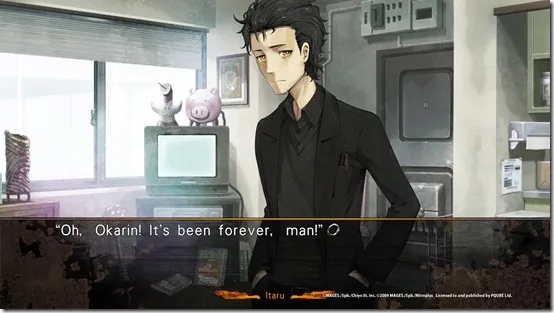
Who Beta Timeline Okabe Really Is
The Okabe in Steins Gate 0 still has Reading Steiner. He still remembers every shift between world lines from the original series. That ability doesn't help him here. It makes everything worse because he knows exactly what he lost and he knows he can't get it back without risking everything again. In the Alpha world lines he watched Mayuri die hundreds of times, but he always had a plan. He always had the time leap machine and he always had the manic energy of Hououin Kyouma to fuel his refusal to accept defeat. In the Beta line he has none of that. He has the memory of killing the woman he loved with his own hands, and he has the knowledge that trying again might make it worse.
This Okabe is eighteen years old going on forty. He walks around like he's carrying weights on his shoulders. His friends notice it. Hashida Itaru tries to get him to build the time leap machine again and Okabe refuses. He won't even entertain the idea. He accuses his friends of not understanding his pain even though they're trying to prevent World War III. That's how deep the trauma goes. He'd rather let the world burn than pick up that burden again. Some people call that selfishness, and they're not wrong, but it's the kind of selfishness that comes from being broken beyond simple repair.
The Death of Hououin Kyouma
In the original series, Hououin Kyouma wasn't just a fun persona. Okabe created that character when they were kids to help Mayuri cope with her grandmother's death. He kept it up for years because it made her smile and because it gave him a mask to hide behind when things got scary. The chuunibyou act let him be brave. When he shouted about the Organization being after him or declared that he was a mad scientist fighting the system, he was building a fictional framework where he had power against impossible odds. It was performance art as coping mechanism.
Steins Gate 0 shows us what happens when that mask gets shattered for good. After Kurisu's death, Okabe can't pretend anymore. The universe proved that his fantasy couldn't protect the people he loved. The Organization turned out to be real, SERN was real, the time machine conspiracy was real, and none of his posturing stopped Kurisu from dying. So he drops it entirely. He introduces himself as Okabe Rintarou now. He goes to therapy sessions with Hiyajou Maho where he discusses his trauma like a normal patient. He takes pills for his anxiety. This isn't the same person who once declared that he would tear the galaxy apart to save his friends. This is a guy who flinches when he sees blood.
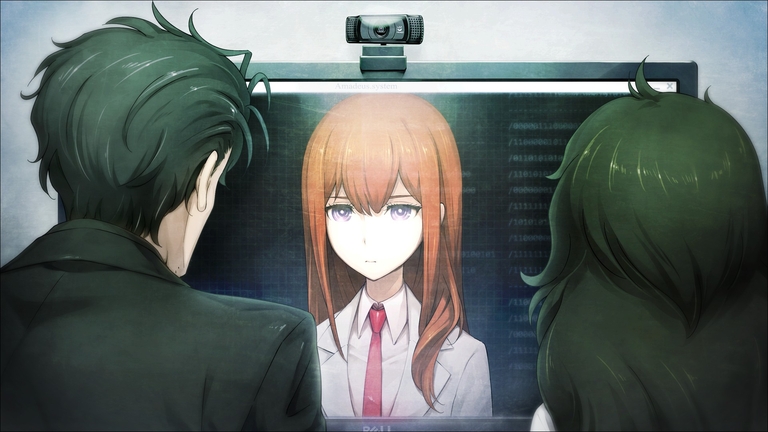
Trapped in Digital Grief
The Amadeus system is probably the cruelest thing that could have happened to this version of Okabe. Hiyajou Maho and Professor Leskinen bring him in to test their new AI, which is built from the digital memories of Makise Kurisu. This means Okabe can talk to her. He can call her up on his phone and hear her voice and have conversations with someone who looks and sounds exactly like the woman he failed to save. It's digital grief made interactive. He's talking to a ghost that doesn't know it's dead.
This keeps him stuck. Every conversation with Amadeus Kurisu rips open the wound again. He can't move on because he's being given a simulation of what moving on might look like. He can almost pretend she's still alive. He can almost apologize. He can almost say the things he never said when she was breathing. But she's code. She's a collection of data points and memory fragments that respond like Kurisu would have responded. Some analyses argue that this interaction is actively harmful to his recovery, and the story bears that out. The more he talks to Amadeus, the harder it becomes for him to accept the reality of Kurisu's death when the system gets compromised or when he has to make choices that put the AI at risk.
The 3000 Time Leaps Nobody Talks About
There's a version of events in the Steins Gate 0 visual novel routes that the anime only hints at, and it's brutal. In the Promised Rinascimento route, Okabe gets captured by Stratfor or DURPA depending on the timeline. They torture him. They break him down physically and mentally until he's nearly brain dead. His friends manage to recover him, but the damage is done. The only way to fix his mind is to use the time leap machine to reboot his consciousness using a backup from before the torture happened.
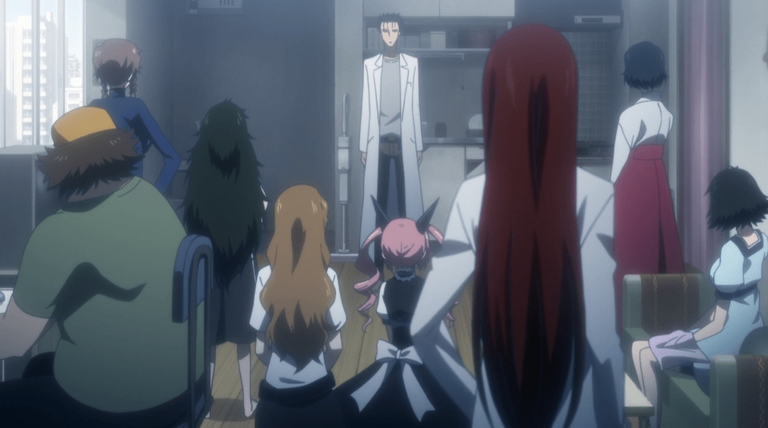
What happens next is that Okabe, now in the year 2036 in a war-torn future, uses the time leap machine over three thousand times to jump back to 2011. Three thousand iterations of sending his memories back, watching his friends die in various ways, seeing the dystopia that results from his failure, and trying again. Episode 20 of the anime shows us an older, frailer Okabe who has lived through decades of this war, and it's terrifying. He's not the mad scientist anymore. He's a desperate old man using up the last of his life force to fix a mistake he made when he was young. The episode shows Daru looking thinner and older too, having spent his adult life fighting this war while trying to be a father to Suzuha. The weight of those years is visible on all of them.
Recording the Message That Changes Everything
The entire plot of the original Steins Gate hinges on a video message that Okabe receives from his future self in episode 23. That video tells him how to trick the world and save Kurisu without causing her death. What Steins Gate 0 reveals is that this message came from the broken Okabe. The version of him who lived through the Beta timeline, who suffered for fifteen years, who watched World War III happen, who time leapt thousands of times, and who finally figured out the solution.
This is why Steins Gate 0 isn't really a sequel. It's the missing piece. It's the story of how that message got made. The Okabe in the original series gets to be the hero because this Okabe did the grunt work of suffering through every wrong answer first. He had to fail completely to learn how to succeed. He had to watch everyone he loved grow old in a dying world to understand exactly what steps were necessary to prevent it. When he records that video D-Mail, he's not the confident mad scientist anymore. He's a man who has lost everything and is betting his last hope on the idea that his younger self can be stronger than he was.
The 18000 BC Sacrifice
Near the end of Steins Gate 0, Mayuri and Suzuha take the time machine back to try to change things themselves. They get stranded in 18000 BC when the machine runs out of fuel. Okabe, in the year 2025, uses the prototype C-193 time machine to go back and rescue them. He finds them in the prehistoric past, gives them the fuel they need to return home, and chooses to stay behind himself.
He does this knowing that their world line is going to get erased anyway. He knows that when they return to 2025 and the timeline shifts toward Steins Gate, this version of reality will cease to exist. He stays in 18000 BC alone anyway. Some people ask why he bothered, since that timeline gets erased, but that's missing the point. He saves them because he has to. It's not about the timeline persisting. It's about him finally being able to do something selfless after spending the entire series being too broken to act. He gets to be a hero for five minutes in the snow with prehistoric animals, and then he presumably dies alone thousands of years before human civilization begins. That's his happy ending. That's the only victory he gets.
Why He Had to Be Selfish First
Early in Steins Gate 0, Okabe is genuinely hard to root for. Suzuha is begging him to help prevent World War III. She shows him the future. She tells him that billions will die. And he says no. He says he can't do it again. He says he's not strong enough. He puts his own trauma and his own inability to cope above the literal fate of the world. That's not heroic. That's not the Okabe we knew.
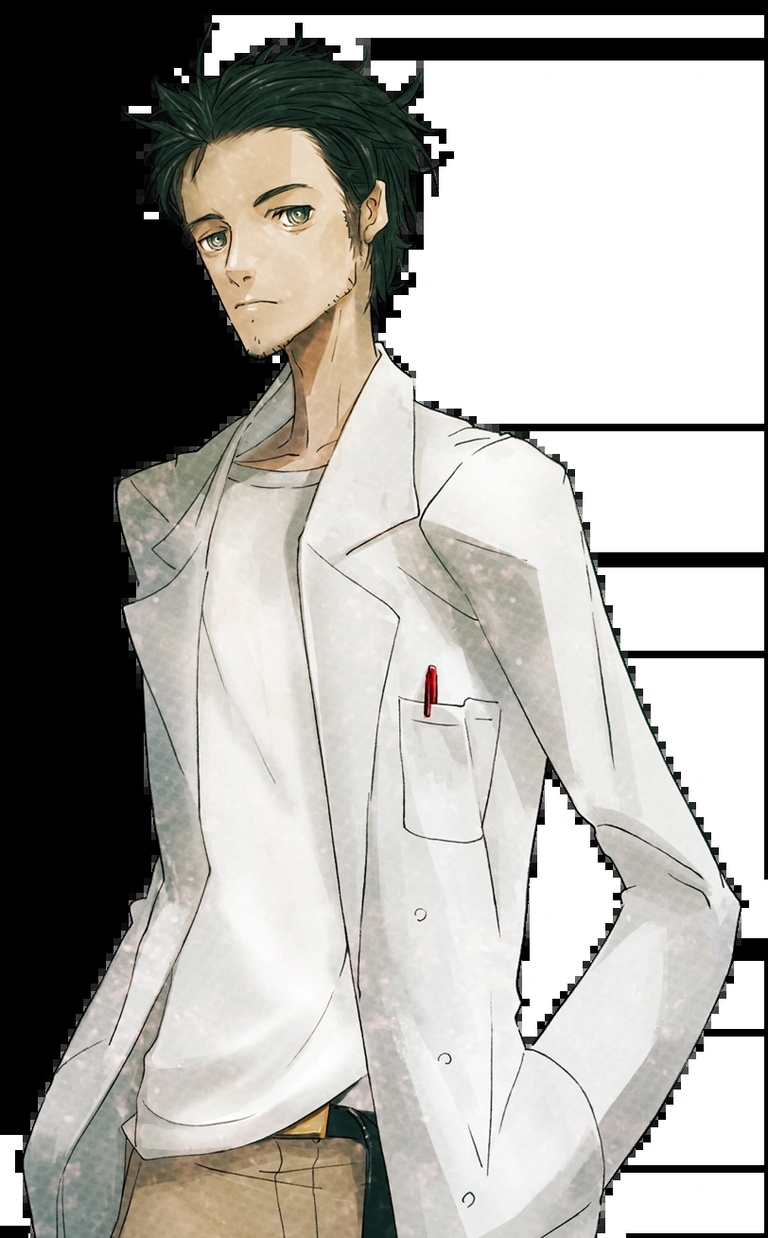
But that's what makes the arc work. Depression isn't logical. PTSD doesn't care about the greater good. The story shows us a high-functioning depressive who is barely holding it together, and it forces us to sit with that discomfort. According to fan discussions, his refusal to build the time leap machine even when his friends want to help is frustrating but realistic. He isn't choosing to be difficult. He's choosing to survive. When he finally does break out of that shell, when he finally puts the lab coat back on and becomes Hououin Kyouma again for real in episode 20, it hits harder because we saw how low he had to sink first. The return isn't just a costume change. It's a resurrection.
The Visual Novel Routes vs The Anime
The Steins Gate 0 visual novel has multiple endings that explore different facets of this broken Okabe. There's the route where he gives up completely and lives out his life in the Alpha timeline after accidentally shifting back there. There's the route where he becomes obsessed with Amadeus and loses himself in the digital ghost of Kurisu. There's the route with the 3000 time leaps where he physically deteriorates into a frail old man while maintaining the mental resolve of his youth. The anime adaptation condenses these into a single cohesive narrative that focuses on the Promised Rinascimento and Milky-way Crossing endings.
This compression works for the emotional arc because it keeps the focus tight. We see him hit bottom in the early episodes. We see him struggling with the Amadeus system in the middle. We see him finally take responsibility in the end. The visual novel lets you explore every possible way he could fail, which makes the true ending feel earned. The anime makes you watch him fail in real time, which is arguably more painful but also more cathartic when he finally succeeds in creating the plan that saves the original timeline.
Why This Arc Validates the Original Series
Without Steins Gate 0, the ending of Steins Gate feels too easy. The original series gives us a Hououin Kyouma who never truly gives up. He despairs for an episode or two after killing Kurisu, sure, but then he gets a pep talk from his future self and figures out the solution. It's a great story, but it skips over the reality of how much suffering had to happen to generate that solution. Steins Gate 0 fills in that gap. It shows us the decade and a half of pain that created the knowledge necessary for the happy ending.
This version of Okabe had to lose everything so the other Okabe could win. He had to become the Sad Scientist so the Mad Scientist could exist again in the future. His emotional arc isn't about becoming a hero. It's about accepting that he can't be the hero, but he can create the conditions where someone else gets to be. That kind of sacrifice is messier and more human than anything in the original series. It doesn't have the clean triumph of saving the girl and getting the kiss. It has the quiet dignity of a man who knows he's doomed but records a message anyway, just in case it helps.
The last thing we see of him is in 18000 BC, standing in the snow, having finally done something unselfish. He's not laughing. He's not declaring himself a mad scientist. He's just standing there, watching the time machine leave without him. That's the completion of his arc. He started as a broken kid who couldn't save one person. He ends as a man who saved everyone by accepting that he wouldn't be there to see it. That's heavier than any time travel paradox. That's the real cost of reaching the Steins Gate world line.