
Shogo Makishima and the philosophy of Psycho-Pass starts with a simple fact that nobody wants to admit. He's the only honest person in the entire show. Everyone else is lying to themselves about how free they really are. The Sibyl System turned Japan into a candy-coated prison where people stopped thinking because a computer told them what to feel, and Makishima is the glitch that proves the software is broken.
You can't judge a man who doesn't feel guilt. That's the whole trick. The Dominators scan for mental stress and criminal intent, but Makishima's crime coefficient stays crystal clear even when he's holding a straight razor to someone's throat. The system was built to catch people who feel bad about doing bad things. It has no protocol for someone who looks at murder and sees art, or sees necessity, or sees nothing at all. That blind spot isn't a bug in the code. It's the whole rotten foundation of their society showing through.
People call him a monster because he kills without hesitation. They miss that he's killing to save humanity from becoming livestock. He reads Shakespeare and Orwell while the rest of the population has forgotten how to read because the Sibyl System calculates what they should consume. He wants the messy, dangerous, unpredictable thing called free will, and he's willing to burn down the safe, sterile cage to get it. He sleeps three hours a night and reads a book every day. He's not chaotic. He's the most disciplined man in the show.
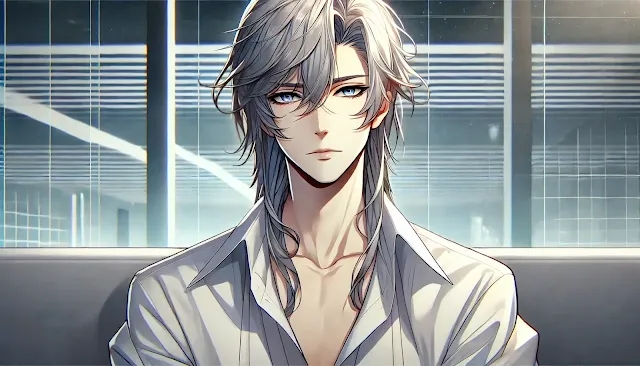
Why Shogo Makishima Embodies the Philosophy of Psycho Pass
The criminally asymptomatic aren't just immune to the Dominators. They're living proof that quantifying morality is a joke. Sibyl thinks it can measure evil like it's temperature or weight. It scans brain waves and stress hormones and assigns numbers to human souls. But Makishima doesn't fit because he doesn't buy into the guilt matrix. He doesn't think he's doing wrong when he removes obstacles, even if those obstacles are people.
This breaks the entire premise of the show's justice system. They built a society where a gun won't fire unless the target is "bad," but they never stopped to ask who gets to define bad. Makishima defines it for himself. He operates on a completely different frequency where Kantian duty meets Nietzschean will. He believes in the categorical imperative, that you act according to maxims you can will as universal law, but he also believes the strong have a right to transcend the herd morality that Sibyl enforces.
He reads books while society watches pre-approved entertainment. He quotes Rousseau about how living isn't just breathing, it's acting. Everyone else stopped acting long ago. They just react to their Psycho-Pass readings. The system took away their agency and called it therapy.
The Helmet Riots and the Lie of Safety
Remember the helmets? Makishima didn't invent them to help criminals get away with murder. He invented them to prove a point. When people wear the helmets that copy someone else's clean Psycho-Pass, the Sibyl System can't tell the difference between a saint and a slaughterer. The Dominators read the helmet, not the person. This exposed the ultimate hypocrisy. The system doesn't care what you do. It only cares what its sensors say you feel.
He forced the entire city to watch as citizens with clean hues beat each other to death in the streets while the police stood by helpless. The cops couldn't shoot because the numbers said everything was fine. Makishima was laughing because he showed them that their safety was an illusion built on bad data. They traded their freedom for a security system that couldn't even spot a riot happening in real time.
The Asymptomatic Precedent
Kozaburo Toma was also asymptomatic. He killed girls and made art out of their bodies, and his Psycho-Pass stayed clear. But Toma was a beast. He killed for pleasure, for the sensory thrill. Makishima helped him escape prison not because they were friends, but because Toma was useful. This is where people get confused about Makishima's ethics. He doesn't love violence. He loves will. Toma had will, even if it was ugly. The Sibyl System had neither will nor beauty. It was just a calculation.
Makishima watched Toma die when he crashed their escape vehicle and felt nothing. Not because he's a psychopath, but because Toma had stopped being interesting. He'd become a tool, and tools that break get discarded. Gu-sung Choe was different. Makishima actually cared about Choe because Choe was a genius who understood the technical side of their rebellion. When Choe died, Makishima was disturbed. Choe wasn't just a tool. He was a friend, maybe the only one Makishima had.
The Books on His Shelf Matter More Than You Think
Makishima isn't just well-read for show. His entire war against the Sibyl System comes straight out of western literature and philosophy. He gifts George Orwell's 1984 to people because he sees the parallels between Big Brother and the Sibyl brains. Both systems claim to protect while they consume. Both watch every move and punish thoughtcrime before it happens.
He references Joseph Conrad's Heart of Darkness when he talks to Kogami. That book is about descending into the dark places of the human soul and finding that the darkness is just honesty without the lights on. Makishima sees Kogami going down that river, chasing him not because the law says so but because Kogami's soul demands vengeance. That's real humanity. That's the "horror of the sublime" that the academic papers talk about when they analyze this show.
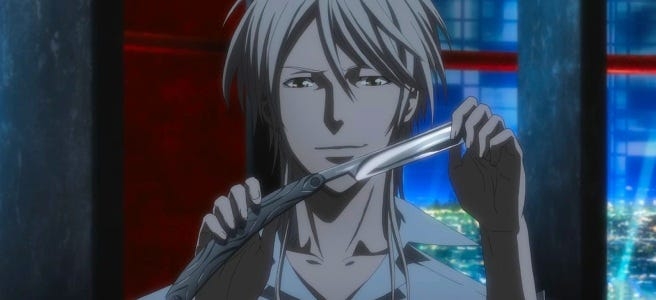
He orchestrates murders based on Titus Andronicus, on The Most Dangerous Game, on Gulliver's Travels. He's not copying these stories because he's unoriginal. He's forcing his victims and his hunters to live inside the literature that the safe world has forgotten. When he kills Rikako's father or sets up the helmet riots, he's staging theater. Real theater where people die for real, not the processed pablum that Sibyl approves.
Foucault and the Panopticon
He carries around a copy of Discipline and Punish for a reason. Foucault wrote about the panopticon, the prison where the guard tower is invisible so prisoners always think they're being watched. They police themselves. The Sibyl System is a digital panopticon. People don't need cops on every corner because they've internalized the surveillance. They check their own Psycho-Pass colors like prisoners checking for the warden. Makishima wants to smash the tower so people can stop performing goodness and start choosing it.
Freedom vs The Safety Algorithm
The Sibyl System runs on utilitarian math. Greatest good for the greatest number. If sacrificing one innocent keeps a hundred safe, the math says pull the trigger. Makishima looks at that equation and spits on it. He believes in the individual experience, the qualia, the specific irreducible fact of being human that can't be averaged out.
This is where he gets weird and where people misunderstand him. He doesn't want to rule. He doesn't want to replace Sibyl with his own dictatorship. He wants to destroy the system so completely that people have no choice but to wake up and start thinking again. Even if that thinking leads to chaos. Even if it leads to death. Because a real death is better than a fake life.
He loves tomatoes because they taste like something. The texture, the juice, the specific sensory data that belongs only to him. The Sibyl System wants to smooth out all those rough edges, to keep everyone at a nice stable hue so they don't disturb the peace. Makishima thinks that peace is death. It's the absence of choice, which means it's the absence of meaning.
When he talks about the "splendor of people's souls," he means that spark you only see when someone makes a real choice under real pressure. Not the programmed responses of citizens who obey because their Psycho-Pass tells them they're calm, but the raw defiance of someone who chooses to fight even when the scanner says they should submit. He saw it in Akane when she chose duty over revenge. He saw it in Kogami when he chose the hunt over his badge.
The Game of Humanity and Why He Refused Godhood
They offered him everything. The Sibyl System revealed itself to him, showed him the room full of brains, and offered him a seat at the table. Immortality. Power. The chance to be a living god judging humanity forever. Makishima laughed at them. He said no because joining Sibyl would mean becoming part of the machine he hated. It would mean sacrificing his finitude, his ability to die, which is the only thing that makes living real.
This is amor fati, the love of fate. He accepts that he's going to die. He wants to die. Not in a suicidal way, but in the sense that a life with an ending has stakes. Every choice matters because the clock is running. The Sibyl brains have stopped the clock. They're static, eternal, dead things pretending to be alive. Makishima would rather be a real man for thirty years than a false god for a thousand.
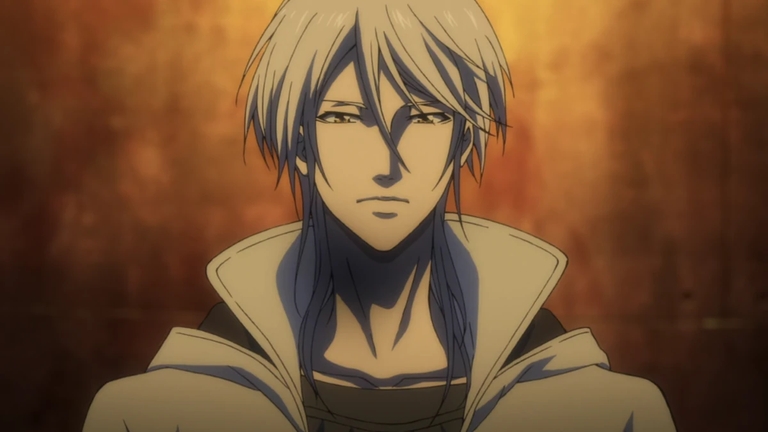
He tells Akane that he wants to see the color of her soul when she's pushed to the edge. He shoots her friend not because he hates Akane, but because he needs to know if she'll break the rules to get revenge. He needs to see if there's still a human in there underneath the cop uniform. When she arrests him instead of killing him, he respects her for it, but he also pities her because she's still playing by the system's rules. She passed his test, but she didn't transcend it.
Why He Wouldn't Kill Her
There's that moment in the abandoned chapel where he has her dead to rights. He could snap her neck. He doesn't. He gives her a shotgun and dares her to shoot him. This isn't mercy. It's experimentation. He wants to see if the system has completely crushed her autonomy or if there's still a kernel of personal justice in there. If she had killed him for personal satisfaction, that would have proved she was free. That she was human. She chooses the law instead. For Makishima, that's tragic.
Why Kogami Was the Only One Who Understood
Shinya Kogami isn't a hero. He's a mirror. Makishima and Kogami are the same person on opposite sides of the law. Both hate the cage. Both read books. Both are willing to kill for their beliefs. The only difference is that Kogami started out believing in the system until Makishima killed his partner and peeled that illusion away.
Their final confrontation in the oat field isn't about justice. It's about recognition. Makishima wants to die by the hand of someone who sees him. Not the Sibyl System executing him with a drone or a drone-like Enforcer. He wants the personal touch. He wants Kogami's rage, Kogami's choice, Kogami's soul laid bare.

Kogami uses a normal gun, not a Dominator, because the Dominator represents Sibyl's judgment. It's the system saying "this person is bad" and pulling the trigger by remote control. Kogami pulls the trigger himself. He makes the choice himself. That's the only execution Makishima would accept. He dies smiling because finally, in that moment, he's free. He's being killed by a human being acting on human will, not a computer following protocols.
The Parable of the Sower and His Final Words
Right before Kogami shoots him, Makishima quotes the Bible. The parable of the sower. Some seeds fall on good ground and grow, some fall on rocks and die. He knows he's the seed that fell on the rocks. He's not going to grow into the new world he's trying to create. He's too broken, too violent, too much a product of the system he's fighting. But he planted the idea. He showed Akane that Sibyl has flaws. He showed Kogami that vengeance is human. He scattered the seeds.
Some fans think he quotes Paradise Lost, casting himself as Lucifer rebelling against heaven. That's not wrong. He is the fallen angel who would rather reign in hell than serve in heaven, except he doesn't even want to reign. He just wants to burn heaven down so people can see the sky again.
Shogo Makishima and the philosophy of Psycho-Pass leaves us with a question that hurts to answer. Would you rather be safe or free? The show wants you to think Makishima is crazy for choosing freedom at the cost of blood. But look at what safety looks like in their world. It looks like puppets who can't read books because they might get stressed out. It looks like people who don't know their own minds because a machine tells them how they feel.
Makishima died proving that the emperor has no clothes. The Sibyl System couldn't judge him because he was too real for their categories. He was too human, in the oldest, messiest, most dangerous sense of the word. The system only works on people who've already given up their autonomy. Makishima never gave his up. Not for a second.
He wasn't the villain. He was the symptom of a disease that had already killed the society he was trying to save. And yeah, he did terrible things. But at least he did them thinking his own thoughts, feeling his own feelings, choosing his own path. In a world of robots following color codes, the man with the razor blade and the book of Shakespeare was the only one who was truly alive. The rest were just waiting to die in their sleep.