
People keep calling School-Live! a slice of life with a twist. That's wrong. School-Live! anime explained properly means understanding it's a psychological autopsy wearing moe clothing like a skin suit. The first episode tricks you into thinking you're watching another cute girls doing cute things show about a high school club. Then the camera pulls back and you see the blood on the walls and the barricaded doors. This isn't a school. It's a tomb.
This series isn't about club activities or friendship ceremonies. It's about four high schoolers losing their minds in a zombie apocalypse while pretending everything is fine because the alternative is suicide or catatonia. The School Living Club isn't an extracurricular group. It's a support system for trauma victims who can't handle reality anymore. If you go in expecting fluff, you're going to get emotionally sucker-punched by one of the darkest anime productions to come out of the 2010s.
What The Show Actually Is
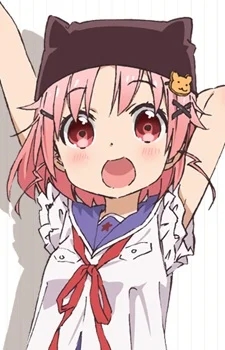
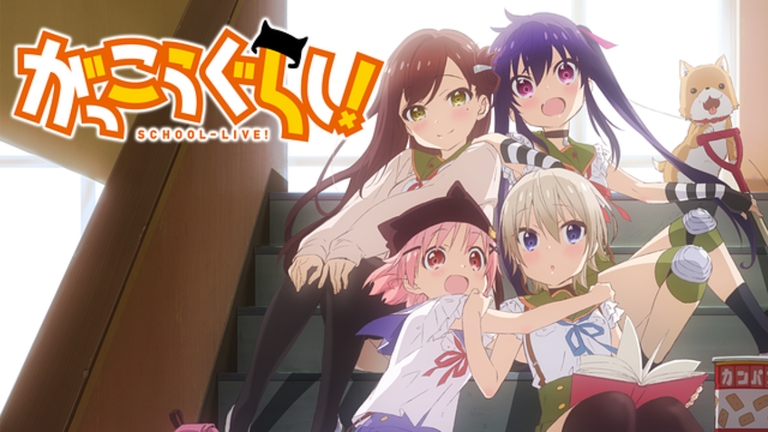
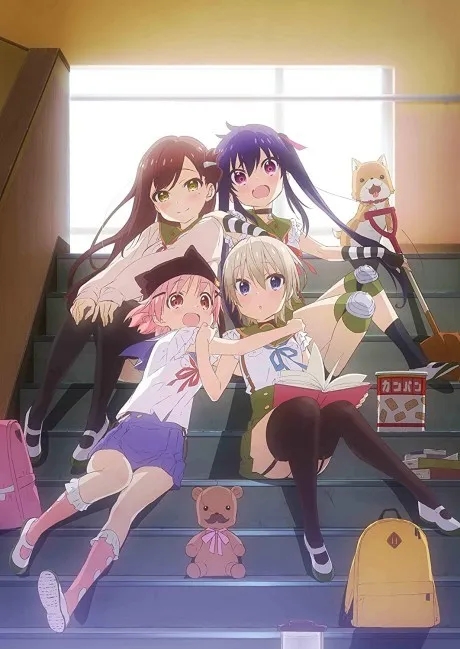
The setup seems simple enough. Yuki Takeya loves school so much she joined the School Living Club, which has one rule. Everyone has to live at school full time. They sleep there, eat there, and do club activities there. Yuki runs around with a cat-ear hat being cheerful while her friends Yuuri, Kurumi, and Miki try to keep her safe. Their teacher Megu-nee supervises. There's a cute dog named Taroumaru. Standard anime stuff.
Except it's not. The city is dead. The school is surrounded by zombies referred to only as "them." The barricades are failing. The water is running out. And Yuki is completely psychotic. She sees the school as pristine and full of students because her brain snapped during the outbreak and built a fantasy world where the apocalypse never happened. The other girls play along because keeping Yuki happy keeps them sane. It's a shared delusion held together by duct tape and desperation.
This isn't a zombie action series. There are no gun battles or military rescues. The horror comes from watching children pretend that murdering their former classmates with a shovel is just another day of school life. The School-Live! Wiki breaks down the club rules, but it doesn't capture how those rules are literally keeping them from eating a bullet.
Yuki's Broken Mind
Yuki Takeya isn't just an airhead protagonist. She's a trauma response given human form. When the outbreak happened and people died around her, her psyche shattered and rebuilt itself around the idea that if she just acts normal, the world will be normal. She hallucinates entire classrooms of students. She talks to her dead teacher Megu-nee like she's still alive. She sees bloodstains as spills and broken windows as maintenance issues.
The anime uses her perspective to deceive the audience. For the first twenty minutes of episode one, you see what Yuki sees. Bright colors. Happy students. Normal school life. Then the perspective shifts to Miki or Yuuri and the saturation drops out. The halls are dark. The windows are boarded up. The students Yuki was talking to are rotting corpses or empty air. It's one of the most effective perspective tricks in anime history because it doesn't use supernatural elements. It uses mental illness.
Yuki's condition isn't played for laughs. When she finally starts breaking through the delusion in later episodes, it's horrifying because you realize she was happy in her fake world. Reality is too painful for her. The School Live Anime Explained piece gets into how her psychosis functions as both shield and cage for the group.
The Other Girls and Their Baggage
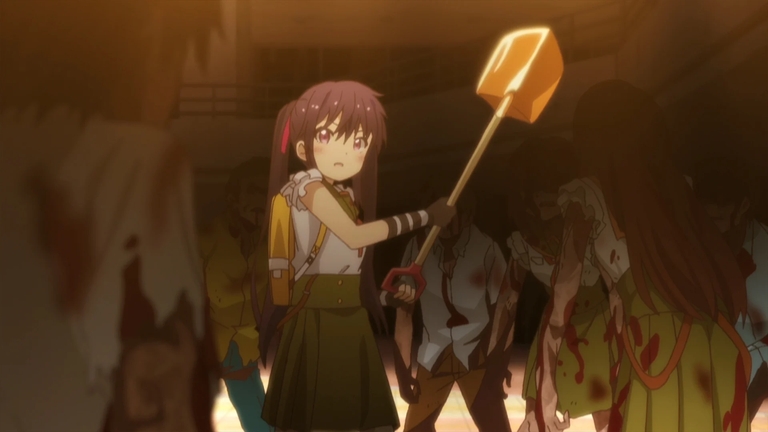
Kurumi Ebisuzawa carries a shovel everywhere. She named it. She uses it to crush the skulls of former friends and teachers who got infected. Before the apocalypse she was a normal high school girl with a crush on an upperclassman. She had to kill that upperclassman with her shovel when he turned. Now she's the group's muscle, going out to scavenge supplies while fighting off hordes with gardening equipment.
Yuuri Wakasa acts like the mom. She's the club president. She cooks. She keeps schedules. She also carries a stuffed teddy bear named Ruu and treats it like her little sister who she rescued from the outbreak. Ruu is a delusion. The bear is just a bear. But Yuuri's mind broke differently than Yuki's. She needed to save someone, so she invented a dependent. When the other girls realize Yuuri is also losing it, they don't confront her. They play along because confronting her might break her completely.
Miki Naoki is the realist. She wasn't with the group when the outbreak started. She was trapped in a mall with her friend Kei until Kei left and presumably died. Miki got rescued later and initially hated Yuki's delusions. She thought they were dangerous. Then she realized that Yuki's insanity gives the group purpose. Without Yuki insisting they have a sports festival or go camping, they'd just be waiting to die. Miki learns to lie to Yuki because the lies keep the lights on metaphorically and literally.
Megu-nee and the Unreliable Narrator
Megumi Sakura, called Megu-nee by the girls, is the supervising teacher. Yuki talks to her constantly. The audience sees Megu-nee participating in club activities, giving advice, being awkward about her age. She's not there. Megu-nee died months ago. She got infected early, locked herself away to protect the students, and turned into a zombie. The girls had to kill her.
The Megu-nee we see is Yuki's guilt and need for authority figures made manifest. When Yuki is alone and scared, Megu-nee appears to comfort her. Except it's just Yuki talking to herself. The anime plays this trick perfectly because Megu-nee interacts with the environment in Yuki's delusion. She holds doors. She carries things. But when the perspective switches to reality, Yuki is holding the door herself or talking to empty space.
This technique creates a weird rewatch value. Once you know Megu-nee is dead, every scene with her becomes heartbreaking. She's not a ghost. She's a hallucination created by a child who can't accept that her favorite teacher is gone. The MyAnimeList reviews often mention how this revelation recontextualizes the entire series.
Why The Cute Art Makes Everything Worse
The character designs are standard moe blobs. Big eyes. Soft lines. Bright hair colors. They look like they belong in a music video or a dating sim. Then you see Kurumi caving in a former student's head and the blood sprays across that cute face. The art style doesn't change for the horror. That's the point.
Lerche, the studio behind it, kept the visual aesthetic consistent whether the girls were having a tea party or burning their former teacher's corpse. This creates a cognitive dissonance that makes the horror land harder. Your brain expects the colors to go dark when zombies appear. They don't. The zombies are drawn with the same rounded features as the living characters. It makes the violence feel more obscene because it looks like someone smashed a doll collection with a hammer.
The anime also adds more fanservice than necessary, which is annoying. There's a swimsuit episode in the middle of the apocalypse. It kills the tension. But it also fits the theme of desperate normalcy. The girls are trying to have a normal high school life complete with pool trips even though the pool is full of corpses and the water is undrinkable. They're clinging to the rituals of youth while the world rots.
Episode 10 and the Collapse
Episode ten is where the house of cards falls down. The school, which had been a sanctuary, gets breached. The zombies get inside. Kurumi gets bitten by the zombified Megu-nee who was trapped in the basement. Yuuri loses her grip on reality completely. The supplies run out. The solar panels break. The school that kept them safe becomes a death trap.
This episode is brutal because it proves that the delusions weren't sustainable. You can't pretend forever. Yuki's psychosis breaks when she realizes the school isn't safe anymore and her friends are dying. Kurumi has to be tied up because she's turning. Yuuri starts talking to her teddy bear like it's giving her orders. The only reason they survive is because they finally stop pretending and run.
The sanctuary collapses physically and psychologically at the same time. The walls break and the girls' coping mechanisms shatter with them. It's some of the most effective survival horror storytelling in the genre because the monsters aren't the threat anymore. The threat is the realization that their fake world is gone and they have to face the real one.
The Virus and World Building
The zombies are caused by the Omega virus, a bioweapon created by the Randall Corporation. The anime touches on this lightly but the manga goes deeper. The virus spreads through bites and possibly airborne means. The infected retain some muscle memory, which is why they wander the school grounds. They remember being students.
This detail is cruel. The zombies don't attack randomly. They follow old routines. They try to go to class. They stand in the courtyard where they used to meet friends. It makes killing them harder because the girls recognize them. Kurumi can't look at their faces when she fights because she sees her classmates, not monsters.
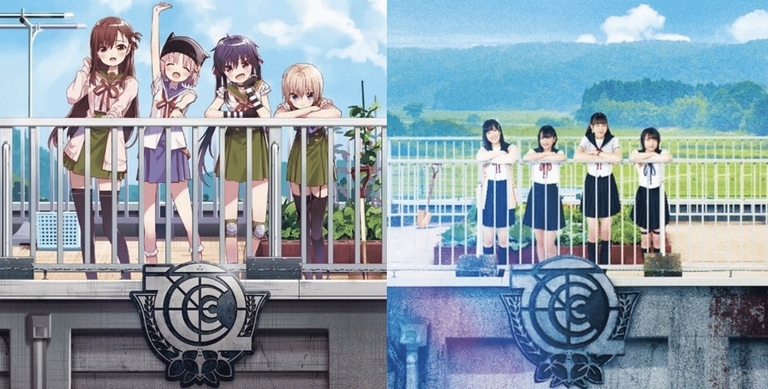
The Randall Corporation stuff gets more play in the university arc, which the anime only touches on at the end. The live action movie and the manga sequel go deeper into the conspiracy. The anime keeps it vague, which works better for the psychological focus. We don't need to know the science. We just need to know the world ended and these kids got left behind.
Anime vs Manga Differences
The anime changes a few things from the source material. The biggest difference is Taroumaru, the dog. In the manga, he's a minor character who gets bitten early and has to be abandoned. In the anime, he gets an entire arc. He gets infected, gets cured with an experimental vaccine, fights his former zombie self, and dies in Yuki's arms. It's manipulative and heartbreaking and completely anime-original.
The anime also ends differently. The manga continues to the university arc and beyond, showing the girls traveling to other settlements and dealing with human threats. The anime ends with them driving away from the school in a van, ready to face the world. It's a more compact story that focuses entirely on the school as a metaphor for childhood sanctuary.
The CBR analysis notes that these changes make the anime more emotionally focused while the manga becomes more of a standard survival story later. Both work, but the anime's tighter focus on the psychological horror makes it the stronger version of the premise.
The Real Point of School-Live!
School-Live! anime explained isn't really about zombies. It's about the stories we tell ourselves to keep going when everything falls apart. Yuki isn't stupid. She's resilient in the most tragic way possible. Her brain chose happiness over reality because reality was too heavy. The other girls protect her delusion not just for her sake, but for theirs. Her fantasy gives them permission to smile.
The series asks what survival actually means. Is it just having a pulse? Or is it having something to live for? The girls choose the latter. They'd rather die maintaining their humanity and their friendships than survive as cold scavengers. That's why they indulge Yuki's school activities. That's why they keep the club going. It's not denial. It's defiance. They're refusing to let the apocalypse turn them into monsters even while they kill monsters.
The show uses the zombie genre to talk about depression and trauma. The zombies are just externalized anxiety. The school is a safe space that can't last forever. Graduation, in this context, means leaving the safety of childhood and facing the brutal world. Yuki's recovery mirrors actual PTSD treatment where patients have to reintegrate traumatic memories without letting them destroy their present.
School-Live! anime explained properly reveals a survival story where the enemies aren't the undead outside. The enemy is despair. The girls win not by clearing the school of zombies, but by deciding to keep living despite them. They drive away from the school at the end not because they conquered the apocalypse, but because they learned they can carry their memories without being crushed by them. It's dark, it's messy, and it's one of the most honest portrayals of psychological survival in animated media.