
Romance anime where friends become lovers sounds simple enough but most writers completely botch the execution. You've got two people who already trust each other, who know each other's weird habits and bad moods, and somehow the story still finds ways to force fake drama or keep them apart for twelve episodes over a misunderstanding that would take five minutes to clear up in real life. The trope is everywhere because it works, because watching two people realize they've been in love the whole time hits some primal nerve, but finding a series that handles the transition with any kind of realism or emotional honesty is rare as hell.
The problem is most anime treats friendship like a waiting room for romance. The characters are "just friends" until the plot decides they're not, and there's no real exploration of what that shift costs or how scary it is to look at someone you've known for years and suddenly see them differently. You see this in every season's crop of light novel adaptations where the childhood friend exists to lose, or where the protagonist collects girls like Pokemon without ever dealing with the messiness of changing a relationship's entire foundation. But when it works, when a show really sits with the confusion and risk of turning a friendship into something else, it's better than any dramatic meet-cute or love at first sight scenario.
The Childhood Friend Curse Is Real
Everyone knows the meme. The childhood friend almost never wins in romance anime. She's there from episode one, she knows the protagonist's favorite food and his traumatic backstory about a dead dog or whatever, and by episode twelve she's watching him run off with some transfer student he met three days ago. This happens so often that when a show actually lets the childhood friend succeed, it feels like a subversion of the genre itself.
Wotakoi Love Is Hard for Otaku is the obvious example everyone brings up because it's one of the few that doesn't treat the childhood friend like a consolation prize. Narumi and Hirotaka knew each other in middle school, drifted apart, and reconnect as working adults who are both massive nerds. There's no tsundere violence, no accidental groping, no beach episode where they almost kiss but get interrupted by a phone call. They just talk, realize they're compatible, and start dating. The show spends more time showing them navigating what it means to date someone who already knows all your embarrassing secrets than it does on will-they-won't-they tension. It's refreshing because it treats the friendship as the foundation rather than an obstacle.
But Wotakoi is an outlier. Most shows use the childhood friend as emotional shorthand without doing the work. They tell you these characters have history but they never show you why that history matters or why risking it for romance is terrifying. You need stakes for this trope to work. If losing the friendship doesn't feel like losing a limb, then the romance has no weight.
Workplace Slow Burns Hit Different
There's something about adult characters that makes the friends to lovers transition more believable. Maybe it's because adults have usually been burned before, so they know exactly what they're risking when they try to upgrade a relationship. My Senpai Is Annoying understands this. Futaba and Takeda aren't childhood friends but they develop a platonic work friendship that's so solid everyone around them assumes they're dating long before they do. Takeda is this loud, giant himbo who takes Futaba under his wing when she starts at the company, and their dynamic stays strictly mentor-mentee for way longer than typical anime patience allows.
The show gets the awkwardness right. When Futaba starts catching feelings, she doesn't immediately confess or run away. She just sits with it, confused about whether she's misreading his kindness, worried that if she's wrong she'll lose the only person who makes her job bearable. That's the real fear in friends to lovers scenarios. It's not rejection by a stranger, it's the possibility of making things so weird you lose your best friend.
When Height Becomes Character Development
Lovely Complex takes two characters who should be enemies or at least rivals and forces them into friendship through shared misery. Risa is way too tall for a Japanese girl and Otani is way too short for a Japanese guy, so they bond over being the weirdos in their class who don't fit the standard measurements. They start as comedy partners, roasting each other constantly, helping each other pursue other crushes because they assume no one would want someone with their "freak" proportions anyway.
The transition works because the show doesn't rush it. Risa falls for Otani while they're still in the friendship stage, while she's still actively trying to set him up with other girls, and the cognitive dissonance of that is messy and painful to watch. She doesn't have a magical realization where everything clicks. She just slowly notices that she hates seeing him with other people and then has to deal with the guilt of wanting to change the terms of their relationship when he's done nothing wrong. It's not cute or romantic in the moment, it's just scary, and that's why it resonates.
The Science of Falling for Your Lab Partner
Science Fell In Love So I Tried To Prove It takes a weird approach where two research scientists who are already friends decide to quantify their attraction using the scientific method. Ayame confesses to Shinya, he suggests they need data to prove it's actually love and not just a chemical imbalance or proximity effect, and they spend the show running experiments on themselves while their lab mates watch in frustration.
It's a gimmick but it works because it captures that specific academic denial where smart people try to logic their way out of feelings. They're already close colleagues who respect each other's brains, so the shift to romance feels like it should be simple, but they overthink it into oblivion. The show is funny but it's also honest about how terrifying it is to admit you want more from someone when the current arrangement is already pretty good. Sometimes the friendship stage is so comfortable that leaving it feels like jumping off a cliff without knowing if there's water below.
Yuri and the Long Road to Recognition
Adachi and Shimamura is slow. Painfully slow. Adachi meets Shimamura while skipping class and they become friends, hanging out in the gym loft avoiding everyone else. Adachi realizes she's gay and in love with Shimamura, but Shimamura is dense in a way that feels realistic rather than anime-stupid. She's not oblivious because the plot needs her to be, she's oblivious because compulsory heterosexuality is a hell of a drug and she literally cannot conceive that her best friend might want to kiss her.
The show spends episodes just showing them existing together, building up the tiny moments where Adachi notices Shimamura's smell or the way her hair moves, and it captures that specific queer experience of falling for a friend who might not even know queer people exist. Sweet Blue Flowers does similar work with Fumi and Akira, childhood friends who reconnect in high school after years apart. Fumi knows she's gay from the start but Akira is straight (or thinks she is) and the show lets that tension breathe without forcing a resolution. These stories work because they understand that for a lot of queer people, the friends to lovers pipeline isn't just a trope, it's the only way relationships happen. You can't exactly meet queer people at random if you're closeted or in a conservative area, so your dating pool starts and ends with the people already close enough to know your secrets.
When the Alliance Backfires
Toradora is the classic example of two people teaming up to help each other pursue other romantic interests, only to realize they've fallen for each other instead. Ryuji helps Taiga get close to his best friend, Taiga helps Ryuji get close to her best friend, and they spend so much time together orchestrating these schemes that they become inseparable. The show is built on the idea that you can't manufacture chemistry, that the person you're most comfortable plotting with at 2 AM is probably the person you should be dating.
What makes it work is that they don't just wake up one day and decide they're in love. The feelings creep in through proximity, through seeing each other at their worst, through the realization that no one else understands their specific brand of chaos. By the time they figure it out, the audience has already known for episodes because the friendship was so convincing. That's the key. If the friendship doesn't look fun, if these people don't seem like they'd be miserable without each other, then the romance payoff feels empty.
Gender Performance and the Reverse Trap
Tomo-chan Is a Girl takes the tomboy trope and actually does something with it. Tomo has been friends with Jun since they were kids, he's always seen her as "one of the guys," and she's been in love with him the whole time but can't figure out how to make him see her as a girl without giving up who she is. The show deals with the frustration of being friendzoned not because you're unattractive but because your gender presentation doesn't fit the box someone put you in.
Jun isn't being cruel, he's just genuinely confused about why his best friend is suddenly wearing skirts and acting weird, and Tomo isn't sure if she wants to date him enough to stop being herself. It's a specific kind of friends to lovers story where the barrier isn't fear of rejection but fear of being seen wrong. Tomo doesn't want Jun to fall for a performance, she wants him to want the real her, muscles and sweat and competitive violence included.
The Density Problem
Monthly Girls' Nozaki-kun is technically a friends to lovers story but the "lovers" part is moving at the speed of continental drift. Chiyo confesses to Nozaki in episode one, he misunderstands and thinks she's a fan of his manga, and she spends the rest of the series as his assistant while he remains completely oblivious to her feelings. They become genuine friends, he trusts her with his work and his weird creative process, but he never clocks her as a romantic option.
Some people hate this because it feels like stagnation, but it captures a specific type of friendship where one person is so deeply inside their own head that they miss every signal. The tension comes from watching Chiyo decide whether to risk the comfortable friendship they have for a chance at something more, knowing that Nozaki might literally not understand what dating is. It's funny but it's also sad in a way that feels real. Sometimes you love your friend and you know they love you back, just not in the same shape.
Coming of Age and Physical Intimacy
O Maidens in Your Savage Season got mentioned in a Reddit thread as one of the only accurate representations of friends to lovers where they already like each other at the start. The show follows five girls in a literature club who decide they want to have sex before they die, and it deals with the confusion of wanting physical intimacy with someone you already trust versus someone new. One of the main arcs involves two friends who have known each other since childhood realizing that their comfort with each other might actually be attraction.
It's messy and gross and awkward in the way teenage sexuality actually is. They don't have a beautiful confession under cherry blossoms. They have conversations about whether touching each other is weird, about whether their friendship can survive adding sex to it, about what it means that they feel safe with each other but not aroused by strangers. It's one of the few shows that admits that transitioning from friends to lovers isn't just about saying "I love you," it's about figuring out if you can be naked around each other without laughing or crying.
Reunited and It Feels So Complicated
Blue Spring Ride or Ao Haru Ride features Futaba and Kou who were close in middle school, drifted apart when Kou moved away, and reconnect in high school to find that he's a completely different person. He's colder, meaner, closed off, and Futaba spends half the show trying to figure out if the boy she loved still exists inside this new person. It's a friends to lovers story but it's also a story about grief and how trauma changes people.
The friendship they had is dead. They can't just pick up where they left off because Kou isn't the same kid who used to walk her home. So they have to build something new from the ashes, and that new thing might not be as good as what they had. That's a scary proposition and the show doesn't sugarcoat it. Sometimes the friends to lovers transition fails because the people involved have changed too much, and Blue Spring Ride is honest about that possibility even while it gives you the happy ending you want.
Neighborhood Friends and Unspoken Rules
Tamako Market is about a girl who works in her family's mochi shop and her neighbor Mochizo who has been in love with her since they were tiny but never said anything because it felt like breaking a rule. They grew up together, their families are close, they have a shared history that goes back to diaper days, and admitting romantic feelings feels almost incestuous at first because they've been like siblings for so long.
The show is gentle and slow, focusing on the community around them, but underneath it's about the terror of confessing to someone whose family might be at your dinner table every week for the next fifty years. If she says no, it's not just a rejection, it's a permanent shift in the neighborhood ecosystem. Mochizo has to decide if loving her is worth potentially making things weird for everyone forever. That's a specific pressure that only childhood friends face, and Tamako Market gets it.
Why Gaming Brings People Together
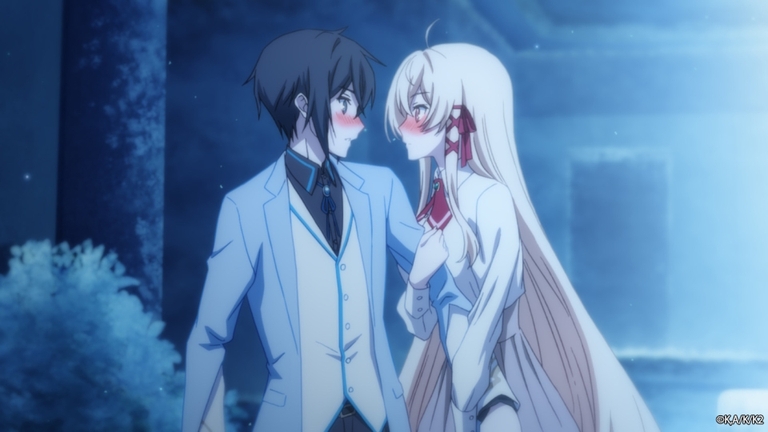
While Our Last Crusade features enemies becoming lovers rather than friends, the image above shows how shared intense experiences bond people. In Hi Score Girl, which was mentioned in the IMDb list, Haruo and Akira meet at the arcade as kids and bond over fighting games. She's rich and perfect, he's a slob, but they speak the same language when it comes to Street Fighter or whatever they're playing.
Their friendship is built on competition and shared obsession, which is a different foundation than the "we sit next to each other in class" setup. When it shifts to romance, it works because they respect each other's skills. He doesn't see her as just a prize to be won, and she doesn't see him as a project to fix. They just want to keep playing games together forever, and eventually they realize that means dating.
The Real Risk Is Losing the Friendship
Every single one of these shows, at their best, understand that the stakes in friends to lovers aren't about whether the protagonist will die or the world will end. The stakes are about whether two people who care about each other will be able to look each other in the eye after a rejection. Will the Sunday morning coffee runs stop? Will the group chat get weird? Will you have to find a new person to text when something funny happens?
That's why the trope is so popular when done right. Everyone has that friend, or had that friend, where you wondered for a second what would happen if. Everyone knows the specific stomach drop of realizing you're looking at someone differently and you can't take it back. Good romance anime captures that specific terror and hope, the way your hands sweat when you're trying to decide if you should shift closer on the couch or if that would be weird now.
Why Adult Stories Work Better
There's a reason Wotakoi and My Senpai Is Annoying feel so fresh compared to high school settings. When you're an adult, you know exactly how rare good friends are. You've already lost people to moves and marriages and petty disagreements. So the calculation changes. Is dating this person worth the risk of losing one of my three good friends? In high school, you've got thirty kids in your class, you can make new friends. At twenty-eight, your social circle has calcified. Every relationship shift is tectonic.
Adult friends to lovers anime can also deal with the physical stuff more honestly. Teen shows have to dance around sex or treat it like a magical endpoint. Adult shows can acknowledge that friends cuddle sometimes, that adults share beds platonically when drunk or sad, that the line between friendship and romance is blurrier than we pretend. Wotakoi has them dating early but spends time on the weirdness of sleeping together when you've known each other since puberty, of kissing someone who knows you had braces and acne.
The Trope Will Never Die
As long as people keep having friends, they'll keep falling for them, and as long as they keep falling for them, anime will keep making shows about it. The good ones remember that the friendship isn't just a prologue. It's the whole point. The romance should feel like a natural extension of what was already there, not a plot twist that comes out of nowhere. When Risa and Otani finally get together in Lovely Complex, it feels inevitable because their friendship was so solid. When Narumi and Hirotaka start dating in Wotakoi, it feels like the only logical choice because they already fit.
That's the standard. Don't give me two strangers who become friends for three episodes then fall in love. Give me two people who have seen each other cry, who know how the other takes their coffee, who have a language of inside jokes, and then show me the moment they realize they don't want anyone else to ever know those things. That's the good stuff. That's why we keep watching romance anime where friends become lovers even though most of them disappoint us. Because when one finally gets it right, it feels like validation for every time we sat on our hands and didn't say what we felt.
The next time someone recommends you a friends to lovers anime, ask them if the friendship looks like fun. If it doesn't, skip it. Life's too short to watch people suffer through relationships that don't even look enjoyable in the fiction.