
Rin Okumura's heritage and internal conflict aren't just backstory details you can skip in the opening credits. They're the entire reason Blue Exorcist exists as a story worth watching instead of another generic demon-fighting cash grab. Being Satan's biological son isn't a cool power-up or an edgy origin meant to make him special and mysterious. It's a death sentence wrapped in blue fire that forces Rin to fight his own DNA every single day just to stay human and keep his friends alive.
Most shonen protagonists spend years chasing power. They want to get stronger, defeat bigger enemies, unlock new transformations, and save everyone through sheer determination and friendship. Rin starts with all the power he'll ever need. He's got Satan's flames flowing through his veins, superhuman strength that can crush concrete, and a healing factor that makes him nearly impossible to kill. The problem is he doesn't want any of it. He watched his adoptive father die because of what he is. He sees his classmates recoil in terror when they learn his secret. The Kurikara sword isn't some cool anime weapon he pulls out to win fights. It's a leash keeping him from becoming the monster his real father wants him to be, and every time he draws it, he's gambling with his own humanity.
The series never lets you forget that Rin is walking a tightrope with no safety net underneath. Draw the Kurikara and he can protect his friends from demons and save lives. Keep it sheathed and he's harmless but completely useless in a fight against anything stronger than a cockroach. The blue flames don't care about his good intentions or his desire to help people. They burn everything indiscriminately. When he loses control during the Kyoto Impure King arc, it's not a heroic moment where he powers up to save the day. It's a terrifying confirmation of exactly what everyone feared about him. He could turn into Satan at any given moment and destroy everything and everyone he loves without even meaning to.
This internal struggle gets messy and complicated because Rin isn't fighting external villains half the time. He's fighting the voice in his head that says "burn it all down" and "you're better than these weak humans." His human upbringing from Shiro Fujimoto clashes hard against the demonic instincts that are hardwired into his brain from birth. He wants to be an exorcist to protect people, but every time he uses his powers to do good, he risks proving that he's exactly the kind of existential threat that exorcists are supposed to hunt down and eliminate. That's a special kind of hell that most characters don't have to deal with.
The Kurikara Sword Is a Prison Not a Weapon
People who watch Blue Exorcist and think the Kurikara is just a cool demon-slaying katana are missing the entire point of the show. This isn't a legendary blade that gives Rin his powers through some magical blessing or ancient contract. The sword is a container. Specifically, it's a locked box holding his literal heart, or at least the demonic essence that functions as his heart, sealed inside by monks from the Myodha Sect right when he was born. While the blade stays in its scabbard, Rin can pass for human. He can eat, sleep, joke around with his brother, and pretend he's normal. The moment he draws it, the seal breaks open and his true nature comes flooding out whether he wants it or not.
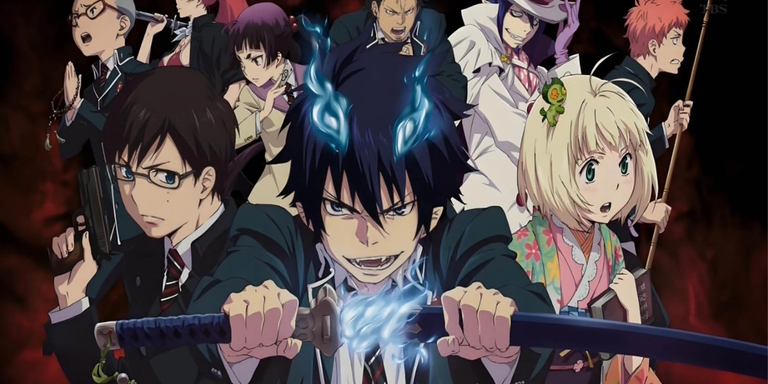
The physical changes that happen when he unsheathes the sword aren't heroic transformation sequences with sparkles and cool music. They're horror movie body horror. His eyes turn demonic blue, his ears get pointy, his fangs extend, and a tail bursts out of his back. These aren't power-ups. These are regression to his true form, the form of a demon prince of Gehenna. The blue flames that wreath his body aren't special effects to look pretty. They're the same flames Satan uses to burn cities to ash, and Rin has to constantly fight the urge to just let them consume everything around him. The sword mechanics show that if the blade gets damaged or the seal breaks completely, Rin doesn't just lose his powers. He loses his mind and becomes a raging monster.
The design of the sword itself tells you everything about Rin's situation. It's got a blue hilt wrapped in cloth, a guard featuring two overlapping circles that represent the dual nature of his existence, and a scabbard covered in ceremonial spiritual seals and talismans. When he carries it, he's carrying a visual reminder that he's only human by technicality, held together by ancient magic and prayer. The dependency is psychological torture. He needs the sword to fight, but using it makes him less human every time. He can't win. If he fights, he risks becoming the monster. If he doesn't fight, people die. That's the trap his heritage built for him.
Yukio's Resentment Makes Everything Worse
You can't talk about Rin's internal conflict without talking about Yukio Okumura because his little brother is a massive part of why Rin feels like garbage about himself most of the time. Yukio isn't just the worried sibling who wants to protect his older brother from afar. He's got a massive inferiority complex that poisons their relationship from the inside out, and it all stems from their shared demonic bloodline. See, Yukio trained since he was a toddler to be an exorcist. He studied constantly, learned multiple fighting styles, became a genius at tactical combat, and graduated at the top of his class with multiple certifications. He did everything right and worked himself to the bone to be perfect.
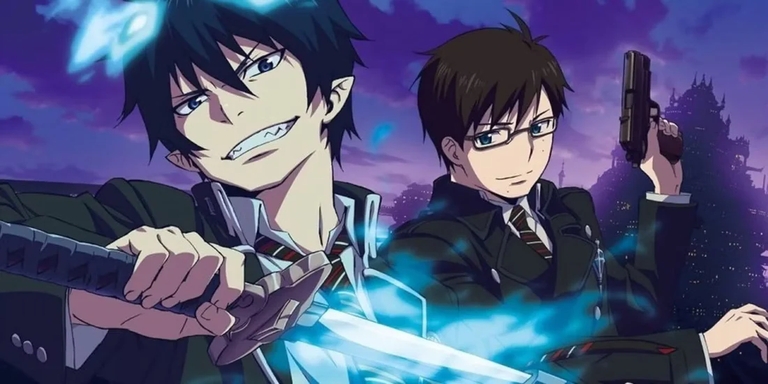
Then there's Rin, who stumbled into godlike demonic power by accident of birth without studying or training for a single day. Rin can do things Yukio will never be able to do no matter how hard he trains. Rin has the spiritual strength of a demon king while Yukio is stuck with weak human genes and perfect eyesight. The community discussion points out that this creates a weird dynamic where Yukio is technically the responsible adult and teacher at True Cross Academy, but Rin is the one with the raw power to actually make a difference in high-level fights. Yukio feels weak and useless despite being more skilled, and that makes him cold and distant toward Rin when Rin needs support the most.
This resentment isn't just in Yukio's head either. It manifests in how he treats Rin, constantly putting him down, reminding him that he's dangerous, acting like he's a bomb that might go off rather than a brother. When Yukio should be helping Rin accept his heritage and learn to control it, he's instead treating him like a containment risk. This external rejection feeds Rin's internal conflict because if his own brother who grew up with him and knows his heart still sees him as a monster, then maybe he really is one. The psychological weight of having your twin fear you is heavier than any physical battle Rin fights.
Living as a Nephilim Means Everyone Hates You
True Cross Academy isn't some happy Hogwarts-style school where everyone accepts each other and works together in harmony. It's a military academy for exorcists, and exorcists are trained to kill demons on sight. Then Rin shows up, the literal biological son of Satan, and expects people to just be cool with it. They aren't. His classmates, including people like Suguro, Shiemi, and Konekomaru who eventually become his friends, initially react with pure terror and hostility when they learn his secret. They don't see a classmate who needs help. They see a Nephilim, a half-demon hybrid that represents an existential threat to both the human world and the demon world.
The staff and higher-ups in the True Cross Order literally debate whether they should execute Rin immediately just to be safe. He's not the chosen hero to them. He's a containment risk with a ticking clock. The fandom wiki notes that this pervasive hostility follows Rin everywhere he goes. He can't escape it. Even when people are being nice to him, he's wondering if they're just waiting for him to slip up so they have an excuse to put him down. This external pressure feeds his internal conflict because he can't just ignore his heritage when people remind him every single day that he shouldn't exist and that his very presence is an insult to the exorcist profession.
The isolation is crushing. Rin can't make friends easily because he has to hide what he is, but when the secret comes out, the friends he made turn on him. The Kyoto Impure King Arc is brutal specifically because Rin has to prove his trustworthiness to people who knew him for months but instantly revert to seeing him as a threat. He has to earn back basic human decency from people who should have given it to him automatically. That kind of rejection leaves scars, and it makes Rin question whether he's fighting to protect humans who will never accept him, or if he's just fighting to prove he isn't the monster they think he is.
Rin Okumura's Heritage and Internal Conflict Drive His Growth
The progression from Season 1 to Season 4 of Blue Exorcist isn't about Rin getting stronger or learning new techniques. It's about him learning to exist without falling apart. In the beginning, Rin is impulsive, angry, and dangerous. He draws the sword too easily because he thinks power is the answer to his problems. He fights with raw emotion and blue flames that scorch the earth around him. He's a hazard to himself and others because he hasn't accepted what he is yet. He's still fighting the reality of his bloodline, still pretending he can be normal if he just tries hard enough.
Character evolution shows that by Season 3 and the upcoming Beyond the Snow Saga, he's changed fundamentally. He's not trying to get stronger anymore. He's trying to get stable. The snow imagery in the new season isn't just a pretty background. It represents the cold control he needs to keep his flames from burning everything. White covering blue. Purity covering destruction. He's learning to use the flames for protection rather than just violence, and that requires a level of emotional maturity that he didn't have before. He accepts that he's Satan's son, but he chooses to be Shiro's son instead, and that choice is what matters.
This is where Blue Exorcist separates itself from other shonen anime. Rin isn't collecting new abilities to beat a final boss. He's doing psychological work to undo the trauma of his birth. Every time he uses the blue flames now, he's making a conscious choice to direct them rather than letting them consume him. He's proving that genetics aren't destiny, that he can take the curse of his lineage and turn it into a shield for others. The heritage study emphasizes that this makes every battle a test of willpower rather than just strength, and that's way more interesting than another power level escalation.
Why This Conflict Actually Matters for the Story
Most anime about demons and exorcists focus on the cool factor. They want to show big explosions, flashy sword fights, and epic battles between good and evil. Blue Exorcist uses those elements, but it never forgets that Rin's power comes from the same source as the ultimate evil in this universe. Every time he uses the blue flames, he's using the exact same power that killed his father figure, Shiro Fujimoto. He's weaponizing the force that destroyed his family, and that carries a psychological weight that most protagonists never have to deal with.
Rin doesn't get to be the happy-go-lucky hero who believes in the power of friendship to solve everything. He has to be careful. He has to be controlled. He has to doubt himself because if he doesn't, if he gets too confident or too comfortable with his power, he might slip and burn down the school or hurt someone he loves. The internal conflict isn't just character flavor. It's the central mechanic of the story. Without Rin's struggle to reconcile his human upbringing with his demonic nature, there is no story. It's just another exorcist show.
The question the series keeps asking is whether you can be good if your father is literally Satan. Can you choose to be human when your blood screams at you to destroy? Rin's answer is yes, but it's a daily, hourly, minute-by-minute struggle. That struggle, that constant tension between what he is and what he wants to be, is what makes Blue Exorcist worth watching. Not the sword fights, not the demons, but the kid with blue fire in his chest trying not to burn the world down.
Rin Okumura's heritage and internal conflict keep Blue Exorcist from being another generic demon-fighting show that you'll forget about next season. The series understands that power without control is just destruction waiting to happen, and it treats that concept with the seriousness it deserves. Rin isn't collecting abilities to beat a final boss or unlock a super form. He's learning to live with a body that wants to destroy everything he loves, and he's choosing to protect people anyway.
The upcoming arcs will likely push this even further as Yukio's own demonic potential surfaces and his psychological issues come to a head. Rin spent years accepting his nature through blood, sweat, and tears. Now he might have to watch his brother go through the same hell, or worse, fight against him if Yukio loses control. Either way, the core of the story stays the same and keeps its emotional weight. It's not about being the strongest fighter in the room. It's about choosing to be human when every cell in your body is screaming at you to burn, and that's a fight that never really ends.