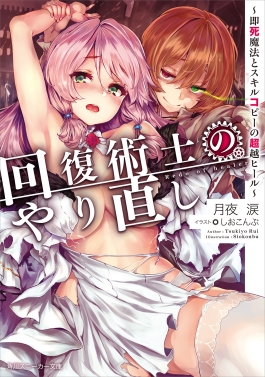
Redo of Healer anime controversy and themes hit different because nobody knew how to handle a protagonist who fights back this dirty. Most isekai or fantasy shows give you a hero who forgives everything or turns the other cheek. Keyaru doesn't do that. He gets raped, drugged, beaten, and used like a magic battery for four years, then he rewinds time using the Philosopher's Stone to make every single abuser pay in the most humiliating ways possible. People lost their minds on Twitter and Reddit because the show doesn't pretend revenge is clean or noble. It shows exactly how broken someone gets when you push them past their breaking point, and some viewers couldn't handle that level of honesty about trauma cycles.
The show aired in three different versions which should tell you everything about how extreme the content gets. You had the TV broadcast that covered everything with fog and light beams that made scenes look like they were filmed in a sauna, the streaming redo version that showed more skin and blood but still hid the explicit sexual content, and the AT-X complete recovery version that showed everything including the rape scenes that drive the entire plot. Most anime with mature themes pick one rating and stick to it. Redo of Healer said screw that and gave viewers the option to pick their own poison, which pissed off critics who wanted it banned entirely but also created this weird collector's mentality where fans hunted down the uncensored episodes like they were rare trading cards. Apparent interview details suggest the author knew this tiered release would create buzz.
What makes the controversy stick is that the author Rui Tsukiyo knew exactly what he was doing. He wasn't some amateur stumbling into dark themes by accident. In interviews he talked straight about targeting a hardcore base of 50 dedicated buyers instead of 100 casual viewers who might watch once and forget. That business strategy meant he could write the most unhinged revenge fantasy possible without worrying about mainstream appeal, and that honesty about the grind is rare in an industry that usually chases mass market safety. He compared his approach to other revenge stories that start edgy but quickly become standard harem power trips, specifically mentioning how Shield Hero backed off its initial darkness while Redo of Healer doubles down every episode.
The Three Versions Nobody Wants to Explain
Most streaming sites gave you the middle option with the redo label slapped on it, but that wasn't the full picture. The AT-X version ran at midnight with zero censorship, showing every scene that made people call this hentai instead of anime. Those scenes matter because they're not just there for shock value. When Keyaru gets assaulted by Blade the Sword Hero and Bullet the Cannon Hero in the first timeline, you need to see how bad it gets to understand why he breaks completely. The show refuses to let you look away from the cause if you're going to watch the effect. The Wikipedia page lists the specific content differences between the broadcast, streaming, and uncut versions if you want the technical breakdown.
The censorship debate got weird because some territories got different cuts entirely. Crunchyroll had to navigate different regional laws about depicting sexual violence, which meant some countries got the heavy fog version while others got the semi-uncensored stream. This patchwork release made discussing the show online almost impossible because nobody knew which version the other person watched. You'd have arguments where one person saw a implied scene and another saw explicit content, and both thought they were talking about the same show. The streaming version also had different voice acting takes in some scenes, with Keyaru sounding more broken in the uncensored cut versus more angry in the censored one.
Keyaru's Powers Are Actually The Main Character
The mechanics of Keyaru's healing powers get glossed over in discussions about the shock value, but they're actually the clever part of the setup. His heal ability doesn't just fix wounds. It lets him copy the skills and experience of anyone he touches through the Imitation skill, absorb their pain into himself, and even rewrite their memories or physical forms using Transmutation and Memory Erasure. That's how he turns Princess Flare into Freia, wiping her mind and changing her face so she serves him instead of torturing him. The power system is broken on purpose because it gives him godlike control over the people who once treated him like livestock. Detailed power breakdowns show he can also absorb levels with Predator and modify stats with Upgrade.
The healing magic works as a metaphor for how trauma changes you, but it's also just a really cool RPG mechanic taken to its logical extreme. When he heals someone, he experiences every injury they've ever suffered. Four years of absorbing other people's broken bones and stab wounds while being unable to fight back turned him into someone who understands pain better than anyone alive. That's why his revenge is so specific and cruel. He knows exactly how much something hurts because he's felt worse. His Corruption ability lets him cause internal destruction without leaving marks, which he uses to torture people psychologically before the physical payback even starts.
His imitation ability lets him steal the sword skills from Blade after healing her, which means he doesn't just defeat his enemies with brute force. He takes their own talents and uses them better than they do. There's something deeply satisfying about watching the Sword Hero get cut down by her own technique. The predator skill lets him absorb levels and mana, so he's constantly getting stronger by consuming the people who tried to consume him first. By the time he fights the main antagonists in the redo timeline, he's basically a composite of every hero and monster he's ever touched, which is a clever way of showing how abuse survivors often have to become a patchwork of defense mechanisms just to survive.
The Author's Business Plan Was Brutally Honest
Rui Tsukiyo gave an interview where he explained the 100 people example that broke anime Twitter. He said if you try to please everyone, you get 100 people who kinda like your work and buy nothing. If you write for 50 people who love it and 50 who hate it, you still have 50 guaranteed sales from the hardcore fans. That approach is why Redo of Healer doesn't pull punches or soften the revenge into something socially acceptable. It's written for people who want to see the abusers suffer specifically, not for people who want a redemption arc where everyone hugs at the end. This targeting explains why the show refuses to give you a heroic protagonist. Keyaru is a victim who becomes a monster, and the author never tries to make him sympathetic in the traditional sense. He brainwashes women, he tortures people slowly, he manipulates entire kingdoms. But he's also the product of a system that treated healing magic like a resource to be drained dry.
The comparison to Shield Hero keeps coming up because both feature betrayed heroes seeking revenge, but the differences matter. Naofumi stays fundamentally good despite his anger. He protects people and eventually forgives. Keyaru has no interest in forgiveness. He wants to dismantle the entire power structure that allowed his abuse, and he's willing to become worse than his abusers to do it. That refusal to compromise is what makes the show feel different from every other revenge fantasy out there. While Shield Hero asks what justice looks like, Redo of Healer asks what happens when justice is impossible and all you have left is vengeance.
Why The Jioral Kingdom Deserves To Burn
Most fantasy anime treat kingdoms like background decoration, but Redo of Healer makes the entire system rotten from the inside. The Jioral Kingdom practices slavery openly, uses demi-humans for target practice, and runs a propaganda machine that convinces citizens like Kureha Clyret that they're fighting for justice when they're actually enforcing tyranny. Keyaru isn't just getting back at three people who hurt him. He's taking apart an entire corrupt civilization piece by piece. The analysis of the kingdom's politics points out how the border towns are neglected and the nobles are raised to be either entitled rulers or apathetic subjects.
The princesses Flare and Norn represent two sides of the same coin. Flare is the hot-tempered abuser who drugs and rapes Keyaru to keep him compliant. Norn is the cold calculating strategist who recognizes Keyaru's revenge plot in the first timeline but lets it happen because she thinks she can use the chaos. Both of them get broken down and rebuilt, though Norn's conversion to Ellen hits different because she remembers enough to know she lost completely while Flare remembers nothing. The demon lord politics get introduced later with Eve Reese and the Black Wing Clan, showing that the kingdom's corruption extends to how they treat non-human races. Eve's people were nearly wiped out because the current demon lord had an inferiority complex, which parallels how Keyaru was almost used up because humans saw healers as disposable.
Redo of Healer Anime Controversy and Themes The Brainwashing Problem Nobody Solves
Here's where the story gets really messy and why people still argue about it years later. When Keyaru uses his heal ability to rewrite someone's personality, is that murder? Is it justice? Freia acts sweet and loving, but she's literally a different person than the Flare who tortured him. The show presents this as a happy ending for her character arc, which freaks people out because usually brainwashing is treated as villain behavior in fiction. Setsuna's situation is different but still sketchy. He buys her from slavers, gives her power through his abilities, and she falls for him because he's the first person to treat her like a person. But he still owns her technically, and their relationship starts with a massive power imbalance. The show doesn't pretend this is healthy romance. It's two broken people finding each other in the wreckage.
Kureha is the only one who comes close to a normal relationship with Keyaru, and even that starts with him manipulating her using her own trauma about losing her arm. He gives her back her sword skills, which makes her loyal to him, but he also shows her the truth about the kingdom's atrocities which breaks her worldview. She's the character who represents what redemption might look like in this universe, and she's constantly struggling with whether Keyaru's methods are justified. The character analysis shows how each betrayal forces Keyaru deeper into his anti-hero role until he can't see a way out that doesn't involve controlling everyone around him.
The Female Viewership Data Surprised Everyone
Despite being labeled as misogynistic revenge porn, Redo of Healer pulled a surprisingly high percentage of female viewers compared to other ecchi shows. Some data suggested nearly 40% of the audience was women, which doesn't make sense if you only read Twitter takes about the show hating women. The explanation might be that the show treats male rape with the same severity as female rape, which almost never happens in media. Keyaru is a victim of sexual violence who gets to fight back, and that power fantasy resonates across gender lines. Women in the show aren't just victims either. They're complex participants in the corruption. Flare is an abuser. Norn is a mastermind. Setsuna is a warrior seeking vengeance for her clan. Eve is a political leader fighting for her people.
They have agency even when terrible things happen to them, and the show doesn't frame their suffering as titillation even when the camera gets creepy about it. The controversy comes from the show being honest about how power and sex get twisted together in abusive systems, which makes people uncomfortable because most fiction sanitizes that connection. The fact that Keyaru is a male rape survivor who doesn't get over it in one episode and doesn't become a pure hero also challenges the usual tropes where male victims have to be stoic or immediately seek noble justice.
Why It Isn't Just Edgelord Garbage
Critics call this show the worst thing ever made, and sure, the writing gets sloppy and the shock value wears thin sometimes. But underneath the extreme content is a real discussion about cycles of abuse. Keyaru becomes exactly what he hates in order to destroy what he hates, and the show doesn't pretend that's healthy. Every time he brainwashes someone or tortures a former hero, he loses another piece of his humanity. The revenge isn't satisfying in the long run. It's hollow and bitter, which is the point. The spin-off manga Hospitality of Healer shows what happens if Keyaru chose kindness instead, running a cafe with the same characters in a peaceful setting. That alternate timeline exists specifically to prove that the characters aren't inherently evil, just products of a broken system.
Keyaru's revenge doesn't just punish individuals. It prevents the system from ever existing by dismantling it at the source, which is why he goes after the kingdom itself and not just the three heroes who hurt him. If you're looking for a more detailed breakdown without the moral panic, check out this controversy explanation that covers the censorship versions and author intent.
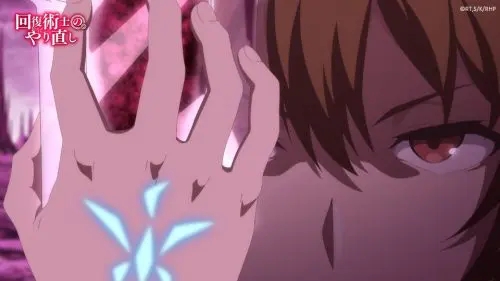
Looking at how the anime handles the transition from light novel to screen, TNK studio knew they were making something divisive. They didn't sanitize the content like they could have. They leaned into the uncomfortable close-ups and the psychological horror of Keyaru's smiles. The voice acting switches between broken vulnerability and cold menace in ways that sell the character's damage. You believe this kid went through hell because the performance commits completely to that reality. The music choices also subvert expectations. Instead of heavy metal or dark orchestral scores during revenge scenes, you often get almost romantic or sad tracks playing over the violence. That dissonance creates a weird emotional effect where you're not sure if you're supposed to cheer or feel sick, which mirrors Keyaru's own emotional state.
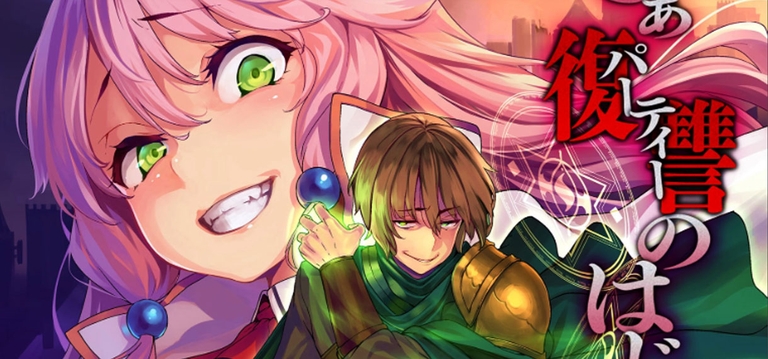
Season 2 is supposedly happening though details are scarce. The light novels have enough content for several more seasons, covering the demon lord arc and the confrontation with the remaining heroes. If it follows the source material, Keyaru keeps getting darker while the world around him slowly realizes the kingdom was the real enemy all along. The controversy will probably get worse before it gets better, but that's what happens when you make art that refuses to comfort the audience.
Redo of Healer anime controversy and themes matter because they force a conversation about what revenge fiction is allowed to show. We accept grimdark stories where heroes kill thousands with swords, but when the violence gets personal and sexual and psychological, people demand censorship. Keyaru's story is ugly because abuse is ugly. His solutions are monstrous because he had to become a monster to survive. The show isn't saying you should brainwash your abusers. It's showing what happens when a system pushes someone so far past human limits that they stop being human. Whether you think it's trash or art probably depends on whether you've ever wanted revenge so bad you could taste it. The show captures that taste, metallic and bitter and unsatisfying, and forces you to sit with it for twelve episodes. That's either exactly what you needed to see or something you should skip entirely. There's no middle ground, and that's exactly how the author wanted it.