
Outbreak Company anime plot and themes get dismissed by people who never got past the first episode. They see a guy in a fantasy world with a half-elf maid and assume it's generic trash. That's completely missing the point. This show is basically a polemic about cultural imperialism dressed up in maid outfits and manga references.
Shinichi Kanou starts as a shut-in NEET who got rejected by his childhood friend for being an otaku. He takes a weird job test that measures his knowledge of anime, manga, and dating sims. Next thing he knows, Matoba from AmuTec drugs him and ships him to the Eldant Empire, a parallel world with elves, dwarves, and dragons. The Japanese government didn't pick him because he's special. They picked him because he's expendable and knows exactly which light novels to use as propaganda.
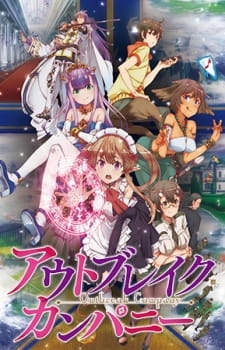
The Setup Is Crazier Than Truck-kun
Most isekai protagonists get hit by trucks or stabbed by stalkers. Shinichi just gets kidnapped by his own government. There's no dying involved. He wakes up in a fantasy castle and learns his job is to spread otaku culture throughout the Eldant Empire. The official line is that this creates goodwill for trade relations. The real plan is way nastier.
Matoba, the government handler, plays the nice bureaucrat but he's running a soft power invasion. He wants to make the Eldant Empire dependent on Japanese cultural products so Japan can extract resources without firing a shot. It's the 'Cool Japan' initiative taken to its logical extreme. Instead of tanks, they send manga. Instead of diplomats, they send a guy who knows every route in Fate/stay night.
The show doesn't hide this cynicism. Shinichi realizes early on that he's a tool for cultural imperialism. He's supposed to make the locals love Japan so much that they don't notice their economy getting looted. The Wikipedia page covers the basic premise but doesn't capture how sleazy the politics feel when you watch Matoba smile while explaining why they need to ban local competition.
Eldant's Social Structure Is Rotten
The Eldant Empire looks like a standard fantasy kingdom with castles and magic, but the social hierarchy is brutal. Humans rule everything while half-elves like Myucel get treated like property. Myucel works as Shinichi's maid but she's legally closer to a slave. She hides her elf ears because showing them gets her beaten or worse.
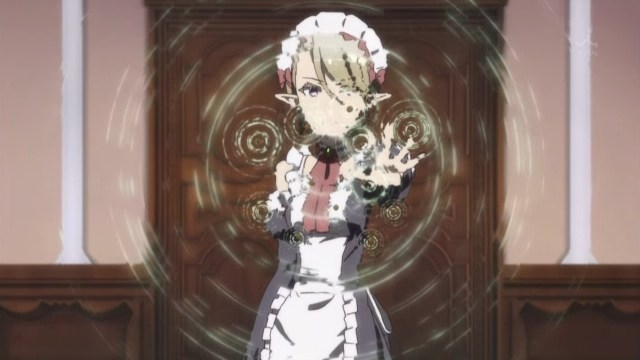
Shinichi freaks out when he learns that half-elves can't even learn to read. The empire keeps demi-humans illiterate to maintain control. This isn't background lore either. Myucel's backstory involves military training as a child soldier because her mixed blood made her disposable to the state. When Shinichi teaches her Japanese and treats her like a person, it isn't just cute. It's politically explosive in a society built on racial caste systems.
The show uses this to contrast modern Japanese values with feudal fantasy values, but it gets complicated because Shinichi is literally working for a government that wants to colonize these people. He's trying to liberate the oppressed while serving as the vanguard of economic exploitation. One analysis I read breaks down how the show presents Japan introducing the 'capacity to aspire' to a 'primitive' land, which creates demand that only Japan can fill. It's gross when you think about it, and the show wants you to think about it.
When Moe Becomes a Weapon
The central gimmick is that Shinichi runs a school teaching otaku culture to elf and dwarf nobles. He explains tsundere archetypes, hosts soccer matches, and introduces manga. The Eldant nobles get addicted to it. Petralka, the sixteen-year-old empress who looks like a child, becomes obsessed with dating sims and yaoi.
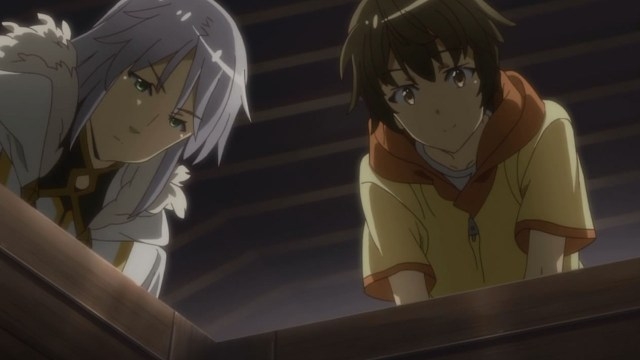
But this isn't just cultural exchange. It's dependency creation. The Japanese government restricts what technology and culture flows into Eldant to maintain leverage. They want the locals hooked on anime while keeping them ignorant of things that would actually make them independent. When Shinichi tries to introduce modern agricultural techniques or egalitarian ideas, Matoba shuts him down because empowered peasants don't make good trade partners.
The show asks whether spreading otaku culture is really any better than sending missionaries or soldiers. At least the military occupation in Gate was honest about what it was. Outbreak Company presents the creepier version where the conquered people beg for their own colonization because they want the next volume of Attack on Titan.
The Characters Who Matter
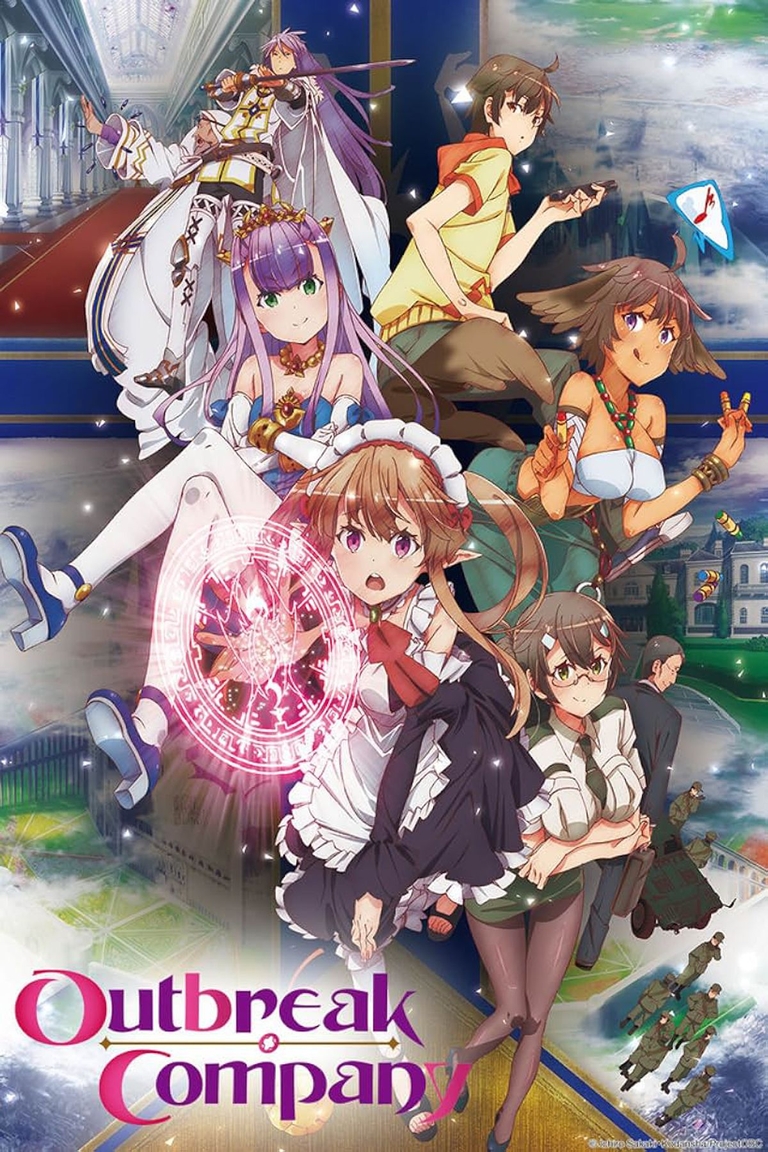
Myucel isn't just the maid love interest. She's a half-elf who starts the series broken by systemic abuse and slowly learns to stand up straight. Her relationship with Shinichi works because he treats her as an equal in a world that treats her as livestock. She learns Japanese faster than anyone and becomes his most trusted ally, not just his romantic interest.
Petralka starts as a standard tsundere loli but develops into the most complex character. She's a child ruler with massive insecurity about her elven heritage and her right to the throne. Episode 8, where she becomes a hikikomori and hides in a crate to avoid royal duties, is the show's high point. Some reviewers call it a masterpiece of standalone storytelling. She isn't just jealous of Myucel for romantic reasons. She's jealous because Myucel has the education and freedom that royal protocol denies her.
Minori provides the military muscle as a JSDF officer and bodyguard. She's also a massive fujoshi who ships Shinichi with Galius, the knight captain. Her character balances genuine combat competence with otaku obsessions, showing that the show isn't mocking its own audience despite the premise.
Matoba is the stealth villain. He keeps smiling and apologizing while manipulating everyone. When the Eldant terrorists attack because they correctly identify Japanese culture as an invasion, Matoba uses it as proof that they need more Japanese protection. Classic imperialist logic.
The School Arc and the Spy
The middle episodes focus on Shinichi running a school for demi-human students. He teaches elves and dwarves to read using manga. This creates tension because literacy threatens the ruling class's monopoly on knowledge. It also leads to genuinely sweet moments where elf and dwarf students bond over shared fandom instead of racial hatred.
Elbia Hanaiman complicates things as a werewolf spy sent by the rival Bahairam Kingdom. Instead of executing her, Shinichi fakes her death and keeps her as an artist. She represents the alternative to Japan's cultural imperialism, military espionage from other powers. The show suggests that every nation is trying to exploit Eldant, but Japan's method is just more insidious because it feels voluntary.
The soccer episode shouldn't work but does. Shinichi organizes a match between elf and dwarf students to settle a feud. It plays out like every sports anime cliché, but it works because the stakes involve dismantling centuries of racial tension through shared otaku hobbies.
That Messy Ending
The final two episodes drop the comedy completely. The Japanese government decides Shinichi has too much influence and might prioritize Eldant's interests over Japan's resource extraction. So they send JSDF troops to assassinate him and Petralka, staging it as a terrorist attack to justify military occupation.
This twist recontextualizes everything. Matoba was never a benign bureaucrat. He was preparing for a coup the whole time. When Shinichi refuses to let the Japanese monopoly continue, Matoba tries to have him killed. The show reveals that cultural imperialism was always the soft opening for economic and military domination.
TV Tropes notes that this follows the light novels but compresses volumes of political intrigue into two episodes. It feels rushed. The tone whiplash from teaching manga to avoiding assassination is jarring. Some fans hate it because they wanted a chill harem ending. Others appreciate that the show committed to its political thesis even if the execution got sloppy.
Why Everyone Forgot About It
Outbreak Company aired in the same season as Kill la Kill and Golden Time. It got buried. The shiny art style by studio Feel looks generic now, all soft lighting and rounded faces. The harem elements turned off viewers who would have liked the political commentary. The political commentary turned off viewers who just wanted elf fanservice.
Reddit discussions from when it aired show people split between calling it smart satire and annoying otaku wank. The truth is it's both. Shinichi's internal monologues about equality hit hard, but then the camera zooms in on Myucel's chest for no reason. The show can't decide if it's criticizing otaku culture or celebrating it.
The light novels continued the story with Shinichi choosing to stay in Eldant permanently, marrying Myucel, and continuing his cultural invasion despite knowing it's problematic. The anime ends with him surviving the assassination attempt and doubling down on his mission, but with more awareness that he's playing a dangerous game.
The Real Themes Under the Hood
At its core, this anime asks whether spreading your culture is always good. Shinichi believes anime and manga can bring people together across racial lines. He's right. His students stop hating each other because they both love the same fictional characters. But the mechanism for spreading that culture is a government conspiracy to create economic dependency.
The show also tackles the 'white savior' trope by making Shinichi Japanese instead of Western, but the dynamic remains similar. He comes from a 'developed' world to teach the 'primitive' natives about art and equality. He means well but he's still an invader. The locals who embrace his culture, like Petralka, gain personal growth but also become politically vulnerable to foreign control.
Myucel's arc embodies this contradiction. She gains literacy, confidence, and love through Japanese culture. She also becomes the perfect colonial subject, loyal to Shinichi personally and Japan culturally, divorced from her own people's traditions. When she starts drawing manga instead of traditional Eldant art, it's presented as progress but also as cultural erasure.
Outbreak Company anime plot and themes remain relevant because they predict how soft power works in the real world. Nations don't just conquer with armies anymore. They conquer with entertainment exports that make other countries want to be like them. The show presents this as both liberating for individuals and dangerous for sovereignty. That's a lot heavier than most isekai that just want to show a guy with a harem beating demon lords.
If you skipped this show because it looked like generic harem trash, you missed one of the few isekai that actually interrogates what it means to be an outsider imposing your values on another world. It's messy, inconsistent, and sometimes annoying, but it's never stupid. The elf maid is cute, but she's also a victim of racism that Japanese cultural imports can't fix without creating new problems. That's the whole point.