
One Week Friends anime review threads usually start with someone complaining that the memory loss makes no biological sense and ends with everyone else telling them to shut up and enjoy the feelings. They're both right. The premise is completely ridiculous. Kaori Fujimiya loses every memory of her friends every Monday morning at midnight like her brain is running on a weekly cron job, yet she remembers her parents, her math teacher, how to solve equations, and how to cook omelets. That's not how amnesia works. That's not how brains work. But if you spend the whole twelve episodes trying to figure out the medical mechanics of her condition, you have missed the point entirely and you are watching the wrong show. This is a messy but sweet premise that works better as emotional background noise than as serious drama.
This slice of life anime isn't trying to be a medical documentary or a psychological thriller. It's using this impossible weekly reset as a way to explore what happens when you try to build something permanent with someone who can only offer you something temporary. Yuki Hase sees this girl eating alone on the roof every day and decides he wants to crack her shell, which is a standard setup for a thousand high school romances, but when he finally gets her to talk she drops the bomb that she won't remember him by next week. Most guys would take the hint and back off. Hase is either the most persistent or the most stubborn idiot in the school, depending on how you read him, and he decides he will just keep asking every Monday. The show becomes this weird loop of introductions and re-introductions, of explaining the same jokes twice, of watching two people fall into a rhythm that one of them can't remember.
And honestly? That repetitive cycle is the best part of the show. The first half moves slow, almost glacial, with Hase learning how to handle Kaori's defenses and Kaori slowly learning that maybe this guy isn't going to hurt her like whoever caused this trauma in the first place. It's gentle. It's soft. The art style is all pastels and soft lines and nobody has sparkly eyes or ridiculous proportions. There's no fan service, not even in the beach episode, which is so rare for a high school anime that it feels like a miracle. You can just turn your brain off and watch these two kids try to figure out friendship without the usual anime antics getting in the way.
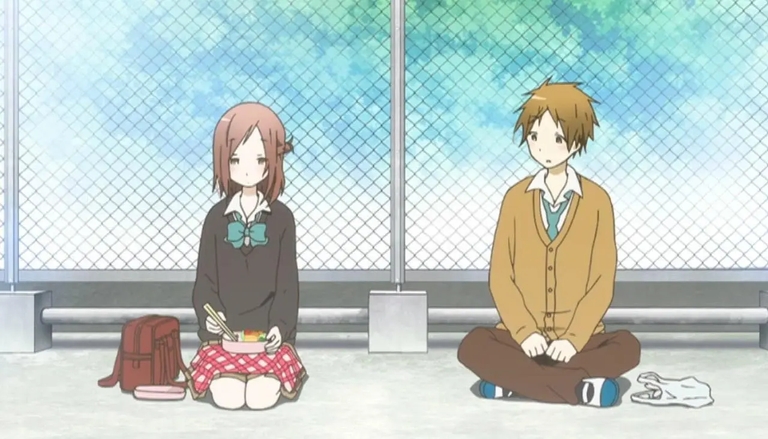
One Week Friends Anime Review Divides On The Weekly Reset Gimmick
Let's get the science out of the way. There is no condition where you forget only your friends but retain procedural memory and academic knowledge. The show tries to handwave it later by saying it's psychological trauma from elementary school, not physical brain damage, but even then it's sketchy. Apparently some kid said something mean to her and she got hit by a car and her brain decided friends are too dangerous to remember. That's not trauma response, that's anime logic, and if you can't accept that you're going to hate this show.
But here's the thing. The weekly reset works as a metaphor for social anxiety and the fear of connection way better than it works as a medical diagnosis. Kaori isn't just forgetting names and faces. She's forgetting the emotional labor of friendship, the vulnerability, the risk that comes with letting someone see the real you. Every Monday she wakes up back at square one, safe in her isolation, and she has to choose all over again whether the pain of potential loss is worth the joy of having someone to eat lunch with. That's real. That's something people really feel, just exaggerated into a magical realism thing where the reset is literal instead of metaphorical.
Hase has to deal with the frustration of being forgotten constantly, which some Reddit threads call annoying and others call heartbreaking, and both are true. There are episodes where he finally gets her to laugh on Friday and then Monday morning she looks at him like he's a stranger and you can see him deflate. It's cruel. It's repetitive. But it builds this weird tension where every Friday feels like a victory and every Monday feels like a funeral, and the show milks that rhythm for everything it's worth. The diary she keeps becomes this physical manifestation of trust, this object that holds the memories she can't retain, and watching her learn to rely on it instead of fearing it is the closest thing the show has to a character arc.
The diary itself is a clever device because it allows for exposition without being clunky. Kaori reads about her past self's feelings, sees the evidence that she was happy, and slowly lets herself believe that she can be happy again even if she doesn't remember why. It's not a cure. It doesn't fix the problem. But it's a coping mechanism, and the show treats it with respect. There are scenes where she clutches that book like a life preserver, and others where she writes in it with this desperate urgency, trying to capture the feeling of friendship before it fades into the Monday void. Those moments hit hard because they're so specific to her condition, this unique horror of knowing you're going to lose something precious and trying to anchor it to paper before it disappears.
The specific details of her retained knowledge matter more than you'd think. Kaori is brilliant at mathematics, solving complex equations with ease, and she's an incredible cook, making elaborate lunches that require muscle memory and procedural recall that should be impossible if her memory loss were truly comprehensive. The show uses these skills to show that she is a complete person even with her condition, not defined by her broken memory but by her intact capabilities. Hase doesn't save her or complete her; he just provides companionship while she continues being good at the things she's good at. That's a subtle but important distinction from other damaged girl tropes where the love interest fixes the broken protagonist.
Hase walks the line between sweet and stalkerish
Yuki Hase is a weird protagonist because he shouldn't work. He's got that generic nice guy energy where he decides he likes this girl because she's quiet and pretty and alone, which is usually a red flag in anime, but the show keeps him just grounded enough that he stays likable. He gets jealous when she makes other friends, which is a realistic flaw that makes him human instead of perfect, and he apologizes for it instead of doubling down. That's growth. That's rare.
But there's always this uncomfortable edge to his persistence. He keeps showing up on the roof even after she says no. He keeps pushing for friendship when she has clearly stated that it causes her distress to lose people. The show frames this as romantic determination or pure-hearted persistence, and most of the time it lands that way, but if you tilt your head slightly it looks like he won't take no for an answer. The only thing that saves it is that Kaori genuinely seems to want the connection even when she can't remember it, and the show makes sure she has agency in saying yes or no each week. Still, some people watch this and see a guy who can't respect boundaries, and I get that reading even if I don't agree with it.
What makes Hase work is that he isn't trying to fix her. He isn't on a quest to cure her amnesia. He just wants to be her friend within the constraints of her condition, and when he realizes that means he has to be her friend every single Monday for the rest of his life, he doesn't hesitate. That's either beautiful or pathetic depending on your worldview, but it's consistent. He brings her math problems because she likes math and he brings her food because she likes cooking and he never once tries to kiss her or confess his love in a way that would pressure her. It's friendship first, romance maybe never, and that's a choice that most high school anime don't have the guts to make.
The jealousy subplot is where Hase gets interesting. When Kaori starts making other friends, specifically when she bonds with Saki or when Kujo shows up, Hase doesn't handle it well. He gets possessive. He assumes that because he's put in all this work, he owns her attention or her affection, and the show doesn't let him get away with that. Shogo calls him out on it. Kaori gets upset. He has to learn that friendship isn't transactional, that you don't earn points that entitle you to someone's time, and that Kaori is allowed to have a life outside of their Monday resets. That learning curve is messy and makes him seem like a jerk for a few episodes, but it also makes him feel like a real teenager who is figuring out that his feelings aren't the center of the universe.
Shogo and Saki keep the whole thing from collapsing
If this show was just Hase and Kaori staring at each other on the roof for twelve episodes, it would be unbearable. The supporting cast saves it. Shogo Kiryuu is Hase's best friend, this deadpan guy who never smiles and always looks like he's judging everyone, and he is the best character in the entire series. He delivers these brutal honest observations about Hase's behavior, calling him out when he's being selfish or dramatic, but he also shows up when it counts. He joins study sessions. He listens to Hase whine. He offers advice that is really useful instead of generic platitudes.
Some MyAnimeList reviews call him uninteresting because he doesn't have a tragic backstory or a weird quirk, but that's exactly why he works. He's the only normal person in a show full of damaged weirdos, and his reactions ground the whole thing in reality. When he tells Hase that he's being an idiot, you believe him. When he sits there reading while everyone else panics, you feel calmer. He's the straight man in a comedy that isn't always funny, and the show is better for his presence.
Saki Yamagishi is more divisive. She's this forgetful, childish girl who talks slowly and acts like she's ten years old instead of a high school student, and a lot of people find her annoying. I get it. Her voice is grating and her memory issues feel like a cheap parallel to Kaori's real medical condition, like the writer needed another forgetful character for thematic symmetry but didn't know how to make it subtle. But she serves a purpose. She gives Kaori a female friend, which is important because Kaori's isolation shouldn't be solved entirely by a guy who has a crush on her, and she forces Shogo to interact with someone who isn't Hase. Their weird almost-romance is more interesting than the main couple because it isn't defined by tragedy, just by two people who are bad at communicating slowly learning how to do it anyway.
Saki also provides a contrast that highlights how serious Kaori's condition really is. Saki is just naturally forgetful, the kind of person who loses her keys and forgets homework assignments, but she remembers people. She remembers feelings. When she interacts with Kaori, you see the difference between someone who is ditzy and someone who is broken, and it makes Kaori's isolation feel more real by comparison. Plus, Saki's cheerful persistence in befriending Kaori mirrors Hase's determination but without the romantic pressure, showing that Kaori is someone worth knowing even if you aren't trying to date her.
The art style tells you to relax
Look at the colors in this show. Everything is soft. The sky isn't blue, it's pastel cyan. The grass isn't green, it's mint. The characters have simple designs with soft edges and no sharp angles, and their eyes are normal sized instead of taking up half their faces. This isn't a show that wants to shock you or excite you. It wants you to sink into your chair and exhale.
The animation is minimalistic, which some people call cheap but I call appropriate. There are no flashy action sequences because there is no action. There are no complicated camera angles because the story doesn't need them. The characters sit on the roof. They walk to school. They cook eggs. The simplicity lets you focus on the dialogue and the tiny facial expressions, the way Kaori's eyes widen when she remembers something from the diary, the way Hase's smile wavers when she doesn't recognize him. It's a vibe show, a background noise anime that you can have on while doing homework and not miss anything crucial, but that rewards you if you pay attention to the details.
The sound design deserves special mention because it's so quiet. There are scenes on the roof where you can hear the wind and the distant chatter of other students and the sound of Kaori turning pages in her diary, and that's it. No music swelling. No dramatic stings. Just the ambient noise of being a teenager skipping class to sit on a roof. That quietness makes the moments when music does appear hit harder, like when a gentle piano theme starts playing as Hase realizes she remembers something from last week. The audio mixing trusts the viewer to feel the emotion without being told what to feel by an overbearing soundtrack.
The soundtrack matches this energy perfectly. It's mostly gentle piano pieces and soft acoustic guitar that fade into the background, never overpowering the scenes. There are no J-pop opening sequences that blast you with energy, just mellow themes that tell you exactly what kind of show you're getting into. The music swells slightly during emotional moments but never hits you over the head with drama. It respects the quiet nature of the story.
And I have to mention the fan service thing again because it's so weird. There is none. Zero. The beach episode happens and everyone wears normal swimsuits and nobody gets a close-up of their chest or a wardrobe malfunction. The girls look like actual high school girls, which means they look like kids, and the show treats them with respect. That's sad that it's notable, but it is. In a genre where the camera usually undresses the female characters whether they like it or not, One Week Friends keeps its eyes up and its focus on the feelings. That alone makes it worth watching for people who are tired of the usual anime nonsense.

The second half drama almost ruins everything
Here is where the consensus splits hard. The first six episodes are universally loved. They're slow, gentle, character-focused, and consistent. Then around episode nine, the show introduces Hajime Kujo, this blond kid from Kaori's past who knew her before the amnesia started, and the show immediately gets worse.
Kujo is a plot device with hair. He shows up out of nowhere, recognizes Kaori, and immediately causes her condition to worsen because of emotional stress. He's the childhood friend trope crammed into the final act of a twelve-episode series where he doesn't belong, and his presence forces the show to become something it's not. Suddenly there are misunderstandings. Suddenly Hase is jealous and acting like a jerk. Suddenly we're supposed to care about this random guy's feelings when we've spent eight episodes learning that Hase and Kaori's bond is special.
It feels rushed. It feels like the manga was still ongoing and the anime needed to create some conflict to end on, so they pulled this guy out of a hat and said "remember him?" The drama is contrived. The tension is artificial. And worst of all, it distracts from the central premise, which is that the weekly reset is the obstacle, not some random guy from the past. Some people like Kujo because he gives Kaori closure on her trauma, and I guess that's fair, but the way he's introduced is sloppy and the show would have been better without him.
The timing is what kills it. If Kujo had been introduced in episode four or five, if he had been a lingering presence throughout the series, his arrival would have felt earned. But dropping him in the final quarter means we don't have time to care about him, and his resolution feels cheap. He triggers Kaori's memories to return temporarily, which breaks the rules the show established, and then he leaves just as quickly as he arrived, having served his purpose as a catalyst for Hase to realize his feelings. It's lazy writing in a show that had been carefully avoiding lazy writing up to that point.
The ending gives you blue balls but fits the theme
So after all that, after twelve episodes of Hase asking to be Kaori's friend every Monday, after the diary entries and the math problems and the near-confessions, how does it end? With them being friends. Just friends. Still. After all that.
Hase clearly wants to date her. Kaori clearly has feelings for him that go beyond friendship, evidenced by the fact that she writes about him constantly and makes him lunch and seeks him out even on days when she's supposed to have forgotten him. But the show ends with them walking to school together, still just friends, still stuck in this weekly loop. No kiss. No confession. No cure for the amnesia. Just the implication that they will keep doing this forever, or at least until graduation.
Some people hate this. They call it anticlimactic. They wanted resolution. They wanted the memory loss to be cured by the power of love or friendship or whatever. But that's not how chronic conditions work, and the show knows it. The open ending is frustrating because we want these kids to be happy in a conventional way, but it's honest because Kaori's condition isn't going to magically disappear just because we reached episode twelve. The friendship is the point. The persistent asking, the weekly renewal of trust, that is the happy ending. It's not satisfying in the way a romance novel is satisfying, but it fits the show's whole deal about valuing the present moment over the past or future.
That said, it does feel like a setup for a second season that never came, or a manga continuation that the anime didn't adapt. If you want closure, you have to read the manga, which apparently goes further into their relationship and really resolves things. She doesn't get magically cured, but she learns to manage it better, and they do finally start dating. The anime stops just short of that, ending on the threshold of romance, which is either frustrating or poetic depending on your patience. If you need that closure, you'll have to read the source material, but the anime functions as a complete emotional arc even without the romantic payoff. It just leaves you with a lingering sense of "what if" that might bug you for days after you finish.
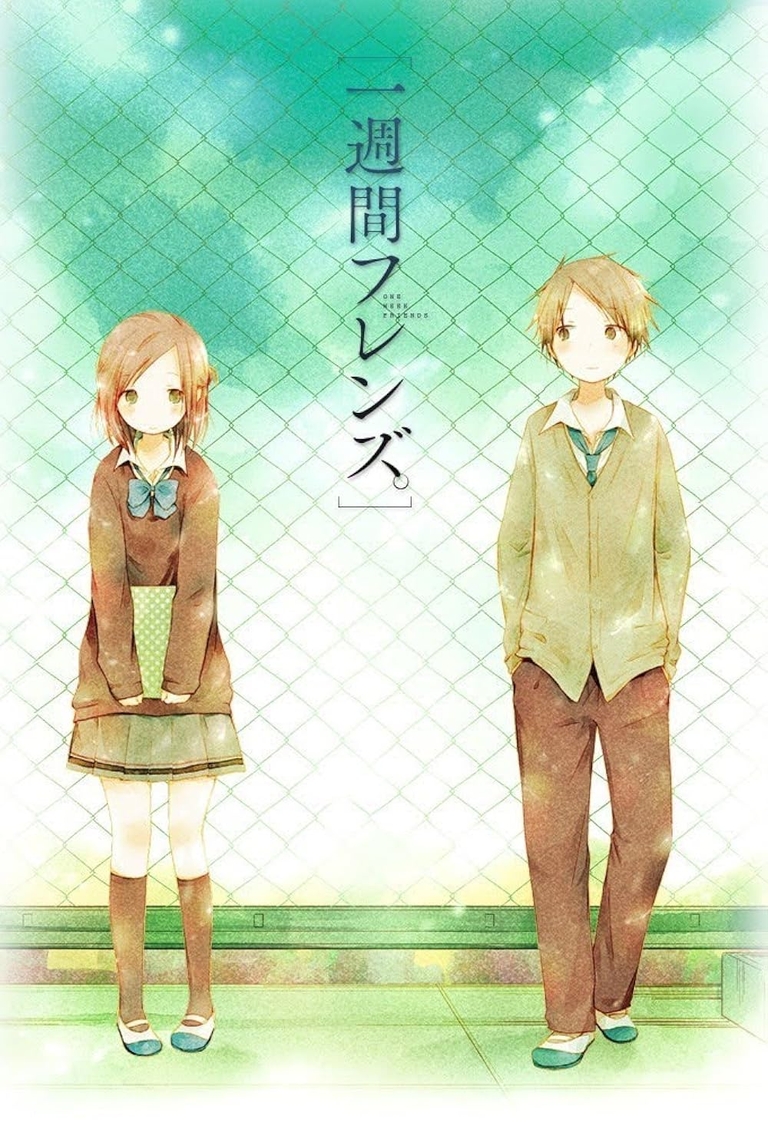
This is a background noise anime with heart
Let's be real about what One Week Friends is. It's not going to blow your mind. It's not a masterpiece of animation or storytelling. DoubleSama rated it a 6/10 and that's exactly where it belongs, maybe a 7 if you're feeling generous. It does one thing really well, which is capturing the feeling of trying to connect with someone who is hard to reach. The pacing is slow. The conflict is minimal. The second half has that weird Kujo thing that drags it down. But it's comforting. It's the kind of show you put on when you're feeling anxious or sad and you need something soft that won't demand too much from you.
The memory loss premise could have been exploitative or melodramatic, and there are moments where it veers close to that edge, but it always pulls back. The characters talk like people. They hurt like people. They heal slowly, messily, without clear resolution, like people do. If you're looking for a high school romance with big gestures and dramatic confessions and fireworks, this isn't it. If you want a show about two kids eating lunch on a roof and learning to trust each other despite impossible odds, this is exactly what you need.
People always compare this to Golden Time because both feature amnesia, but they're completely different beasts. Golden Time treats memory loss as a mystery to be solved and a curse to be broken, with dramatic reveals and supernatural elements. One Week Friends treats it as a fact of life to be managed, like diabetes or asthma. There's no mystery. We know why she lost her memories eventually, and knowing doesn't fix it. The show isn't interested in curing her; it's interested in showing how she lives with it. That grounded approach, despite the unrealistic premise, makes it feel more honest than shows that promise a magical cure at the end.
It's not perfect. It's messy in places and slow in others and that ending is going to frustrate you. But it's sweet. It's genuine. And sometimes that's enough.
One Week Friends anime review scores always land in that weird middle ground where critics can't decide if it's a hidden gem or just okay, and that's exactly right. It's not ambitious enough to be great and not bad enough to be hated. It just exists in this comfortable middle space where it tells a small story about memory and connection without trying to change your life. The weekly reset gimmick carries the whole thing, and when the show forgets that and tries to be a normal drama with Kujo, it falters. But when it focuses on the quiet moments, the diary entries, the math problems shared on the roof, it works.
If you've ever felt like you're starting over every Monday, like your progress gets wiped clean and you have to prove yourself all over again, this show gets that feeling. It doesn't offer solutions. It doesn't cure the condition. It just says that showing up counts, even if the other person doesn't remember that you showed up last week. That's a specific kind of comfort, and it's why this anime has stuck around in conversations about gentle slice of life shows despite its flaws.
Watch it when you need something soft. Don't expect explosions or dramatic twists or a kiss at the end. Expect a slow, sometimes repetitive story about persistence and kindness, and let it wash over you like background music. It's not going to be your favorite anime, but it might be the one you need right now.