
Okabe Rintarou in Steins Gate 0 isn't the same guy you remember from the first series. This version failed to save Makise Kurisu. He watched her die, tried to fix it, and ended up stabbing her himself. Then he gave up. The Okabe we get in Steins Gate 0 is a broken college student who throws away his Hououin Kyouma persona because pretending to be a mad scientist feels like a joke when you've got blood on your hands.
People call him the Sad Scientist for a reason. He's dealing with serious PTSD. He's in therapy but it isn't working. He jumps at shadows and can't look at a microwave without remembering Mayuri's deaths. This isn't the energetic weirdo who spouts nonsense about the Organization. This is a guy who knows exactly how badly time travel can screw things up, and he's terrified of touching it again.
The story doesn't pull punches with his mental state. You see him having panic attacks. You see him avoiding the lab because it reminds him of Kurisu. You see him latching onto the Amadeus system, an AI made from Kurisu's memories, because it's the just the way he can talk to her without breaking down. It's uncomfortable to watch because it feels real. This is what happens when you put the weight of multiple worldlines on one person's shoulders.
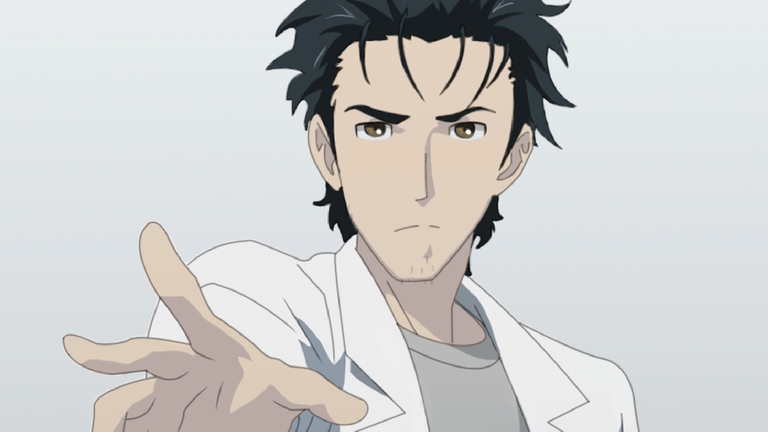
From Mad to Sad
The transformation starts right after the failed attempt to save Kurisu in the Beta worldline. In the original Steins Gate, Okabe got a pep talk from his future self via video message. He got slapped by Mayuri. He tried again and succeeded. In Steins Gate 0, that never happened. The video message didn't come. The slap didn't happen. Okabe returned to August 21st, accepted that Kurisu was dead, and decided to burn the time machine data.
He stops wearing the white lab coat. He switches to black clothes that look like he's going to a funeral. He stops calling himself Hououin Kyouma. He starts going by his real name, Rintaro, and he acts like a normal, depressed university student. He even tries to throw himself into his studies at Victor Chondria University, partly because he thinks he owes it to Kurisu to continue her research.
But the normal act doesn't stick. Suzuha is still there from the future, nagging him about World War III. The Amadeus program brings an AI version of Kurisu into his phone. Every time he talks to Amadeus Kurisu, he sees the real Kurisu's face. He hears her voice saying things the real her never said. It's torture, but he can't stop doing it because he's addicted to that connection.
The PTSD Is Real
Okabe's symptoms aren't just for drama. He flinches when people mention time travel. He has flashbacks to the moment he stabbed Kurisu. When he visits the lab after months away, he nearly has a breakdown just standing in the room where they built the Phone Microwave. Suzuha physically shakes him at one point, demanding he help her prevent the war, and he shuts down completely.
He's seeing a therapist, but he lies to the guy. He can't explain Reading Steiner without sounding insane. He can't tell a doctor that he remembers other worldlines where his friends died in different ways. So he bottles it up and takes pills that don't fix the root problem.
The worst part is his survivor's guilt. He knows that in other worldlines, he saved Mayuri by sacrificing Kurisu. In this one, he saved Mayuri but killed Kurisu himself. There's no version where he feels like he made the right choice. Every option leads to someone he loves being dead, and his brain can't handle that loop.

Why He Won't Time Leap
A lot of viewers get frustrated with Okabe in this series. Some fans argue he was selfish and put his friends in harm's way. Suzuha tells him that World War III is coming and billions will die. Daru begs him to help build the time leap machine. Maho looks at him with disappointment when he refuses to use the knowledge in his head.
But here's the thing. Okabe tried the time leap thing. He did it hundreds of times in the original series to save Mayuri. He knows exactly how much it costs. Every jump erases a version of himself. Every jump means watching his friends die again from a different angle. He's not being selfish; he's traumatized. He knows that if he starts time leaping again, he'll get obsessed with saving Kurisu, fail because of convergence, and probably lose his mind completely.
He tells Suzuha flat out that he's not the man who can save the world. He's just a guy who got lucky once and doesn't have it in him to try again. That honesty is brutal. In the first series, he never gave up. In this one, he gives up immediately because he knows what giving up prevents.
The Amadeus Problem
The Amadeus system is the cruelest thing they could have given him. It's an AI based on Kurisu's memories, created by Maho and Professor Leskinen. Okabe can talk to Kurisu on his phone, ask her questions, even argue with her. But she isn't real. She's a copy.
This creates a weird psychological trap. Okabe starts treating Amadeus Kurisu like the real thing, which stops him from moving on. He gets jealous when Leskinen talks about the real Kurisu. He gets protective of the AI data. At one point, he has to confront the fact that keeping this AI alive means letting a corporation potentially really use Kurisu's genius for weapons research.
The AI also serves as a trigger. When Amadeus Kurisu asks about the original Kurisu's death, Okabe freezes. He can't tell the AI that she, the original, is dead. It would be like killing her twice. So he lies, and the lies eat him up.
The 18000 BC Trip
One of the weirdest but most important parts of Okabe's arc is when he travels to 18000 BC to save Mayuri and Suzuha. The 18000 BC trip happens because Mayuri and Suzuha take the time machine to go back to August 2010 to convince Okabe to try saving Kurisu again. But they run out of fuel and get stuck in 18000 BC.
Okabe, in 2025, realizes they're gone. He knows he can't leave them there to die in the ice age. Even though he knows this worldline is doomed, even though he knows saving them won't stop World War III, he builds a prototype time machine and goes back to get them.
This is where people call him selfish again. They say he's ignoring the big picture to save two people. But that's exactly the point. Okabe isn't trying to save the most people possible. He cares about specific faces, not numbers. He goes to 18000 BC, finds them after they've been stranded for years, and brings them back. It's a stupid, emotional decision that wastes time and resources, and it's exactly what makes him human.
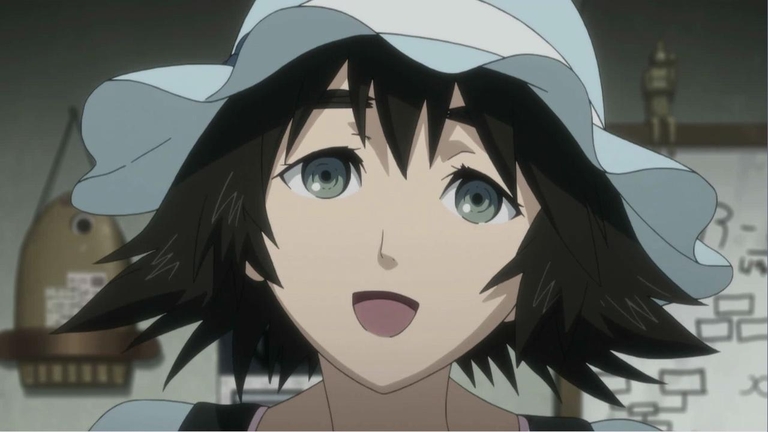
Recording the Message
The most important thing Okabe does in Steins Gate 0 happens near the end. He records the video message, the D-RINE, that gets sent to his 2010 self. This is the "deceive the world" message. The Okabe in the original series receives this video, figures out how to fake Kurisu's death, and creates the Steins Gate worldline.
Making this video is hard. Okabe has to accept that he can't reach Steins Gate himself. He has to accept that his entire timeline is a sacrifice so that another version of him, one who hasn't given up yet, can succeed. He looks into the camera and tells his past self to fail once, to let Kurisu die on the floor, to scare the past Okabe into thinking she's dead.
It's a moment of clarity. He finally understands that his suffering has a purpose. He's not just a depressed guy failing at life; he's the setup for the greatest trick in time travel history. He sends the message, knowing that when his 2010 self watches it, the worldline will shift and this version of Okabe, the broken one, will probably cease to exist or get overwritten.
The Return of Hououin Kyouma
Eventually, Okabe puts the lab coat back on. It happens in the true ending route. He realizes that pretending to be a normal person isn't working. The only way to fight the future is to embrace the delusion again. He becomes Hououin Kyouma one last time, not because he's pretending, but because that persona is his armor.
When he puts on the coat and starts laughing like a maniac again, it hits different. In the first series, it was funny and annoying. In Steins Gate 0, it's a war cry. He's choosing to be crazy because sanity didn't protect him. He shouts about being a mad scientist while tears are streaming down his face, and it works. It gets Mayuri and Suzuha to believe in him again.
This version of Hououin Kyouma is darker. He knows the jokes are fake, but he needs them to survive. He's using the persona as a coping mechanism, and for the first time, we see that it was always a coping mechanism. He started acting like a mad scientist in high school to deal with his anxiety and depression. In Steins Gate 0, he just stops hiding it.
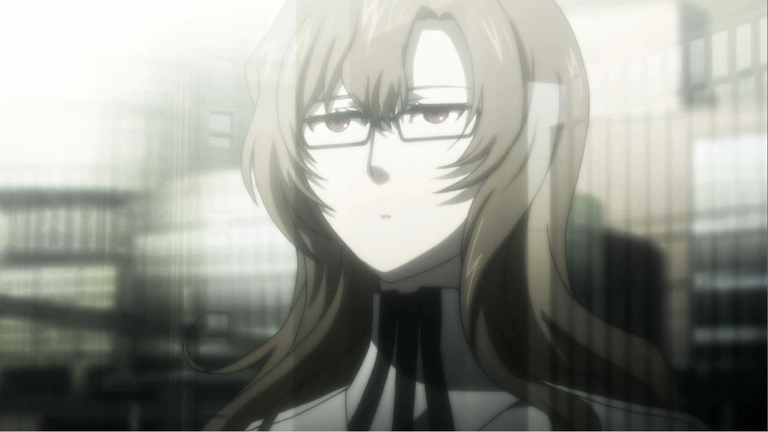
Maho and the Salieri Complex
Maho Hiyajo plays a huge role in his recovery. Detailed character breakdowns show how she's Kurisu's senior from the university, short, angry, and brilliant. She has a massive inferiority complex about Kurisu, calling herself Salieri to Kurisu's Mozart. Okabe is the only one who understands her grief.
Their friendship is built on mutual loss. Maho loved Kurisu like a little sister. Okabe loved her romantically. Together, they keep Kurisu alive by arguing about her research and protecting her legacy. Maho pushes Okabe to be better. She calls him out when he's wallowing. She helps him realize that giving up on time travel means giving up on Kurisu's dream of saving the future.
When Maho almost gets killed by Stratfor agents, Okabe finally gets angry again. He remembers how to care about something other than his own pain. Saving Maho becomes practice for saving the world. By protecting her, he remembers how to protect everyone.
The Selfishness Argument
There's a real debate in the fanbase about whether Okabe is selfish in this series. Some people think he should have just built the time leap machine immediately when Suzuha asked. They think he prioritized his own mental health over preventing World War III.
Those people are missing the point. Okabe tried the hero thing. He spent three weeks watching Mayuri die in dozens of different ways. He knows that time travel doesn't have a reset button for the traveler. Every memory stays. If he had started jumping again to stop WWIII, he would have become a different kind of broken. He might have succeeded, but he would have lost himself completely.
His refusal to play God is what makes him relatable. He's not a shonen hero who can just power through trauma. He's a college kid with PTSD who needs therapy and friends. The fact that he eventually does help, but on his own terms and after he's processed some of his grief, is more realistic than if he had just jumped into action.
The Convergence Trap
Okabe knows about convergence. He knows that some events are fixed. In the Beta worldline, he dies in 2025. That's a fact. He can't avoid it. Knowing your death date changes how you act. He isn't planning for a future because he knows he doesn't have one.
This is why he goes to 18000 BC instead of staying in 2025. If he's going to die anyway, he'd rather die saving his friends than get assassinated by agents. He cheats the convergence a little by leaving the timeline, but he knows he'll have to come back eventually.
The knowledge of his own death makes him reckless in some ways and careful in others. He takes risks because he has nothing to lose, but he also refuses to involve new people in time travel because he doesn't want them to get the same scars he has.
Okabe Rintarou's experience in Steins Gate 0 ends with him accepting that he is the sacrifice. He doesn't get the happy ending. The Okabe who saves Kurisu and reaches Steins Gate is a different version, one who got the video message that this Okabe recorded. This Okabe fades away or dies in 2025, having ensured that another him gets to be happy.
It's a depressing ending if you think about it too hard. But it's also beautiful. This broken, sad man who couldn't save the girl he loved still managed to save the world by admitting he couldn't do it alone. He passed the baton to himself, across time, and trusted that his other self would finish the race.
Steins Gate 0 isn't about triumph. It's about surviving long enough to set up the conditions for someone else's triumph. Okabe's depression, his refusal to time travel, his obsession with Amadeus, and his eventual trip to the ice age all serve one purpose: creating the perfect plan to deceive the world. Without this broken Okabe, the happy ending of the original series couldn't exist. That's why his experience matters.