
People think Steins;Gate is about saving Kurisu Makise. They're wrong. Okabe Rintarou's attempts to save Mayuri Shiina are the real engine of the story, and they represent one of the most messed up sequences in visual novel history. We're talking about a guy who watched his childhood friend die hundreds of times, trapped in a loop where the universe itself demanded her blood.
The anime showed maybe three or four attempts. The visual novel and supplemental materials reveal the truth: Okabe time-leaped approximately 450 times trying to stop Mayuri's death. That's not a few bad afternoons. That's over a year of cumulative time spent watching her get shot, run over, have heart attacks, and fall from heights. And he remembered every single one.
This isn't about heroics. It's about watching a man break against the wall of fate.
The Alpha World Line Is a Death Trap
The Alpha world line doesn't play fair. Once you're in it, certain things have to happen. Kurisu lives, SERN takes over the world, and Mayuri Shiina dies. It's not a suggestion. It's convergence. The universe treats Mayuri like a battery that needs to be drained to power the future dystopia. Okabe didn't know this at first. He thought he could just push her out of the way of a train and call it a day. He was wrong.
Convergence means that even if you dodge one bullet, another finds its target. If Mayuri avoids the train, she gets shot. If she avoids the bullet, her heart stops. If you lock her in a bunker, she suffocates. The world line actively reshapes probability to ensure she dies on August 17th, 2010. This isn't bad luck. It's physics. The attractor field pulls events toward a fixed point, and Mayuri's corpse is that point.
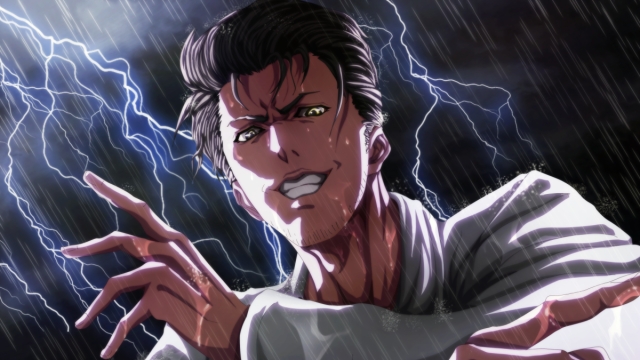
Okabe learned this the hard way. He started with small interventions. He'd leap back a few hours, change a detail, and watch. Maybe he moved her to a different part of Akihabara. Maybe he kept her inside the lab. Maybe he confronted the Rounders directly. None of it mattered. The universe has a sick sense of humor, and it was laughing at him every time Mayuri's body hit the ground.
450 Time Leaps and Counting
Here's where it gets horrifying. According to Annularly-Chained Ouroboros, the novelization of the original visual novel, Okabe leaped approximately 450 times during the Alpha world line arc. The anime compressed this into a montage for pacing reasons, but the reality was a grind of Sisyphean proportions.
Each time leap covered roughly 26 hours. Do the math. 450 leaps times 26 hours equals 11,700 hours. That's 487.5 days. Okabe lived through nearly a year and a half of watching Mayuri die, trapped in a body that kept resetting but a mind that accumulated every trauma. He didn't get to forget. His Reading Steiner ability meant he carried every version of her death like a scar.
The physical toll was brutal too. Time leaping isn't teleportation. It's copying memories from the present and overwriting the past self's brain. Doing this once gives you a headache. Doing it hundreds of times causes nosebleeds, dizziness, and neural degradation. Okabe was literally burning out his brain to save a girl who kept dying anyway.
Every Way Mayuri Dies
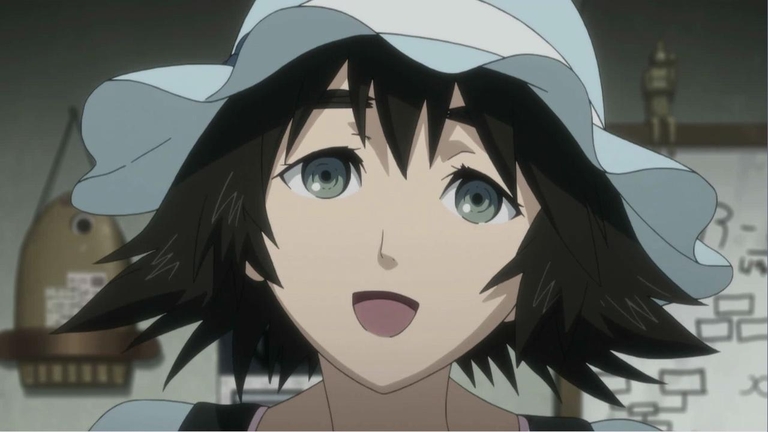
You want specifics? The visual novel doesn't shy away from them. Mayuri died by train impact when she pushed Okabe out of the way. She took a bullet from a Rounder's gun when they raided the lab. She fell from a fire escape during the chaos. She suffered a sudden cardiac arrest with no warning. She got caught in a car accident. She was poisoned by gas leaks. Every time Okabe thought he found the loophole, the world line found a new method.
The worst part was the repetition. Okabe would leap back to the same afternoon, see Mayuri smiling, and know with absolute certainty that she had maybe six hours left. He'd watch her buy a drink from the vending machine and think about which variation of death was coming this time. Would it be the train? Would it be the gun? The uncertainty became its own form of torture.
Some data suggests that the universe enforces this sacrifice to maintain causality. Saving one life requires another to end. In the Alpha line, Mayuri's death enables the future where SERN rules and the resistance forms. Without her dying, the timeline becomes unstable. Okabe was fighting the operating system of reality itself, and it was winning.
When Okabe Realized He Was Beaten
There comes a point in every time loop story where the protagonist realizes they're stuck. For Okabe, it happened around leap 300. He stopped being the Mad Scientist. He stopped shouting about Hououin Kyouma. He became a hollow-eyed observer who knew exactly how the afternoon would end.
He tried everything. He tried locking Mayuri in the lab's basement. She died of carbon monoxide poisoning from a faulty generator. He tried sending her to her grandmother's house. The train she took derailed. He tried removing her from Tokyo entirely. She collapsed at the station from an undiagnosed heart condition. The universe wasn't just killing her. It was mocking his creativity.
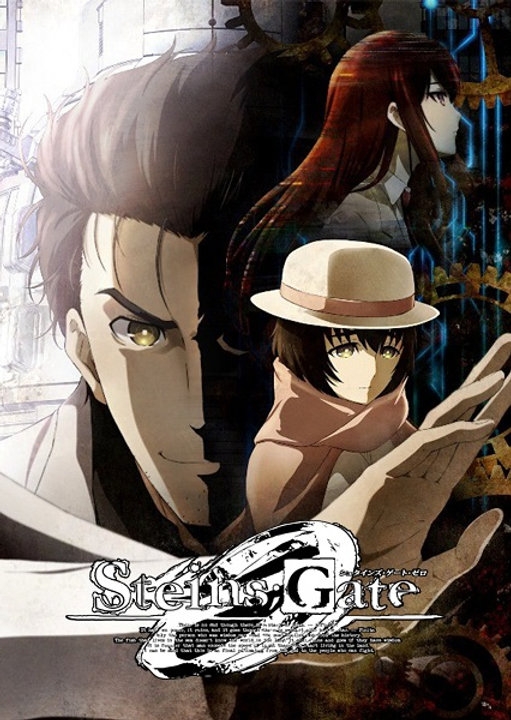
This is where Steins;Gate 0 becomes relevant. The Okabe we see in that series, the broken Sad Scientist who refuses to time travel, is the direct result of these loops. He isn't cowardly. He's traumatized. He spent 1.3 years watching his best friend die in his arms, and when he finally escaped to the Beta world line, he swore he'd never touch a time machine again. The Mayuri loops broke something fundamental in him.
The Meeting at Radio Kaikan That Changed Everything
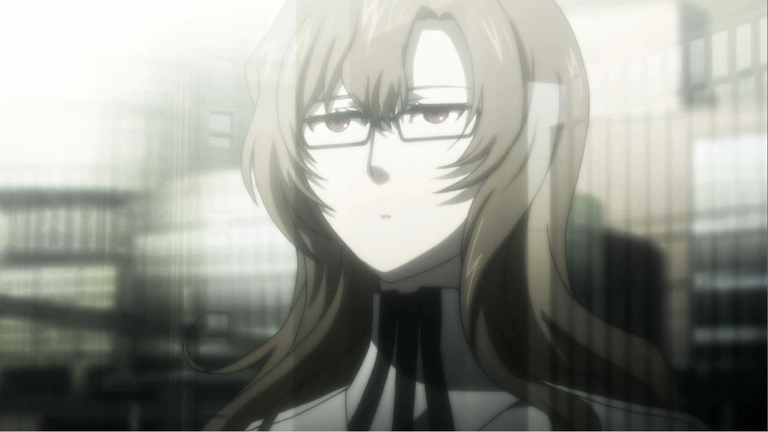
The turning point came when Okabe hit his limit. He had tried every variable he could think of, and Mayuri still died on August 17th. In the visual novel, this culminated in a meeting with Kurisu at the Radio Kaikan building, the same place where this whole mess started. Kurisu found him broken, his lab coat torn, his hands shaking.
She stopped him from leaping again. She physically grabbed him and refused to let him reset. This intervention was crucial because Okabe was approaching neurological collapse. He couldn't keep overwriting his brain without permanent damage. Kurisu forced him to confront reality: he couldn't save Mayuri in the Alpha world line. It was mathematically impossible.

This moment reframed the entire conflict. Okabe wasn't fighting SERN or the Rounders. He was fighting the structure of time itself. To save Mayuri, he didn't need better tactics. He needed to escape the Alpha attractor field entirely. He needed to jump to a world line with a divergence number above 1.0%, a place where the convergence point didn't exist.
From Mayuri to Kurisu
Here's the cruel math of Steins;Gate. To save Mayuri, Okabe had to sacrifice Kurisu. The Beta world line, where Mayuri lives, is the world line where Kurisu dies. Okabe spent 450+ attempts trying to find a loophole where both survived, but the universe doesn't negotiate. You get one or the other, not both.
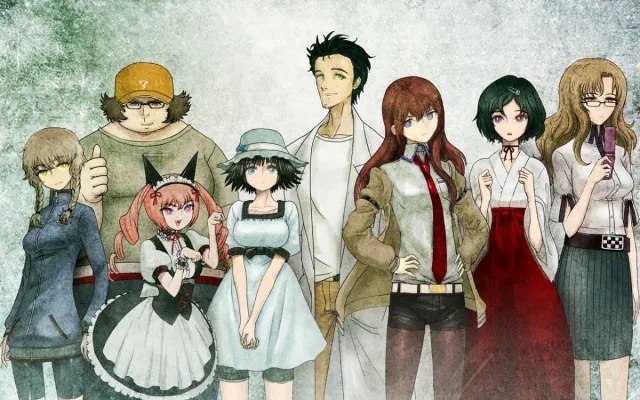
This choice is what separates Steins;Gate from other time travel stories. It isn't about finding the perfect solution. It's about choosing which tragedy you can live with. Okabe chose Mayuri, and the guilt of that choice, the knowledge that he abandoned Kurisu to a pool of blood in a deserted building, is what drives the second half of the series.
Apparently, the Okabe from Steins;Gate 0 eventually figures out how to cheat this system with Operation Skuld. But that solution required the trauma of the Mayuri loops to exist. Without Okabe breaking in the Alpha line, he never develops the desperation necessary to deceive the world. The suffering was a prerequisite for the solution.
The Psychological Reality of Reading Steiner
People underestimate how lonely Okabe's power makes him. Every time he leaped to save Mayuri, he arrived in a past where no one remembered the horror he just witnessed. Mayuri would greet him with a smile, unaware that five minutes ago in his memory, she was bleeding out on the sidewalk. Daru would make a joke about drinks. Kurisu would argue about theories. And Okabe had to pretend he hadn't just watched them all die.
This dissociation is what leads to his PTSD in Steins;Gate 0. The human brain isn't meant to process that much death. Okabe's dreams become contaminated with memories of world lines that don't exist anymore. He flinches when Mayuri moves too fast near traffic. He panics when she leaves the lab. He's living with the ghost of 450+ failed futures.
The anime adaptation shows none of this aftermath. It ends with everyone happy in the Steins Gate world line. But the visual novel and Steins;Gate 0 reveal the cost. Okabe doesn't get to be normal after that. He's seen behind the curtain of reality, and you can't unsee that. The Mayuri loops turned him from a chuuni otaku into a soldier who knows exactly how fragile existence is.
Why Physical Prevention Always Failed
Let's talk tactics. Okabe tried physical intervention. He tried weapons. He tried hiding. He tried running. None of it worked because convergence isn't a chain of causality you can break with force. It's a statistical probability enforced across infinite world lines.
If you stop the Rounders from shooting Mayuri, a car accident happens. If you stop the car, she has a stroke. If you prevent the stroke, a piece of construction equipment falls from a crane. The universe rolls dice until it gets the result it wants, and it has infinite dice. Okabe was playing a game where the house always wins.
This is why the solution required such an abstract approach. You can't fight convergence head-on. You have to trick the universe into thinking the death happened when it didn't, or you have to shift to a world line where the death isn't part of the attractor field's requirements. Okabe's eventual success in the Steins Gate world line involved faking Kurisu's death while saving her, effectively hacking the system's accounting department.
The Legacy of the Loops
Okabe Rintarou's attempts to save Mayuri Shiina represent the darkest period of his life. He aged mentally by over a year while his body stayed twenty. He accumulated trauma that would take decades to process. He learned that love isn't enough to overcome physics, and that determination has limits when you're fighting the fundamental structure of time.
But those loops also taught him the rules. He learned how world lines shift. He learned how Reading Steiner functions. He learned that small changes create big ripples, and that big changes get erased by convergence. This knowledge became the foundation for Operation Skuld, the plan that eventually saved both Mayuri and Kurisu.
The Mayuri loops weren't just suffering for suffering's sake. They were the tuition Okabe paid to understand time travel. Without watching Mayuri die 450 times, he wouldn't have known that the universe checks its math. He wouldn't have known that you can't just save someone, you have to make the universe believe the save fits its rules. That insight came from failure, not success.
In the end, Okabe Rintarou saved Mayuri not because he was the Mad Scientist Hououin Kyouma, but because he was a guy who refused to accept defeat after watching his friend die for 487 days straight. That's not madness. That's just stubborn love, and sometimes that's enough to break the world.