
Most slice of life anime try too hard. They throw in forced drama or loud comedy because they're scared you'll get bored watching kids just exist. Non Non Biyori doesn't care about your attention span deficits. It drops you into a village where buses come once every two hours and the school has five kids total, then it dares you to relax. This non non biyori anime series analysis isn't going to pretend the show is perfect, but it is going to explain why this particular rural comedy hits harder than almost anything else in the healing genre.
People who don't get it will tell you nothing happens. They're half right. Stuff happens, it's just not the stuff anime usually cares about. A first grader learns to ride a bike. Someone makes a teru teru bouzu doll when it rains. The teacher sleeps through class again. These moments shouldn't carry twelve episodes per season, let alone three seasons and a movie, but they do because the show understands something fundamental about atmosphere over plot.
You don't watch this series for character arcs in the traditional sense. Hotaru never really stops being the Tokyo transfer student. Komari never grows taller. Renge stays weird. Instead, the show builds a place so specific and tactile that returning to it feels like going back to your grandparents' house. That's the trick. That's why people write six thousand word essays about it. It's not nostalgia for the viewer's specific childhood necessarily, it's nostalgia for a theoretical childhood where you had time to wander and nothing hurt yet.
The Village Itself Steals Every Scene
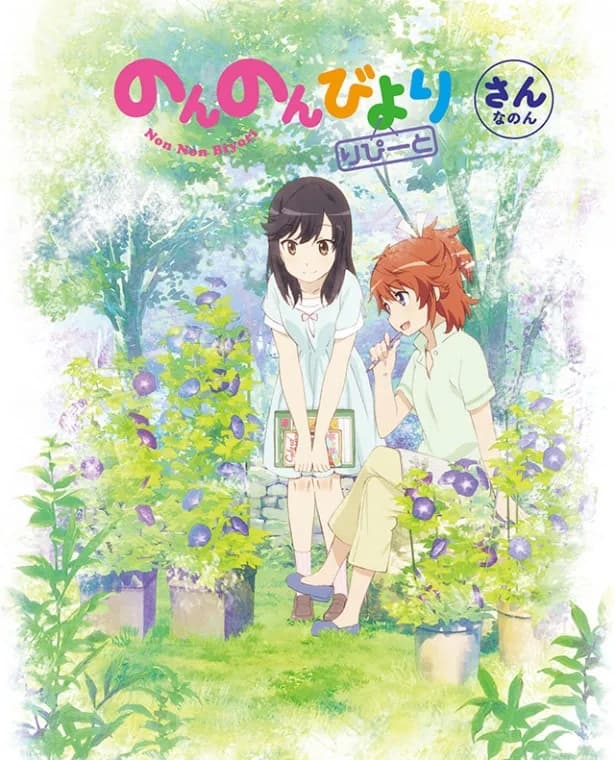
Asahigaoka isn't just a backdrop. It's the whole point. The animators at Silver Link didn't half-ass the rural Japanese countryside, they painted it with an attention to detail that borders on obsessive. Apparently some of the background art was even painted in Vietnam, which creates this weird hybrid of real Japanese locations filtered through another cultural lens, but it works anyway. The fields look real. The rivers move like actual water. The candy store feels like a place you visited when you were eight years old and forgot about until now.
The show uses this setting to kill the concept of time. There's no cell phone reception worth mentioning. The kids walk everywhere because there's nothing else to do. When Hotaru arrives from Tokyo, she's not just experiencing culture shock, she's entering a different temporal zone where urgency doesn't exist. The isolation means the show can focus on seasonal changes with a granularity that city-set anime can't match. Cherry blossoms matter when you live in the sticks. The first snow isn't an inconvenience, it's an event that changes your entire routine for months.
This reliance on place creates what some academic papers call a sense of non-place versus actual place, though honestly that's just fancy talk for saying the show feels lived-in. The backgrounds aren't generic anime trees copied from a texture pack. They're specific trees that exist in specific relationships to the schoolhouse and the shrine and the hole-in-the-wall hangout spot behind the general store. You could draw a map of Asahigaoka from memory after watching a few episodes, and that's rare. Most anime locations feel like sets. This one feels like geography.
The infrastructure details matter too. The school building has a leaking roof and loose floorboards. There's only one classroom for all grades. The teacher is related to one of the students and sleeps at her desk. The candy store doubles as a postal service and a babysitting service. These details aren't played for poverty tourism or sadness, they're just facts of rural life that the characters navigate without complaint. It creates a sense of community that's tight-knit without being claustrophobic.
Renge Is the Best Part and It's Not Close
Let's be real about the character hierarchy here. Renge Miyauchi carries this show on her tiny first-grade shoulders. The other characters are fine. Komari has her height complex, Natsumi is a tomboy disaster, Hotaru has that weird crush on Komari that goes nowhere interesting, and Suguru exists as a silent prop. But Renge? She's the engine that makes everything run.
She's a first grader who acts like an actual child instead of a tiny adult or a mascot character. She says "nyanpasu" instead of good morning because she's six and that's the kind of weird linguistic quirk real kids have when they're playing with language. She plays her recorder badly in the opening scene of the first episode, and that out-of-tune screeching tells you everything about the show's auditory philosophy. It's not polished. It's not trying to be cute in a manufactured way. It's just authentic childhood weirdness that hasn't been filtered through marketing demographics yet.
The voice acting here matters more than usual. Kotori Koiwai gives Renge this flat affect that makes her deadpan observations hit different. When she names a raccoon "Gu" or decides to walk to school alone for the first time, it doesn't feel scripted by a committee. It feels like documentary footage of a kid being a kid. The show never talks down to her or uses her for cheap emotional manipulation. She's treated as a full person with her own internal logic, which is why her moments of vulnerability, like learning about death for the first time or failing to whistle despite practicing for days, actually land instead of feeling like plot devices.
Sound Design That Refuses to Manipulate You
Most anime music tries too hard to tell you how to feel. It's all dramatic strings when someone confesses or wacky xylophones when something funny happens. Non Non Biyori just doesn't do that. The soundtrack by Hiromi Mizutani uses woodwinds and acoustic guitars to create this hazy, summer-afternoon vibe that never intrudes on the scene. It supports instead of directing.
The opening song "Nanairo Biyori" by nano.ripe captures the playfulness without being obnoxious, but the real star is the background audio. You hear cicadas loud enough to drown out dialogue. You hear water flowing over rocks. You hear the wind in the grass and the creak of old wood. The show uses silence better than almost any other slice of life series, letting scenes breathe with just ambient noise instead of filling every gap with chatter or music. There's an entire episode about making teru teru bouzu dolls during the rainy season where the sound design does more emotional work than the dialogue.
And yeah, the recorder matters more than you think. Renge's recorder playing isn't a cute gimmick, it's a thematic statement about imperfection being acceptable. The show is full of flat notes and off-key moments because that's what real rural afternoons sound like. Kids learning instruments make terrible noises and the show doesn't edit that out or make it sound better. If this show had a generic J-pop opening and sparkly magical girl sound effects, it would fall apart immediately. The audio grounds it in reality and keeps it from floating away into pure escapism.
Character Dynamics Without Artificial Conflict
Here's where Non Non Biyori separates itself from garbage like Glasslip. The characters like each other. They don't create artificial conflict for the sake of plot movement. Natsumi teases Komari about being short, but it's sibling ribbing, not actual bullying. Hotaru has a crush on Komari that's played for gentle comedy rather than romantic melodrama that derails the tone. Renge treats everyone as equals despite being half their age because in a village this small, age matters less than proximity.
The multi-grade classroom setup helps here. With only five students in the entire school, including one silent brother who never speaks and basically serves as background furniture with legs, the social dynamics are stripped down to essentials. There's no popularity contest. No clubs competing for funding. No graduation anxiety because everyone knows they'll just keep existing together. Just kids of different ages interacting because they're the only other humans around within walking distance. The teacher, Kazuho, is Renge's older sister and she's hilariously incompetent, sleeping through lessons and ignoring the kids, which removes the authority figure tension you see in other school anime where teachers are obstacles or mentors.
This lack of conflict doesn't mean lack of characterization. Natsumi gets episodes showing she's actually kind and caring underneath her lazy troublemaker exterior, like when she helps Renge with the recorder or looks out for her during the Okinawa trip. Komari's insecurity about her height and breast size is treated with empathy rather than cruelty. Even the candy store lady, Kaede, gets development showing her soft spot for Renge that borders on maternal. The show trusts that watching these personalities bounce off each other in low-stakes situations is enough entertainment, and for anyone who isn't allergic to calm, it totally is.
The Vietnam Connection and Visual Aesthetics
Silver Link went absolutely hard on the backgrounds for a show about kids catching bugs. We're talking movie-quality pastoral imagery for a TV anime. The color palette is bright but not garish, using lots of greens and blues that feel like actual nature rather than anime nature. There's a specific quality to the light in this show, like it's always golden hour, which shouldn't work for every scene but totally does because it creates visual consistency.
According to some academic analysis, the backgrounds were painted in Vietnam by studio associates there, which explains why the vegetation looks slightly different from standard Japanese rural anime. It's a hybrid of Japanese location scouting and Southeast Asian artistic interpretation, creating a rural Japan that feels real but slightly idealized. The fields look like they have actual depth. The mountains in the distance have atmospheric perspective. When it rains, the puddles reflect correctly.
The character designs are simple but distinct. Renge has her triangle mouth when she's being deadpan. Komari has that permanent pout about her height. Hotaru looks like a high schooler despite being in fifth grade, which is a running gag that never gets old because her maturity contrasts with her actual behavior. Suguru looks like every generic anime background character, which is the point since he has no personality and no voice actor. The designs don't sexualize the characters, which is refreshing in a genre that often struggles with that. They look like kids. Weird, specific kids with realistic hair colors except for Renge's purple twintails, but we give that a pass because it's cute and matches her eccentric personality.
Non Non Biyori Analysis of the Three Seasons
People always ask if they should watch Repeat or skip to Nonstop. Here's the deal: watch all of it, but understand that Repeat isn't a chronological sequel. It's more stories from the same timeframe as the first season, filling in gaps and showing different perspectives. Some fans get confused because episode one of Repeat covers Renge's first day of school, which feels like a prequel, but the season jumps around the timeline. It's not season two in the traditional sense, it's season one point five.
Nonstop, the third season that came out years later after the long gap, feels slightly different. The animation is cleaner, the colors are brighter, and there's more confidence in the directorial choices. But the core appeal remains intact. The movie, Vacation, takes them to Okinawa, which sounds like it would break the rural spell, but actually just shows how these characters behave when removed from their natural habitat. They don't change into different people. They just do the same relaxed activities on a beach instead of in a field.
The manga ended recently, which makes the anime feel complete now. You can watch all three seasons and the movie and feel satisfied. There's no cliffhanger. No "read the manga" ending that ruins the pacing. Just a complete portrait of childhood in the countryside that stops when it's ready to stop. The third season in particular has some of the best episodes, including the one with the New Year's shrine visit and the one where Renge meets the transfer student before she transfers, which plays with timeline expectations in a way that shouldn't work but does.
Why It Works as Iyashikei
Iyashikei means "healing" anime, and most attempts at the genre fail because they try too hard to be relaxing. They add unnecessary narration or force cute moments that feel calculated. Non Non Biyori succeeds because it doesn't try to heal you. It just exists and lets you observe. The healing happens as a side effect of spending time in a place where nothing hurts.
The show captures the specific liminal space of summer vacation when you're too young to have responsibilities but old enough to wander. It's the time between elementary school obligations when the day stretches forever and you might catch a bug or might just stare at clouds and both are valid choices. In a medium obsessed with power scaling and isekai mechanics and high school romances, that's pretty radical. It's saying that you don't need a quest or a goal to have a story. You just need time and weather.
Non Non Biyori isn't for everyone. If you need plot twists, romantic resolutions, or high stakes, you'll think it's boring. But if you can accept that watching a first grader stare at a mountain for thirty seconds is valid entertainment, there's nothing else quite like it. This non non biyori anime series analysis barely scratched the surface of why the show works, honestly. You could write books about how it captures the rhythm of rural life and the way children process the world when they aren't being rushed.
The show endures because it doesn't try to be important. It just wants to show you a quiet place where kids are free to wander and the biggest crisis is whether it will rain tomorrow. Watch it when you're stressed. Watch it when you're happy. It doesn't matter what mood you're in, it'll slow your heartbeat down a few notches. That's the magic trick. That's why people keep coming back to Asahigaoka year after year.