

People keep asking if the NieR Automata Ver1.1a anime adaptation analysis should treat this like a shot-for-shot remake of the 2017 game. They're missing the entire point. The "Ver1.1a" in the title isn't just decoration or a cute reference to software patches. It's a version number indicating this is a branch in the timeline, not a retelling, and that's exactly what makes it worth watching instead of just replaying Route A on your console for the third time.
The anime takes Yoko Taro's multiverse obsession and runs with it. You aren't watching the same 2B and 9S you controlled in the game. These are alternate universe variants where the Pearl Harbor Descent went differently, where Lily survived instead of Anemone, and where the Pods decide to screw protocol at the end rather than follow their programming. If you want the game experience, go play it. This is something else entirely, and it uses that freedom to fix problems the game had while creating new ones of its own.
Why The Version Number Matters
The "1.1a" designation isn't subtle. In the NieR universe, timelines branch like crazy. Drakengard started this mess with multiple endings leading into different games, and Automata itself has 26 endings ranging from serious to joke endings where you eat a mackerel and die. The anime explicitly slots itself into this framework as an alternate universe where small changes snowball into massive differences.
This matters because it shuts down the complaints about accuracy. When Lily leads the Resistance instead of Anemone, that's not a mistake. When Eve dies protecting Adam instead of the other way around, that's not the writers forgetting the game script. It's a different timeline where choices played out differently. The anime even references this directly through Pod dialogue and the final episodes, suggesting these branching paths are all equally real within the fiction.
How They Squashed Two Playthroughs Into One
The game splits its story across multiple routes. You play through Route A as 2B, then Route B replays the same events from 9S's perspective with hacking mechanics, then Route C throws everything sideways. The anime doesn't have time for that. It merges Routes A and B into a single linear narrative, showing events from both androids' viewpoints simultaneously or switching between them rapidly.
This creates a pacing problem. The show moves fast, sometimes adapting one full game chapter per episode. Side quests get cut or condensed. The Forest Kingdom gets skipped entirely in favor of moving Pascal's village to the commercial facility area. You lose the slow, atmospheric exploration that made the game feel so lonely and huge. But you gain something the game couldn't do. You see 9S's reactions to events while they're happening alongside 2B's actions, creating a more immediate emotional connection rather than the delayed understanding you got from the game's structure.
A2 Finally Gets Her Due
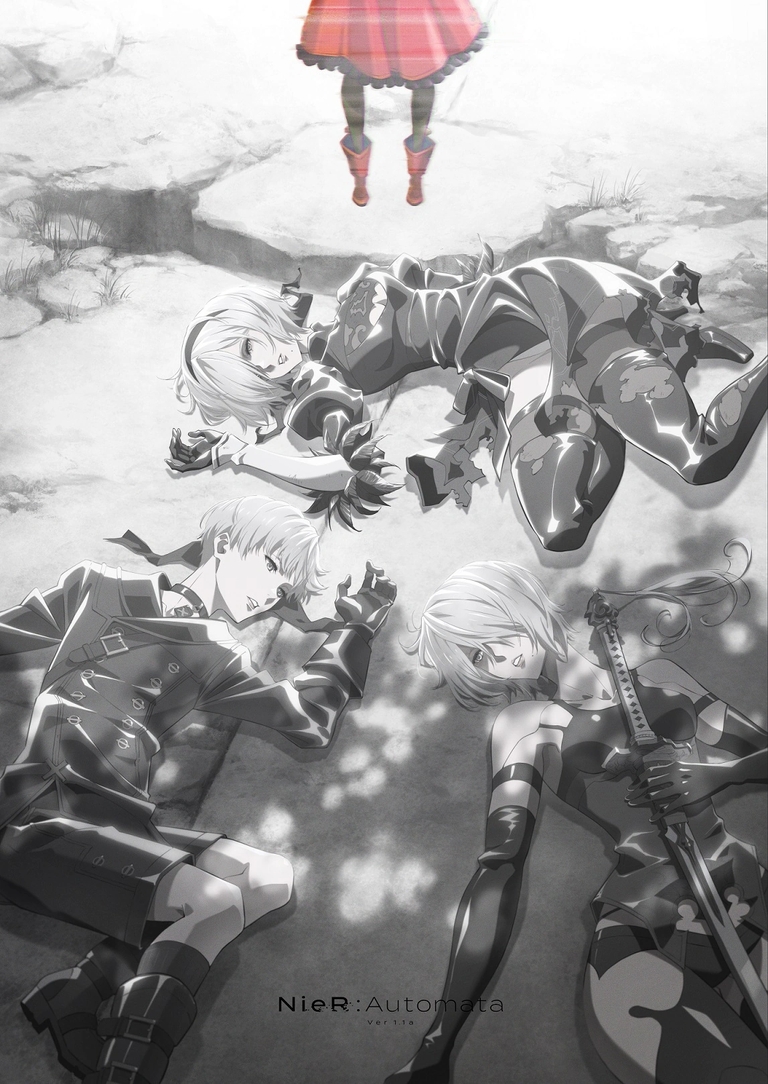
In the game, A2 shows up as this mysterious angry lady who hates machines and YoRHa equally. Her backstory exists only in text logs you can miss, specifically the Pearl Harbor Descent Record. You read about her squad getting wiped out, about her relationship with the original Resistance leader Anemone, and about why she deserted. Most players never found these logs or didn't read them, so A2 came off as underdeveloped.
The anime fixes this by adapting the stage play and manga directly into the show. We see young A2, back when she was just No. 2, leading her squad with optimism and trust. We watch her bond with Lily, who in this timeline is the one who survives instead of Anemone. The anime spends real time showing the betrayal by YoRHa command, showing her squad getting sacrificed for data, and showing her transformation from a trusting soldier into the vengeful rogue we meet later. It adds emotional weight to her fights with 2B later because we understand she's not just angry. She's grieving people we actually saw alive.
The Character Death Swap Mess
The timeline differences hit hard when characters start dying. In the game, Anemone leads the Resistance and survives the whole story. Lily dies during the Pearl Harbor Descent before the game even starts. The anime swaps this. Anemone dies on the descent mission, and Lily takes over as the leader you meet in the present. This changes the dynamic of the Resistance camp completely.
Then there's Adam and Eve. In the game, 2B kills Adam in the Copied City, and Eve goes berserk with grief. In the anime, Eve dies protecting Adam, and Adam goes full monster mode, transforming into this kaiju-looking thing that references enemies from NieR Reincarnation. Adam survives longer, changing the final battles. Other characters get it worse. The entire Resistance camp gets wiped out by a zombie-like virus in the anime. Lily dies. Jackass dies. Pascal's village gets invaded by hostile machines rather than going berserk internally, leading to different tragedy.
When The Pods Disobey
The biggest divergence comes at the end. The game has Endings C and D where either A2 or 9S dies, then Ending E where the Pods rebuild the androids after players delete their save data to help others. The anime creates something called Alternative Eden. A2 fights 9S but doesn't kill him. She meets the machine network's consciousness and rejects its offer to join a spacefaring ark. The Tower collapses.
Then the Pods act differently. Pod 042 and Pod 153 actively rebel against YoRHa protocol to defend and repair 2B and 9S's bodies. They use their own bodies as shields. They die in the process, sacrificing themselves to save the androids. The final scene shows 2B and 9S waking up together, alive, with Accord from the Drakengard universe showing up to repair A2. It's a happier ending than the game provides, suggesting this timeline might actually break the cycle of suffering, or at least pause it.
Why The CGI Looks Like That
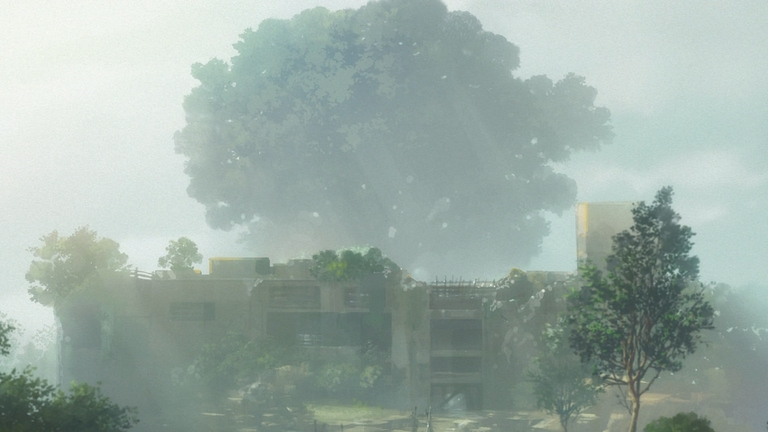
Nobody's going to call this anime a visual masterpiece. The first episode especially has rough moments with the 3D CGI for flight units and machines. It looks plastic and moves weird. The production faced serious delays, with episodes getting postponed due to staff health issues and COVID complications. A-1 Pictures had to work around constraints that PlatinumGames didn't face when making the game.
But when it counts, the 2D animation delivers. The character models for 2B, 9S, and A2 stay on model. The backgrounds capture that specific NieR aesthetic of overgrown ruins and melancholic skies. Some shots directly replicate the game's camera angles, creating that uncanny sense of déjà vu for players. It's uneven, sure. Some episodes look solid while others feel rushed. But the art direction respects the source material even when the budget couldn't quite match the ambition.
Is It Worth Watching Or Just Playing
Here's the thing. If you haven't played NieR Automata, don't start with the anime. You'll be lost. The show assumes you know the lore, the terminology, the twist about humanity being extinct. It moves too fast to let newcomers soak in the existential dread that the game drip-feeds through environmental storytelling and side quests. The anime tells you the plot but can't replicate the feeling of wandering through the City Ruins alone, listening to Keiichi Okabe's soundtrack while wondering what happened to this world.
But if you played the game and loved it, the anime works as a companion piece that expands the lore. It fills in gaps you didn't know existed, like the full Pearl Harbor story. It shows you what if scenarios that are canon within the multiverse. It gives A2 the character study she deserved. The changes aren't random. They're supervised by Yoko Taro himself, who wanted to destroy the original story while the anime staff tried to preserve it, resulting in this weird hybrid that manages to be both faithful and completely different.
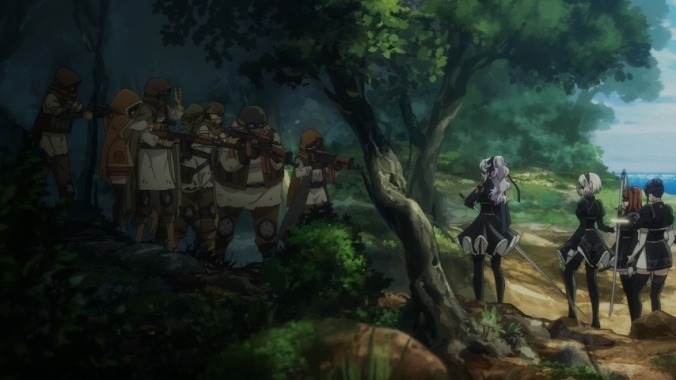
The anime also integrates stuff from side materials. Characters from the YoRHa stage plays show up. References to NieR Replicant appear when 9S hacks into Emil's memories. There's even a nod to the sadfutago mod with a hidden church in the Copied City. These aren't just Easter eggs. They're building out the world in ways the game couldn't, using the anime format to show rather than tell.
Some choices still feel weird. Removing the Grün fight removes a major set piece. Changing the factory sequence from "Become as Gods" to "Become as Eve" alters the thematic punch. The pacing never lets you breathe, rushing from emotional beat to emotional beat without the quiet moments that made the game special. But it also fixes the game's biggest flaw by giving side characters proper sendoffs instead of leaving their fates in optional text boxes.
The Final Verdict On Ver1.1a
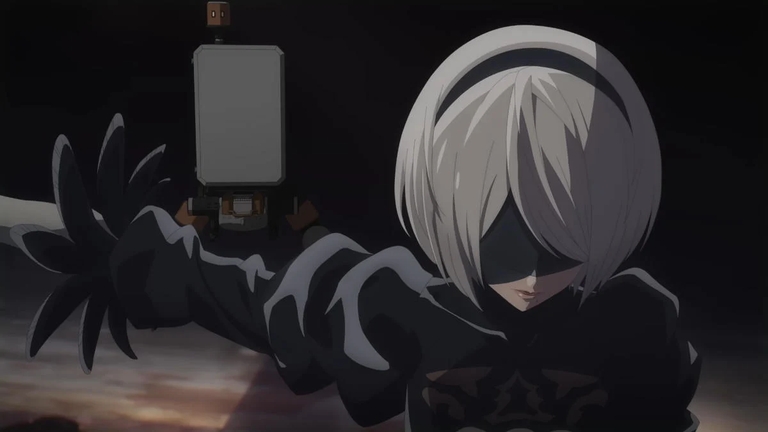
NieR Automata Ver1.1a isn't trying to replace the game. It's trying to justify its own existence as a parallel story, and mostly it succeeds. It stumbles with production issues and pacing, but it sticks the landing by treating the source material as a foundation rather than a prison. The character changes make sense for this timeline. The expanded backstories add weight. The ending offers hope instead of just cycles of violence.
If you want the definitive experience, play the game. If you want to see what else could have happened in that world, watch the anime. Just don't expect a perfect copy. The version number warned you. This is 1.1a, not 1.0. It's an upgrade, a branch, a what-if that manages to stand on its own while respecting where it came from. That's more than most game adaptations manage. Most just try to copy and fail. This one had the guts to diverge.