
If you're digging into nier:automata ver1.1a anime vs game differences and lore, you need to understand one thing right away. This isn't a shot for shot retelling of the 2017 PlatinumGames release. The "Ver1.1a" in the title isn't just there to look cool. It marks this as a branching timeline within the Drakengard and NieR multiverse, a separate universe where events play out differently and characters meet ends they avoided in the original playthroughs.
Yoko Taro supposedly fought the production staff at A-1 Pictures about this. He wanted to destroy the original story structure completely, arguing that a direct translation of the game wouldn't work as a linear show. The staff pushed back hard, wanting to keep things faithful to what fans loved. They compromised, and what we got sits somewhere in the middle. It keeps the bones of the story but swaps enough meat around to make it a distinct experience. You can't watch this as a substitute for playing the game, but you also can't ignore it if you care about the full scope of the setting.
The anime merges the game's Routes A and B into one continuous thread. In the game, you played through 2B's perspective first, then replayed the same events as 9S to get new details. The anime cuts between both viewpoints in the same episodes, showing you what both androids see without making you sit through identical battles twice. It sounds simple but it changes the pacing completely, letting the story breathe in ways the game couldn't while rushing through some emotional beats faster than players might remember.
The Big Character Swaps
The most obvious change hits you early. Lily leads the Resistance in the anime, not Anemone. In the game, Anemone runs the camp and survives the whole mess. Lily shows up only in text logs and backstory as a dead member of the Pearl Harbor Descent squad, the mission that broke A2. The anime flips this. Anemone dies during that descent mission and Lily takes her place as the leader you meet in the present day.
This isn't a cosmetic swap. It changes the emotional weight of the Resistance camp scenes. Lily carries survivor guilt from watching her squad die, including Anemone, which ties her directly to A2's trauma. When A2 shows up later, their interactions hit different because Lily knew her before she became a deserter. The anime spends real time on the Pearl Harbor Descent through flashbacks and direct adaptation of the stage play "YoRHa: Pearl Harbor Descent Record." You see A2's bond with her original comrades, you see the betrayal by Command, and you understand why she hates both YoRHa and the machines before she even opens her mouth in the present timeline.
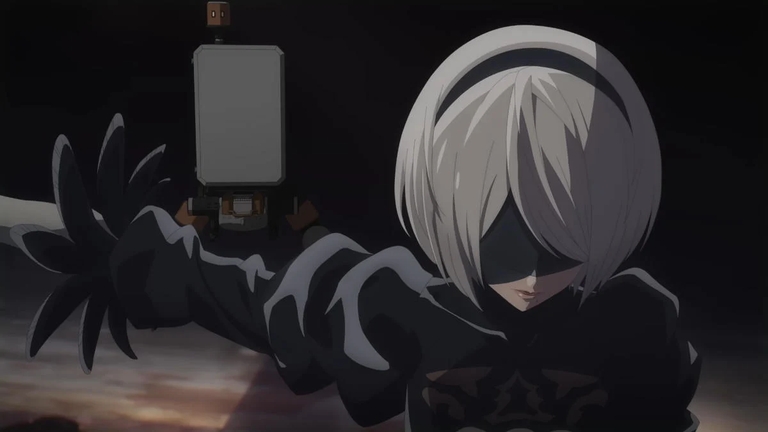
A2 gets way more screen time in general. The game throws her in late as a wild card, but the anime tracks her from the start, showing her hiding in the Forest Kingdom and eventually landing at Pascal's village instead of the shopping center entrance. She develops relationships with the machine children and Pascal himself, giving her a reason to care about the world beyond just killing. By the time she fights 2B and her sword breaks, you actually know who she is.
Adam and Eve Get Mixed Up
The twins get their fates reversed. In the game, 2B kills Adam in the copied city, causing Eve to lose his mind and go on a rampage that you have to stop. The anime has Eve intervene during the fight, getting himself killed while Adam survives. This sends Adam into a rage spiral instead, transforming him into a kaiju sized monster that resembles the grotesque designs from NieR Reincarnation.
This change ripples outward. The "Become as Gods" scene in the factory becomes "Become as Eve" instead, removing Pascal from that specific sequence entirely. The factory sequence still happens, but the context shifts because Adam's grief and anger drive him in directions the original plot didn't explore. The anime also moves their final confrontation to a replica of The Library, a location that doesn't show up until Route C in the game, creating weird spatial continuity if you try to map it directly to the game layout.
Missing Bosses and New Locations
The Grün fight is gone. That whole massive missile sequence where you blow up the XXL Goliath in the city ruins? Cut completely. Instead, 2B and 9S head to the Flooded City earlier to investigate A2's history, which gives 9S more time to stew on the idea that Command betrayed her unit. This isn't just a pacing choice. It removes a major action set piece but replaces it with character development for 9S's growing paranoia.
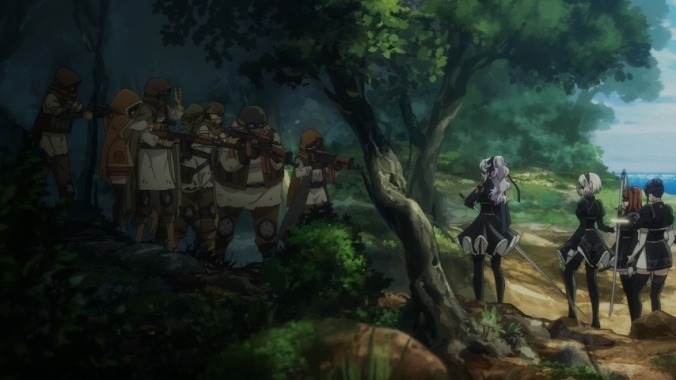
The anime also adds the hidden church from the sadfutago mod into the Copied City, complete with references to the Replicant Library and the Tower. This Easter egg acts as a nod to the community but also ties the Automata timeline more explicitly back to the first NieR game. 9S hacks into Emil's memories and sees Kainé, Yonah, Grimoire Weiss, and Nier directly, whereas the game only alluded to them vaguely.
Pascal's village gets rearranged too. The path from the commercial facility leads straight there, skipping the Forest Kingdom entirely in terms of main plot progression. Inside the village, an Emil head sits as a religious icon in a tree, and Pascal's backstory expands to show Emil inspired his pacifism. Devola and Popola show up earlier to help the Resistance, and their fates get altered when the camp gets infected later.
The Ending Goes Off Script
The second cour diverges hard from Route C. 2B and 9S get paired for scouting missions earlier, which triggers the Amnesia side quest sooner and reveals 2B's Type-E nature (her real job is executing 9S when he learns too much) way before the game did. When YoRHa falls, 9S operates separately from 2B instead of getting knocked out and separated by circumstance. Operator 6O dies on screen in a transmission you watch, rather than just finding her body.
The Resistance camp gets hit by a zombie-like virus that turns the androids hostile. Lily, Jackass, and others die here in gruesome ways that didn't happen in the game. One machine child even cannibalizes the others. Pascal self-destructs in the chaos, which differs from the game where you choose his fate or he goes berserk.

The finale creates an original ending labeled "Alternative [E]den." A2 fights 9S but resists his hacking attempt. She encounters the machine network's offer to join their spacefaring ark before the Tower collapses. Pods 042 and 153 rebel against their programming to defend and repair 2B and 9S's bodies, eventually dying themselves in the process. The show ends with 2B and 9S waking up together, and Accord from the Drakengard series shows up to repair A2, implying connections to even older timelines.
Post-Credits Puppet Shows
The anime uses its end credits weirdly. Early episodes feature live-action puppet shows that adapt the game's joke endings, like 2B dying from eating mackerel. Later episodes shift to animated discussions between Pods 042 and 153, giving them personalities and commentary that the game reserved for the very end. These segments let the anime wink at the audience about the nature of adaptation and repetition without breaking the main story's tone.
Eyecatchers hide messages in UTF-8 hexadecimal code for lore hunters to decode. The show knows its audience and layers these meta-commentaries throughout, treating the medium itself as part of the story's cyclical themes about repeating loops with slight variations.
Visuals That Copy the Game Exactly
Despite all the story changes, the camera work stays faithful to a weird degree. Scenes replicate the game's camera angles, framing, and character choreography shot for shot in many places. Cutscenes that were 3D in the game become 2D animation but keep the same blocking. A-1 Pictures replicated the cinematics without altering them much because they viewed them as complete in themselves.
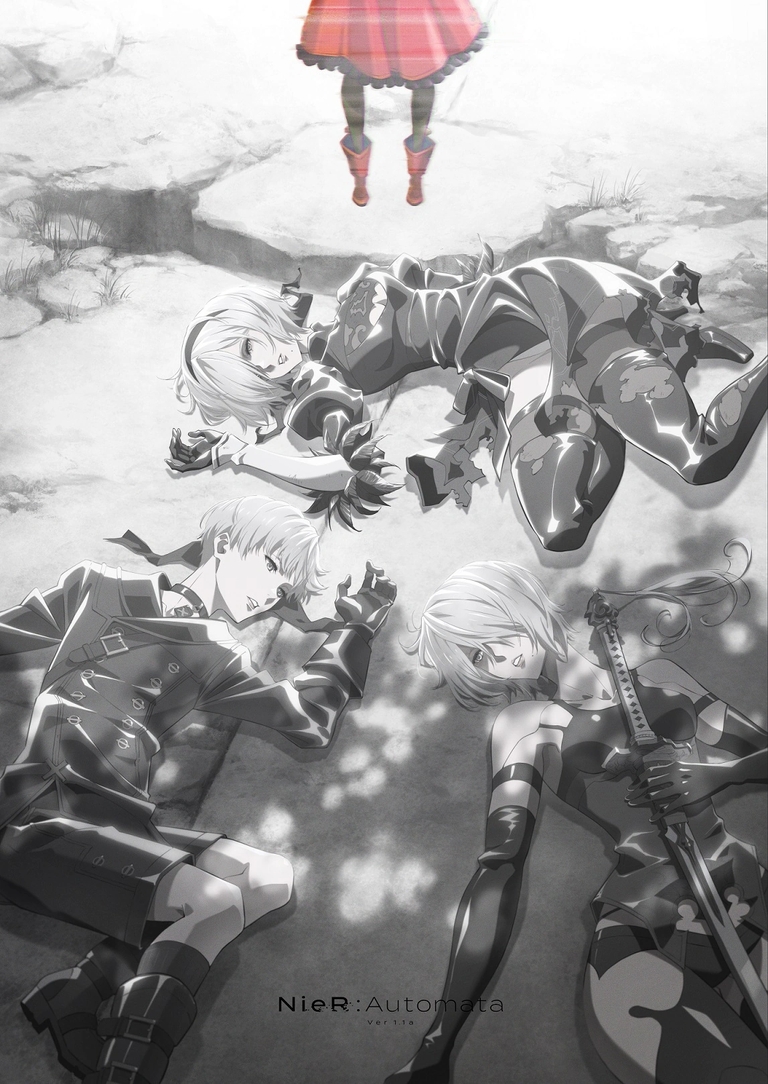
This creates a strange effect where the show looks exactly like the game during action sequences but feels completely different during character moments. The color palette and environmental design capture that post-apocalyptic sadness, though the CGI sometimes looks rough compared to Platinum's fluid combat animation.
Why It Works as a Companion
You shouldn't watch this instead of playing the game. The game uses player agency and multiple playthroughs as mechanical storytelling devices that a linear show can't replicate. The anime can't make you feel the betrayal of realizing you're replaying content for a reason, or the shock of the camera pulling back to reveal the truth about humanity.
But the anime expands on buried lore that the game hid in text files and side materials. It brings the Pearl Harbor Descent to life, gives A2 the characterization she deserved, and connects dots between Automata, Replicant, and Drakengard that the game only hinted at. It treats the source material as a multiverse where every version is valid but none are the "real" one.
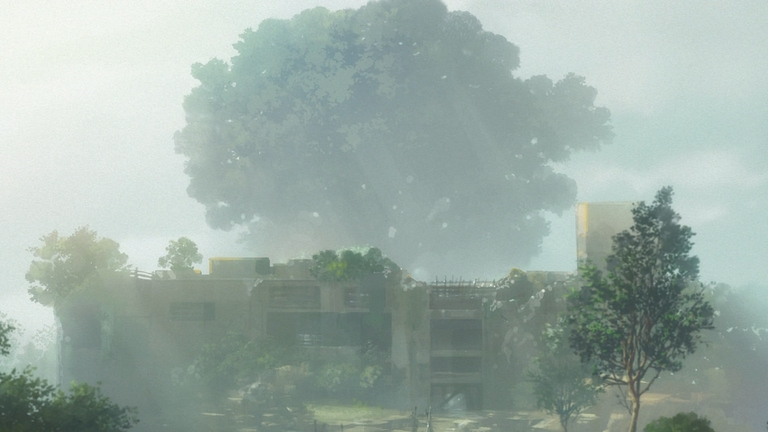
If you played the game, the anime gives you a new experience with familiar characters. If you haven't played it, you'll miss the impact of certain reveals that the anime rushes through or changes entirely. Yoko Taro wanted to subvert expectations and the result sits in a weird middle ground between remake and sequel.
The differences aren't mistakes or shortcuts. They're deliberate branches in a timeline that was always about cycles and variations. The nier:automata ver1.1a anime vs game differences and lore aren't just trivia points. They represent the idea that no story stays the same when you tell it twice, and that androids, like narratives, can change their programming if they fight hard enough against the ones who wrote it.