
Naruto Shippuden anime series overview discussions usually focus on the filler count or the pacing issues, but they're missing the point entirely. This show isn't just a sequel where the characters get taller and the explosions get bigger. It's where Masashi Kishimoto's ninja story actually grows teeth and bites down hard on themes of war, peace, and what it costs to break cycles of hatred. You get 500 episodes of a teenager trying to save his best friend from darkness while a terrorist organization hunts monsters sealed inside children. It's messy, it's ambitious, and yeah, sometimes you want to throw your remote at the screen during the endless flashback episodes, but when it hits, it hits harder than a Rasenshuriken to the chest.
The series picks up two and a half years after the original ends, with Naruto Uzumaki rolling back into the Hidden Leaf Village looking taller, wearing a black and orange jacket that finally fits, and carrying enough emotional baggage to fill a storage unit. He's been training with Jiraiya the whole time, learning to control the Nine-Tails chakra and trying not to die, but he doesn't get a break because the Akatsuki organization is out here kidnapping jinchuriki left and right. The stakes jump from "pass the chunin exams" to "prevent the apocalypse" real fast, and the show never really looks back after that shift. If you want the official episode breakdown, it's organized into 21 seasons that aired from February 2007 to March 2017.
What makes this series worth watching isn't just the bigger explosions or the new jutsu names. It's the way the story forces a loudmouth kid to confront that he can't punch his way out of every problem. You've got 21 seasons of television here, spanning a full decade of broadcast, and it covers everything from intimate character tragedies to giant chakra avatars throwing mountain-sized projectiles at each other. That's a wild ride even if you use a filler guide and skip half the runtime.
The Akatsuki Hunt Changes Everything
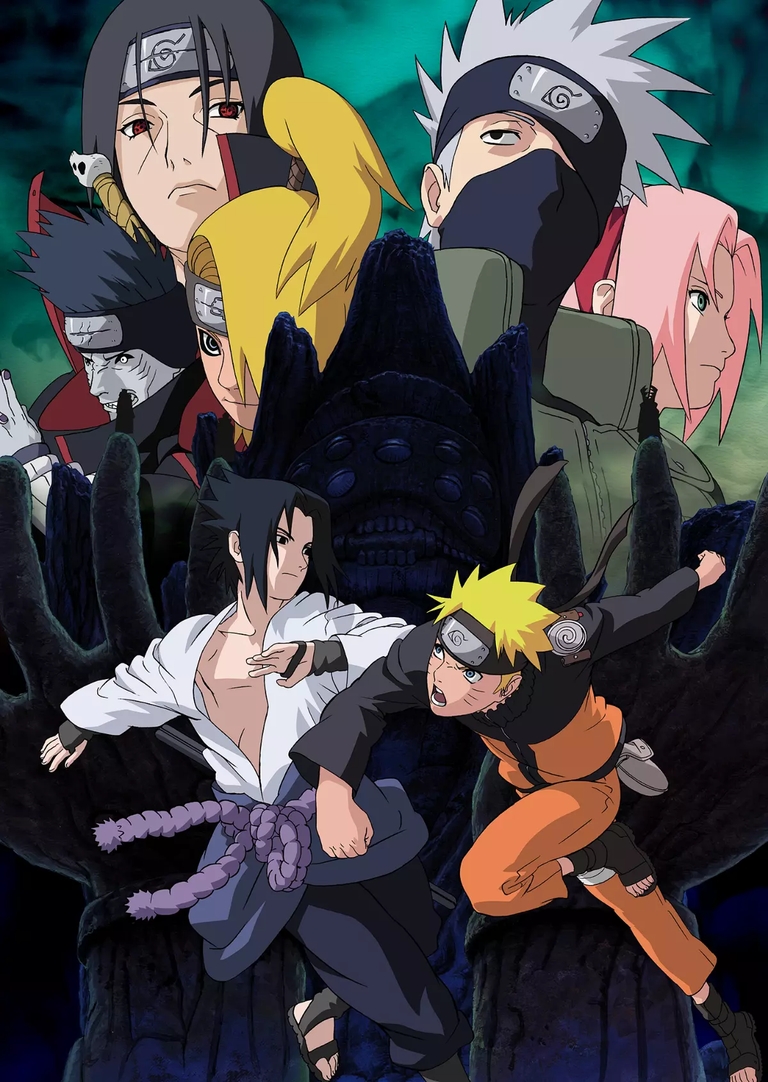
You can't talk about this show without mentioning the Akatsuki. These guys show up wearing black cloaks with red clouds and immediately make the original series look like preschool craft hour. They're hunting tailed beasts, which are basically nuclear weapons with fur and bad attitudes, and they don't care who gets crushed in the process. Each member gets paired with a partner, and they work in teams to capture jinchuriki and seal the beasts into a giant statue. It starts feeling less like ninja missions and more like hunting endangered species for a doomsday cult that wants to rule the world through mass hypnosis.
The Kazekage Rescue Mission hits first and it hits hard. Gaara gets kidnapped by Deidara and Sasori, two Akatsuki members who treat murder like it's art class. Naruto loses it because he sees himself in Gaara, another jinchuriki who suffered alone for years while his village hated him. When Team 7 finally catches up to the Akatsuki hideout and rescues Gaara but he dies anyway, only to get revived by Chiyo's sacrifice, that's the moment you realize this isn't kid stuff anymore. People stay dead here. Well, sometimes they stay dead, which is more than you can say for later arcs when the reanimation jutsu starts bringing everyone back.
Then you've got the Tenchi Bridge arc where Sai shows up acting like an emotionless robot who insults people's pen sizes and Yamato has to babysit Team 7 while Naruto goes full four-tails mode against Orochimaru and nearly kills himself. The animation gets weird here, all stretchy and distorted like they're animating through a funhouse mirror, but the intensity is real. Sasuke appears at the end looking like he shops exclusively at Hot Topic and moves like a completely different fighter, which sets up the whole relationship that drives the plot for the next several hundred episodes where Naruto chases him across deserts and through dimensions and into literal hell if that's what it takes to bring him back home. You can check the official series page for more context on these early arcs.
Complete Series Overview by Arc
If you're trying to watch this beast without getting lost in the weeds, you need a map. The show covers 29 distinct arcs according to most breakdowns, though some of them are filler you can skip without missing anything important. The canon material follows the manga closely and tells a complete story from Naruto's return to his eventual marriage and ascension as Hokage. The chronological arc order helps keep track of what matters.
The Akatsuki Suppression Mission spans episodes 72 through 89 and it's where the show gets really dark and stays there. Hidan and Kakuzu kill Asuma Sarutobi, Shikamaru's teacher and the son of the Third Hokage, and suddenly the stakes aren't abstract anymore. You watch Shikamaru cry while lighting a cigarette in the rain and planning revenge for ten episodes straight, using his genius IQ to trap an immortal cultist in a forest and blow him into pieces that get buried underground forever. Naruto develops the Rasenshuriken here, which destroys his own arm when he uses it because perfect techniques come with perfect costs. It's brutal and effective storytelling that hurts to watch.
Then Jiraiya goes to the Hidden Rain Village alone to investigate Pain. This is the Tale of Jiraiya the Gallant arc, episodes 127 to 133, and it's basically a snuff film disguised as ninja television. He fights Pain, discovers the secret of the Rinnegan, dies underwater while sinking with his throat crushed, and manages to encode a message on a frog's back with his dying breath. That's metal as hell and it hurts every time you watch it because you see Naruto's reaction and it's not pretty. He's destroyed by it.
Pain's Assault follows immediately after, episodes 152 to 175. Pain destroys the entire Leaf Village with one move, Shinra Tensei, which is basically a gravity bomb. He literally drops a nuke on Naruto's hometown while he's away training on Mount Myoboku. When Naruto shows up in Sage Mode ready to negotiate but mostly ready to break faces, it's the best the show ever looks. The fight choreography here is stupid good, with Naruto using shadow clones to throw himself around like a pinball and frogs singing genjutsu that paralyzes entire bodies while he tries to talk a terrorist into becoming a decent human being through the power of empathy and punching.
The Five Kage Summit arc gets political in a way the series never tried before. Sasuke attacks the meeting of all five village leaders, nearly dies multiple times, and Tobi reveals himself as Madara Uchiha, or so we think at the time. The ninja world unites against a common enemy for the first time in history, which leads directly into the Fourth Shinobi World War. And that's where things get complicated. The war arc starts around episode 261 and doesn't end until episode 479. That's over 200 episodes of battle. You get Obito's reveal as the man behind the mask, Madara breaking out of the coffin and dropping meteors on thousands of soldiers, the Ten-Tails resurrection, and eventually Kaguya Otsutsuki showing up as the final boss like she owns the place. It's a lot to digest and the pacing drags hard in the middle when they start flashbacking to the Warring States period for the hundredth time.
Sakura and the Side Characters Matter Too
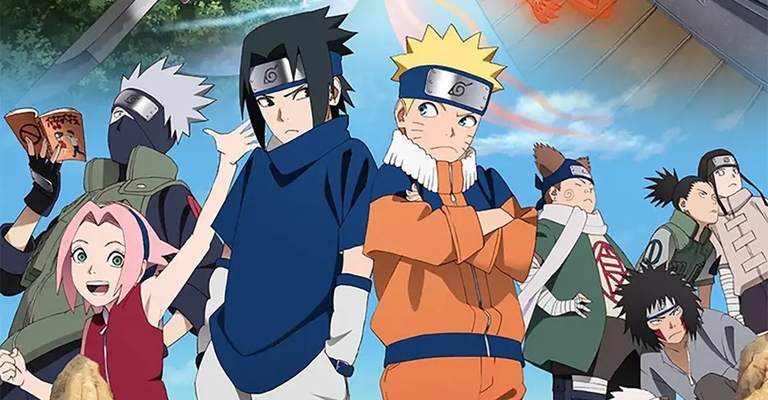
People love to clown on Sakura Haruno but Shippuden gives her moments to shine that the original never did. She trains under Tsunade and becomes a medical ninja who can punch buildings apart while healing entire armies. During the Kazekage Rescue arc she gets a legitimate win against Sasori, one of the most dangerous Akatsuki members, by using her intelligence and poison knowledge instead of just brute force. It's one of the few times a female character in a shonen anime gets to win a major fight without male backup.
Shikamaru Nara evolves from a lazy genius into a strategic commander who leads the Allied Forces because he's literally the smartest person in the room. His arc dealing with Asuma's death and his subsequent revenge against Hidan shows that he's not just brains, he's got heart too, even if he complains about it being troublesome the whole time. Rock Lee, Neji, Hinata, and the other Konoha 11 all get their moments to contribute during the war arc, though some get sidelined harder than others. Hinata's confession to Naruto during Pain's assault is a standout moment that changes their relationship forever.
When the Animation Budget Shows Up
Studio Pierrot animated this thing for ten years straight, so the quality bounces around like a ping pong ball in an earthquake. Early Shippuden looks okay but nothing special. Characters go off-model constantly and the fight scenes rely too much on still frames with speed lines covering the screen. But sometimes they drop the entire budget on one episode and it shows.
Episode 167, when Naruto goes six-tails against Pain, looks like a different studio took over entirely. The lines get sketchy and loose, the movement becomes fluid and terrifying, and Pain's face stretches like he's made of rubber or Play-Doh. Some fans hate it because it's not "on model" but those people don't understand animation. That episode captures chaos and rage better than any perfectly drawn frame could. It looks like the animators were trying to draw pain itself and they succeeded.
Later in the war arc, when Madara shows up against the Shinobi Alliance, the animation gets consistent again. The fight between Naruto, Sasuke, and Kaguya in the final stretch looks gorgeous, all glowing gold Kurama cloaks and purple Susanoo wings cutting through alternate dimensions. Yasuharu Takanashi's soundtrack helps a lot here, with strings and drums making every punch feel like the end of the world. The man knows how to use a flute to make you feel like you're watching history unfold. You can watch the series on Crunchyroll to see these animation shifts yourself.
The Filler You Can Actually Skip
Look, I'm gonna be real with you. About 40% of this show is filler. That's roughly 200 episodes that don't advance the main plot at all and weren't in Kishimoto's manga. The anime needed to pad runtime while waiting for new chapters to release, so they invented entire arcs that go nowhere and characters who never appear again.
Some filler is criminal. The Paradise Life on a Boat arc lasts forever and nothing happens except Naruto gets seasick. The Three-Tails arc drags on with a boring crystal-style user named Guren who nobody remembers and nobody cares about. But then you've got stuff like Kakashi: Shadow of the ANBU Black Ops, episodes 349 to 361, which actually explores Kakashi's traumatic childhood and Rin's death in ways the manga rushed through. That's worth watching if you care about the copy ninja.
The Itachi Shinden episodes, 451 to 458, give you the Uchiha massacre from Itachi's perspective and they're canon enough that you shouldn't skip them. Same with the Sasuke Shinden episodes at the very end, episodes 484 to 488, which show Sasuke doing actual redemption work and investigating missing ninjas instead of just brooding in a cave. And the wedding arc at the end, episodes 494 to 500, is pure fluff but it's earned fluff after 500 episodes of suffering. If you're in a hurry, stick to the canon arcs only. You'll miss some decent character moments but you won't want to die of boredom during the Mecha-Naruto episode or the infinite Tsukuyomi dream sequences that last for twenty minutes each. For more details on what to skip, check this comprehensive arc guide.
The Movies and Where They Fit
The Naruto Shippuden franchise includes several films that range from filler with high budgets to actual canon material. Naruto Shippuden the Movie: Bonds and The Will of Fire are standard filler adventures where Naruto beats a villain with a Rasengan variation and saves the day while Sasuke sulks in the background. They're fine but skippable.
But The Last: Naruto the Movie is actual canon that takes place after episode 479. It shows Naruto and Hinata's relationship developing properly, with the moon falling towards earth and Toneri Otsutsuki trying to destroy humanity. It bridges the gap between the end of the war and the final episodes showing Naruto as Hokage. Then Boruto: Naruto the Movie shows Naruto as the Seventh Hokage dealing with his son's daddy issues and a new threat from the Otsutsuki clan. These films matter to the overall story in ways the earlier movies don't.
Why the Ending Actually Lands
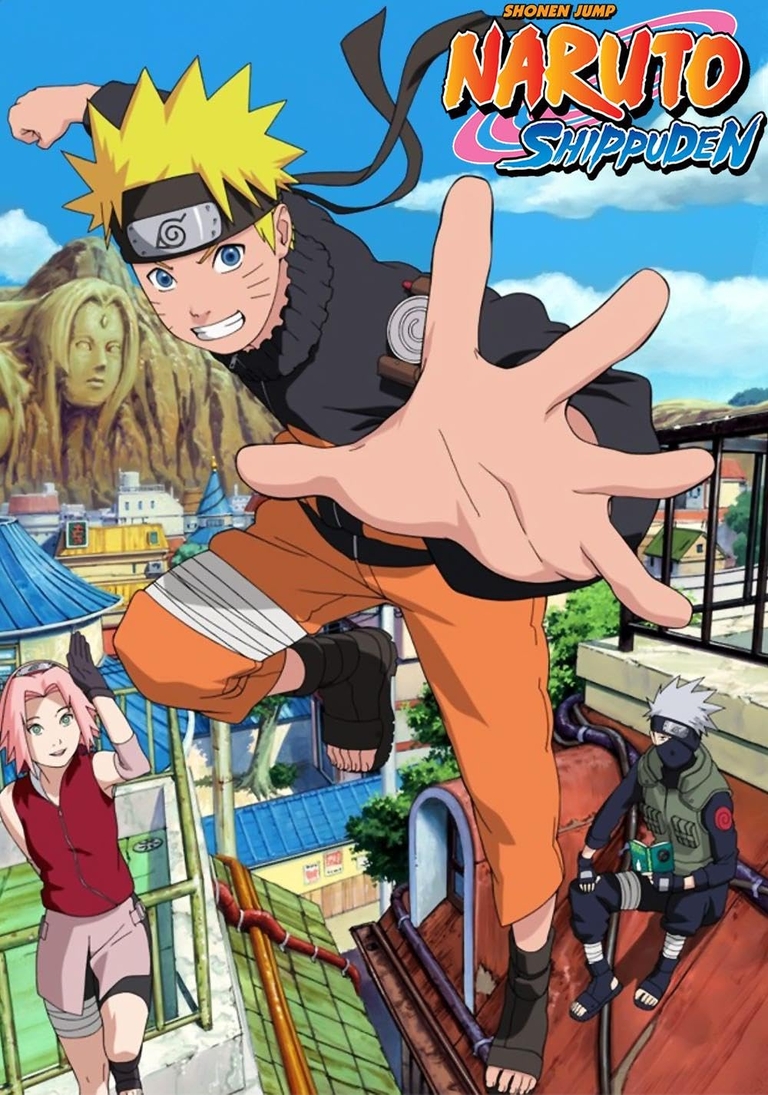
After 500 episodes, you need a payoff that matters or the whole thing was a waste of time. The final battle between Naruto and Sasuke at the Valley of the End isn't just about who's stronger or who can make the bigger chakra ball. It's two grown men finally talking about their feelings while punching each other into paste and breaking each other's arms. Sasuke wants to execute all the Kage and start a revolution to prevent future wars. Naruto wants to eat ramen and be friends and maybe kiss Hinata. They fight until they both lose their dominant arms and lie on the ground bleeding in the rain until Sasuke finally admits Naruto was right and cries. It's cathartic and messy and perfect.
The epilogue episodes showing Naruto and Hinata's wedding feel earned because you watched this idiot grow from a prankster child who couldn't make a clone into a hero who saved the entire world from a rabbit goddess. When he becomes Hokage in The Last movie and the final episodes show him with his own kids, it doesn't feel like a participation trophy. It feels like the end of a long, painful, worthwhile road that took ten years to walk down. The Narutopedia entry documents this entire progression from start to finish.
Naruto Shippuden anime series overview articles love to focus on the negatives. They mention the filler percentages, the pacing issues, the power creep that makes early villains like Zabuza look like jokes compared to the moon-busting attacks at the end. But that's missing the forest for the trees. This show gives you a complete story about a lonely kid who earns the respect of his entire world through stubbornness, empathy, and never giving up on his friends even when they try to kill him.
It's not perfect. The war arc drags in the middle like a snail through peanut butter, some animation looks like it was drawn by interns on their lunch break, and yes, there are flashbacks within flashbacks within flashbacks. But when you stack it against other long-running shonen, it's got heart that most competitors can't touch. You get 500 episodes of growth, tragedy, and redemption that actually stick the landing instead of falling flat on its face. If you've got the time and the patience to use a filler guide, this series delivers one of the most satisfying conclusions in anime history. Just be ready to cry when Jiraiya dies. Everyone cries when Jiraiya dies, and if you don't, you might be a sociopath.