
Nanbaka anime series review threads usually start with people asking why the prisoners look like they are attending a rave instead of serving hard time. That is the first thing you need to understand about this show. It does not care about realism even a little bit. Nanba Prison looks like someone fed a rainbow steroids and told it to decorate a maximum security correctional facility. You have got glitter on the walls, neon uniforms that hurt to look at, and inmates who treat escape attempts like Tuesday afternoon hobbies rather than serious crimes.
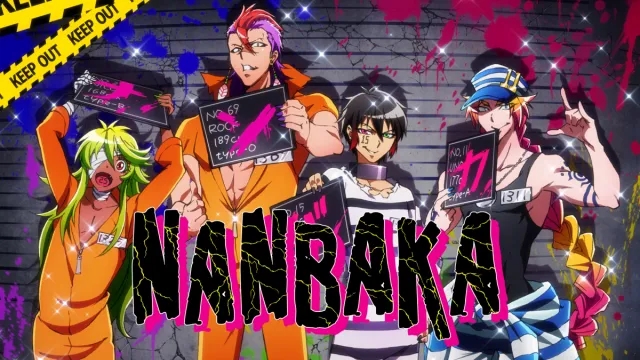
The setup is simple enough on paper. Jyugo is inmate number fifteen and he is obsessed with breaking out because he wants to find the guy who put these weird shackles on him that he cannot remove. He is joined in Cell 13 by Uno the gambler who can spot a lie from a mile away, Rock the musclebound brawler who cares more about his next meal than freedom, and Nico the anime obsessed kid who has weird reactions to medication. Together they drive the guards insane while occasionally uncovering dark secrets about the prison and themselves. Some people on MyAnimeList will tell you the character work is what keeps you watching even when the plot gets messy.
The Visual Style Is An Assault On Good Taste
The first thing that slaps you in the face is the art direction. Studio Satelight decided that muted colors were for cowards. Every character looks like they walked out of a pop art exhibit that exploded. Jyugo has heterochromia and hair that is brown but tipped with red like he dipped his head in paint. Uno wears a striped uniform and has a two tone braid that makes no practical sense. Rock is covered in tattoos and Nico looks like he raided a Hot Topic in 2007. The guards are just as bad with the warden Momoko having pink hair and heart shaped pupils that activate when she sees Hajime.
Apparently the creator wanted the show to look like nothing else on the market. ScreenRant pointed out that the bright bold color combinations and consistent sparkle effects are a deliberate choice to contrast with the prison setting. You are supposed to feel weird about how cheerful everything looks while people are technically incarcerated. It works too. The cognitive dissonance between the setting and the visuals creates this weird energy that keeps your eyes glued to the screen even when the jokes do not land.
The character designs are so distinct that you can tell who someone is from their silhouette alone. That is rare in anime where too many protagonists have the same face. Here you have guys with makeup and sparkles and weird hair colors that break every prison dress code in history. The animation quality drops sometimes during the comedy bits but when a fight scene starts the budget suddenly appears and the colors get even louder if that is possible.
Cell 13 And The Four Misfits
The heart of the show is the relationship between the four inmates. Jyugo acts like the main character because he has the tragic backstory with the shackles and the search for the man who put them on him. He is good at picking locks and escaping but he always comes back to the cell which makes no logical sense until you realize he has nowhere else to go. Uno is the mom friend of the group despite being a compulsive gambler who cannot resist a bet. He keeps the peace and often explains what is happening when the plot gets weird.
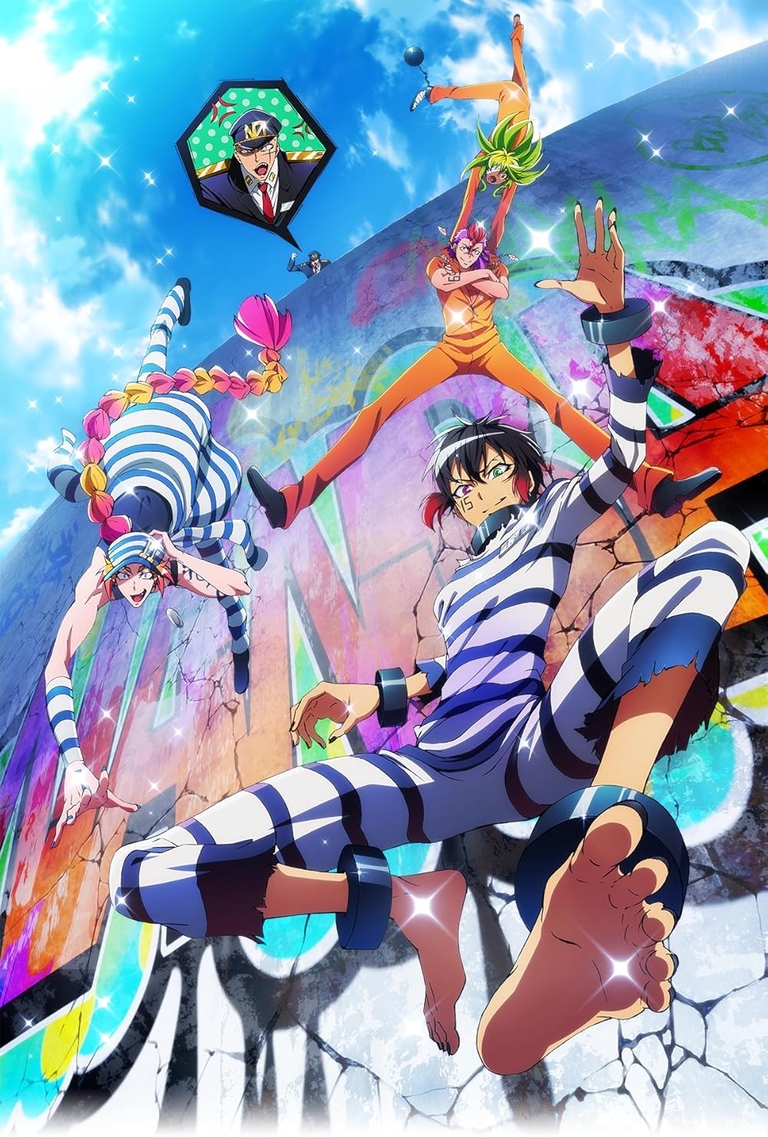
Rock is the brawler who loves food more than freedom. He will start a fight over a meal ticket but he is also weirdly gentle with Nico. Speaking of Nico he is the wild card. He is obsessed with anime and manga, he has allergies to every drug known to man, and he has this weird medical history involving experimentation that gets revealed later. One reviewer noted that each character has an outrageous design element that makes it easy to connect with at least one of them.
Their group chemistry carries the show through its rough patches. When they are just hanging out in their cell or messing with Hajime during inspection time the show is at its best. They feel like a found family. Jyugo acts like he wants to escape but he keeps returning to these three specific idiots which tells you everything about where his loyalty actually lies. The comedy comes from their interactions and the fact that they treat prison like a weird summer camp with bad food.
When Comedy Drops The Act
Here is where things get weird and where some Reddit users start complaining. The first few episodes present Nanbaka as a pure gag anime. Short sketches, punchlines, visual gags about sparkles, and everyone acting stupid. Then the New Year's tournament arc hits and suddenly people are throwing fireballs and trying to murder Jyugo for real. The shift is jarring. You go from silly competitions to a guy attempting to kill Cell 13 with actual lethal force.
Never Argue with a Fish called this a Frankenstein level miracle where the show should not work but somehow does. I disagree with the somehow part. The show works because the characters are solid enough to handle both tones. When the action starts you actually care if they get hurt because you spent six episodes laughing with them. The problem is the whiplash. You are laughing at a joke about Uno's makeup routine and then someone is bleeding out on the floor talking about their traumatic childhood.
Jyugo's backstory gets dark fast. Those shackles on his neck and wrists are not just fashion accessories. They were put there by a mysterious figure and they activate and turn him into a weapon or cause him pain. The show digs into his emptiness and his search for identity beyond just being the guy who escapes. It is heavy stuff for a show that spent twenty minutes on a cooking competition episode.
The Staff Side Of Things
The guards are not just punching bags for the inmates jokes even though they take a lot of abuse. Hajime Sugoroku is the supervisor of Building 13 and he is exhausted. He has to deal with these four escape artists every day while maintaining order and he is actually superhumanly strong. He represents the straight man in the comedy routine but he has his own weird personality quirks and a brother who works in another building.
The warden Momoko Hyakushiki is obsessed with Hajime and has heart eyes for him which is played for laughs but also makes her authority weirdly inconsistent. Then you have the supervisors from other buildings. The design team hid a Momotaro reference in the staff. Momoko is the peach, Kiji Mitsuba is the pheasant, Kenshirou Yozakura is the dog, and Samon Gokuu is the monkey. Their uniforms have animal motifs that correspond to these roles which is a neat detail most people miss on first watch.
Samon Gokuu from Building 5 becomes a major player in season two. He starts as a rival but his backstory with the antagonist Enki becomes central to the plot. The staff characters have their own tragic histories and rivalries that get explored. They are not just there to yell at the inmates. They have their own politics and hierarchies and emotional baggage which adds layers to what could have been a simple cartoon.
Season Two Gets Uncomfortably Real
If season one is a comedy with action elements, season two is an action drama with comedy relief. The second season dives into the underground of Nanba Prison and reveals that some inmates are being experimented on with superhuman enhancements. The tone gets bleak. Characters are tortured, traumatized, and dealing with genuinely disturbing pasts. Nico's backstory involving medical experimentation becomes a major plot point rather than a dark joke.
The second season introduces the idea that Nanba Prison is not just a weirdly decorated correctional facility but a place hiding horrific secrets. Enki Gokuu, Samon's brother, acts as the main antagonist and he is legitimately scary. He is not a funny villain who gets comically defeated. He is a threat that puts main characters in the hospital and challenges the idea that the prison is safe.
IMDb reviewers often mention that the second season introduces more serious elements and that it ends on a cliffhanger that never gets resolved. That is the painful truth. The anime adapts part of the manga but stops before the big final confrontation. You get two seasons of buildup and then it just ends with characters preparing for a final battle that never happens on screen.
The Dub Deserves Recognition
Usually I do not talk about dubs much because most of them are fine but forgettable. The Nanbaka English dub is different. The voice actors understand the assignment completely. They deliver the comedic lines with perfect timing but also handle the emotional breakdowns without sounding cheesy. The way they pronounce the names and handle the banter between Cell 13 feels natural rather than forced.
Fans consistently praise the dub for being fantastic and I have to agree. If you are someone who prefers dubs over subs this is one of those shows where the English version might actually be the better experience. The energy matches the visuals and the jokes land harder because the delivery is snappier. Multiple reviews mention the dub specifically as a highlight of the series.
The sub is good too do not get me wrong. The opening song Rin Rin Hi Hi by Hashiguchikanaderiya is an earworm that perfectly matches the visual chaos. But if you are showing this to a friend who does not like reading subtitles, the dub will not ruin the experience. It might even enhance it.
Why It Never Got A Third Season
This is the part that hurts. Nanbaka ends on a setup for season three that never came. The manga continued past where the anime stopped so if you want to know how the story ends you have to read the source material. The anime covers up to a certain point in the Enki arc and then stops with a to be continued vibe that has been sitting there since 2017.
The show was never a massive hit. It aired in Fall 2016 and got overshadowed by bigger titles like Yuri on Ice. It found its audience on Crunchyroll but not enough to justify the animation budget for a third season apparently. This leaves you with twenty six episodes of a show that builds up to a climax that does not exist in animated form.
Is it still worth watching knowing that? I think so. The journey is messy and weird but the characters stick with you. Just know going in that you will have to switch to the manga if you want closure on the plot threads. The anime ends mid arc with characters gearing up for a war that never happens.
Nanbaka is a hard show to recommend to everyone because it is so inconsistent. It is a comedy that wants to be a shonen action series that wants to be a psychological drama about trauma. It has sparkles and rainbows mixed with blood and broken bones. Reddit users often describe it as a parody that accidentally became serious or a serious show that got dressed up as a joke.
If you want a straightforward prison break story watch something else. If you want a pure comedy look elsewhere. But if you want a show that swings for the fences even when it misses, a show that looks like nothing else on your screen, and a show with characters who feel like they actually matter to each other despite the chaos, then give it a shot. It is flawed, it is weird, and it ends too soon, but it is never boring. That counts for something in a medium flooded with safe predictable adaptations.
The Nanbaka anime series review consensus is split between people who love the tonal chaos and people who think it is a mess. Both are right. It is a mess that I happen to love. Watch the first three episodes. If the colors do not give you a headache and the jokes make you smile, stick around for the ride. Just prepare yourself for the fact that the ride ends at the bottom of a cliff and you will have to walk the rest of the way through the manga to get to the finish line.