
Little Busters! anime character arcs are structured like a visual novel that got shoved into a blender. If you go in expecting a smooth ride, you're gonna get whiplash. The first season spends twenty-six episodes doing the slice-of-life dance, introducing girls with trauma, fixing them with friendship, and moving to the next one. Then Refrain hits like a truck, literally, and suddenly you're in a thriller about death, artificial worlds, and a guy playing god.
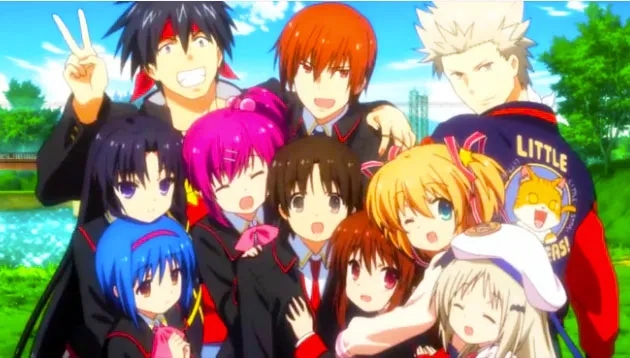
Most people get annoyed by the pacing. They want to know which arcs matter and which ones are filler. Some guides suggest skipping half the first season to get to the good stuff, but that's missing the point. The slow burn isn't a bug, it's the feature. You need to see Riki as a weak, dependent kid so his growth in Refrain means something. You need to care about the girls as friends, not just backstory devices, or the final twist feels hollow.
The show is based on a Key visual novel, which means it follows the common route then branches into heroine-specific routes. JC Staff tried to linearize this by having Riki solve each girl's trauma in sequence. This creates a weird effect where Komari is the most important person alive for three episodes, then becomes background noise for the rest of the season. That's just how these adaptations work.
How Little Busters Anime Character Arcs Really Work
The first season covers the common route plus five main heroine arcs. Riki recruits girls for the baseball team while dealing with his own narcolepsy and the mystery of the "secret to this world." Each arc follows a pattern: girl has hidden trauma, Riki discovers it through weird supernatural hints, he helps her confront it, she joins the team. It sounds repetitive but the specific traumas are distinct enough to keep you watching if you're invested.
Komari's Picture Book and Denial
Komari Kamikita lives in a fairy tale because her brother died when they were kids. She thinks if she doesn't acknowledge death, it didn't happen. Her mind rewrites reality to protect her. When Riki finds a dead kitten in a box, it triggers her breakdown because she can't process the concept of something being gone forever.
Her brother Takuya wrote her a picture book before he died. It suggested his existence might be a dream. Riki creates a new picture book for her that says death is real but life goes on. He tells her to rely on the Little Busters instead of living in the past. One analysis points out that this arc is about accepting that people die and you can't stay a child forever. It's heavy stuff wrapped in cute colors and pastry metaphors.
Mio and the Shadow She Lost
Mio Nishizono is the quiet girl everyone forgets. She's literally missing from class photos and attendance sheets. In her arc, she loses her shadow, which is the anime's way of showing she's disappearing from people's memories entirely. Her imaginary sister Midori takes her place in reality while the real Mio fades away.
Only Riki remembers the original Mio because he actually sees her. This arc hits different because it's not about past trauma like a dead relative, it's about the fear of being irrelevant right now. The idea that you could vanish and nobody would notice is way scarier than a ghost story. Riki has to convince Mio that she matters enough to cast a shadow again. It's weirdly poetic for a show that also has episodes about playing baseball with a cat.
The Futaki Twins and Family Curses
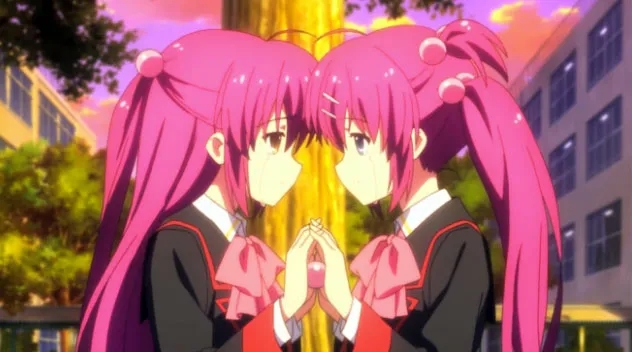
Haruka Saigusa and Kanata Futaki are twins separated by a garbage family that made them compete to be the "good daughter" while the other one got locked up and abused. Haruka acts out at school because she expects to be blamed anyway. Kanata acts as the public morals chair, seemingly hunting Haruka down for every minor infraction.
The reveal that they're twins and Kanata was protecting Haruka the whole time by taking the abuse hits hard. Kanata isn't the villain, she's the scapegoat who took the hits to protect her sister. Their reconciliation is messy and involves breaking into family records and confronting their abusive relatives. It addresses how family bonds can be twisted by cruelty but also how they can survive it. Kanata's arc continues into EX but we'll get to that mess later.
Kud's Fear of Being Average
Kudryavka Noumi wants to be an astronaut like her mom. She's half-Russian, fully stressed, and terrible at math. When her mom's rocket fails on live television, Kud thinks she failed too by not being smart enough to help. She runs away from school because she can't handle the pressure to be special.
This arc is about the relief of just being okay. Not everyone has to be a genius or a hero. Sometimes doing your best is enough even if your best isn't perfect. It's weirdly relatable if you've ever felt like you weren't enough for your parents' expectations. Kud carries a penguin plushie everywhere and speaks broken Japanese mixed with Russian, which makes the arc feel lighter than it actually is.
Kurugaya's Fake Emotions
Yuiko Kurugaya is the mysterious onee-san who's good at everything from fighting to studying. She claims she can't feel real emotions, that she's just acting out what she thinks people expect. Her arc involves a time loop where she keeps repeating the same day because she doesn't want summer to end.
She's the only character who seems to know the world is fake before Refrain confirms it. Her regret is that she never had real friends or real feelings until the Little Busters. She's testing the boundaries of the artificial world without realizing what she's doing. Her route in the visual novel is locked until you finish everything else because she knows too much.
Why Refrain Changes Everything
This isn't just another arc. The first season lulls you into thinking this is a harem comedy with sad moments. Then episode one of Refrain shows you the bus crash that killed everyone. Kyousuke Natsume, Rin's older brother and the charismatic leader, built an artificial world to train Riki and Rin to survive alone.
All those heroine arcs weren't just side stories. They were therapy sessions designed by Kyousuke to strengthen Riki's ability to help others and Rin's ability to interact with people. The tasks they got from the cat were literally training exercises. The narcolepsy Riki has is a defense mechanism from the trauma of the crash. When he overcomes it through willpower, he's able to wake up in the real world and drag everyone out of the wreckage before they die.
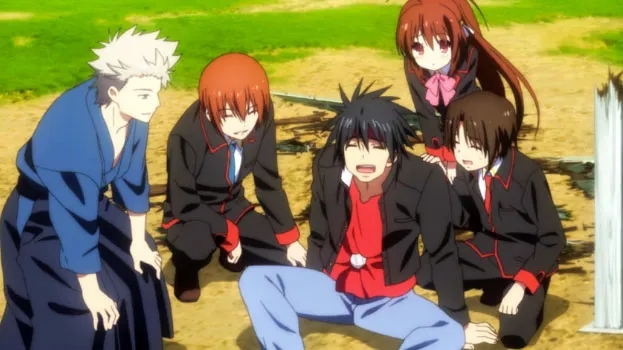
Forum discussions reveal that Kyousuke is basically playing god, holding the dream world together with his willpower while rotting in the real world. The heroines in the first season are manifestations of their own regrets, staying in the world because they have unresolved issues. Once Riki solves their problems, they're ready to move on, but Kyousuke keeps looping time to give Riki more chances to grow.
Rin's Social Anxiety Arc
Rin Natsume is Kyousuke's sister and she has severe social anxiety. She can only talk to the Little Busters members and hides behind Riki constantly. She gets tasks from a cat to help her interact with people like preparing meals for the team or organizing a puppet show. It seems silly until you realize Kyousuke is controlling the cat to force his sister to grow up.
She can't stay the shy girl who only talks to her brother because Kyousuke knows he's going to die. The puppet show she puts on is awkward and painful to watch but it's the first time she reaches out to strangers. Her growth is measured in small steps, like being able to order food or talk to classmates. By the end of Refrain, she's strong enough to function without her brother or the group, which was Kyousuke's goal all along.
Riki's Growth from Passenger to Driver
In season one, Riki follows Kyousuke around like a puppy. He solves problems but he's always reacting to situations Kyousuke sets up. In Refrain, Kyousuke is losing control of the world and falling into despair. Riki has to lead because he's the only one who can see the way out.
This shift is brutal. Riki fights his best friends when they try to stop him from waking everyone up. He realizes that staying in the fake world means dying in the real one. When he finally drags everyone out of the bus in the final episode, it's earned because you spent twenty-six episodes watching him be too weak to handle conflict.
The EX OVA and Its Timeline Mess
Little Busters EX adds three more arcs but they're weird and unnecessary. Saya Tokido gets four episodes even though she wasn't in the bus crash in the main timeline, which makes her backstory confusing and unanswered. Sasami Sasasegawa turns into a cat for her arc, which feels like a magical girl filler that breaks the rules established in Refrain. Kanata gets another arc that repeats ground we already covered in Haruka's story.

One review calls EX largely unnecessary and they're right. It doesn't add to the main plot and even tries to ship Riki with Saya, which betrays the Riki-Rin romance built up in Refrain. The timeline jumps around with one arc before season two, one after, and one spanning both. It's fanservice for visual novel readers who wanted to see those specific routes animated, but for anime-only viewers it's a confusing mess that dilutes the perfect ending of Refrain.
Saya's characterization is all over the place. She shifts between tsundere, chuunibyou with guns, and clumsy airhead without settling on a real personality. Her arc consumes half the OVA series, leaving only two episodes each for Sasami and Futaki. Sasami's arc rehashes the fake fantasy world concept from Refrain but in a devalued way. Kanata's arc is solid but redundant because we already saw her reconcile with Haruka.
Why the Arcs Matter as a Package
Little Busters! anime character arcs work best when you view them as training wheels for Riki. Each girl he helps makes him stronger, more observant, more capable of saving the day when it really counts. The first season feels slow because it's showing you a safety net that doesn't exist. Refrain rips that net away and asks if Riki can stand on his own.
If you're watching, don't skip the heroine arcs even if they're messy. You need to see the full cast's regrets to understand why they stay in that fake world. The baseball team isn't just a club, it's a family built on shared death. When Riki finally leads them out of the accident site in the real world, it matters because you spent twenty-six episodes seeing them alive and happy. The contrast is the point. You can't have the catharsis of Refrain without the slow build of the first season. It's a package deal, and trying to shortcut it just leaves you confused about why you should care.