
The latest mecha anime dropping right now isn't playing it safe anymore. You look at the lineup for 2025 and it's obvious the genre has stopped caring about what worked in the nineties. Studios are mixing giant robots with isekai power fantasies, setting Gundam in illegal underground fight clubs, and letting five different animation teams handle one time-traveling robot story. It's messy, it's experimental, and honestly it's the most interesting the genre has looked in years.
If you've been sleeping on new releases thinking it's just more military sci-fi with generically depressed pilots, you need to wake up. The current wave includes everything from a high school girl betting her life on black market mobile suit duels to a reincarnated tyrant accidentally becoming the greatest benevolent leader in galactic history while stomping around in a custom mech. These aren't your standard war stories. They're weird, visually distinct, and willing to poke fun at the very tropes that defined mecha for decades.
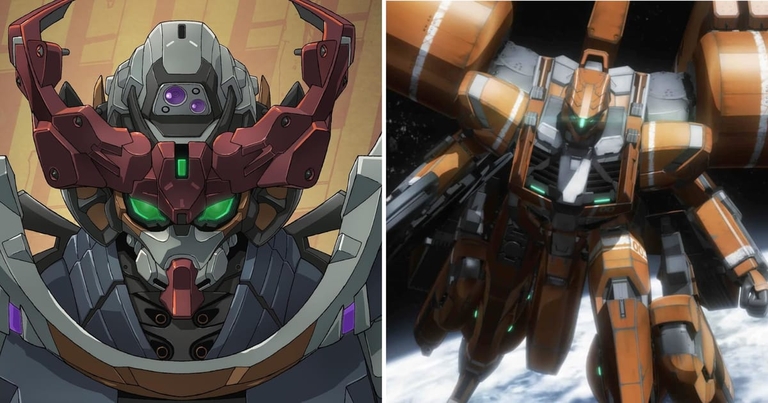
Gundam GQuuuuuuX and the Alternate Universe Gambit
The biggest splash comes from Mobile Suit Gundam GQuuuuuuX, pronounced G-Quarks, and it's doing something that shouldn't work but totally does. This isn't just another side story in the Universal Century. It's a full what-if scenario where Zeon actually won the One Year War, creating a timeline where the Federation lost and space colonies live under different political conditions.
Amate Yuzuriha is your protagonist, a high school student living in a peaceful colony with standard Earth gravity who gets bored out of her mind and starts looking for trouble. She finds it in the form of illegal mobile suit dueling rings called Clan Battles. These aren't honorable military engagements. They're gritty 2v2 fight club scenarios where people bet money on combatants beating each other senseless in repurposed mobile suits.
Amate takes the nickname Machu and pilots the experimental Jax unit, but the real twist comes when she meets Shuuji Itou, a graffiti artist wanted by military police who somehow has access to a mysterious mobile suit called Gundam. The setup described by Mecha Alliance makes it sound like a street racing movie got thrown into a blender with giant robot politics.
What makes this production insane is the collaboration between Studio Sunrise and Studio Khara. That's the Evangelion studio working directly with the Gundam factory. Staff from FLCL, Diebuster, and Star Driver are involved. The visual style reflects this crossover energy, swapping the usual gritty military aesthetic for something more colorful and fluid while still keeping the mechanical designs recognizable as Universal Century tech.
Isekai Mecha Is Somehow Not Terrible
You see the words "isekai" and "mecha" together and you probably want to run away screaming. Fair. Most attempts to mix reincarnation power fantasies with giant robots end up as generic power trips with mecha skin. But 2025 is producing exceptions that understand the assignment.
I’m the Evil Lord of an Intergalactic Empire follows Liam, a guy who had a terrible past life, died, and got reborn as an evil space emperor with his own custom mecha and fleet. He tries his absolute hardest to be a ruthless tyrant, taxing his people into oblivion and acting like a cartoon villain, but his incompetence at being evil keeps accidentally solving problems. His infrastructure improvements work too well. His security forces actually protect people. The show leans hard into the comedy while delivering solid space battles whenever Liam decides to personally pilot his unit into combat.
Then there's Sentai Red Isekai de Boukensha ni Naru, which translates to The Red Ranger Becomes an Adventurer in Another World. According to the 2025 preview lists, this follows Tougo Asagaki, a sentai hero who gets transported to a fantasy world after sacrificing himself to defeat a boss. Instead of learning magic like every other isekai protagonist, he keeps his sentai powers and can summon the Kizuna Kaiser, his team's combination robot, to squash dragons and orcs. It's utterly ridiculous and knows it.
These shows work because they don't try to be serious war dramas. They accept that mixing genres creates absurd situations and they lean into the chaos rather than pretending it's normal.
Old Franchises Refusing To Stay Buried
For every experimental new IP, 2025 drags a classic franchise out of retirement and forces it to adapt. Sometimes this goes badly. Sometimes it produces exactly what fans wanted after years of disappointment.
Aquarion Myth of Emotions represents the franchise attempting to apologize for Aquarion Logos, which deviated so far from the original formula that fans basically pretend it doesn't exist. The new installment returns to design aesthetics that look like the 2005 original, focusing on emotional synchronization between pilots and cosmic invaders. The CGI transformations look cleaner than ever, and the show remembers that Aquarion works best when it's about human connection powering ridiculous aerial combat rather than whatever weird philosophical tangent the writers went on last time.
Aldnoah.Zero gets an epilogue called The Penultimate Truth that drops in March 2025. The original series started strong with Inaho using tactical genius to defeat technologically superior Mars knights, then the second season made some bizarre character decisions that undermined everything. This OVA attempts to provide closure to the Earth-Mars conflict, showing the lasting impact of the war through new tactical combat sequences in zero gravity. Whether it fixes the narrative damage remains to be seen, but at least it looks expensive.
Mashin Creator Wataru updates the classic franchise for Gen Z by making the new protagonist a tech-savvy kid who wants to be a digital content creator. Ryujinmaru gets new forms, the art style modernizes, and the show acknowledges that kids today care more about making videos than traditional heroics. It starts broadcasting January 12th and could introduce the franchise to an audience that wasn't alive for the original 1988 run.
The Weird Experimental Releases Worth Watching
Beyond the big names, 2025 hides several original projects that ignore convention entirely. These are the shows that prove mecha can still surprise you when creators stop trying to remake Evangelion for the hundredth time.
Mecha-Ude Mechanical Arms finished its run in early 2025, concluding the story of Hikaru and his sentient prosthetic limb named Alma. Rather than piloting giant robots, this series focuses on humans bonding with mechanical partners that attach to their bodies. Hikaru joins the resistance group ARMS to fight a corporation, and the animation emphasizes fluid hand-to-hand combat with mechanical augmentation rather than city-destroying giant battles. The visual style stands out as distinct from typical mecha aesthetics, looking more like a superhero show with industrial design influences.
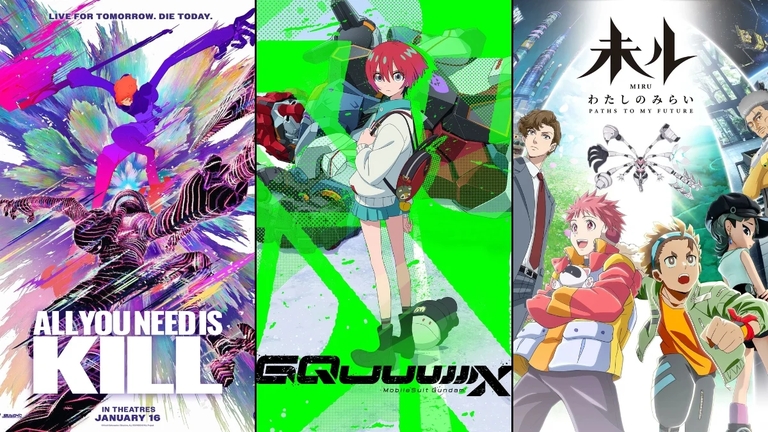
MIRU Paths to My Future represents an insane production experiment where five different studios each handle episodes in their own style. The robot Miru travels through time and parallel worlds helping humanity without using violence, creating butterfly effects that guide society toward better outcomes. Because each episode comes from a different animation team, the visual consistency shifts dramatically, making the series feel like an anthology rather than a single narrative. Miru itself stays unarmed, which forces the writers to solve problems creatively rather than just having the robot punch threats.
Leviathan adapts Scott Westerfeld's steampunk novels into an alternate World War I where biological behemoths fight steam-powered mechanical walkers. It's not anime-original but the adaptation brings a unique aesthetic to the table, mixing historical drama with biomechanical engineering. The walking machines look clunky and industrial in a way that contrasts sharply with the sleek anime mecha most fans are used to seeing.
All You Need Is Kill takes the light novel that inspired Edge of Tomorrow and turns it into a proper anime series. The time loop mechanic sees a soldier wearing a high-tech exoskeleton dying repeatedly during an alien invasion, learning patterns and improving his combat efficiency. Unlike the Hollywood version, the anime can spend more time on the psychological toll of repeated violent death while showcasing the exoskeleton's capabilities in detailed combat sequences.
Why The Genre Is Shifting Away From War Stories
Look at the patterns in these releases and you'll notice something. The modern mecha landscape described by CBR has largely abandoned the straightforward military science fiction that defined the genre during the Cold War era. You don't see many shows about organized armies fighting defensive wars against alien invaders anymore. Instead you get illegal dueling rings, reincarnated space emperors, and high school students accidentally becoming revolutionary symbols.
Part of this comes from market reality. Military mecha costs a fortune to animate with modern quality standards, and the audience for grim war dramas has shrunk compared to the eighties and nineties. But the bigger factor seems to be creative exhaustion. How many times can you tell the story of a reluctant pilot joining the army to defend Earth before it becomes background noise?
The latest mecha anime releases solve this by making the robot combat personal rather than political. Clan battles happen for money and reputation, not territorial expansion. Isekai protagonists fight for their own survival or amusement, not national defense. Even when shows like AS ONE tackle military origins, they focus on the experimental testing phase rather than full-scale war, treating the mecha as dangerous prototypes that might kill their pilots.
This shift annoys old-school fans who want another Gundam 0080 or Armored Trooper Votoms, but it keeps the genre alive by acknowledging that audiences want character-driven stakes rather than strategic briefings about frontline movements.
Visual Evolution And Production Values
You can't talk about 2025 without mentioning how these shows look. The high-fidelity visual production mentioned in recent analyses has become standard rather than exceptional. Even mid-tier productions feature mechanical designs with complex panel lines and lighting effects that would have been movie-quality a decade ago.
Gundam GQuuuuuuX specifically benefits from the Khara influence, bringing cinematic composition and color grading to television anime. The mobile suits move with weight and momentum while the characters emote with exaggerated expressiveness that clashes interestingly against the mechanical realism. It's a hybrid approach that shouldn't work but creates a unique visual identity.
Meanwhile shows like Aquarion Myth of Emotions fully embrace CGI for transformation sequences, abandoning the hand-drawn limitations that constrained previous entries. The result is smoother combining animations but occasionally jarring shifts between 2D character art and 3D robot models. Whether this trade-off satisfies you depends on your tolerance for modern production shortcuts.
Shinkalion Change the World continues through 2025 with its train-robot concept, and while it's primarily aimed at younger audiences, the mechanical designs have grown more complex. The show uses the railway infrastructure as a tactical element rather than just visual flair, with battles occurring along train routes that limit movement options.
What To Watch If You Hate Isekai
Not everyone wants reincarnation plots in their robot shows. If the isekai trend annoys you, 2025 still offers alternatives that stick closer to traditional science fiction or fantasy without the genre hybridization.
AS ONE works as a prequel to the Starwing Paradox game, set twenty years before the arcade story. It focuses on test pilots developing early mecha technology through industrial espionage and dangerous prototype trials. The Square Enix production carries their distinctive mechanical design sensibilities from games like Xenogears or Front Mission, emphasizing how these machines are dangerous industrial equipment rather than superhero suits.
For something completely different, Kakushite Makina-san plays as a romantic comedy where a high school student inherits an advanced female android. It features occasional mecha combat against rival machines but spends most of its runtime on daily life scenarios and the robot trying to understand human emotions. It's light, goofy, and avoids the heavy existential dread that defines most mecha narratives.
The key is checking previews before committing. Community reviews and trailers remain your best defense against wasting time on shows that look like military sci-fi but turn into harem comedies three episodes in.
The Future Beyond 2025
If this year represents anything, it's proof that mecha anime refuses to become a nostalgia-only genre. The experimentation with formats, from interactive VR experiences like Mobile Suit Gundam Silver Phantom to anthology projects like MIRU, suggests studios are willing to take financial risks on weird concepts again.
The collaboration between Sunrise and Khara on GQuuuuuuX specifically opens doors for future cross-studio projects that blend different animation philosophies. If that show succeeds commercially, expect more high-profile partnerships that mix veteran mechanical designers with avant-garde directors.
Meanwhile the isekai hybrid trend shows no signs of stopping. The combination of established genre tropes with mechanical combat creates built-in marketing hooks that help shows stand out in crowded release schedules. Whether this leads to creative burnout or genuine innovation depends on whether writers can move beyond the initial premise of "what if fantasy but with robots."
What's clear is that the latest mecha anime releases have abandoned the safety of generic military formulas. They're weird, visually distinct, and occasionally frustrating, but they're never boring. For a genre that's existed for fifty years, that's probably the best outcome anyone could ask for.