
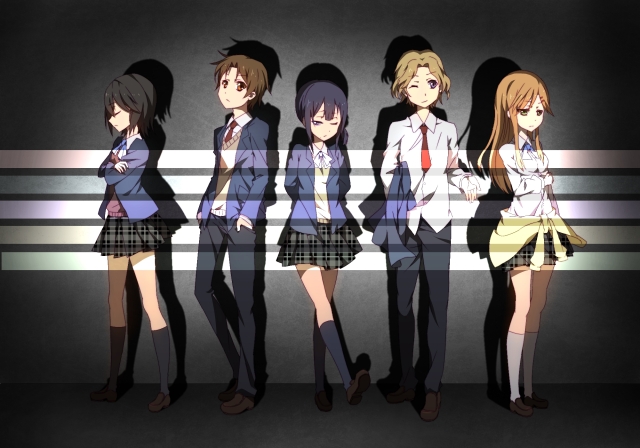
Most body swap anime use the trope for cheap laughs or awkward romantic tension. Kokoro Connect anime themes of connection and identity go way darker than that gimmick from the start. This show doesn't care about giving you fanservice moments where characters freak out in opposite gender bodies. Instead, it uses supernatural torture to force five teenagers into radical honesty, stripping away every social mask they wear until they're raw and exposed. Heartseed, that creepy entity possessing their teacher, isn't some playful trickster. It's a scientist performing psychological vivisection, and the StuCS members are just specimens who learn that connection hurts worse than isolation ever did.
The whole premise kicks off when Taichi, Iori, Inaba, Yui, and Aoki start randomly switching consciousness. But here's where it gets nasty. The swaps don't follow a schedule. They happen mid-conversation, during fights, while someone's using the bathroom. The show isn't interested in the logistics of how it works. It cares about what happens when you can't hide anything anymore. When Inaba's calculating control freak personality gets stuck in Yui's body while Yui's having a panic attack, or when Iori's fake cheerful mask slips because she's literally trapped inside someone else's skin, that's where the real horror lives.
This anime grabs the concept of identity and shakes it until it breaks. These kids aren't just swapping bodies; they're forced to experience how other people perceive them from the inside out. Taichi learns he's insufferably self-righteous. Iori discovers she's been performing a personality so long she doesn't know who she actually is. The connections they form aren't built on shared hobbies or school club activities. They're welded together through shared trauma and the absolute inability to lie anymore.
Heartseed Is Not Your Typical Anime Antagonist
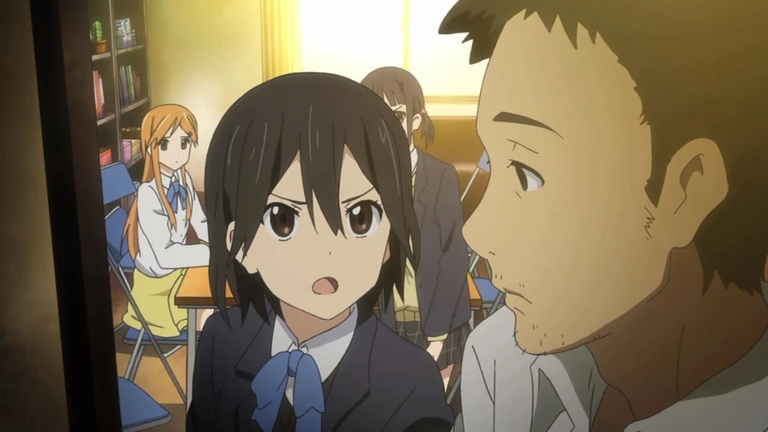
Most anime villains want power, revenge, or world domination. Heartseed just wants to watch. This thing possesses their teacher Gotou and explains flat out that it's doing this for entertainment, which somehow makes it worse than if it had some grand evil scheme. There's no reasoning with a being that treats your emotional breakdown like reality TV.
Apparently, Heartseed operates as an observer who orchestrates these phenomena specifically to force personal growth through discomfort. The entity explicitly tells them during the desire unleashed arc that it hurts them because pain opens people up. That's messed up philosophy but weirdly effective storytelling. Heartseed doesn't attack with weapons. It attacks with the truth these kids were never going to tell each other.
The being stays vague about its origins, which annoys some viewers who want concrete explanations. But honestly, giving it a backstory would ruin the point. It's a force of nature, like a tornado that specifically targets your psychological weak points. When it switches from body swapping to making them act on their impulses, or regressing them to childhood, it's not changing tactics randomly. It's escalating the experiment to see how much connection these bonds can withstand before snapping completely. The entity never lies about what it's doing, and that honesty makes it more terrifying than any masked villain with a grudge.
The Body Swapping Arc Destroys Social Masks
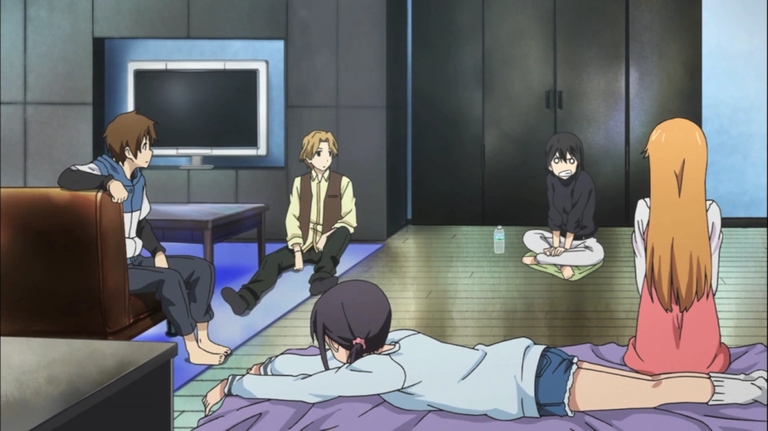
The first phenomenon hits hard because nobody gets warning. One minute you're yourself, the next you're staring at your own body from across the room while someone else panics inside your skin. The immediate logistics are nightmare enough, having to impersonate each other to avoid social ruin, but the real damage happens in the private moments.
Taichi ends up in Yui's body during her period and has to deal with cramps he never imagined. Inaba finds herself in Taichi's body and realizes exactly how much physical space male bodies occupy in the world. These aren't played for comedy, or at least not comfortable comedy. They're moments of forced empathy that strip away privacy completely. You can't maintain a facade when someone else is literally living your physical reality.
I saw some data that said the body swapping serves as a narrative device to explore how supernatural occurrences affect relationships. But that clinical description misses the visceral horror of it. When Iori swaps during a fight with her mom, or when someone has to maintain club activities while secretly being someone else, the tension isn't about the magic. It's about the constant threat of exposure. Every secret becomes a ticking bomb.
The club tries to establish rules. Check phones constantly, keep detailed logs of daily activities, never use the bathroom while swapped. But rules don't account for the emotional bleed. Spending hours in someone else's skin, feeling their heart race when they're anxious, experiencing their physical sensations, it creates intimacy that's invasive and unwanted. They know each other too well too fast, and that kind of forced closeness breeds resentment as often as friendship. The scene where Taichi accidentally walks into the men's restroom while in Yui's body, or when Inaba has to deal with Aoki's physical responses while trapped in his form, these moments break down the barriers that keep polite society functioning.
Iori Nagase and the Crisis of Manufactured Identity
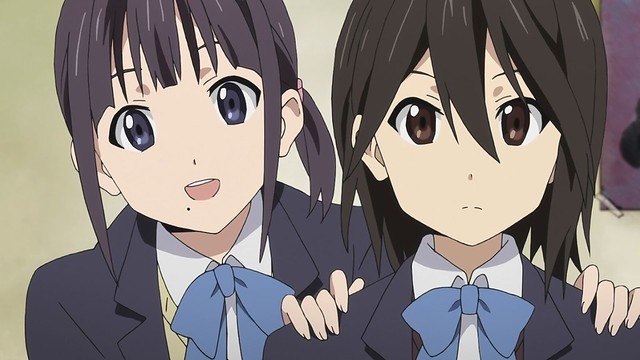
Iori gets the worst of it, and Episode 4 proves why she's the heart of this show's identity crisis. She's been adapting her personality to survive her mom's rotating door of boyfriends and unstable home life. At school she's cheerful and adaptable, the perfect girl next door who gets along with everyone. But that's not a personality, it's a survival mechanism she built so she wouldn't get abandoned again.
When the body swapping starts, Iori freaks out because she doesn't know who she is without a physical body to perform for. If she's in Taichi's body, does she act like Taichi? Does she act like herself? But which self? The one her mom sees, the one her friends see, or the screaming mess she keeps locked down? Apparently, Episode 4 explores Iori's emotional struggles and the profound difficulty of identity crises, showing her literally losing her sense of self when she can't maintain her physical performance.
The crisis peaks when she realizes she's been treating relationships like roles to play. She tells Taichi she could be anyone he wants her to be, which sounds romantic but is actually terrifying. She's offering to erase herself completely to keep him happy. That's not love, that's annihilation. The body swapping forces her to confront that she's been emptying herself out for years to make room for other people's expectations. Her mother raised her to be a chameleon, changing colors to match whatever man entered their lives, and Iori never learned to just be a solid color on her own.
Her arc hurts to watch because it doesn't resolve cleanly. She doesn't have one breakthrough moment where she finds her true self. Instead, she has to accept that identity is something you build actively, not something you discover like a buried treasure. The connections she forms with the StuCS don't save her, but they give her a safe place to try being different versions of herself without getting rejected immediately.
Inaba's Control Issues Meet Forced Vulnerability
Inaba Himeko walks into the clubroom like she owns the place and everyone in it. She's sharp, paranoid, and always three moves ahead of everyone else. The body swapping should be her worst nightmare because it takes away the one thing she values most: control over her own body and image.
And it is her nightmare, but it also breaks something open in her that needed breaking. Inaba keeps people at arm's length because she's terrified of being hurt. She calculates social dynamics like chess moves to avoid vulnerability. But when you're randomly jumping into other people's bodies, control becomes impossible. She can't maintain her ice queen persona when she's stuck in Aoki's body and has to deal with his physical impulses or his emotional openness.
The scene where Heartseed possesses their teacher and she tries to attack him is telling. She immediately goes for violence to reassert control, and he shuts her down effortlessly. That moment destroys her illusion that she can handle this through force of will. She has to learn that connection requires letting other people see you messy, confused, and not in charge. Her habit of collecting data on everyone, keeping files and monitoring their digital footprints, becomes useless when the data changes every time someone swaps.
People often point to Inaba as the standout character in reviews, and they're right. While everyone else is dealing with external trauma, Inaba's fighting her own defensive mechanisms. Her arc is about learning that trusting people isn't weakness, and that you can't actually protect yourself from pain by predicting every outcome. Sometimes you just have to jump and hope someone catches you. Her computer screens and information networks can't save her from the fact that she's falling for Taichi while he's obsessing over Iori, and she has to deal with that jealousy without her usual shields.
Taichi's White Knight Complex Gets Weaponized
Taichi Yaegashi thinks he's the hero of this story. He's got a textbook savior complex where he feels compelled to fix everyone's problems, usually by sacrificing his own wellbeing or boundaries. The show recognizes this isn't noble, it's pathological.
During the body swaps, Taichi keeps trying to play protector even when he's in someone else's body. He interferes in Iori's family drama while pretending to be her, which is a massive violation even if his intentions are good. He can't stand watching people suffer, so he rushes in to save them without asking if they want to be saved or if his help is actually about making himself feel useful.
The desire unleashed arc weaponizes this trait beautifully. When Heartseed makes them act on their hidden impulses, Taichi's urge to help people becomes physically uncontrollable. He can't stop himself from intervening in dangerous situations, which nearly gets him killed. The show is asking whether his selflessness is actually a form of ego, a way to feel superior by being needed. When he sees a thug threatening someone, he doesn't call the police or assess the situation. He just attacks, because stopping the threat is more important than his own safety or the legal consequences.
He's not a bad guy, but he's exhausting. The connections he forms are initially one-sided, with him positioned as the giver and everyone else as receivers. He has to learn that real friendship isn't about rescue missions. Sometimes people need to fall apart without you trying to tape them back together. His growth comes when he realizes he can just be present without fixing anything, and that listening is sometimes braver than fighting.
Yui's Trauma and the Physical Manifestation of Fear
Yui Kiriyama looks like a tough girl who practices martial arts and carries herself with confidence, but she's carrying trauma that makes her freeze around men. Her androphobia stems from a past assault attempt, and she's built her entire identity around being physically strong enough to never be vulnerable again.
The body swapping hits her differently than the others. Being trapped in a male body triggers her phobia from the inside out. She has to feel the physical presence of masculinity in first person, and it's revolting and terrifying to her. The show doesn't shy away from how this affects her. There are scenes where she's having panic attacks while stuck in Taichi's body, feeling trapped in skin that feels threatening.
Her recovery arc gets criticized for being too quick or too slow depending on who you ask, but the mechanics of it are interesting. She doesn't get cured through the power of friendship. Instead, she has to confront the fact that her trauma made her isolate herself from half the population. The StuCS becomes a controlled environment where she can slowly relearn that male bodies aren't inherently dangerous, especially when they're occupied by people she trusts like Taichi or Aoki. The fact that Aoki is goofy and harmless helps, but it's Taichi's relentless kindness while she's in his body that starts dissolving the association.
The age regression arc later hits her hard too, because she has to confront her childhood self from before the trauma. Kokoro Connect uses these supernatural events to force characters into situations where they can't avoid their pain anymore. Yui's healing isn't pretty. She backslides, she gets angry, she tries to quit the club. But the connections she's formed won't let her disappear completely, and eventually that's what keeps her fighting. Her martial arts stop being a wall she puts up and start becoming just something she enjoys again.
Why You Can't Skip the Michi Random OVA
If you watch the TV series and stop there, you got an incomplete story. The original broadcast ends on a note that feels rushed, with Inaba getting shortchanged and Iori's arc feeling unresolved. The Michi Random OVA episodes aren't bonus content, they're essential chapters.
The OVA introduces a new phenomenon where their thoughts start broadcasting to each other randomly. It's the final escalation of Heartseed's experiment: total transparency. No more hiding behind polite smiles or calculated responses. Every petty jealousy, every fleeting cruel thought, every insecurity gets broadcast to the whole group.
This is where the themes of connection get pushed to their breaking point. Can you still be friends with someone when you know exactly what they think of you in their worst moments? When Inaba's jealousy of Iori gets broadcast, or when someone's petty irritation at a friend becomes public knowledge, the bonds they've built get stress-tested in real time. Taichi thinks something insensitive about Aoki and immediately everyone hears it. There's no taking it back, no claiming you didn't mean it, because they felt the intent.
The OVA also resolves the romantic triangle in a way that actually respects all three characters involved. Without spoiling specifics, it doesn't take the easy route of having the loser just accept defeat gracefully. It hurts, and it should hurt, because that's what happens when genuine feelings are involved. The anime needs the OVA for a proper conclusion, and skipping it leaves you with half a story about identity that never finds its resolution. The thought broadcasting forces them to accept that they can't curate their internal lives for public consumption, and that real intimacy requires letting someone see the ugly parts you normally edit out.
Age Regression Forces Confrontation With Past Selves
After the body swapping and thought broadcasting, Heartseed hits them with age regression. The characters physically revert to younger versions of themselves at random intervals, sometimes losing memories of their teenage years entirely.
This phenomenon isn't just a cute gimmick where they get small and adorable. When Taichi regresses, he becomes a child who hasn't developed his savior complex yet. When Inaba regresses, she's a shy kid who hasn't built her defensive walls. They have to confront who they were before trauma and social conditioning turned them into who they are now.
For some of them, like Yui, meeting their childhood self is heartbreaking because they see how much they've lost. For others, it's a reminder of simpler times when they weren't so broken. The connections they've formed as teenagers get tested because their child selves don't recognize these bonds. A kid Inaba doesn't trust Taichi yet. Kid Iori doesn't know how to perform her cheerful mask. The club has to babysit their friends' younger selves while trying to hide the phenomenon from the school.
The arc asks whether our core identity is something we're born with or something we construct. If you strip away the memories and experiences, what's left? Just raw personality? The show suggests that while our experiences shape us, there's something essential that remains, something that seeks connection even when we don't have the words for it yet. When little Taichi still tries to protect people despite not having the teenage vocabulary for his complex, it proves that his urges run deeper than performance.
Desire Unleashed and the Horror of Hidden Impulses
The third major phenomenon has Heartseed removing their impulse control. Whatever they think, they immediately do. Whatever they feel, they immediately express. It's like being drunk against your will, except you remember everything afterward.
This is where the show gets really uncomfortable because everyone has intrusive thoughts they'd never act on. Inaba has moments of petty cruelty she suppresses. Taichi has violent urges when he sees people hurting his friends. Iori has self-destructive impulses. Suddenly they're all acting on these things with no filter.
The horror here is realizing that your friends contain multitudes, and not all of those multitudes are nice. When you see someone you care about act on their worst impulses, can you ever unsee it? The connections between them get poisoned by knowledge they never wanted. They see each other ugly, selfish, and cruel. Inaba says something devastatingly mean to Iori that she's thought but never would have voiced. Aoki makes a move on Yui that crosses boundaries. Taichi attacks someone with a level of violence that scares everyone.
But there's a weird healing in it too. Once everyone's seen everyone else's darkness, there's nothing left to hide. The shame of having your worst moments witnessed becomes a strange kind of bond. They can't pretend to be perfect anymore, so they stop trying. The desire arc destroys their ability to perform for each other, which ironically creates the most authentic connections they've had. It's painful, but Heartseed's manipulation hurts them to open them up, forcing growth through the worst kind of exposure.
Japanese Honne and Tatemae in Supernatural Context
Kokoro Connect doesn't work without understanding honne (true feelings) and tatemae (public facade). Japanese social interaction relies heavily on maintaining harmony through careful presentation, never burdening others with your true problems, keeping the surface smooth.
Heartseed's phenomena are essentially weapons that destroy tatemae completely. Body swapping removes the physical vessel you use to perform your social role. Thought broadcasting eliminates the privacy needed to maintain a facade. Desire unleashed removes the filter between honne and expression.
The show is asking whether genuine connection is possible when we're all performing socially appropriate versions of ourselves. Can you really know someone if you've only ever seen their tatemae? The StuCS members start as polite acquaintances maintaining proper distance. By the end, they've seen each other's honne in the most invasive ways possible, and they have to decide if they can accept what they've seen.
This cultural context makes the show hit harder than similar body swap stories from Western media. It's not just about the magic, it's about the violation of social contracts that keep Japanese society functioning. The pain the characters feel isn't just personal, it's cultural. They're breaking rules they didn't know they were following, and the relief they eventually feel comes from not having to maintain the exhausting performance anymore.
Kokoro Connect anime themes of connection and identity don't offer easy answers because there aren't any. The show ends with these five people choosing to stay connected despite knowing exactly how much damage they can do to each other. They've seen each other at their absolute worst, swapped into each other's bodies, broadcast their petty thoughts, and acted on their darkest impulses, and they decide that's still better than being alone.
The identity question remains open-ended. Iori doesn't find one true self, she finds permission to be multiple selves. Inaba doesn't stop being controlling, she just aims it at protecting her friends instead of pushing them away. Taichi doesn't cure his savior complex, he just learns when to shut up and listen. The growth is messy and incomplete because that's how people actually work.
What Heartseed understood, and what the show proves, is that you can't form real bonds without breaking something first. The connections these kids build aren't pretty or gentle. They're scorched earth relationships built on shared trauma and absolute honesty. But they're real in a way that matters, and sometimes that's enough.