
K project anime powers and kings explained without the fluff means getting straight to the Dresden Slate. Most fans get distracted by the pretty colors and the glowing swords floating in the sky, but the real engine driving everything is that weird stone tablet sitting underground in Dresden, Germany. You've got seven Kings running around Japan, each with a different flavor of superpower, but they're all tied to this one artifact that Weismann found back in the 1940s. The show throws terms like Weismann levels and Damocles Down at you without much context, so let's break down how this system actually works before someone accidentally blows up Tokyo.
The whole setup looks cool on the surface. You've got gang wars between color-coded clans, people throwing fire and ice around, and high school kids caught in the middle. But underneath that style is a brutal, unforgiving power system where the people with the most strength are basically walking nuclear weapons with anxiety disorders. The powers aren't gifts; they're burdens that get heavier every time a King uses them.
The Dresden Slate Is the Source
Everything starts with this stone. Weismann and his sister Klaudia discovered it during the war, and it wasn't just some archaeological find sitting in a museum. It actively chooses people to grant power to, turning them into Kings who can then hand out abilities to their followers. The Slate doesn't care about morality or worthiness; it just picks seven vessels and assigns them colors based on... well, nobody really knows why the colors stick, but they do. The selection process seems random, though the Slate tends to pick people with strong wills or specific trauma that matches the power type.
The Slate creates a resonance with specific individuals, flooding them with Aura that's way beyond human limits. This isn't training or mutation. It's a forced evolution that rewires the body on a cellular level. Kings get the full package, while their Clansmen get watered-down versions that still put them above normal humans. You can't earn this through hard work or meditation. You're either chosen by the Slate or you're not, which makes the whole system feel pretty unfair if you're born without the genetic lottery ticket the Slate happens to like that decade.
Apparently, the Slate's influence was originally confined to the Kanto region of Japan, which is why all the Kings operate there. When Nagare Hisui tried to unlock it fully during Return of Kings, powers started manifesting worldwide, proving the Slate could theoretically turn the entire human population into superhumans if given the chance. That's exactly what Nagare wanted, but we'll get to his messed up motivations later.
Breaking Down the Seven Colors
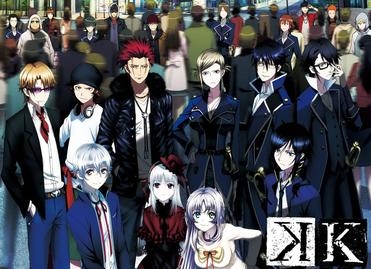
Each King gets a specific power set tied to their color, and these aren't just cosmetic differences like picking a favorite shade. The abilities are distinct enough that fighting styles completely change depending on who you're facing, and matchups matter. A Red Clan fighter approaches combat differently than a Blue Clan soldier, and mixing those Auras creates weird effects that the series explores through characters like Saruhiko Fushimi.
Silver and Gold (The First and Second)
Adolph K. Weismann holds the Silver King title, and he's basically unkillable. I'm not talking tough; I mean full immortality with regeneration that puts most comic book characters to shame. He manipulates gravity, can fly, and his Clansmen get synced to his power field, allowing them to levitate when he's nearby. The Silver King's power represents "eternity," which fits since he's been alive since the 1940s without aging a day. His Aura is silver-colored and allows him to defy gravity entirely, making him float constantly unless he focuses on staying grounded.
The Gold King, Daikaku Kokujoji, boosts talents to their absolute peak. If you're good at computers, his Aura makes you a genius programmer. If you're a fighter, you become elite tier. He can also summon astronomical objects to crush enemies, literally throwing scaled-down planets and stars made of pure energy at people. The Gold Clan runs the massive conglomerate that basically controls Japan's economy, which makes sense since their King's power maximizes potential in whatever field his followers pursue.
Red and Blue (The Combat Kings)
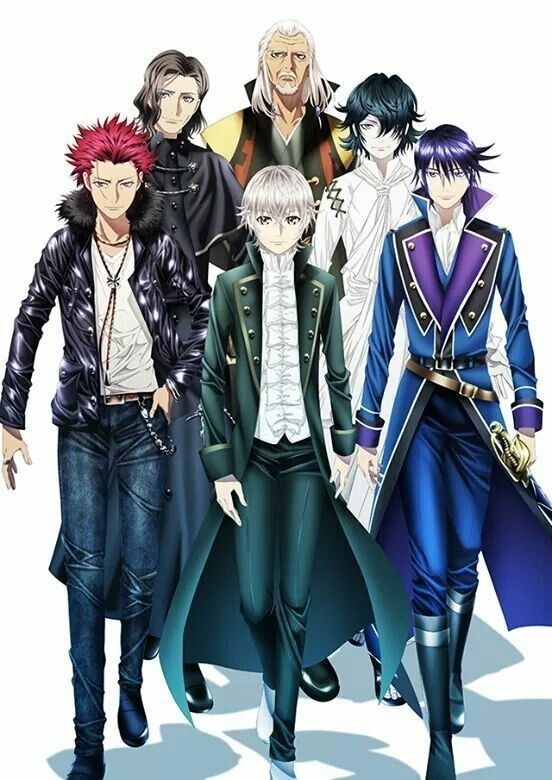
Mikoto Suoh's Red Clan, HOMRA, wields fire that incinerates almost anything it touches. It's raw destruction without much subtlety, which fits Mikoto's personality perfectly. The Red Aura exhibits flame-like characteristics and immense destructive force, capable of burning through steel and concrete like paper. When Mikoto gets angry, which is often, his flames intensify to the point where he can melt entire buildings. His Clansmen get enhanced strength and the ability to manifest red fire, though nowhere near his level.
Reisi Munakata's Blue Clan, Scepter 4, uses ice and energy projection. They're the defensive line, the cops who maintain order, and their powers focus on restraint and protection rather than outright annihilation. Blue Aura enables users to strike opponents rapidly, attack multiple areas at once, and channel energy into swords for combat. Primarily, Blue Aura is used defensively, forming barriers that can stop bullets and explosions. The Blue King can also reportedly repair physical objects, though we don't see the full extent of that ability in the anime. Their powers represent order and discipline, contrasting with the Red Clan's chaotic freedom.
Green and Gray (The Oddballs)
Nagare Hisui runs the Green Clan with electricity powers that let him break physics entirely. Phasing through walls, walking on ceilings, moving at speeds that shouldn't be possible for human biology. The Green Clan's green-colored Aura generates and discharges electricity, but esteemed users can defy physics, such as phasing through objects and walking on vertical surfaces. Nagare's Aura is considered one of the most powerful because of its versatility and the way it allows him to transform into electricity itself, effectively becoming intangible and able to travel through power lines.
Tenkei Iwafune's Gray Clan generates fog that acts as absolute defense. The grey-colored Aura creates fog or mist that disrupts enemies' perception and seemingly protects the user from attacks. During the Kagutsu Crater incident, Iwafune survived because of this defensive capability, though he failed to protect his clan members. The Gray King's power is subtle but effective, creating confusion and hiding allies while shielding them from harm.
Colorless (The Wildcard)
Here's where it gets messy and unpredictable. The Colorless King isn't consistent like the others. Ichigen Miwa, the previous Colorless King, had clairvoyance and could see possible futures. The next guy could possess bodies like a parasite, jumping from host to host and controlling them. Kuroh Yatogami, technically a Colorless Clansman, manipulates space and imbues his sword with Aura. There's no pattern to the Colorless power, which makes this King the most dangerous and unstable of the seven. The Colorless Clan's clear-black-translucent Aura varies wildly between users, giving them abilities ranging from foresight to spatial manipulation to body-snatching.
I saw some data that said the different King abilities) are tied to their personal burdens and psychological states, which explains why the Colorless power shifts so dramatically between hosts. The power reflects the holder's inner turmoil or desires.
Swords of Damocles and Why Kings Are Walking Time Bombs
Floating above every King's head is this massive energy sword called the Sword of Damocles. It looks cool and dramatic, but it's actually a warning system and a threat. The more power a King uses, the more unstable their sword becomes, showing cracks and deteriorating. Push too hard and the sword drops, causing a Damocles Down that wipes out entire cities with explosive force equivalent to a nuclear blast.
Weismann Levels Explained
The system measures King stability through Weismann levels, named after the Silver King who helped quantify the phenomenon. Stay low and you're fine. Max out the level and you're basically a nuclear weapon with a timer. This is why the Blue King constantly monitors the Red King; Mikoto's temper made his sword deteriorate fast during the first season. The only way to stop a Damocles Down is killing the King before the sword falls, which creates this messed up situation where the good guys have to murder their friends to save civilians. Reisi Munakata faced exactly this choice when Mikoto's Sword became too unstable, forcing him to execute his rival to prevent mass destruction.
The psychological weight of this is crushing. Every King knows that using their full power might kill thousands of innocent people. They can see their own doom hanging over their heads every day. It's no wonder most Kings develop severe depression or destructive coping mechanisms.
The Difference Between Kings, Clansmen, and Strains
Not everyone with powers is equal in this universe. There's a strict hierarchy that determines what you can do and who you answer to, though there are exceptions that break the rules.
Kings and Their Reach
Kings draw directly from the Dresden Slate without filtration. They're batteries that never run dry, and they can distribute their Aura to followers through a process that bonds the Clansman to the King's will. A Clansman gets enhanced physical stats, tougher bodies, and access to their King's specific power type, but at a reduced level. You're strong, faster, and more durable than normal humans, but you're not destroying buildings with a punch unless you're the King. The bond between King and Clansman is emotional as much as it is power-based; the followers believe in their King, and that faith strengthens the connection.
Strains Break the Rules
Then you've got Strains, people born with powers who aren't connected to any King or the Slate. Neko is the prime example, shapeshifting and creating illusions without being part of a clan. They exist outside the color system, which makes them wild cards that the clans don't know how to handle. Some Strains join clans later and gain Aura on top of their natural abilities, but their original powers come from random genetic mutation rather than the Slate's direct blessing. This makes them unpredictable in combat since they don't follow the established power rules.
Transferring Powers and the Fushimi Problem
Usually, when you switch clans, you lose the old Aura and gain the new one. The previous Aura vanishes after transfer, replaced by your new King's power. But Saruhiko Fushimi kept his Red Aura after joining the Blue Clan, eventually picking up Green too, making him the only known individual to possess three Auras simultaneously. This shouldn't be possible according to the rules the characters understand, yet he pulled it off through sheer stubbornness and his complicated relationship with both Kings.
Kuroh Yatogami also dual-wields Colorless and Silver powers later in the series, and Yukari Mishakuji can manifest both Colorless and Green Auras. The system isn't as rigid as Scepter 4 wants it to be. The Aura mechanics show that while it's theorized a clansman is bound to a single Aura type, exceptions exist for those with strong enough will or specific genetic factors.
The Kagutsu Crater Incident
Years before the show starts, the previous Red King lost control and dropped his Sword during a battle. The resulting explosion killed thousands of people and created a massive crater that became a memorial site. This event shapes everything about how the current Kings view their powers; it's why they're so paranoid about power usage and why the Blue Clan monitors the other Kings so closely.
Tenkei Iwafune watched his entire Gray Clan die there because he couldn't protect them with his fog defense, which failed against the sheer scale of the explosion. This trauma is why he later helps Nagare try to democratize the Slate's power. He never wants to experience that weakness again, and he believes that if everyone has power, no single King can cause that kind of destruction. His logic is flawed but understandable given what he survived.
The Burden Nobody Talks About
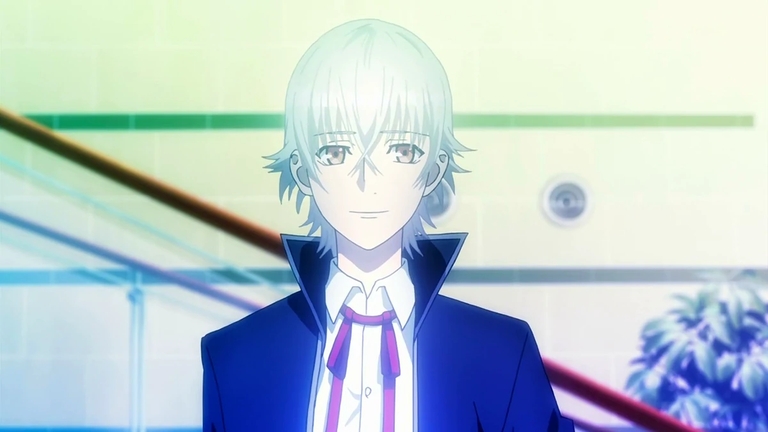
Being a King isn't fun or glamorous despite the fancy titles. You carry the weight of your clan's lives, the constant fear of losing control, and the knowledge that using your full strength might kill thousands of innocent civilians. Mikoto wanted revenge for Tatara's death but knew going all out would destroy the city he loved. Reisi had to kill his friend and rival to prevent that explosion, carrying the guilt of that execution. Nagare wanted to give power to the weak because he felt helpless as a child when he was fatally injured, only surviving because the Slate chose him as Green King.
Every King is traumatized by their own strength. The powers look cool in fight scenes with glowing effects and massive attacks, but they're curses wrapped in pretty colors. I read a breakdown of these burdens that pointed out how the Greek myth of Damocles applies here perfectly; great power comes with great danger hanging overhead by a thread.
Why the System Had to End
By the time Return of Kings wraps up, Yashiro realizes the Slate is too dangerous to keep around. Kings live under constant threat of exploding, clans war endlessly over territory and ideology, and regular people get caught in the crossfire of superhuman battles. The power system creates inequality and violence by its very nature.
Yashiro maxes out his Weismann level on purpose, drops his Sword directly onto the Dresden Slate, and destroys it in a calculated move. This kills Nagare instantly since the Green King was only alive because of his powers keeping his damaged body functioning, and it depowers everyone else. The Swords vanish, the Auras fade, and the burden finally lifts from the Kings' shoulders. Yashiro returns to his original body as Adolf K. Weismann, no longer immortal but finally free.
K project anime powers and kings explained comes down to one truth: absolute power creates absolute anxiety. The Dresden Slate took seven people and turned them into weapons, then gave them followers to worry about and protect. When the Slate finally broke, it freed them from that cycle of violence and responsibility. No more Swords hanging overhead, no more Weismann levels to monitor, no more fear of accidentally killing everyone you love. For a series known for its flashy aesthetic and cool fight scenes, the ultimate message is that power isn't worth the cost when it threatens everyone around you. The most heroic act in the series isn't winning a fight; it's giving up the power to fight at all.