
Takahata hated that you call it an anti-war film. He said it outright in interviews. If you're sitting there sobbing at Seita and Setsuko and thinking 'war is hell,' you've only caught half the message. The other half is way more uncomfortable and most viewers miss it entirely. This is the core of isao takahata filmography analysis and grave of the fireflies controversy - a director who survived the firebombings of Japan refusing to let his most famous work get tagged as a simple pacifist statement.
The film destroys you emotionally. Everyone knows this. Roger Ebert called it one of the greatest war films ever made, which is exactly the kind of praise that made Takahata grit his teeth. Because here's the thing: Takahata wasn't trying to make a statement about the evils of war. He was trying to show you how a 14-year-old boy let his sister die because he couldn't swallow his pride.
The Director's Own Words
Takahata gave interviews where he laid it out plain. He said a real anti-war film has to show how wars start, not just the misery at the end. He pointed out that Grave of the Fireflies only shows the aftermath, the collapse, the specific moment when society breaks down. He wanted to depict the failure of social life, not the bombs falling.
Apparently, Takahata saw Seita and Setsuko as representing something specific about isolation. They build a family life together in that cave, sure, but they completely reject the community around them. They fail socially because Seita can't bow his head to the aunt. He can't accept that he's not a privileged navy captain's son anymore. He's just another mouth to feed in a starving nation, but his ego won't let him accept charity or work.
This reading changes everything. It means the aunt isn't the villain. Yeah, she's harsh. She sells their mother's kimonos for rice and nags Seita to contribute. But look at her actions through 1945 eyes. She's managing a household in total war and famine. She's feeding two extra kids who aren't helping. When Seita refuses to work or study, choosing instead to laze at the beach while his sister starves, the aunt's anger makes brutal sense.
Seita's Fatal Flaws
The Grave of the Fireflies analysis that hits hardest is the one that treats Seita not as a tragic hero but as a cautionary tale about stubbornness. He had options. He could have apologized to the aunt. He could have stayed in the house and done labor. He could have taken the farmer's advice when Setsuko got sick instead of dismissing it. He chose pride over survival every single time.
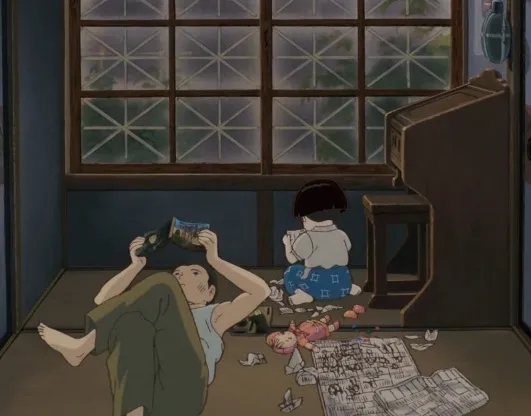
In 1945 Japan, a 14-year-old was labor-ready. They weren't a child by modern standards. Seita spending his days catching fireflies and playing at the beach while his sister's teeth fall out from malnutrition isn't just sad, it's a specific kind of vanity. Takahata apparently saw this as a mirror for modern Japanese youth who isolate themselves and can't accept help even when they need it desperately.
Some critics, particularly in South Korea, have gone further. They read Seita as an allegory for Japanese imperial leadership itself - vain, prideful, driving the nation to ruin while the innocent populace (Setsuko) suffers the consequences. Takahata was a member of the Communist Party of Japan and consistently argued that Japan needed to acknowledge its role as a perpetrator and invader during WWII, not just a victim. The film becomes a weird kind of self-critique under this lens, showing how the Japanese public avoids responsibility by blaming leaders while ignoring their own collective madness.
Beyond the Anti-War Label
The controversy around Grave of the Fireflies/%EB%85%BC%EB%9E%80%EA%B3%BC%20%EB%B0%98%EB%A1%A0) gets messy when you look at East Asian reception. Some Korean critics call it victim cosplay, a way for Japan to portray itself solely as the victim of American bombs while ignoring Nanking, comfort women, and Unit 731. But Takahata's own politics complicate this reading. He wasn't trying to make Japan look like a pure victim. He was showing how personal failure and social collapse interact during crisis.
The film never shows the war crimes. It stays tightly focused on these two kids. That's why Takahata defended it as being outside the scope of anti-war messaging. It's not about the causes or the geopolitics. It's about what happens when a 14-year-old thinks he can raise a 4-year-old alone in a cave during famine because he's too proud to ask for help.
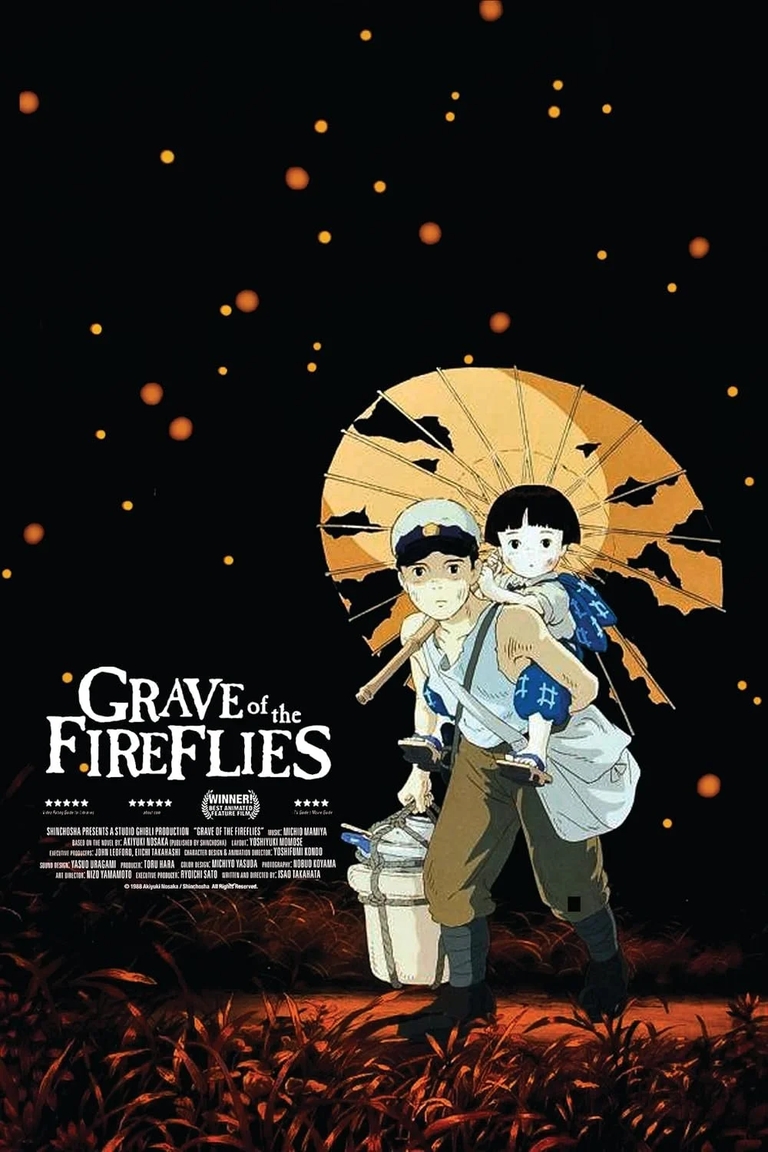
The fireflies themselves carry the heavy symbolism. They're beautiful but die fast. They represent the human soul, sure, but also the American firebombs that created the hellscape these kids wander through. Setsuko's question, "Why do fireflies have to die so soon?" hangs unanswered because there is no answer. It's just the nature of fragile things in a world that doesn't care about them.
Takahata's Other Works
You can't understand the controversy without looking at the rest of Takahata's filmography. The guy wasn't just the "sad war movie" director. He had range that makes Miyazaki look one-note sometimes.
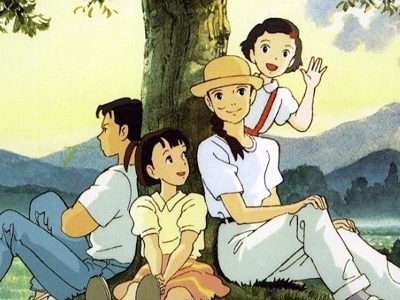
Take Only Yesterday. It's a quiet story about a 27-year-old woman named Taeko visiting the countryside and remembering her childhood. No bombs, no death, just memory and the passage of time. It uses the same vignette style as Fireflies but for nostalgia instead of trauma. The cuts between adult Taeko and her 10-year-old self create this rhythm that feels like flipping through a photo album. It proves Takahata could do bittersweet without devastating you.
Then there's Pom Poko, which is completely unhinged in the best way. It's about tanuki fighting human deforestation, full of weird humor and those infamous scrotum gags. It shares DNA with Princess Mononoke's environmental themes but handles them with chaos and comedy instead of Miyazaki's mystical seriousness. The voiceover narration and episodic structure show Takahata experimenting with form.
My Neighbors the Yamadas goes even further into domestic weirdness. It adapts a newspaper comic with simple, sketchy art that pissed off audiences expecting Totoro-style polish. But it's perfect for capturing the small stupid moments of family life - the arguments, the silliness, the mundane stuff that actually makes up marriage and parenting. No grand message, just life happening.
His final film, The Tale of Princess Kaguya, is arguably his masterpiece. It looks like watercolor paintings moving on screen, all loose brushstrokes and fading colors. He waited decades to make it because the technology needed to catch up to his vision. The story of the bamboo princess uses the visual style to show emotional turmoil in a way that realistic animation couldn't achieve. It proves Takahata cared about form matching content, not just pretty pictures.
The Weight of History
The BBC coverage of Grave of the Fireflies notes how the film maintains this haunting relevance decades later. But that relevance comes from ambiguity, not preaching. It shows the failure of heroism and nobility in desperate circumstances. Hollywood would have Seita finding a way to save Setsuko through pluck and determination. Takahata shows him failing because those qualities don't matter when you're starving and too proud to farm or beg.
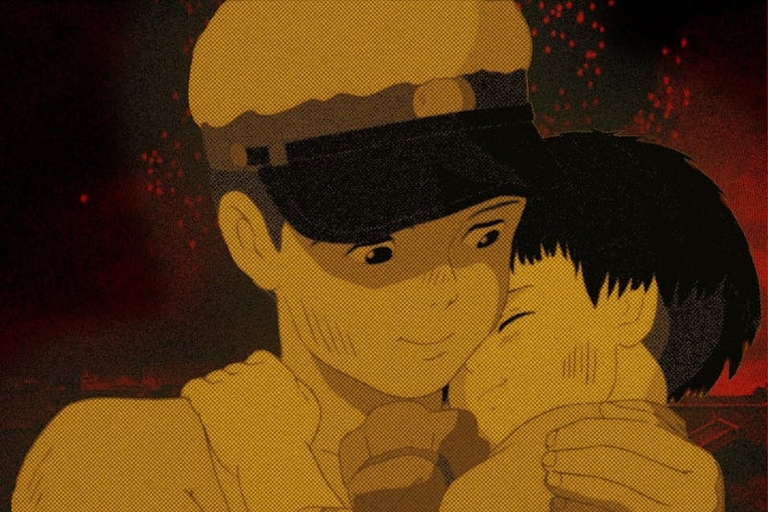
The historical context matters here. The firebombing of Kobe killed thousands. The U.S. Army Air Forces targeted civilians deliberately to break Japanese morale. Seita and Setsuko are victims of this strategy, absolutely. But Takahata focuses on the weeks after the bombs stop falling, when the social fabric unravels and neighbors stop helping neighbors. That's the tragedy he wants you to see. The war created the conditions, but the social collapse killed the girl.
Some academic readings of the film look at PTSD symptoms in Seita. He has flashbacks, dissociation, survivor's guilt after his mother dies. This psychological angle adds another layer to why he makes bad decisions. He's a traumatized child trying to play adult, failing because trauma and malnutrition don't care about his intentions.
The fruit drops tin that holds Setsuko's ashes becomes this powerful material artifact. In the film's final moments, Seita puts her cremated remains in that tin along with a photo of their father. It's the only container he has, but it's also symbolic of how he tried to keep her happy with sweets while failing to keep her fed. The tin gets thrown away by a janitor at the train station, which is how the film opens, confirming from frame one that these kids die and nobody cares.
Why the Confusion Happens
People call it an anti-war film because it's devastating and it's set during WWII. That's surface-level reading. The emotional impact is so intense that viewers assume the message must be "war is bad." But Takahata was smarter than that. He knew that showing suffering doesn't automatically make people oppose war. Humans are too good at compartmentalizing for that.
Instead, he made a film about pride and isolation. Seita chooses to leave the aunt's house. He chooses not to work. He chooses to steal fruit instead of asking for help. Every step of the way, he prioritizes his self-image as a provider and protector over the reality that he can't provide or protect. Setsuko dies because he feeds her watermelon and candy drops instead of rice and protein, not because the Americans bombed them.
The analysis comparing Grave of the Fireflies to Barefoot Gen shows the difference between victim history and transcending it. Barefoot Gen hits you with explicit nuclear horror and political anger. Fireflies shows you social breakdown through the eyes of a boy who refuses to participate in the community that's trying to survive. Both are valid approaches to war stories, but only one gets mislabeled as simple pacifist propaganda.
Takahata's entire career was about this kind of specificity. He didn't make "messages." He made observations about how people live. Whether it's Taeko remembering her childhood crush in Only Yesterday, the tanuki losing their forest in Pom Poko, or the Yamada family bickering at dinner, he cared about the texture of life more than the moral of the story.
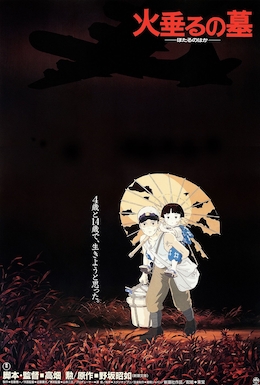
The controversy exists because audiences want easy categories. Anti-war or pro-war. Victim or perpetrator. Good guy or bad guy. But Grave of the Fireflies refuses these binaries. The aunt is harsh but right. Seita is loving but fatally flawed. The Americans are off-screen destroyers, but the Japanese community fails these kids too. Everyone shares the blame, which means no one gets off clean.
If you walk away from this film thinking you've watched a simple tragedy about war orphans, you've missed the hard edge. Takahata looked at his own country's history and saw how pride kills just as surely as bombs. He saw how isolation in a time of crisis is a death sentence. He made you love these kids so you'd feel the full weight of their preventable deaths.
That's not anti-war. That's anti-hubris. That's anti-isolation. It's a film about how we fail each other when times get tough, and how the deadliest weapon isn't the bomb in the sky but the inability to bow your head and ask for help when your sister is starving.