
People keep trying to make Inuyashiki into a simple good versus evil story and that misses the point entirely. This inuyashiki protagonist and villain analysis isn't about picking sides between the old man and the teen killer. It's about recognizing that Ichiro Inuyashiki and Hiro Shishigami got the exact same raw deal from the same aliens and ended up on opposite ends of the moral spectrum not because of their powers, but because of who they already were when their hearts stopped beating in that park.
Both of them died that night. Both got rebuilt as weapons by extraterrestrials who didn't care about human ethics and only had combat chassis lying around. The aliens slapped their memories into metal bodies and called it a day. What happened after that wasn't about the technology corrupting anyone or saving anyone. It was just two different reactions to being turned into obsolete military hardware that looks like a human on the outside.
You can look at the mechanics of their transformations all day, but that's not what drives the story. The real engine here is how a 58-year-old salaryman with stomach cancer and a high school sociopath with mommy issues each processed the same impossible second chance. One decided to heal cancer patients and stop muggings. The other decided to feel alive by slaughtering families. Same powers. Same origin. Totally different wiring in their heads.
Who They Were Before the Crash
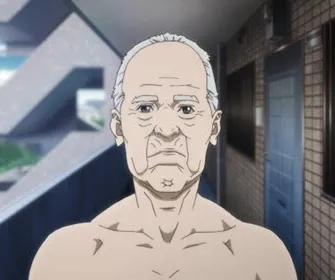
Ichiro was already dead inside before the UFO got him. That's the part a lot of viewers gloss over because it's uncomfortable to watch. He wasn't just old. He was invisible. His wife barely looked at him. His kids treated him like furniture. He worked a job that didn't respect him and he had terminal cancer eating him from the inside out. When he cried alone in that park with his dog, it wasn't dramatic. It was just pathetic in the most human way possible. He had nothing and nobody cared.
His daughter Mari was obsessed with becoming a manga artist and saw him as an obstacle. His son took him for granted as a wallet. His wife complained about his smell and his uselessness. This isn't uncommon in Japan or anywhere else. The elderly get pushed aside when they stop being productive. Ichiro represented that demographic perfectly. He was a walking ghost haunting his own house. At work, younger employees ignored his input. At home, his family ate dinner without waiting for him. The cancer diagnosis was just the final insult in a life full of quiet rejections.
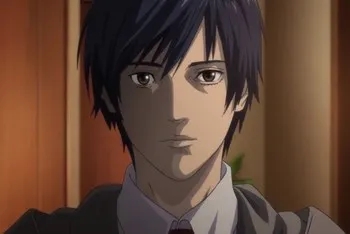
Hiro wasn't much better off, but his damage was quieter and meaner. He lived in a cramped apartment with his mother while his father had a whole other family across town. Kids at school bullied him regularly, stuffing him in lockers and stealing his shoes. He watched a guy get hit by a train and realized he liked watching people die. That's not normal teen angst. That's a warning sign everyone missed. He had one friend, Ando, and even that relationship was strained because Hiro couldn't feel things the way other people do. He faked emotions by copying what others did, but inside he was just empty.
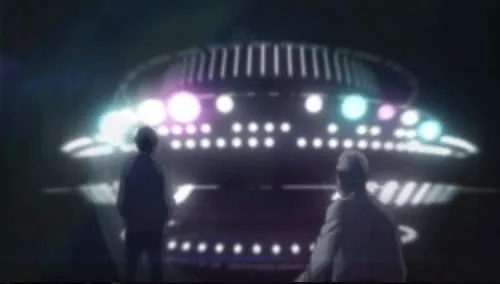
The alien ship didn't discriminate. It killed them both indiscriminately and rebuilt them with the same specs. The difference was that Ichiro had spent 58 years learning what it meant to hurt and Hiro had spent 16 years learning that hurting others was the only thing that made the buzzing in his head stop. You can't blame the cybernetics for what came next.
Inuyashiki Protagonist and Villain Analysis of the Machine Bodies
Here's where it gets weird. Both of them got turned into walking weapons with arm cannons, flight capability, and nanomachine healing powers. They could both shoot lasers from their arms. They both had self-destruct mechanisms powerful enough to crack an asteroid. The aliens literally used the same manual to build both bodies. Ichiro could melt a tank and Hiro could cure cancer if he felt like it. The hardware didn't care about morality.
Ichiro spent the first few days after waking up thinking he was a copy. He thought the real him died and he was just a robot pretending to be Ichiro. That's a solid take on the Ship of Theseus problem. If every part of you gets replaced with metal and circuits, are you still you? He cried when he realized he didn't need to eat anymore. He cried harder when he found out he could heal a little girl's paralysis just by touching her. The power didn't corrupt him because he was already broken in a way that made him desperate to matter to someone.
Hiro had the opposite reaction. He tested his limits by murdering his bullies. He walked into houses and killed entire families while they slept. He used the finger gun technique, just pointing and saying "bang" to fire invisible bullets through walls. The power didn't create his violence. It just gave him the ability to act on impulses he'd been suppressing for years. He finally felt human when he was killing because that was the only time his emotional flatness got punctured by something real.
The Yakuza Arc and Samejima
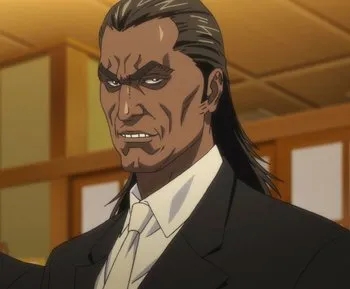
Between the origin stories and the final meteor showdown, Ichiro runs into a piece of human garbage named Samejima. This guy is a yakuza boss who rapes women for fun and thinks he's untouchable because he has money and thugs. He represents the old school evil that doesn't need alien powers to be monstrous. Just power and apathy.
Ichiro confronts him and permanently blinds him. It's one of the few times Ichiro uses his weapons offensively and it shows that he's not a pacifist pushover. He has limits. When he sees pure predatory evil like Samejima, he responds with force. This arc matters because it establishes that Ichiro isn't just healing people out of guilt. He's actively fighting the darkness in society. He's choosing to engage with the world instead of retreating from it.
Hiro never deals with the yakuza. He doesn't care about organized crime or human trafficking. He cares about his own entertainment. That's the difference between a criminal and a villain. Samejima is a criminal with human motivations like greed and lust. Hiro is something else entirely. He's a force of nature that kills because it's Tuesday.
Ichiro's Healing Hands vs Hiro's Finger Gun
The contrast in how they used identical toolkits is almost funny if it weren't so disturbing. Ichiro started sneaking into hospitals at night to cure terminal patients. He'd fly through windows, touch people, and watch their cancer evaporate. He stopped Samejima from hurting more women by blasting his eyes out. He saved people from burning buildings. Every good deed was him trying to prove he was still human by doing the most human thing possible: helping others.
Hiro used the same healing technology maybe twice in the whole series. Once on his friend Ando to prove a point, and later on Shion's grandmother when he was trying to play house and pretend he was normal. But mostly he just killed. He murdered families for fun. He slaughtered police officers by the dozens. When the internet trolls made fun of his mother's suicide, he tracked them down through their screens and executed them one by one. Same tech. Different operating system.
The People Who Saw Through the Metal
Ando is the unsung hero of this whole mess. He was Hiro's only real friend and he immediately recognized that something was wrong when Hiro showed him the arm cannon. Ando didn't sign up for mass murder. He bailed and eventually teamed up with Ichiro to stop the killing. That relationship between the old man and the teen hacker was one of the few genuine connections in the show. Ando didn't care that Ichiro was a machine. He cared that Ichiro was trying to fix things while Hiro was breaking them.
Then there's Shion Watanabe. She's the girl Hiro lived with after his mom died and his crimes went public. She saw something in him that wasn't there, or maybe she just wanted to believe the pretty boy wasn't a monster. She convinced him to use his powers to heal people for like two episodes. It was working too. He was healing the sick in her neighborhood, acting like a creepy messiah. But then the SWAT team showed up and reminded him that society doesn't forgive mass murderers just because they start doing charity work. When they shot Shion and her grandma, Hiro remembered he preferred being a villain.
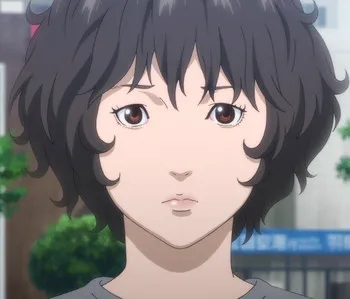
Mari, Ichiro's daughter, is worth mentioning too. She spent the first half of the series ignoring her dad like everyone else. She was obsessed with becoming a manga artist and didn't have time for the old man who paid her bills. Only when she found out he was the flying robot saving Tokyo did she suddenly care. That's a whole other commentary on how we only value people when they're useful or powerful. She wrote a manga about him after he died which is sweet but also kind of too little too late.
Why Age Matters Here
This isn't a story you could tell with two teens or two adults. The age gap is crucial. Ichiro had 58 years of life experience telling him that power means responsibility. He remembered a time before smartphones and social media. He knew what it meant to be powerless and invisible, so when he got power, he used it to become visible through service. He didn't want fame. He just wanted to matter to someone before his second death.
Hiro was 16. He thought he was the main character in a video game. He had no context for mortality except watching that guy get hit by the train. He didn't understand consequence because his brain wasn't done developing and he was already a sociopath. When you give a broken teenager the ability to kill anyone he wants with a thought, and he's already bored with existence, you get exactly what happened. He wasn't cartoon evil. He was realistic evil. The kind that shoots up schools or stabs random people because it feels like something to do.
The Philosophy Behind the Violence
Hiroya Oku, the guy who made Gantz, clearly wanted to talk about what makes us human when the meat gets replaced with metal. But he also wanted to talk about alienation in modern Japan. Ichiro represents the elderly population that gets ignored and shoved aside. Hiro represents the youth that disconnects from society and retreats into nihilism. Both are reactions to a world that doesn't care about you until you become dangerous.
Some folks try to claim Hiro is an anti-hero or that he's sympathetic. That's garbage. He slaughtered babies. He murdered families in their sleep. There's no redemption arc that fixes that. But he's not one-dimensional either. He loved his mom in his own twisted way. He cared about Shion until he didn't. The series asks whether being human is about biology or behavior. If you act like a monster, does it matter that you were born with human DNA? If you act like a hero in a robot body, are you still the same person who died in the park?
The Visual Language of the Show
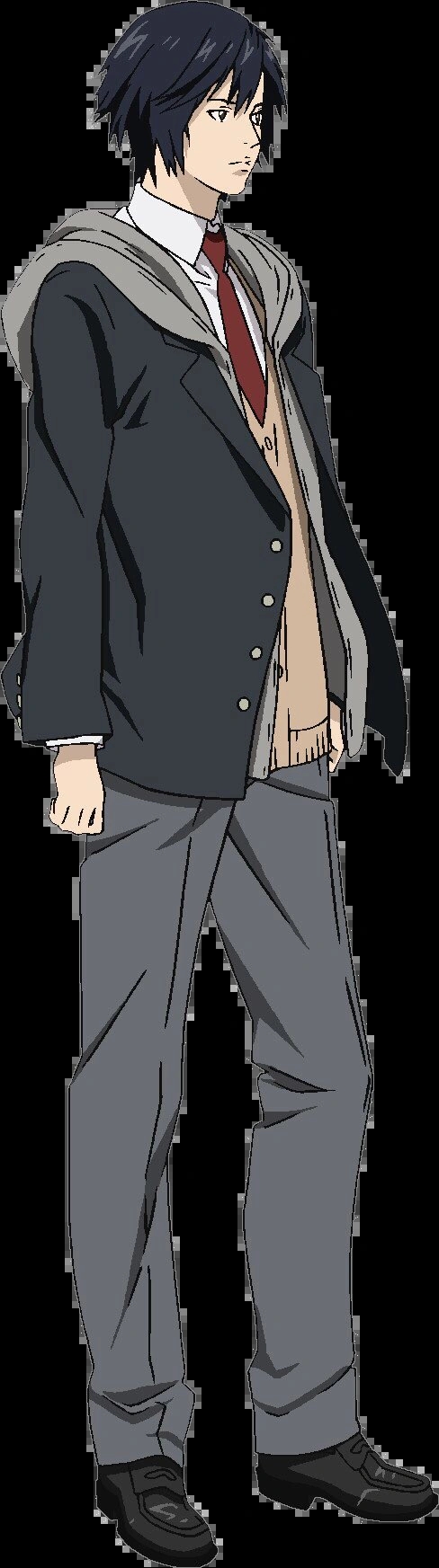
The anime uses some janky CGI for the cityscapes that looks cheap, but the character animation is solid. Ichiro is drawn with wrinkles and bad posture. He looks tired even when he's flying. Hiro is drawn like a pretty boy model even when he's covered in blood. The visual contrast reinforces their roles. Ichiro is ugly but good. Hiro is beautiful but rotten.
When Ichiro uses his powers, the show plays this triumphant theme song that sounds like something out of an old superhero cartoon. It works because it's earnest. There's no irony in Ichiro's heroism. When Hiro kills, the sound design gets quiet and clinical. You hear the mechanics of the finger gun. You hear bodies hit the floor. It's meant to disturb, not excite.
The Live Action Changes
The movie version changed some stuff that actually matters for this analysis. In the manga and anime, Hiro sacrifices himself to help destroy the meteor. He realizes at the end that he wants to save the people Ichiro loves, maybe because he can't save himself. He blows himself up on the rock and Ichiro follows suit. It's poetic. Two machines destroying themselves to save the organic world that rejected them.
In the live-action film, Hiro survives and Shion dies. That changes the message completely. It turns Hiro into a pure villain who gets away with it while Ichiro gets crushed. Some people prefer the movie ending because it feels more realistic. Bad guys don't always get redeemed. But the anime ending hits harder because it suggests that even a broken murder machine can choose to be good in his final moment. That choice is what separates him from just being a weapon.
The Internet Reaction and Misunderstandings
Go on Reddit or any forum and you'll find people arguing that Hiro is the real protagonist. That's because he gets more screen time and he has the edgy appeal that teenage boys love. They see him as some kind of power fantasy. They ignore the part where he's killing innocent people because those scenes make them uncomfortable. They focus on him being bullied or his mom dying and use that to excuse everything.
That's missing the point on purpose. Ichiro is the hero. He's not cool. He's not stylish. He looks like a sad old man and he acts like one too. But he's the one doing the work of saving people while Hiro creates trauma. The series is a test for the viewer. If you find yourself rooting for Hiro, you need to ask yourself why violence appeals to you more than healing. It's not about being edgy or dark. It's about recognizing that nihilism is boring and evil is lazy.
The Final Explosion
The ending with the asteroid is perfect because it forces both characters to confront their own obsolescence. Ichiro can't destroy the rock alone. He doesn't have enough water for his lasers or whatever technical limitation they threw in. Hiro shows up injured and offers to self-destruct. They both know it will kill them. They both do it anyway.
That sacrifice is the only thing that makes them equal. Not their powers. Not their origin story. Just the fact that when it really mattered, when the whole planet was at stake, both broken machines chose to break completely rather than let everyone else die. Hiro didn't do it because he turned good. He did it because Shion would have died and she was the last thing he cared about. Ichiro did it because that's just who he was. Two different reasons. Same result. Earth survives. Two dead cyborgs floating in space.
This inuyashiki protagonist and villain analysis doesn't need to declare a winner. The show already did. Ichiro died loved by his family finally and remembered as a hero. Hiro died as a terrorist who did one good thing at the end. The gap between them was never about the alien tech. It was about the choices they made every day with the same loaded gun in their hands. You can see more about their character breakdowns and Hiro's full profile elsewhere, but the math is simple. One healed. One killed. Both died saving the world.