
Most people think Howl's Moving Castle anime movie analysis is about fancy magic and pretty visuals, but they're missing the point entirely. This isn't a story about wizards and curses in the traditional sense, it's a messy exploration of self-hatred, war trauma, and why growing up terrifies us so much. Miyazaki didn't just adapt Diana Wynne Jones's book to make a fairy tale. He took the framework and stuffed it with his own baggage from being born in 1941 Tokyo while bombs fell around him. The result is a film where the magic system makes no logical sense because it's not supposed to, it's all metaphorical. Sophie's age shifts aren't a glitch in the spell, they're a direct line to her confidence level.
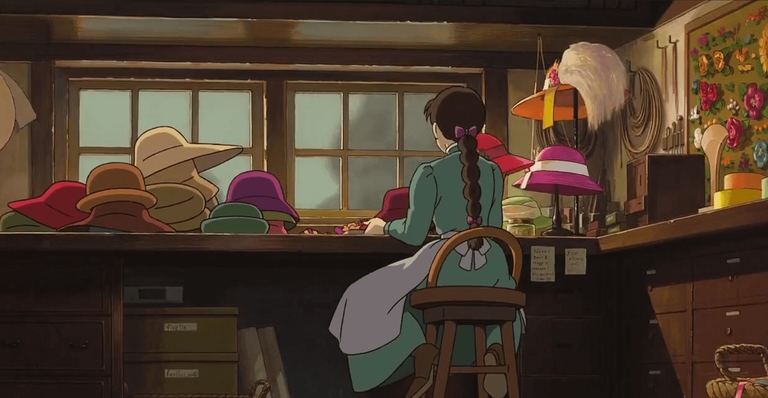
You can see the problems right from the start. Sophie works in a hat shop and acts like she's already eighty years old even though she's eighteen. She thinks she's ugly and boring and doesn't deserve anything interesting to happen to her. When the Witch of the Waste shows up and curses her into looking like a ninety year old crone, Sophie doesn't even get that mad about it. She just kind of accepts it and walks out of town because deep down she already felt that old and worthless. That's the real curse here, not some magic spell but the way she talks to herself inside her own head. Her mother and sister Lettie don't help either, they treat her like she's already given up on life before she's even started living it.
The Curse Runs On Self Esteem Not Magic
Here's the thing nobody explains clearly in the film but becomes obvious if you pay attention to the pattern. Sophie's age changes based entirely on how she feels about herself in any given moment. When she's cleaning the castle and feeling useful and confident, she looks young again. When she doubts herself or gets insecure around Howl, she wrinkles up and goes back to looking ancient. When she's asleep and her subconscious takes over, she always looks young because that's her true self without the negative self talk. The mechanics of this are spelled out in the curse mechanics analysis that breaks down how her self-perception drives the transformation.
The Witch of the Waste didn't really cast a spell so much as trigger what was already there. Sophie believed she was plain and unlovable, so she became physically what she felt emotionally. It's weird and messy and doesn't follow consistent rules because depression and low self esteem don't follow consistent rules either. One day you feel solid and capable, the next you feel like a burden to everyone around you. The film captures that inconsistency perfectly by having her age shift in the middle of scenes without explanation. When she confronts Suliman and defends Howl, she stands tall and looks young because she's being brave. When she doubts whether Howl really cares about her, she hunches over and ages fifty years in seconds.
Calcifer even points this out indirectly when he notices she keeps changing. He doesn't understand it because he's looking for magical causes when the answer is psychological. Sophie breaks her own curse not by finding a counter-spell or killing the witch who cast it, but by learning to accept herself and accept love from other people. When she finally realizes she deserves Howl's affection and that she isn't a burden, she stays young permanently. Her hair stays white though, which is a nice touch showing she's kept the wisdom and maturity she gained even while regaining her youth. That white hair is proof that she earned her happiness through struggle, not that she just went back to the start.
Howl Is A Man Child And That's The Point
People love to romanticize Howl as this perfect charming wizard but he's honestly kind of annoying and immature for most of the film. He's powerful enough to level cities but he throws tantrums when his hair dye turns the wrong color. He creates elaborate schemes to avoid responsibility and runs away from his problems literally by having his castle walk around on chicken legs. He's what happens when you give a teenager unlimited power without forcing them to grow up. His room is disgusting, he leaves messes everywhere, and he expects everyone else to clean up after him while he sulks about his appearance.
The contract with Calcifer is the physical manifestation of his refusal to be an adult. He gave his heart away to a falling star so he wouldn't have to feel things too deeply or get hurt. That's some classic avoidance behavior right there. He can perform incredible magic and fight in wars but he can't have a serious conversation about his feelings without transforming into a monster or running away. Sources note that he's basically a man-child who needs Sophie to call him out on his nonsense. When she finally barges into his room and cleans it up, she's not just tidying, she's forcing him to confront his own chaos.
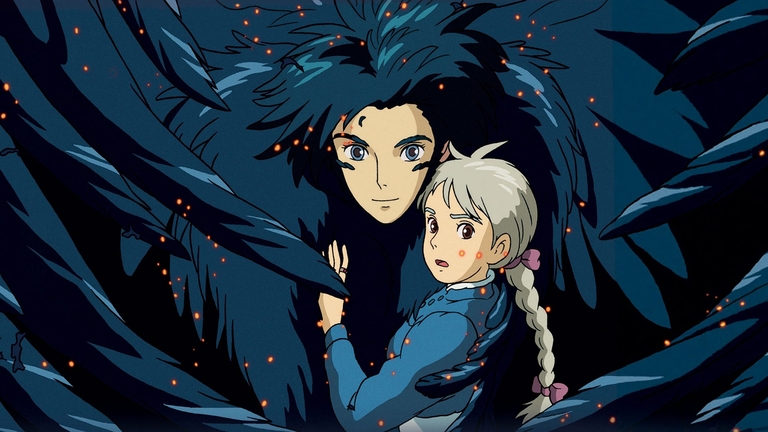
His transformation into the bird-like creature represents what happens when you engage with violence and war. The more he uses his power to fight, the more he loses his humanity and risks never coming back. He starts losing feathers and has trouble returning to human form because the violence is consuming him. It's a solid metaphor for how participating in war dehumanizes everyone involved, even if you're fighting for the right reasons. Sophie has to remind him who he really is to pull him back from the brink, which is exactly what happens when someone loves you enough to hold you accountable. She risks her life to find him when he's lost in the bird form because she sees the real him underneath the monster.
The Anti War Message Hiding In Plain Sight
You can't talk about this film without addressing the Iraq War context because Miyazaki was furious about it. He made this movie in 2004 as a direct response to the invasion and his own childhood trauma from World War II. The war happening in the background isn't some generic fantasy conflict, it's a specific commentary on how governments send young people to die for stupid reasons while the people in power stay safe and comfortable. Miyazaki was born in 1941 and evacuated from Tokyo during the firebombings, so he knew firsthand what war does to civilians.
The kingdoms are fighting over a missing prince that nobody actually cares about finding. The war machines look ridiculous and over designed, all smoke and gears destroying beautiful countryside for no good reason. Howl refuses to fight for either side even though the government tries to force him into service. He interferes with both armies not because he wants either side to win, but because he wants the fighting to stop entirely. Analysis shows that Miyazaki intended this as an anti-war protest disguised as a fairy tale. The bombers drop incendiaries that look too much like the ones that fell on Tokyo to be coincidence.
Suliman represents institutional power and the way bureaucracy tries to control magical people. She wants to turn Howl into a weapon or strip him of his power entirely if he won't cooperate. There's no real villain in the traditional sense, just systems of power that chew people up and spit them out. Even the Witch of the Waste starts as an antagonist but gets defanged by Suliman and becomes part of the found family, showing that people aren't inherently evil but systems make them do evil things. The war ends not because someone wins but because the prince comes back and everyone realizes they were fighting over nothing. That's a pretty blunt way of saying wars are usually pointless.
The Moving Castle Is Anxiety Made Physical
The castle itself is one of the best characters in the movie and it's literally just a pile of junk held together by a demon. It clanks and groans and changes shape constantly because it's reflecting Howl's chaotic mental state. The four colored doors lead to different places because Howl is trying to run away from his problems in four different directions at once. The clutter inside represents his mind, brilliant and creative but messy and disorganized. When Sophie first enters, it's disgusting and dangerous because that's how Howl feels inside.
Calcifer powers the whole thing but he's terrified of going out or being extinguished. He stays in the fireplace because it's safe even though he wants freedom. That's Howl's heart we're looking at, scared and trapped but keeping everything running through sheer stubbornness. When Sophie removes Calcifer from the hearth and the castle collapses, it's symbolic of Howl finally letting his walls down and stopping the performance of being okay. The castle falling apart is necessary because you can't build something solid on a foundation of fear and avoidance.
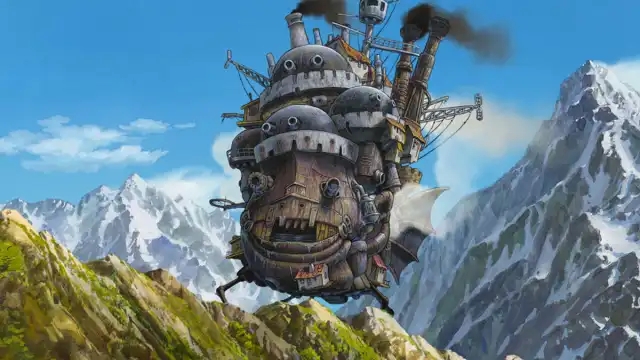
The castle walks on mechanical chicken legs because it's absurd and unstable, just like trying to maintain a false self image while dealing with trauma. It shouldn't work but it does, held together by magic and denial. When Sophie starts cleaning and organizing the place, she's literally helping Howl organize his mind and his life. She grounds him and gives him a reason to stop running. The castle's ability to move between locations represents Howl's desire to never be pinned down or forced to commit to anything.
The Visuals And Music Do Heavy Lifting
The hand-drawn animation in this film is spectacular and serves the story in ways CGI never could. The painterly backdrops and the way the castle moves with such weight and mechanical complexity shows what human artists can do when they're allowed to create. The colors shift from muted grays and browns at the start to bright blues and golds as Sophie and Howl begin to heal. This isn't just pretty, it's telling you how the characters feel without words.
Joe Hisaishi's score, especially Merry Go Round of Life, carries the emotional weight of scenes that have no dialogue. The music swells when Sophie finds her confidence and gets quiet and delicate when she's feeling small. It binds the whole messy story together into something cohesive. The animation details in the market scenes and the way steam rises from the castle's chimneys creates a world that feels lived in and real despite all the magic. You can see the grime and the wear on things, which fits the theme of finding beauty in imperfection.
Why The Ending Makes Sense If You Stop Looking For Logic
Yeah, the ending is confusing if you try to map it out like a logical plot. Sophie goes back in time somehow and sees young Howl catch Calcifer as a falling star. She realizes they've been connected all along and that Howl has been waiting for her specifically. Then she breaks the contract between Howl and Calcifer by kissing Calcifer or putting him back in Howl's chest or both, it's ambiguous, and suddenly everyone's cured and the scarecrow was the prince all along.
It feels like dream logic because it is dream logic. The film operates on emotional truth rather than narrative consistency. Sophie breaks the curse by fully accepting herself and declaring her love for Howl. Howl gets his heart back by accepting that he can feel things deeply without being destroyed. The Witch of the Waste gives Calcifer back because she's learned humility and kindness. Turnip Head breaks his own curse through an act of pure devotion to Sophie.
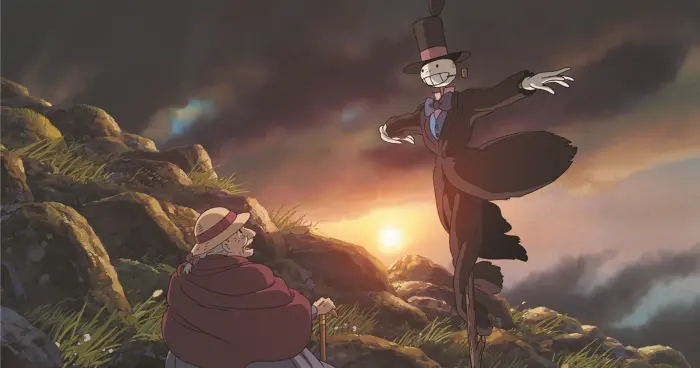
The prince going home to end the war feels abrupt but that's the point. Wars end when people stop participating in them and recognize each other's humanity. Suliman sees that her missing prince is safe and stops the hostilities immediately. It's not about military strategy or political negotiations, it's about individuals choosing compassion over conflict. The film suggests that love and self acceptance are revolutionary acts that can stop wars, which sounds naive but Miyazaki genuinely believed that.
Sophie keeps her white hair at the end because she's not the same person she was at the beginning. She's gained confidence and wisdom and she's not going to go back to being the insecure girl in the hat shop. The hair is a reminder that she earned her happiness through growth and struggle. She and Howl fly away together not because their problems are all solved, but because they've learned they can face problems together without running away or hiding.
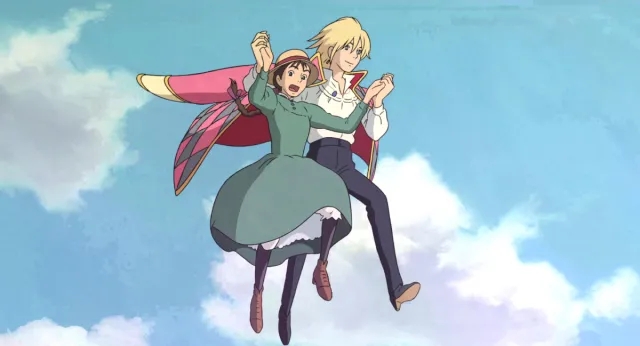
This movie works because it doesn't try to fit into neat boxes. It's weird and messy and sometimes the plot jumps around because feelings jump around. Howl's Moving Castle anime movie analysis shouldn't focus on the mechanics of the magic but on the honesty of the emotions. Miyazaki made a film about his own fears of war and his own struggles with adulthood and self worth, and he wrapped it in steampunk aesthetics and Studio Ghibli charm so we wouldn't notice how heavy it is until it hits us. The castle keeps moving because we keep moving, trying to balance our responsibilities with our desire to stay safe and hidden, and sometimes we need someone to clean out our mental clutter and tell us we're worthy of love even when we're monstrous.