
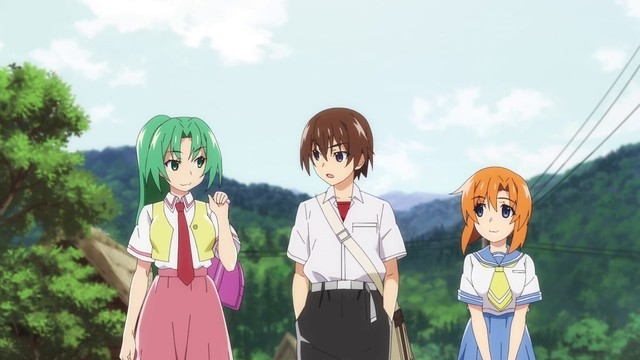
Higurashi Gou anime mystery and plot confused the hell out of everyone when it dropped in 2020 because the marketing lied. They sold it as a remake of the 2006 series, some shiny new coat of paint for newcomers, but that was complete nonsense. By episode two you knew something was wrong because Keiichi wasn't supposed to survive that. The truth is Gou is a direct sequel to Higurashi Kai, and if you jumped in blind without watching the original, you spoiled yourself on about fifteen years of built-up lore.
The setup looks familiar at first. June 1983. Keiichi moves to Hinamizawa. The club plays games. The Watanagashi Festival approaches. People die on June 19th. Rika Furude dies. The loop resets. We've seen this movie before, literally. But this time the rules are broken because Rika isn't the only one remembering what happened. Her best friend Satoko Hojo is looping too, except Satoko isn't trying to save everyone. She's the one making things worse.
What Gou Really Is
Passione animated this thing with a budget that makes the old Studio Deen episodes look like flipbooks, but the real change isn't the smoother animation or the way everyone looks like they wandered in from Monogatari. The real change is perspective. The original Higurashi put you in Keiichi's shoes or Rena's shoes, normal kids trying to survive a curse. Gou puts you in Satoko's head, and Satoko is pissed off.
After the events of Kai, Rika finally won. She broke the cycle, defeated Takano, and got her future at St. Lucia's Academy. It's this fancy prep school for rich girls. Satoko followed her there because she couldn't imagine life without her big sister figure, but St. Lucia broke Satoko in half. The academics were too hard, the social scene was suffocating, and Rika was thriving while Satoko was drowning. Instead of helping, Rika was too busy living her best life with new friends. Satoko felt abandoned, betrayed, left behind by the one person she trusted.
So Satoko ends up in the Sea of Fragments, this weird metaphysical space between timelines, and meets Eua. Some people think Eua is Featherine Augustus Aurora from Umineko When They Cry, which would make Gou a stealth prequel to that whole mess, but that's a rabbit hole for another day. Point is, Eua gives Satoko looping powers stronger than what Rika had. Satoko can not only remember previous loops like Rika can, she can choose when to die and reset, she can drag Rika into new loops manually, and she can even leak memories into other timelines accidentally.
The Horror Changed and Some Fans Hate It
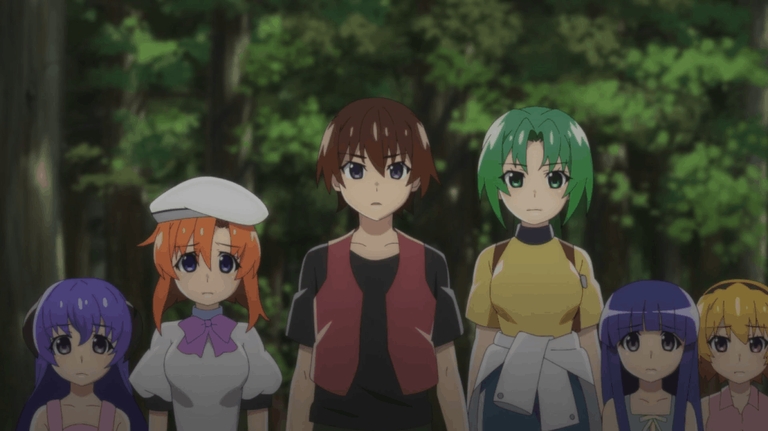
The 2006 anime scared you by making cute girls do terrible things while cicadas screamed in the background. It was psychological horror, slow burning dread, paranoia about your friends, the fear that you couldn't trust your own mind. Gou doesn't bother with that subtlety. Gou is body horror. Gou wants to show you Satoko bashing Rika's head in with a ritual hoe on repeat. It's graphic, it's visceral, and it's cruel in a completely different way.
Some people call this a downgrade. They say the mystery is weaker because you know Satoko is the villain early on, whereas the original kept you guessing about who killed who. But they're missing the point. Gou isn't a whodunit. It's a battle of wills between two people who can reset time. The horror comes from watching Satoko grow colder with every death while Rika keeps trying to find a timeline where they can both be happy.
Satoko's loops don't make her stronger like Rika's did. Rika spent a hundred years suffering and it turned her into a strategist, someone who could manipulate events to save her friends. Satoko's loops make her selfish. She gets good at killing, good at manipulating, good at wearing masks. She infects people with Hinamizawa Syndrome on purpose using stolen H-173 samples just to create chaos. She drives her friends insane because it's convenient. Where Rika learned resilience, Satoko learned cruelty.
The Weird Ripple Effects
Here's where it gets messy. Satoko's meddling starts changing things that shouldn't change. In one loop, her abusive uncle Teppei suddenly remembers all the terrible things he did in other timelines. He tries to redeem himself, becomes a better person, actually cares for Satoko. It's weird and uncomfortable because you're watching a child abuser get a redemption arc, but that's what happens when memory leaks between fragments.
Miyo Takano, the main villain from the original series, also gets hit by this. She remembers the tragedy of her research and abandons the Hinamizawa Syndrome project entirely. The curse should be over. The murders should stop. But Satoko won't let it end. She steals the H-173 agent and starts injecting people herself, becoming the new engine of the tragedy just to force Rika to stay in Hinamizawa forever.
The mystery stops being about the village curse and starts being about how far Satoko will go to break her friend's spirit. She wants Rika to give up on St. Lucia, give up on the future, accept that they'll be trapped in 1983 forever. It's possessive, it's toxic, and it's way more personal than the government conspiracy from the original.
Why the Structure Matters
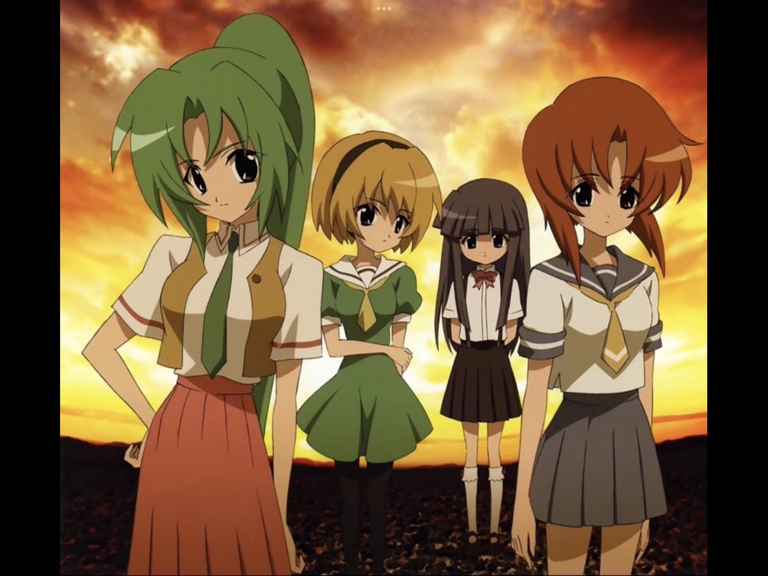
Gou follows the classic When They Cry formula of Question Arcs followed by Answer Arcs, except the first three arcs are twisted versions of Onikakushi, Watanagashi, and Tatarigoroshi from the original. They start the same way but diverge hard. Keiichi doesn't go crazy the same way. Rena's paranoia plays out differently. The club games happen but they feel wrong, forced, like Satoko is going through the motions while planning murder.
Then the second half of Gou hits and everything changes. You see the loops from Satoko's perspective. You watch her argue with Eua, you watch her plan her attacks, you watch her reset time over and over trying to find the perfect way to destroy Rika's hope. It's repetitive and some viewers bounced off it, calling it tedious, but that's the point. Satoko is stuck in her own hell, choosing to suffer because she can't handle the idea of change.
The anime ends on a cliffhanger, setting up Sotsu as the Answer Arc where Rika finally figures out Satoko is the enemy. It's not a mystery anymore. It's a war between two gods of time, and they're using a tiny mountain village as their battlefield.
The Umineko Shaped Elephant in the Room
You can't talk about Gou without mentioning the witches. Eua calls Satoko her "cat," references the Game Board, talks about pieces and moves like she's playing chess with human lives. If you've read Umineko, you're screaming because this is clearly setting up Satoko to become Lambdadelta, the Witch of Certainty, who traps people in loops of suffering just to guarantee they stay together forever.
Even if you don't care about Umineko, this supernatural injection changes the stakes. The original Higurashi was grounded in pseudo-science, parasites, government experiments, mental illness. Gou introduces actual magic, higher dimensional beings, and time manipulation as a superpower. Some fans think this cheapens the horror. Others think it makes the tragedy more epic.
The art style supports this shift. Akio Watanabe's designs are too clean, too pretty, too Monogatari-esque. When the violence hits, it looks wrong because everything else looks like a slice of life comedy. But maybe that's the point. Satoko sees Hinamizawa as her personal playground now, a place where she can script the perfect ending even if she has to kill everyone a hundred times to get there.
The Real Mystery Is Friendship
Sounds stupid when I say it like that, but it's true. The plot of Higurashi Gou anime mystery and plot boils down to one question: can a friendship survive when one person grows up and the other doesn't want to? Rika matured through her suffering. She wants to leave the village, experience the world, become something more than the shrine maiden trapped in 1983. Satoko is traumatized by change itself. She wants everything to stay exactly as it was when they were kids playing club games.
The loops become a metaphor for refusing to move on. Satoko would rather die forever than let Rika leave her behind. That's messed up, but it's also weirdly understandable if you've ever been left behind by a friend who went off to college or got a new job or found a new crowd. The horror comes from taking that normal fear and escalating it to cosmic levels.
So Is It Good or Not
It's complicated. The first half of Gou drags if you know the original story because you're watching a cover album before the band plays the new songs. The pacing is uneven, some characters get sidelined hard, and Shion fans will be mad about how little she matters here. Mion gets possessed by the syndrome which contradicts her established immunity from the original, and that annoys the lore nerds.
But Satoko as a villain is fascinating. She's not a tragic victim like Takano was. She's choosing this. Every time she picks up that needle or that gun or that hoe, she's making a conscious decision to hurt someone she loves because she can't handle being alone. That's scarier than any parasite or government conspiracy because it's human.
The Higurashi Gou anime mystery and plot works best when you accept it as a tragedy about two people who love each other but want incompatible futures. It's messy, it's brutal, and it doesn't care if you think the original was better. It does its own thing, and whether that thing works for you depends on how much you care about watching cute anime girls psychologically torture each other across infinite timelines.
If you want to see the full breakdown of how the loops work and what Eua really wants, check out this detailed series review. For a different take on why the horror style shifted so dramatically, this Reddit analysis hits the nail on the head about the body horror vs psychological dread debate. If you're wondering whether to watch the original first, this review site explains the dependency issues clearly, and Comic Watch covers the nightmare fuel aspects pretty well.