
Heavenly Delusion plot mysteries and world building explained starts with admitting the show is screwing with your head from minute one. You think you're watching two stories that might connect later, but they're already tangled together in ways that make you question what year it even is. This isn't some straightforward zombie apocalypse where monsters are just background noise for action scenes. Masakazu Ishiguro built a puzzle box where every ruined convenience store and every sterile white wall in that academy hides the same secret, and the show refuses to hold your hand while you figure it out.
The dual timeline structure isn't a gimmick. It's the whole point. You've got Maru and Kiruko wandering through rusted-out shopping malls fighting meat monsters that used to be people, and then you cut to these kids in what looks like a futuristic boarding school eating pudding and learning math from robots. The show wants you to think the academy is either before the disaster or maybe after in some protected bubble, but the reality is way messier. Time itself is broken here, and it's playing tricks on everyone including you.
What makes this work is that Ishiguro doesn't explain anything upfront. You get visual clues instead of exposition dumps. Notice how Tokio and Maru have the exact same face. Notice how the outside world has technology that shouldn't exist if civilization collapsed fifteen years ago. The series trusts you to see that the children's "Heaven" has incubators full of featureless babies and an AI named Mina that acts way too controlling to be just a teacher. By the time you realize the two timelines might be running parallel or even inverted, you're already caught in the mystery and can't look away.
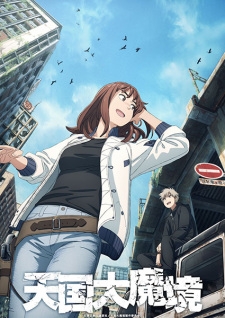
The show came out in Spring 2023 from Production I.G, and people still argue about what really happened in the final episodes. That's the point. The world building isn't there to comfort you with clear answers about the apocalypse. It's there to make you feel as lost as the characters, piecing together rumors and broken photos to guess what the hell happened to Japan.
The Three Lies Everyone Believes About the Great Disaster
Juichi is that weird scavenger Maru and Kiruko meet in the walled town, and he's full of stories. He tells them three main theories about why the world ended. First, an asteroid hit before everything went to hell. Second, aliens invaded and the man-eaters are extraterrestrial life. Third, terrorists used some special weapon that broke reality. The editing tricks you here because while Juichi is talking, the show cuts to scenes of the academy boardroom, making you think he's somehow connected to the truth.
Here's the thing. Juichi is a liar. That branding on his neck that he claims proves he escaped some brutal matriarchal society? Fake. Just a tattoo he did himself. But his lies are built on scraps of truth. The man-eaters, called Hiruko in the Japanese folklore references the show loves, do look like chimeric biological weapons. And Asura, that weird alien-looking kid in the academy with the bird head, sure looks like the thing in Juichi's photos. So maybe an asteroid brought alien DNA that got weaponized later. Or maybe the "special weapon" was biological experimentation on kids.
The series never confirms which theory is right because the characters don't know. That's rare in post-apocalyptic fiction. Usually the hero finds a computer terminal with a "Day Zero" file explaining everything. Here, you get conflicting accounts from unreliable survivors who weren't there when it happened fifteen years ago. The world building works because it mirrors real history, where nobody agrees on what really happened even when they lived through it. Juichi's stories serve as both clues and misdirection, keeping you guessing about whether you're looking at aliens or genetic engineering.
Kiruko's Body Holds the Central Secret
Kiruko isn't just a cool older sister figure with a gun. She's two people crammed into one body, and the show hints at this in the first episode when she tells Maru "I'm also a boy." Everyone thinks she's joking or being weird, but she's being literal. Her name is even a clue. Kiru comes from Kiriko, the girl whose body she's using. Ko comes from Haruki, her younger brother whose brain is now inside that body.
Dr. Inazaki, who you'll later know as Robin the monster, performed this surgery after Haruki and Kiriko got caught in an explosion. He saved Haruki's brain but only had Kiriko's body left to put it in. So now you've got a teenage boy who used to be a brother suddenly in his sister's body, dealing with hormones and anatomy that don't match his memories. The show handles this without being preachy or weird about it. It's just a fact of life in this broken world.
This matters for the plot because Kiruko's dual identity connects the outside world to the academy experiments. She knows medical procedures that shouldn't exist in the wasteland, and her fighting skills come from trying to protect her original body back when she was Haruki. When she finally meets Robin again and he doesn't recognize her, or pretends not to, it confirms that the doctors in the academy were doing body horror experiments long before the disaster officially started.
The Academy Isn't a School, It's a Laboratory
Those kids aren't students. They're livestock. The Takahara Academy, which the children call "Heaven," is a high-tech facility where kids with special abilities are raised like crops. Tokio can float. Mimihime sees the future. Shiro has super strength. They're being prepared for something called the "test" to reach the "outside of the outside," which sounds like graduating but is probably something way worse.
The incubators in the basement are the giveaway. Featureless babies floating in tubes, mass-produced by the AI Mina who runs the place. The kids think they're orphans being cared for by robots, but they're biological experiments. When Tokio gets pregnant despite being a child herself, with no explanation of how, it proves the facility is manipulating their bodies without consent.
The "Great Disaster" that supposedly destroyed the outside world might have been the academy's doing, or at least something the academy knew about in advance. The Director keeps telling the kids that outside is "Hell," but that's a lie to keep them contained. The truth is probably that the academy caused the Hiruko outbreak or is using the chaos outside to hide their human experiments in plain sight.
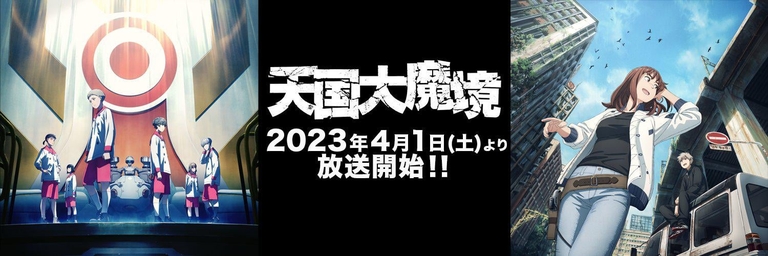
Maru and Tokio Are the Same Person, Sort Of
Maru looks exactly like Tokio. Same face, same eyes, probably the same DNA. But Maru is wandering the wasteland killing Hiruko with his bare hands while Tokio is trapped in that white room drawing pictures. The show implies they're clones, or maybe Maru is what happens when a kid from the academy escapes and grows up rough.
Mimihime predicts that "two saviors will come, one who looks like Tokio." That's Maru. But why does he have the power to destroy Hiruko by touching them? Because he was made in that lab. He's a weapon designed to clean up the mess the academy made. The "Heaven" that Maru and Kiruko are searching for is probably the academy itself, or whatever is left of it after the kids inevitably revolt.
The parallel scenes where both characters eat food or look at the sky are visual rhymes telling you they're connected by more than coincidence. When Tokio gets that message asking "Do you want to go outside of the outside," it's probably from someone who knows about Maru and wants to reunite the split halves of this experiment.
How Production I.G Hides Answers in the Background
The anime adaptation from Production I.G doesn't use text crawls or narrators to explain the lore. Instead, they pack the background with information. In episode one, there's a photo in Juichi's place that shows a bird-like creature that looks exactly like Asura from the academy. The keychains the characters carry match across timelines even when they shouldn't. The architecture of the ruined cities suggests the disaster happened fast, with cars still parked in orderly rows but buildings overgrown with impossible biology.
Kensuke Ushio's soundtrack also clues you in. The music gets eerie and electronic whenever the academy scenes hint at something sinister, but goes acoustic and folksy when Maru and Kiruko are bonding. You can tell which timeline is "real" or at least which one the story favors by the lighting alone. The academy is too clean, too white, like a hospital. The outside is messy and rusted but feels more alive. The adaptation respects the viewer's intelligence enough to let them piece this together without hand-holding.
Director Hirotaka Mori specifically asked the art team to make Kiruko "more sexually appealing" in the anime than the manga, which sounds like fan service but serves the plot. It emphasizes that she's in a woman's body that attracts attention, which is part of her character's struggle with identity.
The Hiruko Connect to Ancient Japanese Mythology
The monsters aren't just zombies. They're called Hiruko, which refers to the "leech child" from the Kojiki, an old Japanese text. In the myth, Hiruko was born deformed and abandoned by the gods. In the show, the Hiruko are former humans mutated by whatever the academy was cooking up. They're fish-like, asymmetrical, and hard to kill, just like the mythological description of the deity.
This isn't just cool naming. It suggests the disaster involved playing god with human biology, creating life that shouldn't exist. The man-eaters aren't alien invaders or nuclear mutants. They're failed attempts at immortality or ascension, probably by the same doctors who built the academy. When Maru destroys them with his touch, he's not just killing monsters. He's undoing bad science.
Why Robin Is the Worst Villain in the Series
Robin seems like a helpful doctor at first. Then he assaults Kiruko. Then you find out he was her original surgeon, the one who put her brother's brain in her body, and now he's pretending not to recognize her while being creepy about it. He's not a cartoon villain with a master plan. He's a selfish, amoral scientist who treats people like puzzles to take apart.
His existence proves the academy doctors are walking around outside, which means the "disaster" didn't kill the people responsible. They're living in walled towns or traveling as merchants, continuing their experiments while the world burns. Maru killing Robin at the end of season one isn't just revenge for Kiruko. It's justice for everyone those doctors hurt.
The Timeline Makes No Sense On Purpose
People argue whether the academy scenes are happening before, during, or after Maru's journey. Evidence suggests they're simultaneous. When Tokio gets pregnant, it's around the same time Kiruko and Maru are discovering the truth about the Hiruko. The seasons match up. But the technology levels don't, unless the academy is in a time bubble or another dimension.
The show wants you confused about time because the characters are confused. Fifteen years is long enough for memories to fade but short enough that survivors like Juichi were born after the collapse. The academy kids don't know what year it is at all. They're taught that history doesn't matter, only the test matters.
The Gender Stuff Is More Important Than You Think
Some viewers get weirded out by how the show handles sex and gender, calling it edgy or exploitative, but they're missing that it's showing how identity survives when society collapses. Kiruko is literally a man in a woman's body, and the show treats this as a practical problem first, an emotional one second. She has to bind her chest to fight properly, she struggles with how others see her, and she has to explain to Maru that she's not a girl but she's not exactly a boy anymore either. Maru's reaction is perfect. He doesn't care. He just accepts her as Kiruko, whoever that is now, because in the wasteland you don't waste energy on pronouns when you're fighting meat monsters.
Then you've got Tokio, who gets pregnant while being physically a child. That's body horror reflecting real fears about exploitation. The academy treats reproduction like farming, taking away the kids' bodily autonomy to breed the next generation of experiments. In the outside world, you've got settlements where women are traded like commodities, or where gender roles got so broken that people like Juichi invent fake stories about matriarchal tyranny to cope with their own powerlessness. The show isn't saying the apocalypse makes gender meaningless. It's saying people still have to figure out who they are even when the world ends, and that's harder when doctors are swapping your brain into your sister's corpse or when you're forced to carry a baby you didn't choose. It's messy and uncomfortable because that's what survival looks like when the social rules burn away.
The Noah Project Reveal Changes Everything
In the final episodes, Aoshima mentions the "Noah Project" like it's common knowledge. In the biblical story, Noah saves animals from the flood. In this show, it's probably the code name for whatever the academy is doing with those babies in tubes. The implication is that the facility isn't trying to rebuild society. It's trying to replace humanity with something better, or at least something that can survive the Hiruko.
The kids are being trained as arks, carrying new life inside them or being prepared to seed a new world. That's why they have powers. That's why they can't leave. The "test" is probably a selection process to see which kids are worthy of becoming the new Adam and Eve, or which ones are failures to be fed to the Hiruko.
This connects back to the three disaster theories. Maybe there was no asteroid or aliens. Maybe the academy released the Hiruko on purpose to clear out the old world so their new humans could inherit it. That's why the outside is full of monsters but also full of resources the academy could use if they wanted. They don't want to fix the world. They want to outlast it.
Why the Anime Cut Certain Manga Scenes
Production I.G made smart choices adapting this. The anime only covers the first six volumes, and they added an extra episode to give it a solid ending point. They cut some of the slower wandering scenes from the manga where Maru and Kiruko just look at ruins, but they kept all the character beats. The director, Hirotaka Mori, specifically focused on making the action scenes fluid because the manga can be hard to follow during fights.
They also toned down some of the more exploitative angles from the source material while keeping the important stuff. Ishiguro apparently told them he was surprised Robin became such a hated villain, which means the adaptation succeeded in making him creepy without glorifying him. The anime makes Kiruko's attractiveness part of her character struggle rather than just eye candy for the viewer, which is a subtle but important shift. Fans on Reddit have noted how the anime improves the pacing by cutting "fat" without losing meaning.
The Real Meaning of Heaven and Hell
The show keeps contrasting these two words. The academy is called Heaven but functions like a prison. The outside is called Hell but has real freedom. Maru and Kiruko are searching for Heaven but finding only ruins. The kids in Heaven want to go outside, which they call the "outside of the outside," suggesting they know they're in a fake paradise.
The religious imagery isn't accidental. The Hiruko name comes from Shinto creation myths. The Noah Project references the Bible. The show asks what salvation means when the godlike figures running your world are mad scientists. Is Heaven a place, or is it just being with people who accept you? Maru and Kiruko find something like Heaven in their partnership, even while sleeping in broken buildings. Tokio finds Hell in a clean white room where her body isn't her own.
The Fan Theories That Miss the Point
A lot of fans online think the academy is in the past and Maru is the grown-up version of one of the kids, but the genetics don't work that way. Others think the whole thing is a simulation, which is lazy writing that the show doesn't support. The simulation theory comes from the clean look of the academy, but the show gives us physical evidence that it's real. Tokio's pregnancy is biological, not digital.
Theories about aliens miss that the "alien" looks like Asura, who is clearly a modified human. The show grounds its weirdness in biology, not sci-fi magic. When you see something impossible, like the Hiruko regenerating, it's because of stem cells or genetic manipulation, not because they're from space. The Wikipedia entry clarifies that the series focuses on posthumanism and the corruption of children with supernatural abilities, keeping the story grounded in human experimentation rather than extraterrestrial intervention.
Heavenly Delusion plot mysteries and world building explained comes down to one truth. The show respects its audience enough to let them stay confused for a while. You don't get a map. You don't get a narrator saying "fifteen years ago, the asteroid hit." You get scraps of photos, lying merchants, and visual rhymes between two timelines that might be one.
The series works because it treats the apocalypse as a mystery rather than a setting. Every ruin has a story if you look at the details. Every character is hiding something, whether it's Kiruko's past as Haruki or Robin's real identity as Dr. Inazaki. By the time the credits roll on episode thirteen, you know more than you did, but you realize the puzzle is bigger than you thought.
If there's a season two, it will probably break the timeline completely and show us what happened on Day Zero. Until then, we're stuck piecing together Juichi's lies and Mimihime's prophecies like the characters are. That's the point. We're as lost as Maru and Kiruko, and that's why we keep watching.