
Given Akihiko and Haruki relationship analysis always gets overshadowed by the high school romance in the foreground, but anyone who's actually been through the wringer knows their story hits harder. It's not clean. It's not cute. It's two guys who spent years hurting each other and themselves finally figuring out how to stop.
Akihiko starts the series as a disaster. He's technically homeless, crashing at his ex-boyfriend's place, sleeping with women for a bed when he gets kicked out, and treating his bandmate Haruki like an emotional vending machine. Haruki isn't innocent either. He's been pining for years while letting Akihiko walk all over him because he thinks that's what love looks like. When you break down their arc, you're looking at a masterclass in showing how actual adults recover from trauma, not just how teenagers fall in love.

Why Fans Care More About AkiHaru Than the Main Couple
People always say they prefer Akihiko and Haruki over Ritsuka and Mafuyu, and honestly, it's not hard to see why. The high schoolers are sweet and all, but they're dealing with first love jitters and grief. Akihiko and Haruki are dealing with the fallout of years of bad decisions, codependency, and learning that love isn't supposed to make you bleed.
Haruki invited Akihiko into the band when they were in college, and from day one, Akihiko saw him as this safe harbor. The problem is he treated that harbor like a hotel. He'd show up after fighting with Ugetsu, or after sleeping with some woman for a place to crash, and he'd let Haruki comfort him without ever giving anything back. Haruki let it happen because he was so starved for any kind of connection that he'd take the crumbs. That's the dynamic that makes people sit up and pay attention. It's real in a way that makes your chest hurt.
I saw some data that said viewers find their relationship more mature and emotionally resonant than the main couple's, and yeah, that tracks. You're watching two people who've already been shaped by the world try to unlearn all the bad habits that kept them alive but miserable. That's harder to watch than a first kiss behind the school building, but it sticks with you longer.
The Ugetsu Problem and Learning Love Isn't Supposed to Hurt
You can't talk about Akihiko without talking about Ugetsu, and anyone who tries to separate them is missing the point. Akihiko spent his formative relationship years in a toxic loop with a guy who was brilliant and broken in equal measure. They loved each other but they suffocated each other. Ugetsu's violin playing stagnated because of his feelings for Akihiko, and Akihiko gave up his own violin career because he couldn't compete with Ugetsu's genius.
That relationship taught Akihiko that love is intensity and pain and sleeping with other people to make your partner jealous. It taught him that you stay with someone even when you're both drowning because leaving feels worse than the daily damage. So when he looks at Haruki, who is gentle and stable and kind, he doesn't recognize it as love. He thinks love has to be the chaotic mess he had with Ugetsu. That's why he keeps going back to his ex even while he's catching feelings for Haruki. He literally doesn't know what healthy attachment looks like.
Apparently, the manga goes deeper into how Akihiko's understanding of love was primarily defined by Ugetsu, which complicates his ability to fully acknowledge his feelings for Haruki. He can't see that what he has with Haruki is better because he's been conditioned to think good love feels like burning alive.
That Scene and Why You Have to Look At It
The assault scene in Given the Movie is where a lot of viewers check out or get angry, and that's fair. It's ugly. Akihiko shows up at Haruki's place after a fight with Ugetsu, finds out Haruki might play backup for his ex-girlfriend's band, and loses it. He forces himself on Haruki, kissing and groping him while Haruki protests, fully aware that Haruki loves him and will let him do it.
People want to call this out of character or unnecessary, but that's cowardice. It's exactly in character for a guy who's never learned consent because his previous relationship was all about emotional blackmail and using sex as currency. Akihiko stops himself not because he's a good guy deep down, but because he realizes Haruki will let him do anything, and that power is corrupting. He sees that taking advantage of Haruki's love would destroy the only good thing in his life.
There's this interpretation I read about how Akihiko's behavior stems from a history of transactional relationships where people always asked for something in return, often involving sexual favors. When he heard about Haruki playing for another band, he felt abandoned and mistakenly believed his advance was desired based on Haruki's past kindness, interpreting it through his own messed up lens of expecting something in return. That doesn't excuse it, but it explains why he thought he had the right.
The Haircut and Drawing Lines
Haruki's response is what matters here. He doesn't forgive Akihiko immediately. He cuts his hair, which Akihiko loved, and kicks him out. That haircut is him saying he's done being the soft place to land for a guy who treats him like an option. It's one of the most powerful visual metaphors in the series because Haruki is literally cutting off the parts of himself that let him be used.
The hair represented Haruki's willingness to wait around and be pretty and available for Akihiko's convenience. When he chops it off, he's reclaiming his agency. He's saying he can still love Akihiko but he won't let that love turn him into a doormat anymore. It's a hard line in the sand that forces Akihiko to realize Haruki isn't just going to absorb his damage forever.
Living Together as Friends First
After the fallout, Akihiko shows up homeless and desperate. He begs Haruki to let him stay, offering to cook and clean and basically be a live-in maid. Haruki agrees, but they're not dating. They're rebuilding from scratch as friends and roommates.
This period is crucial because it's where Akihiko learns to give without taking. He starts waking up early for band practice. He picks up his violin again. He goes to class. He's doing the work to become someone who deserves Haruki instead of just assuming he's entitled to him because Haruki's been waiting around. Haruki, meanwhile, learns to have boundaries. He doesn't fall back into old patterns of caretaking without reciprocity. He makes Akihiko prove he's changed.
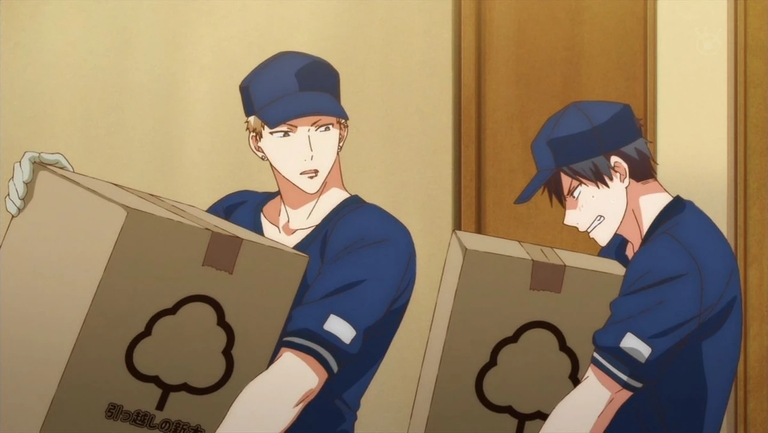
You can see Akihiko working at moving companies and convenience stores with Ritsuka during this period, trying to get his life together. He's no longer the guy who uses his body and charm to scam a bed for the night. He's working hard, showing up early to practice, trying to be reliable for once in his life.
Words vs Touch and Speaking Different Languages
One of the most interesting parts of their dynamic is how they express love. Akihiko is all about physical touch. He grabs Haruki's hand, he hugs him from behind, he uses his body to communicate because words are hard for him. This comes from his background where sex and touch were transactional.
Haruki needs words of affirmation. He needs to hear that he's valued, that he's doing a good job, that he's loved. Early in their relationship, Akihiko doesn't get this. He thinks showing up is enough. But as he grows, he starts learning to say the things Haruki needs to hear. He compliments Haruki's bass playing. He tells him he's important. He asks permission before touching him in the final scene of the movie, which is huge because it shows he's learned that Haruki's body and consent matter more than his own impulses.
According to some analyses, Akihiko exhibits a gentle and eager-to-please demeanor towards Haruki, consistently striving to satisfy Haruki's desires while maintaining mutual respect. This is a complete 180 from how he acted before, where he'd take and take without thinking about what Haruki actually needed.
The Sequel Shows Them Still Working
Given Bangaihen, the sequel manga, doesn't just give them a happy ending and walk away. It shows Akihiko still dealing with jealousy and insecurity. He's protective of Haruki to the point of being possessive, getting weird about Haruki wearing rings that look like wedding bands or talking to exes.
But the difference is now he talks about it. He doesn't just assume Haruki will put up with his moods. He expresses his fears of losing him, and Haruki reassures him. They've built a foundation where Akihiko can be his giddy, eccentric self, the guy who wears weird clothes and gets excited about food, without the depression and abuse that used to coat everything. Haruki gets to be more than just the supportive bassist. He has agency now.
Akihiko has become more protective and expressive of his jealousy, which is a significant shift from his high school self who was indifferent to romantic trifles. This possessiveness stems from the trauma of being with a commitment-phobic ex, creating a fear of losing Haruki. However, Akihiko embraces this indulgence, satisfying his romantic side while keeping it healthy.
Why This Matters for Queer Romance
Most BL anime gives you either pure fluff or tragedy porn. Given gives you two guys who are genuinely messed up learning to be gentle with each other. It shows that you don't have to be perfect to be loved, but you do have to be willing to change.
Akihiko isn't redeemed by Haruki's love alone. He's redeemed by his own hard work, by choosing every day to be better than the guy who assaulted his best friend. Haruki isn't a doormat saint. He's a guy who got hurt, got angry, and decided to give second chances only after seeing real proof. Their relationship analysis isn't about finding perfect people. It's about finding two imperfect people who decide the damage stops with them.
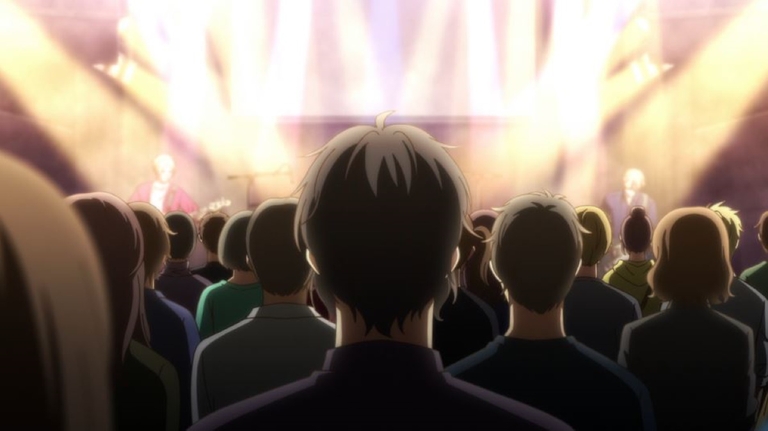
The movie and manga treat Ugetsu with compassion too, showing that he wasn't just a villain but another broken person stuck in a cycle. When Mafuyu's song plays during the concert, it hits different for everyone. For Ugetsu, it's permission to let go. For Akihiko, it's the courage to choose Haruki. For Haruki, it's validation that he's allowed to want things for himself.
Given Akihiko and Haruki relationship analysis ultimately comes down to this: love isn't a feeling, it's a practice. You don't fall into it and live happily ever after. You wake up every day and choose not to hurt the person who trusts you, even when you're angry, even when you're scared, even when you don't feel worthy. That's what makes them work. They chose to stop being weapons against each other and start being shelter instead.