
Garden of Sinners movie order and timeline confusion stops here. If you are looking up how to watch Kara no Kyoukai because the numbers and dates do not line up, you are already on the right track. This series is not linear and that is the whole point. Type-Moon and Ufotable released these films out of order on purpose. They want you to feel lost at first. They want you to wonder why Shiki acts different in Movie 2 compared to Movie 1. That disorientation is a feature, not a bug.
You have two ways to watch this. Release order is for your first time. Chronological order is for your second. Switch them and you ruin the mystery. The story jumps between 1995, 1996, 1998, and 1999. Characters appear before their backstories get explained. Powers show up before you learn where they came from. Watching it the right way means trusting that the confusion pays off. The real way to watch preserves the suspense that makes the final reveals hit hard.
The Only Release Order That Works
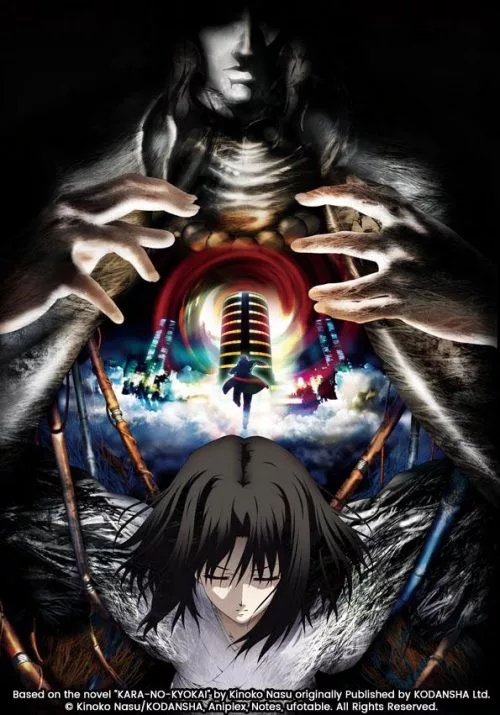
Start with Movie 1 Overlooking View. Yeah, I know it throws you into September 1998 with Shiki already wearing that red leather jacket and Mikiya already working at the detective agency. You won't know their history yet. You won't know why Shiki can see those lines on everything or why she tries to kill Mikiya in the opening scene. Watch it anyway. This is how it was meant to hit you. The release order guide confirms this is the intended path.
Then go to Movie 2 A Study in Murder Part 1. This jumps back to August 1995 when Mikiya first meets Shiki in high school. You see her before the accident. You see the male personality, SHIKI, who speaks differently and acts more violent. This is where you learn why she acts so weird in Movie 1. It is also where the serial murders start, which won't get resolved until Movie 7.
Next is Movie 3 Remaining Sense of Pain set in July 1998. Then Movie 4 The Hollow Shrine covering March 1996 to June 1998. This shows Shiki waking up from her coma and learning about the Mystic Eyes of Death Perception. Then Movie 5 Paradox Spiral in November 1998. Movie 6 Oblivion Recording in January 1999. Movie 7 A Study in Murder Part 2 in February 1999. Then watch the Epilogue. After that, you can hit Future Gospel and Extra Chorus if you want more content.
Some lists tell you to watch Gate of Seventh Heaven between Movie 6 and 7. Do not do it. It is a recap movie that takes scenes from the first six films and puts them in chronological order. It skips all the emotional beats. It is only useful if you already watched everything and need a refresher before Movie 7. For first timers it is a waste of time that removes the impact of the mystery.
Why Chronological Order Ruins the First Watch
If you watch Movie 2 first because it happens first in the timeline, you destroy the mystery of the Murder Speculation arc. The whole point of splitting that story into Part 1 and Part 2 with five other movies between them is to make you wonder what really happened in 1995. Movie 1 sets up Shiki as this dangerous person who might have killed someone. Movie 2 confirms she was standing over a corpse with a knife. But you do not get the answer until Movie 7.
Watching chronologically means you get the answer immediately. You see Lio Shirazumi revealed as the killer in Movie 7's timeline before you even get to Movie 1. That kills the tension. The non-linear structure lets you piece together Shiki's trauma gradually. You see the result in Movie 1, the cause in Movie 2 and 4, and the resolution in Movie 7. That progression hits way harder than a straight timeline. A Reddit discussion backs this up, noting that Movie 7 works because of the wait.
The shock of Movie 4 comes from not knowing how Shiki got her powers. If you watch it first, you just see a girl waking up from a coma. If you watch it after Movie 1, you realize this is the origin of the eyes you already saw her use to kill ghosts. That connection matters.
The Real Timeline for Rewatches
Once you have seen it in release order, watching it chronologically is weirdly satisfying. You catch details you missed. Here is how the dates actually line up based on the chronological breakdown.
1995 to March 1996 is Movie 2. High school Mikiya meets Shiki and the murders start happening. He sees her standing over a body and suspects her but falls for her anyway. Then March 1996 to June 1998 is Movie 4. Shiki is in a coma after her accident. Her male personality, SHIKI, dies inside her mind. She wakes up with the Mystic Eyes of Death Perception. Touko gives her the prosthetic arm and the glasses that suppress the eyes.
July 1998 is Movie 3 with Fujino Asagami and the bridge incidents. Then September 1998 is Movie 1 Overlooking View with the floating suicides. November 1998 is Movie 5 Paradox Spiral with Tomoe Enjo and Araya Souren in the apartment complex. January 1999 is Movie 6 Oblivion Recording with Azaka at the school. February 1999 is Movie 7 where the 1995 murder case finally closes with the reveal of Lio Shirazumi. March 1999 is the Epilogue conversation on the grassy hill between Shiki's third personality and Mikiya.
Future Gospel screws with this because it has two parts. Mobius Ring happens between 1996 and 1998 during the main timeline. Mobius Link jumps to 2010 ten years later when Shiki is an adult.
Where the Side Stories Fit
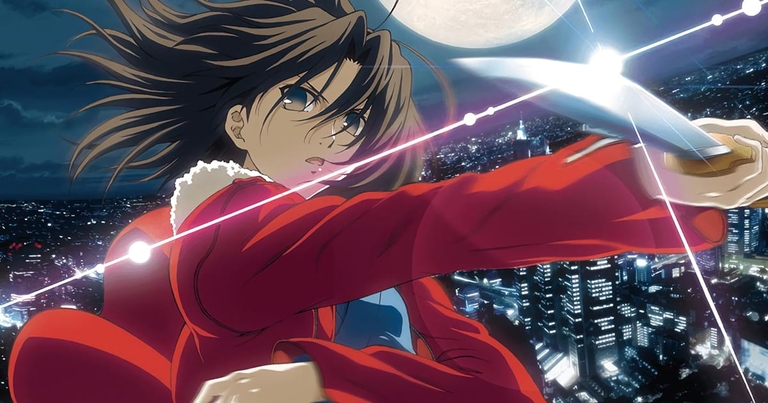
Future Gospel released in 2013 years after the main run. It adapts the final novel. You do not need it to understand Movies 1 through 7. It is good though. It shows Shiki dealing with a bomber who can see the future. It also shows her in 2010 as an adult which is weird to see after spending so much time in the 90s. It gives closure but it is not core to the story.
Extra Chorus is three short stories. One happens after Movie 3 with the cat. One happens after Movie 1. One is an alternate take on a scene. They are fluff. Nice fluff, but fluff. You can skip them and miss nothing important.
Gate of Seventh Heaven is that remix I mentioned. It is an hour long clip show. It puts Movies 2, 4, 3, 1, 5, and 6 in order with some new narration. Watch it never, or watch it between your first and second run if you are really confused about the timeline. It is not a real movie, just a summary for fans who want to see the scenes in order.
The Essential Arc vs The Filler
Movies 1 through 7 plus the Epilogue are the core story. Everything else is optional. Movie 6 Oblivion Recording gets a lot of hate for being weaker than the others. It is slower and focuses on Azaka more than Shiki. It also has that weird fairy subplot. But it sets up some stuff for Movie 7 and shows more of Touko's magic. Do not skip it on your first run even if it drags compared to Movie 5.
Movie 5 Paradox Spiral is the longest at nearly two hours. It is where everything comes together. You need the context from Movies 1 through 4 to understand why Tomoe's story matters and why Araya is a threat. If you only watch five movies, watch 1 through 5. But you will miss the resolution to the murder mystery and the final character development in 6 and 7.
The Epilogue is short, like half an hour. It is just talking. But it explains the third personality, the Origin, and gives the final thematic statement about Shiki and Mikiya. Do not skip it because you think it is just credits or bonus content.
Streaming and Access
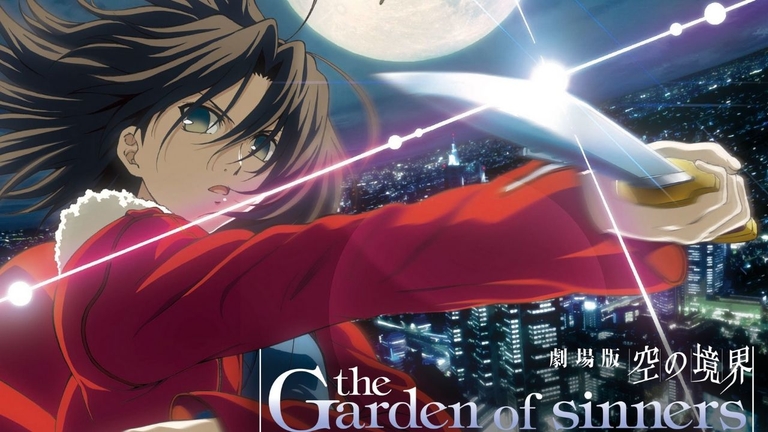
You can find the whole series on Crunchyroll. They have the subbed versions. There is no dub for this and you do not want one. The Japanese voice acting is too tied to the characters. Mikiya's calm voice and Shiki's cold delivery are part of the experience. Maaya Sakamoto's performance as Shiki switches between three different personalities and you need to hear the subtle shifts.
Some regions block certain movies. If you run into that, you might need to look elsewhere. The Blu-rays from Aniplex are expensive but they look incredible. Ufotable went hard on the animation for these films back in 2007 and it still holds up. The fight scenes in Movie 3 and 5 are ridiculous fluidity showcases that predate their Fate work.
Connection to Other Type-Moon Stuff
Yeah, this shares a universe with Fate and Tsukihime. Touko Aozaki shows up in other stuff like Lord El-Melloi II. The Mystic Eyes of Death Perception are similar to what Shiki Tohno has in Tsukihime. But you do not need to know any of that. Garden of Sinners stands alone. It was written by Kinoko Nasu before Fate blew up. It is darker and more philosophical than most of his other work. It deals with suicide, murder, rape, and identity in ways that the Fate series does not touch.
If you like this, check out Tsukihime for more Nasuverse content. But do not expect the same tone. Garden of Sinners is unique because it is finished. The story has a beginning, middle, and end across these films. You are not waiting for a sequel or a remake. Future Gospel is just a bonus.
Get the Garden of Sinners movie order right the first time or you will regret it. Watch release order. Deal with the confusion. Let Movie 1 make you feel lost on purpose. When you hit Movie 2 and realize you are in the past, it will click. When Movie 4 explains the eyes, you will get chills. When Movie 7 finally resolves that first mystery, it hits because you waited for it.
After you finish the Epilogue and you want more, go ahead and map out the chronological timeline. Watch it again that way. It is like a different show when you know when everything happens. But for your first time, trust the release order. It is not a gimmick. It is how the story breathes.