
The Seven Deadly Sins Four Knights of the Apocalypse plot summary sounds like standard sequel bait at first glance. Some kid named Percival lives on a floating rock with his grandpa until his dad shows up and ruins everything. Sounds basic right. But here's the thing. This isn't just a rehash of Meliodas and Elizabeth's story with a new coat of paint. It's set sixteen years after the Demon King took a beating and the Holy War ended. The world moved on. The old heroes got older. And now there's a prophecy about four kids who are supposed to destroy everything. That's where this gets interesting.
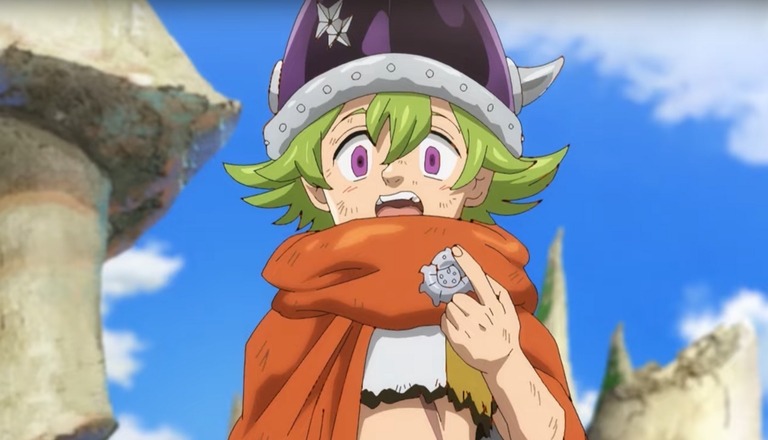
Most people expected Tristan Liones to carry this series. He's the son of the main character from the original after all. But Nakaba Suzuki went and created Percival instead. A weirdly optimistic kid who talks to a fox and doesn't understand why his dad just stabbed his grandpa. That opening episode hits hard because it doesn't waste time. Ironside shows up. He kills Varghese. He leaves Percival with an X shaped scar and a lot of questions. No slow burn. No training montage on the island. Just death and the road.
The Seven Deadly Sins Four Knights of the Apocalypse Plot Summary Starts With Betrayal
God's Finger isn't a nice place. It's a floating island above the clouds where Percival and Varghese lived in isolation for sixteen years. Varghese was a former Holy Knight who left everything to raise his grandson away from the politics of Britannia. Then Ironside arrives. He's not some random villain. He's Percival's father. And he murders his own dad in cold blood right in front of Percival. This isn't a sanitized anime death either. Varghese bleeds out after taking Ironside's magic attack to the chest. He tells Percival to find Ironside and get answers. Then he dies.
Percival leaves the only home he knows with nothing but his grandfather's broken sword and a talking fox named Sin who claims to be a guide sent by destiny. The fox is annoying at first. He speaks in riddles and won't give straight answers about the Four Knights prophecy. But he knows things. He knows Percival is the Knight of Death. He knows the other three are scattered across Britannia. And he knows King Arthur has ordered the death of anyone matching their descriptions.
The early episodes follow Percival stumbling through villages where Holy Knights of Camelot are already hunting for the prophesied children. These aren't the honorable warriors from the original series. They're fanatics who believe Arthur's vision of a pure human world. They kill first and ask questions never. Percival fights them but he doesn't kill them. That's his whole deal. He wants to understand why they're scared of him. He wants to talk to his dad and ask why he killed grandpa. He's not angry in the way Meliodas was angry. He's confused and hurt which hits harder.
The Four Knights Prophecy Explained Without The Fluff
King Arthur Pendragon gets a prophecy from his court mages. Four knights will appear and bring destruction to his Eternal Kingdom. They represent the four horsemen from old scripture. Famine. Pestilence. War. Death. Camelot's Holy Knights receive orders to hunt these kids down before they can fulfill the prophecy and destroy the world. The catch is that these knights are just teenagers who haven't even held real swords before.
Percival is the Knight of Death which is ironic since he keeps bringing things back to life with his weird magic. Lancelot is the Knight of War and he lives up to it by being a combat genius who can turn invisible and read minds. Tristan represents Pestilence because of his mixed blood carrying both demon and goddess powers that could theoretically corrupt everything around him. And Gawain is Famine because her sunlight magic burns through energy and calories like nothing else. At least that's how the symbolism breaks down according to the lore.
Arthur sees them as direct threats to his utopia. But here's where it gets messy. The prophecy doesn't say they'll destroy the real world. It says they'll destroy Camelot's dimension which is actually endangering the true world. Arthur built his kingdom in a pocket dimension using Chaos powers. It's bleeding into reality and destabilizing magic across Britannia. So by trying to kill the Four Knights, Arthur is actually proving the prophecy right. He's forcing them to destroy his fake paradise to save the real world. Classic self fulfilling prophecy stuff that makes for solid storytelling.
Lancelot and Tristan Bring Legacy Weight
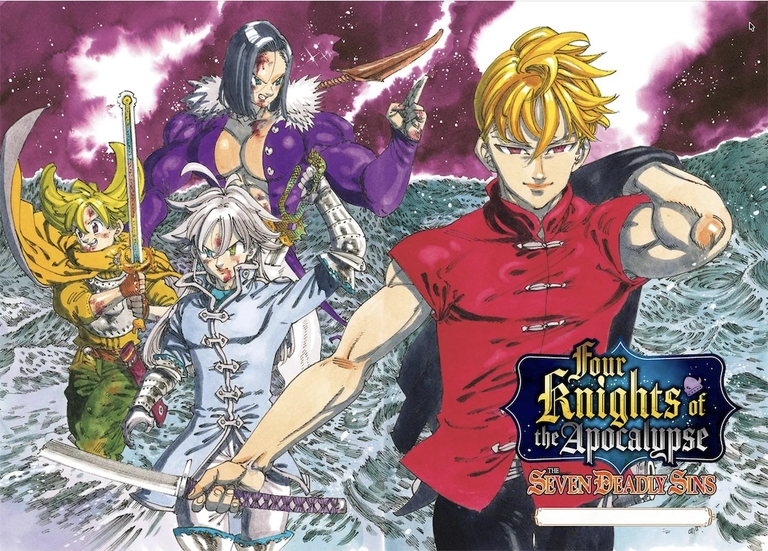
Lancelot is Ban's kid. He inherited his father's immortality and his mother's elven looks. He's also got this weird invisibility magic that makes him impossible to track in a fight. When he first appears he tests Percival by beating him up. Not out of cruelty but because he needs to know if this cheerful idiot is really the Knight of Death. Lancelot is cocky and secretive and carries the weight of being the son of a legendary hero. He doesn't want to live in Ban's shadow but he can't escape the comparison.
Tristan is Meliodas and Elizabeth's son. He's got demon blood and goddess blood mixing in his veins which gives him serious power but also identity issues. He can use hellfire like his dad and healing magic like his mom. When these two show up the story shifts gears. You're not just watching Percival stumble around anymore. You're seeing the next generation deal with the trauma their parents left behind. The Holy War ended but the prejudice didn't. Demons are still feared. Goddesses are still distant. Tristan is polite but dangerous. He smiles while breaking bones. Lancelot is rougher around the edges but has a code. They don't trust each other immediately which makes for some solid conflict before they realize they're on the same side.
King Arthur Pendragon As The Villain Is Weird But Works
In the original series Arthur was a victim. He was possessed by the spirit of Chaos. He needed saving. Now he's the King of Chaos with a god complex and a grudge against non human races. He wants to purge demons and fairies and giants from existence to create a world only for humans. He built a new Camelot in another dimension and he's running it like a cult where he's the only god. This turn surprised a lot of fans who remembered Arthur as the pure hearted king.
But it makes sense if you think about it. Power corrupts. Chaos isn't a benevolent force. It's the raw stuff of creation and destruction mixed together. Arthur absorbed it and now he's drunk on the idea of a pure human world. His Holy Knights aren't protectors anymore. They're enforcers of a genocidal regime. Ironside is the worst of them. He genuinely believes killing his son will save the world. He thinks Percival is a monster waiting to happen. That moral certainty makes him terrifying because he can't be reasoned with. He'll kill his own family for Arthur's dream.
The Magic System Got An Upgrade
Original series had Sacred Treasures and demon powers measured by power levels. This one introduces Hero type magic which is more abstract. Percival's ability manifests as tiny versions of himself called Mini Percivals. It sounds stupid when you say it out loud but it's versatile. He can heal people by sending Mini Percivals into their wounds. He can scout areas by sending them to spy. He can fight by having them swarm enemies like a hive of bees. Later it evolves into Hope magic which is basically the opposite of Arthur's Chaos. While Chaos brings destruction and confusion, Hope brings potential and life. It's a neat thematic counterpoint without being too on the nose.
Other characters have specific magics too. Nasiens uses poison and medicine interchangeably. He can cure a disease or kill a man with the same plant depending on dosage. Anne has wind magic that she channels through her rifle to create impossible shots. Donny starts with just levitation magic but learns to weaponize it. Gawain has Sunshine the same power Escanor had which makes her invincible during noon but useless at night. The fights are less about who has bigger energy beams and more about creative applications of weird powers. When Percival fights Ironside the second time he doesn't win by getting stronger. He wins by using Hope magic to revert Ironside's body to a previous state undoing his injuries and his brainwashing temporarily.
Season One Vs Season Two Structure
The first season runs twenty four episodes split into two cours. The first twelve are episodic. Percival meets Donny the cowardly thief in a forest. He meets Nasiens the androgynous alchemist at a magic pharmacy. He meets Anne the sharpshooter in a town under siege. They fight random Holy Knights and learn about the world. It's slower but necessary for building the party dynamic. You need to see these kids become friends before the real trouble starts.
The second half gets serialized fast. Ironside returns with backup. Other Camelot Knights like Pellegarde and Mortlach show up and they're way stronger than the grunts from earlier. The season ends with the group finally united but facing impossible odds as Arthur reveals himself. Season two drops the monster of the week format entirely. It focuses on the Annwfyn Gladiator Festival where the Four Knights have to fight in a tournament to win a way into Camelot. The pacing gets brutal. Fights last multiple episodes. Characters die for real. The animation by Telecom Animation Film isn't as glossy as A-1 Pictures work on the original but it has a rough charm that fits the darker tone.
Side Characters Who Don't Suck
Donny could have been comic relief and nothing else. Instead he gets a solid arc about courage where he learns to stand his ground against enemies he can't possibly beat. Nasiens deals with gender identity and toxic family legacy since his grandfather was a famous poisoner. Anne wrestles with being a noble's daughter versus being a fighter. She has to choose between her duty to her house and her loyalty to Percival.
Then there's Gawain. She's the last Knight to appear and she's a complete mess. Sunshine magic makes her invincible during the day but she's lazy arrogant and obsessed with food. She doesn't want to save the world. She wants to eat and sleep. She only joins the group because Percival promises her unlimited meals. That apathy makes her interesting because she has the power to solve most problems instantly but can't be bothered to try until someone she cares about gets hurt. When she does fight it's terrifying. She vaporizes enemies with casual gestures.
Why The Visual Style Change Matters
People complain about the CG and the simplified character designs. They miss the point. This isn't the Holy War anymore. It's a different era with different stakes. The bright colors of Liones contrast with the sterile white of Arthur's Camelot. The demons look more grotesque. The Chaos forms are body horror nightmares where knights transform into amalgamations of armor and flesh.
When Percival temporarily dies and becomes a Life Spirit the art shifts to something ethereal and creepy. His body becomes translucent and his eyes glow gold. It's not pretty. It's not supposed to be. The original series got bogged down in power scaling and energy beams that filled the screen with white light. This one focuses on sword fights and tactical magic use. It feels more grounded even when giant monsters show up. The blood matters more here. When someone gets cut they stay cut. Varghese's death in episode one establishes that immediately.
The Seven Deadly Sins Four Knights of the Apocalypse Plot Summary Ends With Hope
The Seven Deadly Sins Four Knights of the Apocalypse plot summary isn't just a checklist of events. It's about four kids who were told they're the end of the world trying to prove they're the beginning of something better. Percival doesn't want to destroy anything. He wants to understand his father and save his friends. That personal stake keeps the giant prophecy from feeling too abstract.
When Arthur declares war on all non humans it isn't just political posturing. It's a direct threat to Percival's found family which includes a fairy and a giant and a half demon. The story asks whether peace is worth the price of segregation. It asks if children should pay for their parents' sins. And it does all this while Percival runs around healing people with tiny clones of himself. If you skipped this because you were burned by the original's ending give it a shot. It's a solid follow up that stands on its own feet. The prophecy says these kids will end everything. Watching them try to save it instead is worth your time.