
People keep mixing up how the Special Fire Force companies work. They see the cool fire effects and miss that this whole setup is a political mess disguised as a fire department. Fire Force isn't just about shooting flames at monsters. It's about eight different factions that barely tolerate each other while trying to solve a problem that burned the planet 250 years ago.
The Special Fire Force companies and power system explained properly starts with understanding that Tokyo Empire is held together by religious propaganda and corporate money. You've got spontaneous human combustion turning random people into Infernals. That's bad. But you've also got eight companies answering to different masters, and they don't share intel. At all. Company 1 won't tell Company 2 what they found. Company 5 experiments on people while Company 4 tries to maintain public safety. It's a disaster.
Most viewers focus on Shinra's feet flames or Arthur being weird about Excalibur. They're missing the mechanics that make this system solid. The power scaling has rules that hurt the user. Third Generation users can make fire but overheat their own bodies until they pass out or die. Second Generation users can bend existing flames with perfect control but can't create them from nothing without a match or a partner. First Generation? Those are the Infernals themselves, burning alive until someone puts them down. The limits matter more than the power.

The Eight Companies Are Political Enemies
Stop thinking of the Special Fire Force as one big happy team. That view is completely wrong. Each company answers to a different power structure in the Tokyo Empire, and they work against each other as often as they work together.
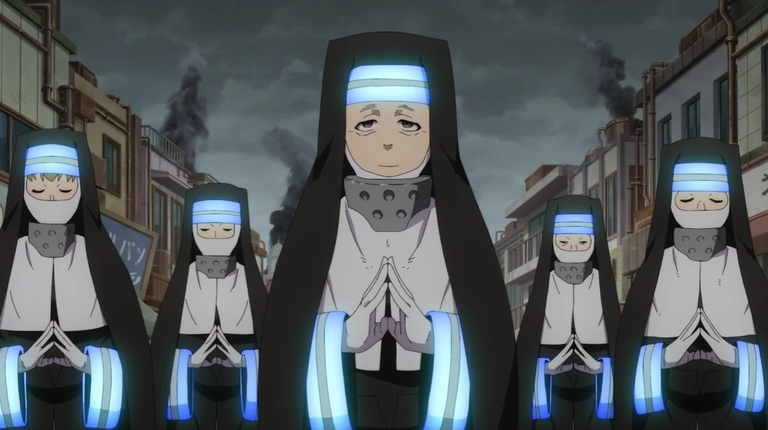
Company 1 belongs to the Holy Sol Temple. These guys are the church with military-grade flamethrowers. Captain Leonard Burns runs it like a monastery that happens to kill demons. Most members come straight from religious training in the Temple. They handle the big ceremonial purifications and carry the heaviest religious baggage. If you see a nun in white praying over a burning body, that's either Company 1 or Company 6 doing the ritual.
Company 2 connects directly to the Tokyo Army. Captain Gustav Honda leads with head-butts and screaming discipline. These are soldiers first, firefighters second. They work with the military and handle mass outbreaks using strict formations and chain of command. They follow orders without asking questions, which becomes a problem when the orders come from corrupt sources.
Company 3 and Company 5 both fall under Haijima Industries. Yeah, the same mega-corporation that manufactures 70% of the equipment and employs most of Tokyo. Captain Giovanni ran Company 3 until he revealed himself as a White Hood cultist working for the Evangelist. Princess Hibana runs Company 5 like her personal science lab where she can torture people for data. These companies have unlimited money and advanced tech but zero moral compass.
Company 4 links to the Fire Defence Agency. They're the closest to normal firefighters, handling regular building fires plus Infernal outbreaks. Soichiro Hague used to captain this unit before the White Hoods assassinated him for getting too close to the truth.
Company 6 serves the Holy Sol Temple too but focuses entirely on medical support and recovery. Captain Kayoko Huang can heal wounds using her flames, which is incredibly rare. When Fire Soldiers get burned by their own powers or torn up by Infernals, Company 6 patches them back together.
Company 7 stays completely independent in Asakusa. Benimaru Shinmon runs this district like a traditional Japanese fire brigade from the Edo period. They don't trust the government, the church, or Haijima Industries. They use old-school techniques and hand-drawn fire engines. Benimaru is widely considered the strongest captain because he breaks the generation rules everyone else follows.
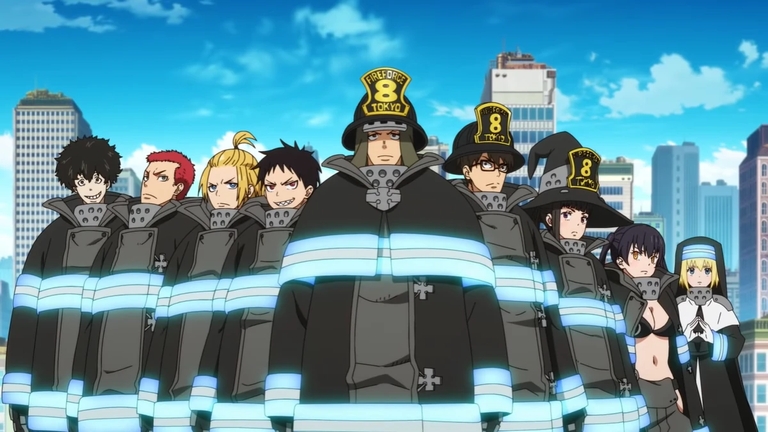
Then there's Company 8. The troublemakers. Akitaru Obi formed this unit specifically to spy on the other seven companies. He believes everyone is hiding something about spontaneous human combustion. He's right. Company 8 is tiny, underfunded, equipped with gear held together by duct tape, and absolutely hated by the establishment. That makes them the only honest cops in a city of crooks.
The Three Generations Have Real Limits
The pyrokinetic system in Fire Force follows physics that punish the user for getting stronger.
First Generation are the Infernals themselves. They combust spontaneously and can't stop burning. No control, just endless suffering until a Fire Soldier kills them to purify the soul. That's the baseline threat that created the need for the Special Fire Force in the first place.
Second Generation users manipulate existing flames. They can't snap their fingers and make fire appear from nothing, but if there's a candle lit or a match struck, they own that heat completely. Maki Oze commands fire sprites she calls Sputter and Flare, little fireballs with personalities that hit like cannonballs. Takehisa Hinawa controls the velocity and trajectory of bullets using heat compression, letting him curve shots around corners or stop projectiles mid-air. These guys need external fire sources or teammates to be effective when fighting alone. It's a hard limitation that forces teamwork and strategy rather than raw power blasting.
Third Generation users create flames from oxygen in their own bodies. Shinra generates jet flames from his feet that let him fly and kick with explosive force. Arthur creates a plasma sword he insists is Excalibur. Tamaki has her lucky lecher cat fire that protects her through sheer coincidence. They can generate heat internally but here's the brutal catch: they overheat. Use too much power for too long and their own bodies cook from the inside out. They suffer heat stroke, organ failure, and physical collapse. They also need oxygen to create flames, so suffocation tactics or vacuum environments completely neutralize them.
Then you have the rare hybrids. Benimaru Shinmon is both Second and Third Generation simultaneously. He can create flames like a Third Gen and manipulate them with Second Gen precision and control. That makes him completely broken compared to everyone else. He doesn't overheat like other Third Gens because he vents excess heat using Second Gen techniques, cycling the energy perfectly. That's why he's called the Asakusa King of Destruction and why no one challenges his authority.
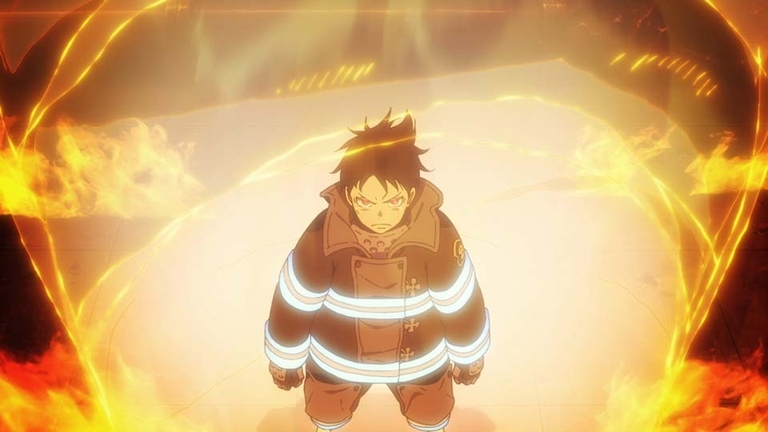
There's also the Adolla Burst users. These guys connect to another dimension called Adolla that exists parallel to reality. Shinra has it. His brother Sho has it. The Eight Pillars have it. It lets them move at light speed, stop time temporarily, or break the laws of physics completely. But it requires intense suffering and emotional trauma to access, and it ties them to the Evangelist's apocalyptic plan.
Adolla and Doppelgangers Change the Game
Around the middle of the story, the power system gets weird in the best way. The Adolla dimension is basically hell, but it's also a reflection of human collective consciousness. It's where the Evangelist lives and where the Great Cataclysm originated 250 years ago.
Adolla Links allow characters to share senses, communicate across vast distances, or see through each other's eyes. Shinra links with his brother Sho during fights, letting them coordinate attacks perfectly. But the real nightmare fuel is the Doppelgangers.
Doppelgangers are physical manifestations of how people perceive you, given form in Adolla and unleashed into reality. If the world thinks you're a silent assassin, your Doppelganger is a shadowy killer. If people see you as a monster, that's what manifests. The messed up part is that Doppelgangers possess all your powers but none of your physical limits or moral constraints. They represent the idea of you at maximum potential without the baggage of being human.
Benimaru fought his own Doppelganger and won in one hit, which shouldn't be possible. That proves he's operating beyond normal human limits. Joker's Doppelganger is a silent edgelord because that's how the public sees him, not the complex person he really is. The Doppelganger system serves as a meta-commentary on how fans reduce characters to single traits, but in the story, it's a terrifying invasion where your own reputation tries to kill you.
The White Hoods want to trigger another Great Cataclysm using the Eight Pillars. Each Pillar represents a different aspect of Adolla power. Shinra is the Fourth Pillar, representing the Demon. Inca is the Fifth, representing the Witch. The Evangelist collects them to burn the world again and create a new reality.
Company Politics Are Dirtier Than the Fights
Here's what the anime doesn't hit you over the head with immediately. Companies 1 through 7 are compromised by different corrupt interests.
Company 1 has deep ties to the Holy Sol Temple which worships the Evangelist indirectly through their sun god religion. Captain Burns knows this but stays to maintain order. Rekka Hoshimiya was a Lieutenant in Company 1 secretly working for the White Hoods, turning people into artificial Infernals.
Company 3 was literally run by Giovanni, a cyborg White Hood spy who turned his own men into insect monsters. Haijima Industries uses Company 5 to run human experiments on pyrokinetics, trying to create artificial Adolla Bursts. Princess Hibana used to be a nun but left the Temple when they let her sisters burn to death, and now she tortures people for science.
Company 2 follows military orders that prioritize killing Infernals over saving civilians. Company 4 got its captain murdered for asking too many questions about the Great Cataclysm.
Only Company 7 and 8 are relatively clean. Company 7 isolates itself in Asakusa because they know the capital is rotten to the core. They follow traditional firefighting methods and refuse to use the high-tech gear that Haijima manufactures because they don't trust the source.
Company 8 exists because Akitaru Obi got tired of the cover-ups. He's a normal human with zero powers, just muscles forged through insane training and a moral conviction that burning people alive is wrong even if they're Infernals. He recruits burnouts, orphans, and misfits. Shinra was called a devil for his nervous grin. Arthur was homeless and delusional. Maki got transferred out of the military for being too violent. Tamaki was a nun who kept having wardrobe malfunctions. Hinawa was a depressed firefighter. They’re the rejects who care more about saving people than following protocol.
The Rookie Fire Soldier Games Are Rigged
Every year, new recruits from all eight companies compete in the Rookie Fire Soldier Games. It looks like a sports festival but it's really intelligence gathering. Companies use it to scout talent, steal techniques, and show off new weapons.
When Shinra and Arthur participated, Company 1 set a trap by staging a fire to test the rookies under pressure. Shinra rescued unconscious brigade members while Arthur got buried under rubble. It proved that raw power matters less than quick thinking, but it also showed how the companies use these events as political chess moves rather than honest competitions.
Recruitment paths vary wildly by company. Company 1 takes temple recruits who've studied religious texts. Company 2 takes army transfers who know how to follow orders. Company 3 and 5 recruit from Haijima engineering schools. Company 4 takes professional firefighters. Company 6 takes medical students. Company 7 takes local Asakusa kids who learn traditional methods. Company 8 takes whoever passes Obi's weird moral tests, powers optional.
Engineers and Science Teams Keep Them Alive
People forget that Fire Soldiers don't just use magic powers. They have support staff. Every company has Engineers who maintain the equipment and Science Teams who research the combustion phenomenon.
Vulcan Joseph joined Company 8 as an Engineer after they rescued him from Company 3. He builds gear that doesn't rely on Haijima parts because he knows the corporation bugs their own equipment. Viktor Licht serves as Company 8's scientist, though he has his own secret ties to Haijima and the White Hoods that complicate things.
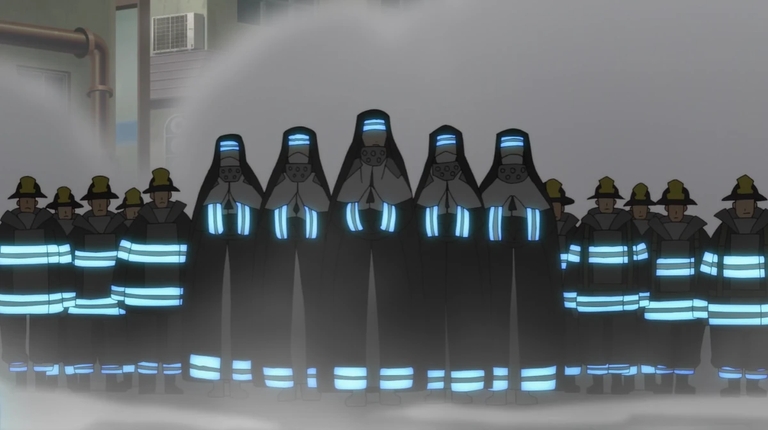
The field uniforms tell you everything about a soldier's allegiance. The bunker gear looks like traditional firefighter suits but modified. Shinra cut his pants short so his feet flames don't ignite the fabric. The jackets have neon blue stripes and cross-shaped buttons. Formal uniforms differ by company. Company 2 wears olive green military coats. Companies 5 and 8 wear black gakuran style jackets. The Sisters wear modified nun habits with armor plates.
Why This System Works Better Than Other Shonen
Fire Force avoids the power creep that kills other long-running battle series. The limits matter more than the abilities. Third Gens burn themselves out if they fight too long. Second Gens need setup time and environmental advantages. First Gens are tragic victims, not villains to hate.
The ranking of captains makes sense because it accounts for strategy, not just raw flame output. Benimaru sits at the top because he hybridized the system. Leonard Burns is second because Voltage Nova lets him store and release heat like a capacitor, building up power over time. Gustav Honda hits like a truck made of solid flame. Hibana plays support and control, neutralizing enemy powers with temperature manipulation. Obi is last in raw power because he has none, but first in moral authority because he'll punch a burning demon to save a civilian without hesitation.
The Special Fire Force companies and power system explained this way shows you that the flames look cool, but the story works because using them costs something real. Overheating isn't just a gameplay mechanic, it's organ failure. The political divisions aren't just background flavor, they're active obstacles that prevent the heroes from solving the mystery.
When Company 8 exposed Rekka Hoshimiya in Company 1 as a White Hood cultist, it nearly started a civil war between the companies. When they invaded Company 5 to rescue Iris, they had to prove Hibana was breaking international law while fighting through her personal guard. The fights are fun to watch, but the tension comes from not knowing which captain is secretly working to end the world.
That’s the breakdown without the fluff. Eight factions with different bosses, three generations of fire powers that physically hurt to use, and a dimensional invasion happening behind the scenes while everyone argues about jurisdiction. Now pay attention to which company logo shows up on the villain's uniform in Season 3. It tells you exactly who paid for the bullet.