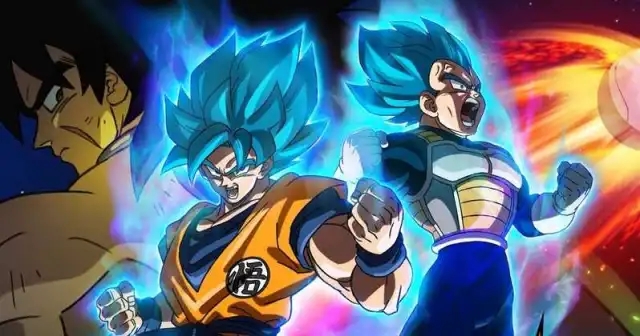
Dragon Ball Super Broly movie analysis tends to fixate on the flashy lights and big explosions, which is fair because there's forty minutes of nonstop fighting that'll melt your eyeballs. But if you think that's all this movie offers, you're missing the real upgrade. This isn't the same Broly from those garbage Z movies where he hated Goku because of baby noises. This is a complete rebuild of the character from the ground up, giving him a tragic backstory that makes you root for him even when he's trying to turn Goku into paste.
The film opens with a history lesson that finally makes Planet Vegeta's destruction feel personal. You see King Vegeta being a petty tyrant, exiling baby Broly to a death world called Vampa just because the kid's power scared him. Paragus, Broly's dad, isn't having it, so he steals a ship and goes after him. The ship crashes, they're stranded, and that's where the real damage happens. Paragus doesn't save Broly out of love. He saves him because he wants a weapon to get revenge on the king. That distinction is everything.
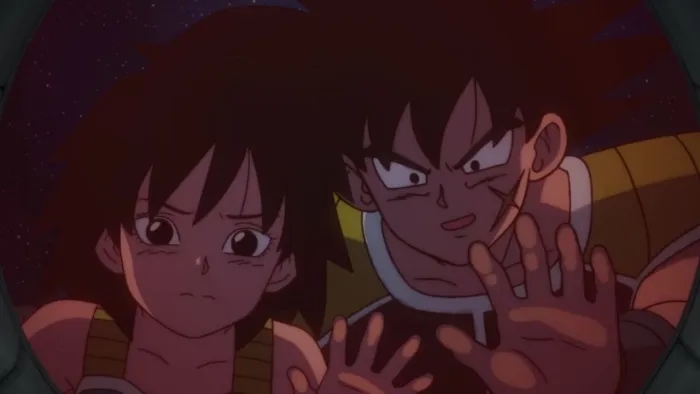
This opening also gives us the best version of Bardock we've ever seen. Forget the brooding anti-hero from the Z special who was just angry all the time. This Bardock is a low-class soldier who actually cares about his family. The scene where he and Gine put baby Kakarot in the pod is heartbreaking because they know what's coming. Frieza is gathering all the Saiyans in one place to wipe them out, and Bardock can't stop it. He sends his son away not because he wants him to conquer Earth, but because he wants him to survive. It retroactively makes every Dragon Ball story mean more because Goku's parents actually loved him, and he never got to know them.
Then we jump to the present day and meet Cheelai and Lemo, who are basically space truckers working for Frieza. They find Broly and Paragus on Vampa, and Broly is feral. He's been eating bugs and fighting monsters for forty years, but he's not cruel. There's this weird little subplot where he befriends a giant monster named Ba, and when Paragus shoots the monster to make Broly angry, you see the problem. Broly doesn't want to fight. He wants to be left alone. But his dad has him wired up with a shock collar that triggers his transformations, so every time Broly starts to calm down, Paragus zaps him into a rage. It's abusive and uncomfortable to watch, which is the point.
The middle act brings everyone to Earth, and Frieza is playing chess while everyone else is playing checkers. He wants the Dragon Balls to become five centimeters taller, which is the most Frieza thing imaginable. He's petty and vain and treats the whole plot like a distraction from his main business. But he also recognizes that Broly is a tool he can use against Goku and Vegeta, so he plays along with Paragus's revenge fantasy. When the fighting starts, it doesn't stop for forty minutes straight.
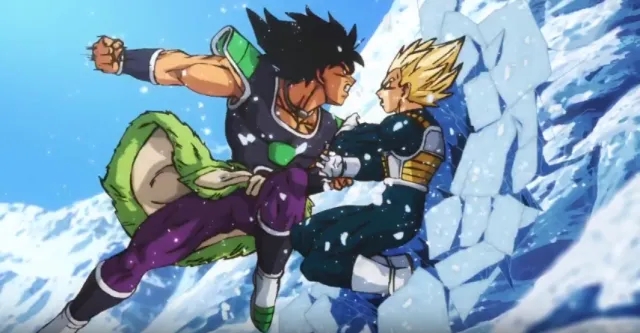
Vegeta goes first, and the choreography here is insane. He starts in base form, goes Super Saiyan, then Super Saiyan God, then Super Saiyan Blue, and Broly matches him at every step without any formal training. He's just adapting on the fly, learning how to fight by getting punched in the face. The animation team at Toei pulled out all the stops here, with hand-drawn explosions and impacts that feel like they have actual weight behind them. You can see the shockwaves when their fists connect. The environment gets destroyed piece by piece, starting in the arctic and moving to rocky wastelands.
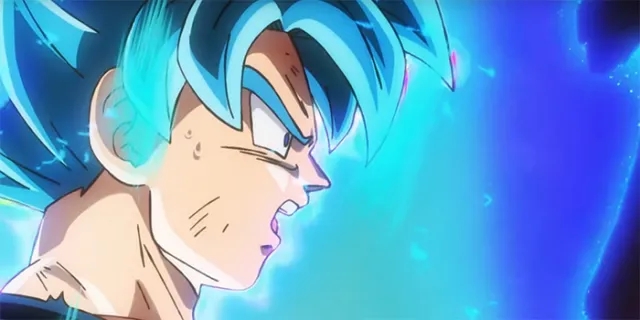
When Goku tags in, he tries his usual tricks. He goes Super Saiyan Blue and starts teleporting around using Instant Transmission, but Broly's energy is so chaotic that he can't predict the movements. The fight becomes a blur of gold and blue light, with Broly's green aura cutting through everything. The animators switch to CGI during some of the wider shots, and it looks weird. The characters go from having thick ink outlines to looking like plastic action figures, and the frame rate drops in a way that makes your eyes hurt. It's not a dealbreaker, but it's jarring when the 2D animation is so gorgeous.
Paragus gets his head lasered off by Frieza mid-fight, which is the trigger for Broly's real transformation. He goes full Legendary Super Saiyan, with the yellow hair and eyes, and the power spike is ridiculous. He starts beating on Golden Frieza for an hour, and Frieza just has to take it because he can't die from the damage but it obviously hurts like hell. This buys Goku and Vegeta enough time to try the fusion dance, and the failed attempts are pure comedy. Their fingers don't match, they do the movements wrong, and they end up as Veku, this fat useless version of the fusion who can't do anything. Piccolo is there coaching them, and his deadpan reactions to their incompetence sells the whole sequence.
When Gogeta finally shows up, the fight reaches another level. Gogeta is in Super Saiyan Blue from the start, and he's the first person who can actually stand toe-to-toe with Broly without getting ragdolled. The fight choreography between these two is some of the best in the entire franchise, with energy blasts that tear holes in reality and punches that shatter ice shelves. Broly keeps getting up, and Gogeta keeps knocking him down, and the whole time Broly is losing more and more control until he's basically a wild animal.
Cheelai saves the day. While the boys are fighting, she uses the Dragon Balls to wish Broly back to Vampa before Gogeta can kill him. It's a smart move that acknowledges Broly isn't the villain here. He's a victim of his father's ambition and Frieza's manipulation. The movie ends with Broly living peacefully with Cheelai and Lemo, eating those gross bugs and being weird but happy. Goku shows up with Capsule Corp gear and introduces himself as Kakarot, which is a nice touch because it honors Broly's Saiyan heritage without forcing him to be a warrior.
The sound design deserves mention because it's brutal. Every punch sounds like a car crash, and the energy blasts have this bass-heavy rumble that makes your speakers shake. But the music by Norihito Sumitomo is divisive. Some tracks are great, but others are so loud and busy that they drown out the dialogue. During the scene where Broly talks about his life on Vampa, the soundtrack swells up and you can barely hear his voice. It's a mixing problem that should have been caught in editing.
The English dub has some controversy attached to it because of Vic Mignogna's behavior at conventions, but his performance as Broly is actually good. He captures that gentle giant vibe in the quiet moments and the feral screams when Broly goes nuts. Sean Schemmel and Christopher Sabat are doing their usual solid work as Goku and Vegeta, though Sabat pulls double duty as Gogeta and manages to make the fusion sound distinct from both characters.
There are little details that make this feel like a love letter to the series. When Beerus is babysitting Bulla, he's eating pizza and complaining about how much work it is, which is hilarious for a god of destruction. Bulma is collecting the Dragon Balls to look five years younger, which is petty but in character. Even the Blu-ray release issues with the green tint can't ruin the fact that this is the best looking Dragon Ball movie ever made.
The movie doesn't just retell history, it recontextualizes the entire Saiyan race. You see them as slaves to Frieza, working as conquering mercenaries who don't realize they're about to be exterminated. King Vegeta's jealousy isn't just personal pettiness, it's a symptom of a culture obsessed with bloodlines and status. When he orders Broly's execution, he's trying to maintain the hierarchy that keeps him in power, even though it dooms his planet in the long run.
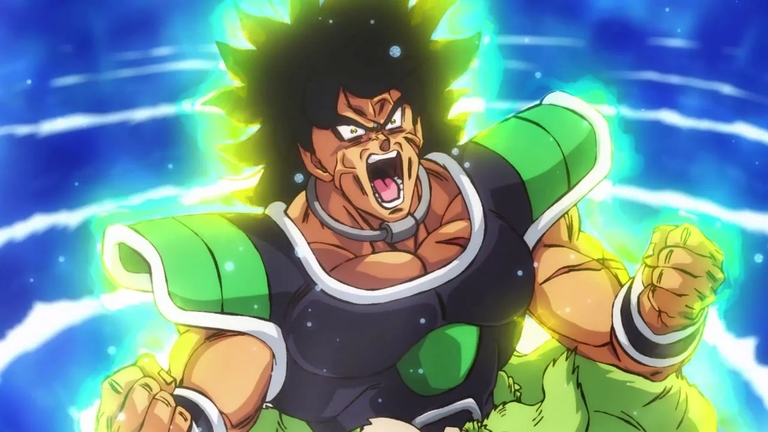
Broly's power works differently than other Saiyans. He has this "Wrathful State" or Ikari form where his eyes turn yellow and his hair spikes up but stays black. He looks like a Great Ape in human form, and the movie implies he's channeling that primal Oozaru strength without actually transforming. This is different from the Super Saiyan progression Goku and Vegeta use. When he finally goes full Super Saiyan, the hair isn't just greenish-yellow like the old movies, it's this bright gold that looks almost white in some lighting, and his eyes lose the pupils entirely. He's fighting on instinct alone, which makes him unpredictable.
The fight geography moves through three distinct biomes. They start in the arctic where Frieza's ship landed, then Broly smashes them through an ice wall into a volcanic area with lava flows, and finally they end up in a rocky wasteland that gets turned into a crater. The background artists went crazy with these environments, painting these gorgeous matte backgrounds that look like classic Dragon Ball Z but with modern color depth. When Broly powers up, the sky changes color, the clouds part, and the ice melts just from his aura. It's over the top in the best way.
Whis watches the whole fight with Beerus and makes comments about how Broly might be stronger than Beerus himself. This is huge for power scaling because Beerus was previously established as an untouchable wall that no mortal could reach. If Broly is in that tier, then Goku and Vegeta teaming up as Gogeta makes sense as the only solution. It's not just two guys punching a third guy; it's a necessity to stop a natural disaster.
Compared to Battle of Gods and Resurrection F, this movie has way more heart. Battle of Gods introduced Beerus but was mostly about Goku failing upward. Resurrection F was just a beat-for-beat rehash of the Namek saga with a golden paint job. Broly feels like a real movie with a three-act structure that pays off. The character work done by Toriyama actually matters here, whereas in the previous films it felt like an afterthought to the punching.
The box office numbers backed up the quality. This thing made over a hundred million dollars worldwide, which is insane for an anime movie that isn't Studio Ghibli. It proved that Dragon Ball is still a global powerhouse and that fans were hungry for new content that wasn't just retreading the same ground. The marketing campaign focused heavily on the mystery of how Broly would fit into the canon, and the reveal that he was a gentle soul manipulated by his father resonated with audiences.
The animation techniques deserve their own discussion. Toei used a mix of traditional hand-drawn frames for the close combat and digital compositing for the energy effects. The ink lines are thicker and more expressive than in the Super TV series, giving it that classic Z feel. But they also experimented with 3D models for Broly during his transformation sequences, rotating the camera around him in ways that would be impossible with 2D cells. Sometimes it works, like when he's floating in space, but when he's trading blows with Gogeta, the frame rate on the CGI models doesn't match the 2D animation, creating this weird disconnect.
Paragus and Broly's relationship is the darkest father-son dynamic in the series. Goku and Bardock had a brief but loving connection. Vegeta and King Vegeta had distance but respect. Paragus treats Broly like a dog. He feeds him, trains him, but keeps him on a literal leash. The collar device is one of the most disturbing visuals in Dragon Ball because it's mechanical abuse of a child by his parent. When Frieza kills Paragus, it's technically murder, but it plays like liberation. Broly doesn't mourn him; he just loses control because the shock collar stops working and he doesn't know how to process his own power without the pain.
The movie also fixes the Dragon Ball Super timeline by placing itself after the Tournament of Power. You don't need to have watched every episode of Super to understand it, but it helps to know why Goku and Vegeta are so strong now and why Frieza is alive again. The film assumes you know about Super Saiyan Blue, but it shows Vegeta explaining the form to Broly in a way that doubles as exposition for the audience.
Cheelai is a great addition to the cast because she represents the everyman in the Frieza Force. She's not a warrior; she's just trying to get by. When she realizes Broly is being tortured, she doesn't hesitate to help him, even though it means betraying Frieza. Her design is distinct, with the pixie cut and the leather jacket, and her chemistry with Lemo, the old veteran soldier, gives the movie a lived-in feel during the quieter moments on Vampa.
The ending sets up future stories perfectly. Broly is alive, he's sane, and he's friends with Goku. This means he can show up in the manga or future movies as an ally, which is way more interesting than having to resurrect him as a villain again. It expands the cast of powerful good guys in a way that doesn't feel forced.
Dragon Ball Super Broly Movie Analysis Final Thoughts
Dragon Ball Super Broly movie analysis comes down to whether you care about these characters, and this movie makes you care. It takes a broken toy from the past and fixes it until it shines brighter than anything else in the box. The fights are too long, the CGI is sometimes ugly, and the music mix is bad, but none of that matters when Broly smiles at the end because someone brought him food instead of demanding he fight.
This is the gold standard for Dragon Ball films now. It respects the past, pushes the present forward, and leaves the future wide open. If every Dragon Ball movie from here on out matches this energy, the franchise will stay alive for another thirty years without breaking a sweat.