
Bungou stray dogs anime character analysis usually gets stuck on the surface level stuff like who has the coolest power or which ship makes sense, but that misses what makes this show actually hit hard. The characters aren't just random anime archetypes with famous writer names slapped on them, they are walking trauma responses bundled up in literary references that actually matter to how they fight and why they bleed. If you think this is just another superpower shonen with fancy ability names, you are watching it wrong and I am here to fix that perception because the writing goes deeper than most people give it credit for.
The show throws you into Yokohama with Atsushi Nakajima getting kicked out of his orphanage and slowly starving on the riverbank, and right away you need to understand that his ability Beast Beneath the Moonlight isn't just a cool tiger transformation for fight scenes. It is a direct reference to his real life namesake's story "The Moon Over the Mountain" which deals with a man who turns into a tiger because of his own internal conflicts and desires. Atsushi doesn't just turn into a tiger because it looks cool, he turns into a tiger because he is a scared kid who has been told his entire life that he is worthless and the tiger represents that internalized rage and self-loathing that he can't express as a human. The fact that he can't control it at first isn't just a shonen trope about mastering your power, it is a metaphor for how trauma survivors often feel like their own emotions are foreign entities that take over their bodies without permission.
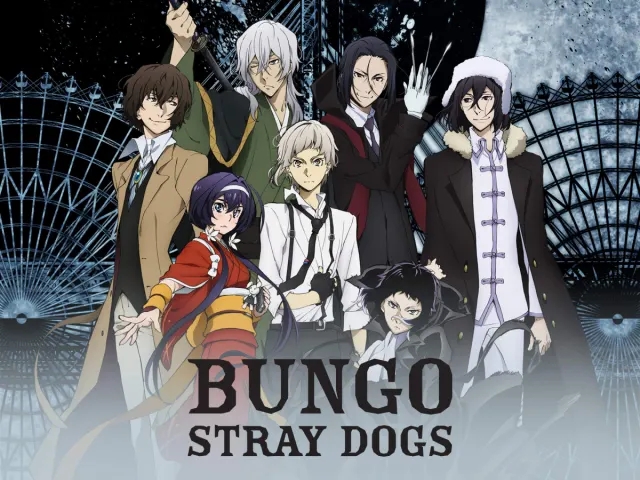
Why Shin Soukoku Is The Actual Heart Of The Show
People talk about the Armed Detective Agency versus the Port Mafia like it is just cops and robbers with superpowers, but the real engine driving this story is the relationship between Atsushi and Ryunosuke Akutagawa, also known as Shin Soukoku. These two are designed to be mirrors of each other from the ground up and the show keeps forcing them to fight because their growth is dependent on understanding the person who reflects everything they hate about themselves. Akutagawa is everything Atsushi fears he could become, a person so consumed by the need for external validation that he has turned himself into a weapon that destroys everything around him. Meanwhile Atsushi is everything Akutagawa resents, someone who got the validation from Dazai that Akutagawa never received despite killing himself to earn it.
Their abilities even reflect this opposition. Atsushi's tiger is a beast of raw instinct and survival, something that protects him when he feels threatened but also isolates him because he is dangerous to touch. Akutagawa's Rashomon is a controlled black beast made of his own coat, something that requires intense concentration and willpower to maintain, representing how Akutagawa has built his entire identity around being useful to others rather than existing for himself. When they fight, it isn't just about who is stronger, it is about two different trauma responses colliding. Atsushi fights to protect others because that is the only way he has ever received positive attention, while Akutagawa fights to destroy because he believes his only value lies in his utility as a weapon. The fact that they eventually have to team up and actually communicate is the show's way of saying that you can't heal trauma in isolation, you need to see yourself in someone else to understand that you are not broken in the way you think you are.
Dazai Osamu Is Not Just Comic Relief
Every bungou stray dogs anime character analysis needs to address Dazai because he is the lynchpin that connects everyone, but most people write him off as just the funny suicide guy who likes bandages. That reading is surface level garbage that ignores how his ability No Longer Human works as a perfect metaphor for his depression and dissociation. In the real literary world, Osamu Dazai wrote "No Longer Human" about feeling so disconnected from humanity that he might as well be an alien, and the anime translates that literally into an ability that nullifies other abilities by making him immune to the supernatural. He is literally no longer human in a world of superhumans, and that isolation is killing him even as he jokes about wanting to die.
His relationship with Chuuya Nakahara adds another layer to this because their partnership in the Port Mafia days was built on mutual hatred and codependency. Chuuya's ability For the Tainted Sorrow lets him manipulate gravity, which is fitting for a character who feels constantly weighed down by his past and his connection to Dazai. They are bound together by a shared history of violence but also by the fact that Chuuya is one of the few people who sees through Dazai's act and refuses to let him die. Dazai keeps testing the people around him to see if they will save him, and Chuuya keeps passing that test by beating him up instead of letting him sink, which is honestly healthier than most of Dazai's other relationships. The fact that Dazai eventually joins the Armed Detective Agency and finds people who value him beyond his utility as a tactician is the slow burn arc of someone learning that they don't have to be useful to deserve to live, which hits different when you remember the real Dazai died by suicide at 39.
The Literary References Actually Matter
I keep seeing people online treating the fact that characters are named after authors as just a quirky gimmick, like the show is just playing dress up with literary history, but that is a lazy take that misses how deeply the character abilities tie into the themes of the real books. Take Kenji Miyazawa for example, this country kid who seems out of place in the violent world of Yokohama crime wars, but his ability Unyielding to the Rain gives him superhuman strength when he is hungry. This references his poem "Unyielding to the Rain" which is about resilience and not breaking despite hardship, and Kenji's character embodies that by being genuinely kind and gentle despite having the power to punch through concrete. He is not naive, he is chosen optimism in a world that keeps trying to make him cynical.
Then you have Edogawa Ranpo who doesn't even think he has an ability, he thinks he is just a super genius detective, and his power Super Deduction is literally just him being incredibly intelligent but framed as supernatural because the world of BSD can't accept that someone could just be that smart naturally. This fits the real Edogawa Ranpo who wrote detective stories and created the modern Japanese mystery genre, and the character's ego and refusal to participate in normal social conventions mirrors how the real author was seen as eccentric. Even Doppo Kunikida with his ability Lone Poet which lets him materialize objects from his notebook fits his real life counterpart who was a poet and naturalist, showing how his rigid idealism about how the world should work clashes with the messy reality of detective work. These aren't Easter eggs, they are the foundation of the character psychology.
Trauma Responses In Combat
What separates bungou stray dogs anime character analysis from other shonen breakdowns is looking at how fighting styles reveal trauma responses rather than just power levels. Akutagawa coughs up blood and looks half dead most of the time because he pushes his body past limits to prove he has value, which is classic self destructive behavior from abuse survivors who think love is conditional on performance. His Rashomon devours space itself but it is eating him alive from the inside out, which is a visual metaphor for how unresolved trauma consumes the victim while they are trying to use it as a weapon.
Atsushi's trauma response is different, he freezes or he runs until someone else is in danger, showing how orphans raised in abusive environments often develop fawning responses where they only feel safe when they are serving others. His tiger form gets stronger when he is protecting the Agency members not because of power of friendship nonsense but because finally having a family to protect gives him a reason to control the beast instead of fearing it. When he fights alone he is weak because he doesn't value his own life enough to fight for it, but when he fights for others he is unstoppable because he is defending the first place that ever felt like home. That is psychological realism wrapped in a tiger transformation sequence and it hits harder than it has any right to.
The Port Mafia As Failed Support Systems
The Port Mafia isn't just the bad guys, they are what happens when traumatized kids don't get proper help and instead get groomed by organized crime. Akutagawa was a street kid who joined because he had nowhere else to go, and the Mafia gave him food and shelter but also told him he was worthless unless he killed efficiently. This is literally how gangs recruit vulnerable youth in real life, by offering basic needs while exploiting the trauma that made them vulnerable in the first place. When Dazai was in the Mafia he played the role of the abuser because that was the only language the organization spoke, but his defection to the Agency represents the possibility of breaking that cycle.
Chuuya stayed behind but he isn't evil, he is just loyal to a fault and believes that strength is the only thing that matters in the underworld. His gravity ability lets him fly but he keeps his feet on the ground metaphorically because he can't let himself hope for something better than what the Mafia offers. The dynamic between the Agency and the Mafia isn't good versus evil, it is recovery versus regression, showing different paths that traumatized people can take when given different support systems. The Agency isn't perfect but they at least try to help each other heal, while the Mafia just sharpens their trauma into weapons and discards them when they break.
Why The Ability Names Hit Different
When Dazai activates No Longer Human and nullifies someone else's power, it is not just a tactical advantage, it is him imposing his own emptiness on others, forcing them to feel the void he lives in every day. When Akutagawa screams Rashomon and the black fabric tears through reality, he is externalizing the internal ugliness he feels about himself, turning self hatred into physical blades. These aren't just cool attacks with book titles attached, they are psychological profiles written in violence. Atsushi Nakajima tiger transformation ties directly into the real story about a man who could not control his transformation, and the anime uses that to talk about puberty and trauma and losing control of your own body in ways that resonate with anyone who has ever felt like their emotions were too big to handle.
Even side characters get this treatment. Francis Scott Key Fitzgerald throws money around literally because his ability is based on his wealth, showing how capitalism and class warfare work in the BSD universe. Fyodor Dostoevsky with his ability Crime and Punishment represents the judgment and decay of the soul that comes from true evil, not just cartoon villainy but the kind of ideological rot that thinks it is doing everyone a favor by destroying them. The show respects its literary roots enough to make the abilities thematically coherent with the authors' actual works, which is more than most media tie ins bother to do.
Character Growth Through Violence
People complain that BSD has too much fighting and not enough quiet character moments, but they are missing that the fighting IS the character development in this show. Atsushi doesn't go to therapy, he fights Akutagawa and learns that he is not worthless. Akutagawa doesn't get a heartfelt talk about his feelings, he gets beaten by Atsushi and realizes that strength isn't everything. Dazai doesn't have a breakthrough session with a counselor, he has to trust Chuuya with his life during a mission and remember that he doesn't have to carry everything alone. The violence is metaphorical even when it is literal, and that is a tricky balance to maintain but the show pulls it off more often than it fails.
Shin Soukoku dynamic explained shows how the fandom recognizes that Atsushi and Akutagawa need each other to function as whole people, which is why their team up in later seasons feels earned rather than forced. They have beaten the trauma into each other until something healthy finally emerged, which is not how therapy works in real life but makes for compelling fiction about two broken people recognizing their shared pain. Dazai depression themes have been analyzed academically because the show doesn't shy away from the reality of suicidal ideation even while making jokes about it, walking that tightrope between dark comedy and genuine tragedy that the real Osamu Dazai was famous for in his writing.
What Makes BSD Different From Other Superpower Shows
Most anime with special abilities treat them like power systems to be gamed, with characters training to get stronger and unlock new forms. BSD doesn't care about that. Atsushi doesn't train to get better at being a tiger, he learns to accept himself so the tiger stops being something he fears. Akutagawa doesn't get a power upgrade, he gets a perspective shift about why he fights. The abilities are static reflections of the characters' inner states, and the growth comes from psychological changes rather than physical training arcs. That is why the show feels weird and different from standard shonen fare, because it is using the visual language of battle anime to tell stories about mental health and recovery.
Good versus evil themes in BSD are complicated because the Port Mafia isn't always wrong and the Agency isn't always right. Mori Ougai runs the mafia like a business but he also keeps Yokohama stable in his own twisted way, while the Agency has to make morally gray choices to protect the city. There is no simple good versus evil binary, just different coping mechanisms for a world that is fundamentally unfair. The characters are all struggling to find meaning in a meaningless existence, which is exactly what the real literary authors were writing about in their books.
Bungou stray dogs anime character analysis reveals a show that respects its audience enough to deal with heavy themes while still delivering cool fight scenes. It is a balancing act that shouldn't work but does because the writing understands that you can have a character who makes suicide jokes while also taking his depression seriously as a medical condition that requires treatment and support. You can have a rivalry that is violent and toxic while also being necessary for both participants to grow. You can name your characters after famous authors and have that actually inform their personalities rather than being a gimmick. The show is messy and weird and sometimes the pacing drags, but when it hits, it hits harder than Rashomon through a concrete wall because it is actually saying something about how people heal from the kind of pain that doesn't leave visible scars.