
Most isekai is trash. You know it. I know it. The best reincarnation isekai anime series recommendations always get buried under piles of shows where some guy gets hit by Truck-kun and immediately becomes god because he can multiply bread or whatever. Real reincarnation stories need stakes. They need characters who remember dying and carry that weight into their new lives instead of treating it like a minor inconvenience.
The genre exploded because everyone loves a second chance. But there's a huge difference between getting transported to another world while keeping your body and actually dying then waking up as a baby with your memories intact. The second one hits harder. It lets writers explore how past trauma shapes new beginnings or how modern knowledge crashes into medieval societies without the easy outs of save points or game menus. This list cuts through the garbage. These are the series where reincarnation matters to the plot, not just a setup to give the protagonist cheat codes and a harem.
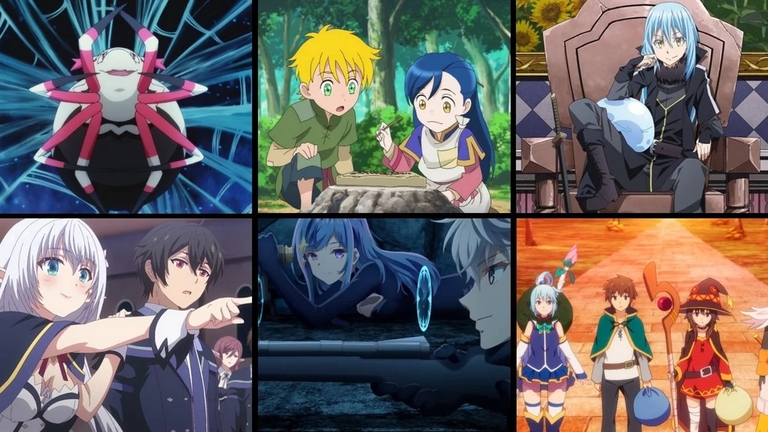
What Makes Real Reincarnation Different
Transportation isekai is lazy. Some loser gets sucked into a game and keeps his level 99 gear. Reincarnation means starting from literal zero. You're a baby. You poop yourself. You grow up knowing things you shouldn't while hiding your past life's regrets and trying not to freak out your new parents when you start speaking full sentences at six months old.
The good ones use this. Mushoku Tensei doesn't just hand Rudeus Greyrat power. It makes him live through childhood again, dealing with the psychological damage of being a 34-year-old shut-in stuck in a kid's body. That's uncomfortable to watch sometimes. It's supposed to be. The show doesn't let him off easy just because he can cast water magic now, and it constantly reminds you that he's a damaged adult looking through a child's eyes at a world that doesn't know his history.
Similarly, Ascendance of a Bookworm has Myne dying from books crushing her in an earthquake then waking up as a sickly peasant child in a world where books are luxury items for nobles that cost more than houses. She doesn't get super strength. She gets a fever every time she overexerts herself because her new body is fragile and malnourished. The conflict comes from her stubborn refusal to accept a world without reading material, not from fighting demon lords with swords. That's the difference. Real reincarnation anime makes the rebirth part of the conflict, not just the origin story you skip in the first five minutes.
The Heavy Hitters That Reset Standards
Mushoku Tensei Jobless Reincarnation
People call this the grandfather of modern isekai for a reason that has nothing to do with chronology and everything to do with execution. Before this got animated by Studio Bind, most reincarnation stories were basically video game manuals with dialogue where the hero lists his stats for twenty minutes. Rudeus gets reborn with massive magical talent, sure, but the story cares more about his emotional growth than his spell list or how many dragons he can one-shot.
The animation is ridiculous. Every frame has weight and fluidity that makes other anime look like slideshows. But what matters is how Rudeus carries his shame from his previous life into this one. He's creepy sometimes. He's pathetic sometimes. He has moments where he backslides into being the loser he was before, and the series doesn't look away from that. That's the point. The series argues that just getting a new life doesn't fix you automatically. You still have to do the work of becoming a decent human being, and Rudeus spends two seasons failing upward while trying to figure out how to not waste this second chance.
His relationships with Roxy, Sylphiette, and Eris actually develop over time. He doesn't just collect them like Pokemon. He hurts them, learns from it, and grows. Season two stumbled a bit with the university arc feeling like filler that lost the plot, but it found its footing again in the second half when it remembered that this is a story about trauma and connection, not just magic school antics. If you want reincarnation that treats the concept seriously as a vehicle for character study rather than power fantasy, start here.
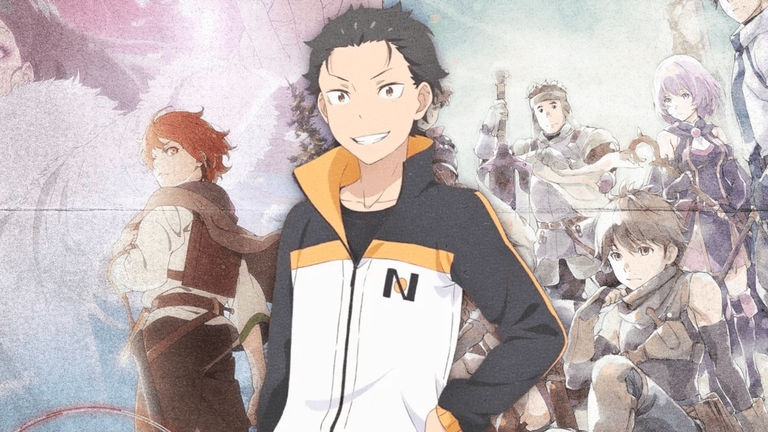
ReZero Starting Life in Another World
Subaru Natsuki doesn't technically reincarnate in the traditional sense. He gets transported. But I'm including this because the mechanics function identically to a reincarnation loop where death sends you back to a checkpoint. He dies and resets, carrying memories back each time like a guy stuck in the world's worst Groundhog Day scenario. It's a respawn mechanic treated with the horror it deserves rather than the convenience most isekai treat it as.
Unlike power fantasy garbage where death has no consequences and the hero treats dying like a minor inconvenience, Subaru remembers every death vividly. He feels the pain. He carries the trauma of watching his friends die repeatedly while being powerless to stop it, and he can't tell anyone about it without the witch's curse killing him. This isn't a fun adventure. It's psychological warfare against a guy who just wanted to buy snacks at a convenience store and ended up in a death loop in a fantasy world that wants him dead in increasingly creative ways.
The character writing here is solid even when it's painful. Subaru is annoying on purpose. He's a shut-in who thinks he's the main character in a game until reality slaps him repeatedly with the fact that he's powerless and his only weapon is the ability to suffer until he figures out the right sequence of actions to keep people alive. Watching him actually grow into someone worth rooting for takes time, and the show makes you earn that investment by showing you every step of his breakdown and rebuilding.
That Time I Got Reincarnated as a Slime
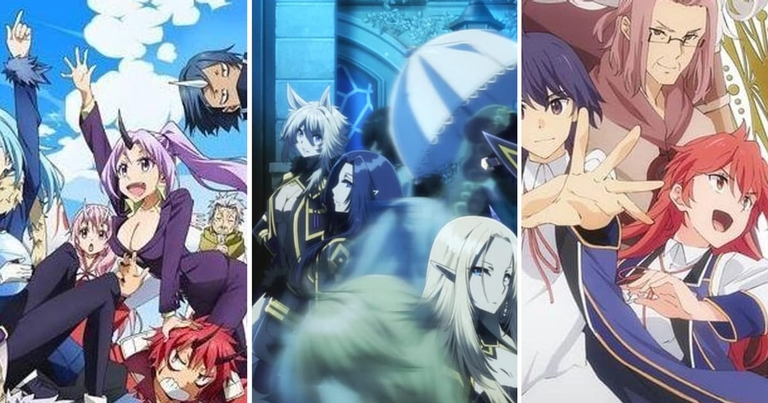
Rimuru Tempest starts as Satoru Mikami, a 37-year-old salaryman who gets stabbed protecting a coworker from a random attacker on the street. He dies bleeding out in a hospital while giving advice to his younger coworkers about relationships, then wakes up as a slime in a cave full of magic crystals. Sounds stupid. It should be stupid. But the writing elevates it beyond the gimmick into something that manages to balance power fantasy with genuine political intrigue.
Rimuru builds a nation from scratch. He doesn't just get strong and punch the bad guy. He navigates complex politics between demon lords, human kingdoms, and monster tribes while trying to create a society where everyone can coexist without the constant warfare that defines most fantasy settings. The series spends entire episodes on trade agreements, infrastructure development, and diplomatic negotiations, which sounds boring as hell but somehow isn't because the characters carry it with charisma and the stakes feel real.
The power curve is ridiculous, yes. Rimuru eventually becomes basically a god who can level cities. But the show earns it by showing the work of building alliances and the emotional cost of leadership. He doesn't just punch harder than everyone. He unites disparate groups through charisma and genuine care for his subordinates, absorbing the pain of his people and carrying it for them. That's rare in isekai where might usually makes right and diplomacy is just the thing you skip between fight scenes.
The Hidden Gems You Probably Skipped
The Faraway Paladin
Will is raised by three undead warriors in a ruined city at the literal edge of the world. His adoptive father is a skeletal knight who teaches him swordplay, his mother is a mummy priestess who teaches him faith and magic, and his other father is a ghost sorcerer who teaches him knowledge and wisdom. They train him for fifteen years specifically so he can eventually leave and make his own way in the world, knowing that their undeath is sustained by a curse that he might be able to break.
This one hits different from anything else in the genre. It's slow and contemplative. It asks serious questions about faith and duty and what it means to swear oaths to gods. Will chooses to dedicate himself to deities not because he has to but because he wants purpose and structure in a life that started with abandonment. The relationship dynamics between the living boy and his undead family are genuinely touching in a way that makes you forget this is supposed to be an action anime.
Studio OLM did the first season, and while the animation wasn't flashy or filled with sakuga moments, the writing carried hard with dialogue that felt like it came from a classic novel rather than a light novel. Season two switched studios and suffered visually for it, but the source material remains some of the best reincarnation storytelling out there because it treats the concept of rebirth as a spiritual journey rather than just a mechanical one.
Ascendance of a Bookworm
Myne's reincarnation is brutal in ways that have nothing to do with combat. She remembers her past life as a college student who loved books more than people, who died in an earthquake crushed by her own book collection. Now she's a five-year-old commoner in a world where paper is expensive, writing is restricted to nobles and clergy, and books are chained to desks in temples like rare artifacts.
Her solution isn't to find a magic sword or awaken as a saint. It's to invent paper and the printing press from scratch using her memories of Earth technology and her desperate need to read again. The series is basically economics and chemistry disguised as fantasy, spending episodes on the process of making paper from wood pulp or negotiating with merchants for oil to make ink. We watch her navigate rigid class structures, struggle with her chronically weak body that collapses from fever constantly, and slowly build a publishing empire while dealing with nobles who see her as either a resource to exploit or a threat to their monopoly on knowledge.
This is what I mean by reincarnation mattering to the plot. Her modern knowledge is her weapon, but it also makes her a target. She can't just punch her way out of noble politics or buy her way out with adventurer money. She has to play the game of thrones with nothing but her wits and the vague memory of how Gutenberg's press worked.
Non-Human Perspectives Actually Work
So I'm a Spider So What
Kumoko starts as a weak spider monster in a dungeon full of deadly creatures that can kill her in one hit. She's one of twenty-six students who died in a classroom explosion and got reincarnated by a bored god. While her classmates become princes, nobles, and heroes with cheat abilities and easy lives, she gets the short end of the stick as a low-level monster in a death trap where everything wants to eat her.
The series uses two timelines that eventually converge. We see Kumoko struggling to survive and evolve in the dungeon while checking in on her classmates living easy lives above ground in the kingdom. The contrast is sharp and intentional. Kumoko doesn't get help from anyone. She fights dragons with webs and poison while leveling up through pure desperation and min-maxing her skill build in an RPG-like system that actually has rules and costs. She starts eating her own eggs to survive. She goes insane from loneliness and talks to herself in multiple personalities just to stay sane.
The story hides a massive twist about the nature of the reincarnations and the true identity of the spider that recontextualizes everything you watched in the first half. It's a narrative trick that only works because the reincarnation setup establishes that not everyone gets reborn equally, and some people get screwed by the random chance of birth just like in real life.
Reincarnated as a Sword
Yeah, it sounds like a joke title that should be terrible. A guy dies and wakes up as a sentient sword floating in a forest with no body and telekinetic movement that drains his mana quickly. He can't move on his own for long distances. He needs a wielder to actually fight. He finds Fran, a catgirl slave seeking revenge for her destroyed tribe, and they partner up with him acting as her equipment and mentor.
The dynamic works because the sword isn't overpowered immediately even though he's sentient. He has abilities but needs Fran to use them, and their relationship drives the series more than the action. It's a buddy cop movie where one buddy is a weapon and the other is a traumatized twelve-year-old who just wants to evolve from her beastman form into something stronger. The world-building includes detailed dungeon economies and adventurer guild politics that feel lived-in rather than borrowed from video games.
Studio C2C handled this one with surprising care, giving the action weight while keeping the heartwarming moments between sword and catgirl genuine instead of creepy. It's a testament to how flexible the reincarnation premise is when writers actually think about the mechanics of their gimmick instead of just using it as an excuse to give the hero a cool sword.
Villainess Stories and Otome Twists
My Next Life as a Villainess All Routes Lead to Doom
Catarina Claes hits her head on a rock and remembers her past life as an otaku who played the otome game Fortune Lover obsessively. She realizes she's been reborn as the villainess who gets exiled or killed in every possible route of the game. Her solution to avoid these bad ends isn't to become a saint or level up her magic. It's to befriend every character who would normally hate her in the game routes while learning farming and swordplay to survive if she gets exiled anyway.
This spawned a whole subgenre of villainess isekai that flooded the market. Catarina is dense as a brick about romance but weirdly charming in her desperation to survive. She learns earth magic to grow crops in case she's sent to the countryside, practices swordplay to avoid assassination by her fiancé, and accidentally collects a harem of both guys and girls because she's too oblivious to notice they're flirting with her. She thinks they're just being friendly.
It's light and funny, but it uses the reincarnation premise perfectly because Catarina's knowledge of the game world lets her subvert social expectations. She knows who the secret villain is. She knows which political marriages fail and who dies in the war. She uses that meta-knowledge to survive while being too dumb to realize she's changed the game so much that none of the original routes apply anymore.
The Eminence in Shadow
Cid Kagenou dies and gets reborn in a world with magic and monsters. In his past life, he was a chuunibyou who trained his body to be a shadow mastermind like in his favorite anime and games, but he was just a regular guy. In this new world, he gets actual magical power and decides to live out his fantasy of being the guy who secretly controls everything from behind the scenes while pretending to be a mob character.
He creates a fake evil organization called Shadow Garden to fight a cult that he made up based on his delusions. Except the cult actually exists and is doing real evil things. He accidentally stumbles into real conspiracies while thinking he's LARPing with his recruited followers. The comedy comes from the dramatic irony. His subordinates think he's a genius prophet who knows everything. He's just making stuff up and getting lucky, but his luck and preparation are so good that he accidentally becomes the hero he pretended to be.
The anime has style for days with a top-tier soundtrack and fight animation that looks like a movie. But what makes it work is how it parodies power fantasies while being a genuinely good power fantasy itself, playing with the idea of a guy who got reborn specifically to fulfill his teenage edgelord fantasies and somehow succeeding at it.
The Dark and Gritty Options
Grimgar Ashes and Illusions
Six teenagers wake up in a dark tower with no memories except their names. They don't know how they got to this world. They aren't overpowered. They have to kill goblins to survive, and the first goblin fight is messy, terrifying, and leaves them traumatized because the goblins look like people and bleed like people and scream when they die. These aren't heroes. They're scared kids learning to be soldiers in a world that doesn't have respawn points.
The art is watercolor and gorgeous, looking like watercolor paintings come to life. The tone is melancholy and quiet. People die and stay dead. The reincarnation aspect is subtle initially because they don't remember their past lives, but the themes of second chances and building a life from nothing while surrounded by constant danger are core to the experience. This is for people who hate how easy most isekai protagonists have it. Here, buying new underwear is a major financial decision that requires planning. Combat is dangerous and leaves scars. The world doesn't care about you and will eat you if you get complacent.
Saga of Tanya the Evil
Atheist Japanese salaryman dies and insults God, who calls himself Being X in this universe. As punishment for his lack of faith and general jerk behavior, Being X reincarnates him as Tanya Degurechaff, a blonde orphan girl in a magic-filled alternate World War One that looks like 1910s Europe with flying mages. She has to survive the trenches while refusing to believe in God, which is hard when God keeps forcing miracles on her and threatening to send her to hell if she doesn't develop faith.
Tanya is a sociopath. She doesn't want to be a hero or save people. She wants a comfy desk job behind the lines making strategies. But her competence keeps getting her promoted to the front lines where she becomes the Devil of the Rhine, a terrifying child soldier who annihilates enemy battalions with magic artillery. The military tactics are solid and based on real WWI strategies. The anti-war message is sharp despite all the action. And watching a middle-aged man in a little girl's body out-cynical everyone around her while trying to game the system is weirdly compelling.
Honorable Mentions That Deserve Your Time
Wise Man's Grandchild is comfort food anime. Shin gets reborn, raised by Merlin the legendary wizard in the woods, and is overpowered but nice about it. No drama, just good vibes and exploding demons while he tries to hide how strong he is from his friends at magic school.
The World's Finest Assassin Gets Reincarnated in Another World as an Aristocrat has an old man reborn as a pretty boy with a specific mission from a goddess to kill the hero who will destroy the world. It's tactical and methodical with actual assassination planning instead of just murder-hoboing.
Campfire Cooking in Another World with My Absurd Skill is about a guy with an online grocery shopping ability who cooks meals that make gods cry. Pure comfort viewing with detailed food animation that will make you hungry.
Dead Mount Death Play is reverse isekai. A powerful necromancer gets reborn in modern Tokyo and has to deal with gangsters while waiting for his magic to return. Mature, weird, and different from the standard formula.
Seirei Gensouki: Spirit Chronicles follows Rio, who has the memories of a Japanese college student named Haruto stuck in his head, seeking revenge for his mother's murder while dealing with noble politics. The dual identity aspect creates interesting tension.
Cautious Hero: The Hero Is Overpowered but Overly Cautious features Seiya who is max level but refuses to fight weak enemies without nuking the area three times first. It's a comedy about anxiety and preparation that parodies the usual reckless hero tropes.
Why Most Reincarnation Anime Fails
The problem with the genre is lazy writing that treats the premise as a shortcut rather than a story engine. Too many authors use reincarnation as an excuse to skip character development and give the protagonist adult knowledge in a child's body without any of the psychological complexity that should come with that. The hero gets memories of a past life plus max stats immediately and faces no struggle. No growth. Just pure wish fulfillment where they show up jerks at the magic academy with skills they didn't earn.
Real reincarnation stories need friction. The past life should haunt the character or help them in specific ways that create conflict rather than solving it. If you're just using it to explain why the hero knows calculus in medieval times or to give him a harem of girls who like him because he's "different from other nobles," you're wasting the premise.
The best series on this list use the rebirth mechanic to explore identity and trauma. Are you the same person if you have new parents who love you unconditionally when your old ones neglected you? New biology that isn't sick or weak like your first body? New social status that lifts you out of poverty? These aren't questions you can answer with a magic system or a bigger sword. They require character work that most light novel adaptations are too lazy to attempt.
Final Thoughts
Start with Mushoku Tensei if you want the full psychological experience of watching someone try to fix a broken soul. Watch Slime if you want politics and nation building. Bookworm if you want economics and printing press inventions. Spider if you want to watch someone suffer their way to the top. Faraway Paladin if you want something with heart that asks big questions about faith.
The best reincarnation isekai anime series recommendations aren't about the destination or the final power level. They're about watching someone rebuild themselves from nothing while carrying the weight of who they used to be. That's the actual fantasy. Not the magic powers or the harems. The chance to fix what you broke in yourself the first time around and do right by the people who give you a second chance at family.
Don't waste time on shows where the hero gets a kingdom by episode three without working for it or suffering for it. Watch the ones where being reborn is just the beginning of the hard part, not the end of the story. Watch the ones where the character has to earn their happy ending through blood and failure and actual growth. That's where the good stuff lives.