
Everyone types "anime to watch if you like Neon Genesis Evangelion" into Google and gets handed a list of shows with giant robots in them. That's missing the point completely. You didn't sit through End of Evangelion because you wanted to see metal punch monsters. You watched it because you wanted to see kids break while the world ended around them. You wanted that specific flavor of psychological damage mixed with religious symbolism and the sound of trains. Stop looking for mecha shows. Start looking for shows that hate their characters in the same way Anno hated Shinji.
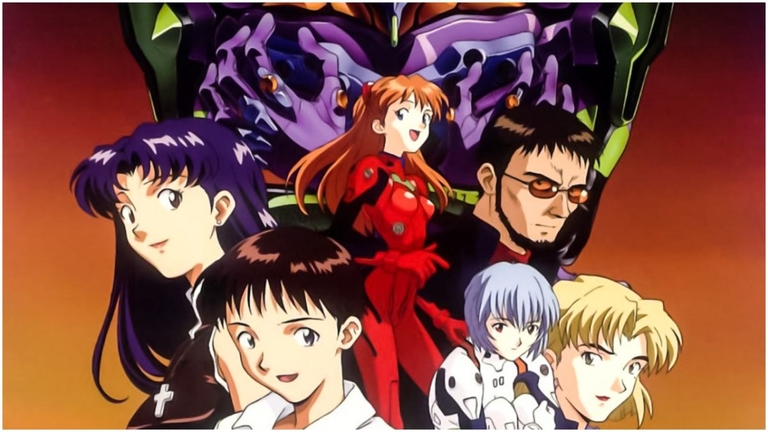
The forums have been arguing about this for decades but most recommendations miss the mark. They'll throw Code Geass at you because it has mechs and a teen genius. They'll suggest Gundam because it's the genre. These shows don't have the nihilism. They don't have that creeping dread that maybe humanity doesn't deserve to exist. If you want the real stuff, the shows that get into your bones the same way Eva did, you need to look at specific DNA strands. You need to look at what Anno made before and after, what inspired him, and what took his deconstruction of genre even further into the dark.
Gunbuster: Where the Pain Started
Before NERV there was the Exelion. Before Shinji there was Noriko Takaya. Hideaki Anno directed Gunbuster in 1988 and you can see every single thing that would become Evangelion already there in six episodes. It's about a girl who wants to follow her dead father into space combat. She pilots a giant robot to fight space monsters. That's the surface.
Underneath it's about time dilation destroying your life. Noriko goes into space for what feels like days and comes back to find everyone she loved has aged decades or died. There's a scene where she calls home and realizes her best friend is now older than her. It's crushing. The final episode is mostly black screen with text because they ran out of money but it hits harder than most million-dollar endings. If you want to understand where Eva's obsession with loneliness and parental absence comes from, this is the source code. It's got the same Gainax bounce animation in the first half and then the same suffocating sadness in the second. Watch it with the lights off.
RahXephon: The Accused Copycat
People love calling RahXephon an Evangelion ripoff because it came out in 2002 and features a teenage boy piloting a clay mecha against multidimensional beings while a shadowy organization runs a base in Tokyo. Sure. But that's surface level. Ayato Kamina isn't Shinji Ikari. He's not whining about not wanting to pilot, he's confused because Tokyo is trapped in a time bubble and he's been told lies his whole life. The show uses Sumerian mythology instead of Judeo-Christian symbolism. It has a romance that actually resolves. The ending makes sense without needing a movie to fix it.
That said, it hits the same notes. The RahXephon sings to fight. The Mulians are weird in the same way Angels are weird. There's a rival pilot who wears yellow. If you want that specific aesthetic of 2000s anime trying to recapture the magic of 1995 but with slightly better animation budgets, this is your show. Some people actually prefer it because Ayato has more agency than Shinji ever did. It's worth watching just to see how close you can get to Eva without being Eva.
Bokurano: Kids Dying in Chairs
Mohiro Kitoh hates children. That's the only explanation for Bokurano. Fifteen kids get tricked into piloting a giant robot named Zearth to save the world from aliens. Here's the catch: every time they fight, the pilot dies. Not sometimes. Not if they lose. Every. Single. Time. They find this out early and the rest of the series is them dealing with the fact that they're all going to die one by one in a metal chair.
There's no NERV here. No SEELE. No conspiracy to save humanity through instrumentality. Just kids crying in a cockpit knowing they're next. Each episode focuses on one kid's backstory before they die. Some are heartbreaking, some are infuriating, none of them get a miracle save. If you thought Eva was cruel with its treatment of Asuka in the movie, Bokurano says "hold my beer." It's the logical extreme of the "child soldier" trope that Eva introduced to mecha. Don't watch this if you're already depressed.
Serial Experiments Lain: The Wired is Instrumentality
1998 was a weird year for anime. Serial Experiments Lain came out and predicted the internet before the internet was really a thing. Lain Iwakura is a quiet girl who gets a computer and discovers the Wired isn't just a communication network, it's a separate layer of reality that's bleeding into the physical world. She starts questioning what makes her "her" when her digital self starts acting independently.
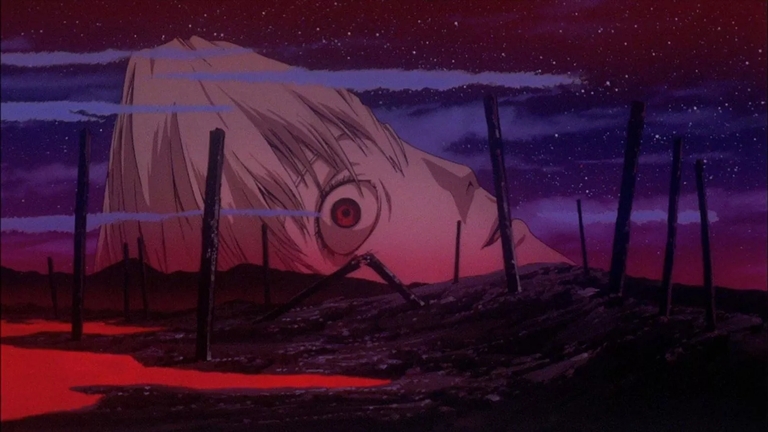
It's slower than Eva. Way slower. There's no explosion every episode. But the last two episodes hit that same "what is happening to consciousness" vibe that Instrumentality gives you. The show asks if you're still human when your identity dissolves into a collective digital unconscious. The animation is sparse, the sound design is just buzzing and whispers, and the ending doesn't explain anything. It trusts you to figure out that Lain became a god or ceased to exist or maybe both. If you liked the abstract horror of Eva's final episodes more than the action, Lain is waiting for you.
Devilman Crybaby: The Apocalypse Done Right
Go Nagai created Devilman in the 70s and Anno borrowed heavily from it for Evangelion. The 2018 Netflix version directed by Masaaki Yuasa is pure visual chaos. Akira Fudo becomes a demon to fight demons but loses his humanity in the process. His best friend Ryo turns out to be... well, spoilers, but it's worse than Gendo Ikari.
The ending of Devilman Crybaby makes End of Evangelion look cheerful. I'm serious. It goes full biblical apocalypse. Everyone dies. The earth burns. The love interest gets murdered by a mob. It's got the same body horror as the Eva movies, the same religious symbolism, and the same question of what separates humans from monsters. The animation style is weird and fluid, all wobbly lines and neon colors. It feels like a bad trip in the best way. If you want that sense of cosmic dread and the inevitability of human extinction that Eva teases, Devilman Crybaby delivers it without mercy.
Revolutionary Girl Utena: Deconstructing the Prince
Kunihiko Ikuhara worked on Sailor Moon then made Revolutionary Girl Utena to destroy everything you think you know about fairy tales and hero narratives. Utena Tenjou wants to be a prince instead of a princess. She duels people at a surreal academy to possess the Rose Bride. It sounds like a shoujo anime and it is, but it's also a psychological thriller about abuse, cycles of violence, and breaking free from systems that control you.
It deconstructs its genre the same way Eva deconstructed mecha. The shadow play girls comment on the action like a Greek chorus. The movie version involves a car that drives out of a castle and into space and it's somehow the most heterosexual thing ever made while also being incredibly gay. If you liked how Eva used Christian symbols to tell a story about isolation, Utena uses fairy tale tropes to tell a story about escaping toxic relationships. It's weird, it's beautiful, and it will make you cry when Anthy finally walks out the door.
Madoka Magica: Breaking the Magical Girls
Studio Shaft looked at Evangelion and said "what if we did that but to Sailor Moon?" Puella Magi Madoka Magica starts like a cute magical girl show. Art style is round and soft. The mascot is cute. Then Mami loses her head. Literally. The show reveals that magical girls are a cosmic scam run by emotionless aliens trying to fight entropy. Kyubey offers contracts that ruin lives and doesn't understand why humans care.
Homura Akemi goes through time loops creating layer upon layer of trauma trying to save Madoka. It's the same recursive suffering Asuka goes through but with time travel mechanics. The witch barriers are abstract art pieces that look like Eva's angel attacks. The show is tight, only twelve episodes, and doesn't waste a frame. If you want that genre deconstruction with a female cast and less religious baggage, this is the one. Don't let the frills fool you. It's about as comforting as a hospital waiting room.
Texhnolyze: When Hope Dies Completely
Yoshitoshi ABe designed the characters for Serial Experiments Lain and he brought that same creepy aesthetic to Texhnolyze. This is set in an underground city called Lux that's slowly dying. Ichise is a fighter who loses his limbs and gets cybernetic replacements. He gets involved with a group that wants to evolve humanity through technology and another group that wants to return to the organic.
It's gray. It's slow. Nothing good happens. The ending is just silence and snow. There's no comedy relief. No fanservice. Just existential dread about whether humanity deserves to survive if this is what we've become. The surface world is empty. The underground is violent. If Evangelion sometimes dipped its toes into nihilism, Texhnolyze does a cannonball into the deep end and stays there. Watch this if you want to feel empty for a week.
Ergo Proxy: Androids and Identity
After an ecological disaster, humanity lives in domed cities. Re-l Mayer is an investigator looking into murders committed by AutoReivs, androids that have become self-aware due to the Cogito virus. She meets Vincent Law, a guy who might be the key to everything, and Pino, an infected android who acts like a human child.
It asks the same questions Evangelion asks about what separates humans from machines. The Evas are alive, they have souls, the pilots sync with them. Ergo Proxy takes that and makes it the whole plot. Who is real? Who is a copy? The show meanders in the middle with some filler episodes but the core mystery about the Proxies and why humanity is stagnant hits hard. It's got that post-apocalyptic vibe and the same color palette as the latter half of Eva. The ending is ambiguous in a good way.
Paranoia Agent: Trauma as a Physical Entity
Satoshi Kon only made one TV series before he died and it was Paranoia Agent. Lil' Slugger is a kid on golden rollerblades who attacks people with a baseball bat. Or maybe he's a delusion. Each episode follows a different character suffering from extreme stress until they break and Lil' Slugger appears.
There's an episode about three people trying to kill themselves that is simultaneously hilarious and the most depressing thing you've ever seen. There's an episode about a shut-in who creates a perfect virtual world and refuses to leave. It captures that same feeling of societal pressure making people crack that Eva has with Shinji and his hedgehog's dilemma. The final episode reveals the truth about the attacks and it's about escapism destroying reality. If you liked how Evangelion looked at why people run away from human connection, Paranoia Agent dissects that exact wound.
The Also-Rans and Honorable Mentions
FLCL is a Gainax production from the same era and it's about puberty literally hitting you like a robot emerging from your head. It's six episodes of surreal comedy that somehow explains adolescence better than anything else. Gurren Lagann is also Gainax but it's the anti-Eva. It's about yelling loudly and believing in yourself to defeat the spiral nemesis. Same studio DNA, opposite philosophy.
Code Geass gets recommended because Lelouch is a teen genius with a mech and daddy issues, but it's more chess game than psychological breakdown. Attack on Titan has walls and monsters and generational trauma but it's more about political intrigue than personal isolation. Darling in the FranXX tried so hard to be Eva with its teen pilots and biomechs but it falls apart halfway through and leans too hard on fanservice. The Big O is Batman with a mech in a city where no one remembers the past. It's solid noir but lighter on the existential dread.
The Hard Truth
You're not going to find another Neon Genesis Evangelion. These shows get close on specific flavors. Gunbuster has the DNA. Bokurano has the cruelty. Lain has the dissolution of self. Devilman has the apocalypse. But Eva is its own thing. It's the perfect storm of Anno's depression, the budget running out, the religious symbolism that doesn't actually mean what westerners think it means, and that specific 90s animation style.
Watch these shows because they're good. Watch them because they hurt in different ways. But don't expect to recapture that first time you saw Unit-01 go berserk and eat an angel. That high is gone. The recommendation lists will keep growing but Eva remains alone at the top of the mecha graveyard, staring at you with those dead white eyes, asking why you keep running away.