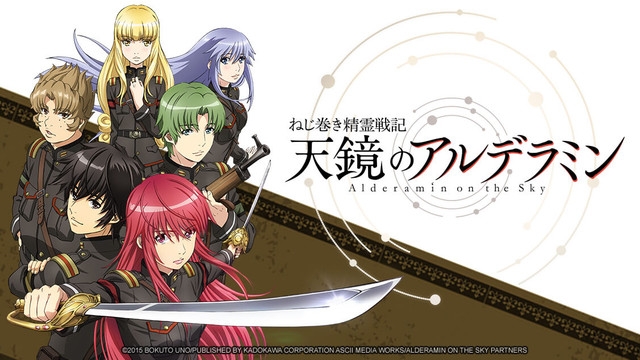
Alderamin on the Sky anime plot and strategy work best when you stop expecting a shonen power fantasy and start treating it like a procedural drama about supply lines and bureaucratic incompetence. Ikta Solork isn't your typical military protagonist charging into gunfire while screaming about friendship or honor. He's a lazy, skirt-chasing bookworm who only fights because the alternative is letting his friends die, and even then he complains about the inconvenience the whole time. The series dumps him into the Katjvarna Empire's war machine against the Republic of Kioka, but instead of turning him into a patriotic hero, it forces him to climb the ranks just to protect his own skin while surrounded by idiots in fancy uniforms.
The whole setup feels like someone took a history book about 19th century logistics, smashed it together with a fantasy setting where elemental spirits power air rifles, and decided to follow the one guy smart enough to realize that most generals are idiots who get their men killed for glory. It's messy, it's occasionally annoying, Ikta's womanizing traits haven't aged well, and it ends on such a brutal cliffhanger that you'll want to throw your screen across the room when the credits roll on episode thirteen. But for those thirteen episodes, the military strategy is smarter than almost anything else in the medium.

Why Ikta Solork Works Despite Being Annoying
Let's get this out of the way immediately. Ikta Solork is a womanizer who makes inappropriate comments to female soldiers, whines constantly about having to work, and generally acts like a creep whenever the plot slows down. In any other show, he'd be completely insufferable. But the thing that saves him, and what makes the Alderamin on the Sky anime plot and strategy compelling, is that he's right about everything when it counts, and his tactical approach treats war like the ugly business it is rather than a proving ground for masculine virtue.
While other officers are charging cavalry into rifle fire because their grandfathers did it that way, or wasting lives on parade ground maneuvers that look pretty but get everyone slaughtered, Ikta is calculating how many days until his troops starve or freeze to death. He treats war like a math problem involving food supplies, terrain elevation, sleep deprivation, and the probability that his commanding officer is an incompetent noble who bought his rank rather than earning it. This "lazy genius" approach isn't just a character trait, it's the entire strategic foundation of the series and the reason he keeps surviving battles that should have killed him.
His philosophy is simple and repeated often. Laziness drives innovation because efficient solutions require less effort than hard work in the long run. Why march your army up a mountain when you can make the enemy come down to you? Why fight fair when you can set the forest on fire and pick them off while they choke? Why charge heroically when you can dig in and let the enemy break themselves against your defenses? He's not interested in looking brave or winning medals, he's interested in keeping his people alive with minimal effort, which makes him the most dangerous officer in an empire full of traditionalists who value ceremony over survival.
The Weird Technology That Changes Everything
The military strategy in this show wouldn't work without understanding the bizarre tech level they've got going on. Forget gunpowder, that doesn't exist here. In this world, they've got air rifles powered by wind spirits called sprites that function like compressed air guns from the American Civil War era, but with magic involved. Each soldier bonds with a tiny elemental spirit that basically acts as their battery and ammunition source, which creates weird tactical limitations that Ikta exploits constantly in ways that confuse his superiors.
The rifles need time to recharge between shots depending on the sprite's stamina. They don't work as well in extreme cold because the spirits get sluggish. The sprites have personalities and get tired, meaning sustained fire is impossible without rotating shooters. It's not just "point and shoot" like modern firearms, and the show treats these limitations as serious plot points rather than background details to be ignored. When Ikta plans an ambush, he has to account for how many shots his men can fire before their sprites need rest, which is the kind of detail most military anime completely ignore.
You've also got other spirit types that matter strategically. Fire sprites exist but the empire treats science and chemistry like heresy, so Ikta has to hide his knowledge of physics while using it to create smoke screens and incendiaries. The technology level is roughly equivalent to the 1800s, but with this magical twist that makes logistics even more complicated because your ammo isn't just lead balls, it's living creatures that need care, rest, and favorable weather conditions to function properly.
Yatorishino Igsem and the Trust Problem
You can't talk about strategy in Alderamin without talking about Yatorishino Igsem, or Yatori as everyone calls her. She's Ikta's childhood friend, a noble from the Igsem family who are basically the empire's attack dogs, bred for generations to be perfect soldiers. While Ikta handles the brain work and logistics, Yatori handles the violence, and she's terrifying at it, capable of taking on multiple soldiers at once and cutting through enemy lines like they're made of paper.
Their relationship is the engine that drives the whole show. They're platonic life partners who trust each other completely, symbolized by this weird ritual where they eat meals sitting back-to-back so they can guard each other's blind spots. It looks silly but it means they can protect each other literally and figuratively, her watching for physical threats while he watches for political ones. She's the sword, he's the shield, except the shield is lazy and keeps trying to negotiate with the sword to work less while she keeps him from getting executed for insubordination.
This buddy cop setup creates tension because Yatori is bound by ironclad honor and duty to the empire while Ikta thinks the empire is a corrupt mess run by morons who should be fired immediately. She believes in following orders, he believes in surviving. She keeps him from getting shot for treason, he keeps her from dying in pointless charges ordered by incompetent generals. It works because they respect each other's skills even when they disagree on methods, and their back-to-back scenes show a trust that runs deeper than romance.

The Supporting Cast Who Actually Matter
Most military anime give the protagonist a bunch of cardboard cutouts to yell orders at who exist just to say "sir yes sir" and look impressed. Here, the side characters have specific tactical roles that matter in every engagement. Torway Remeon is a noble from a rival house to Yatori's family, and he's an incredible marksman who Ikta eventually turns into the empire's first sniper, creating an entirely new branch of warfare that confuses the enemy. Matthew Tetdrich is a lesser noble with a massive chip on his shoulder who learns to command line infantry and hold defensive positions. Haroma Bekker is the team medic who keeps everyone from dying of infected wounds or gangrene.
These aren't just cheerleaders standing behind the protagonist. When Ikta devises a strategy, it only works because Torway can actually make the impossible shots from extreme distances, or because Matthew holds the line when things get messy and the enemy breaks through, or because Haro patches up the wounded so they can fight another day. The show spends time showing how sniper tactics develop from scratch, how line infantry formations actually work in this universe, and why having a medic who knows field surgery saves more lives than having another guy with a rifle.
The Corrupt Empire Making Everything Harder
Here's where the Alderamin on the Sky anime plot and strategy get frustrating in a good way. The Katjvarna Empire isn't just the "good guys" fighting a defensive war. It's a decaying bureaucratic nightmare where promotions come from family connections rather than competence, where the high command is more concerned with looking honorable than winning battles, and where suggesting that science might work better than tradition gets you branded a heretic. Ikta isn't fighting the Republic of Kioka so much as he's fighting his own superiors who keep trying to get him killed out of jealousy, religious fanaticism, or sheer stupidity.
You've got generals who refuse to believe in basic tactics because they threaten the old ways of doing things. You've got nobles who waste lives on cavalry charges against entrenched rifle positions because it looks brave. Ikta has to win battles while circumventing orders, hiding his innovations from superiors who'd burn him as a witch, and navigating court politics that are deadlier than the actual war. He uses the scientific method in a culture that thinks prayer wins battles, and he has to disguise his innovations as lucky accidents or divine intervention to avoid being executed for thinking too much.
This creates a weird situation where the enemy republic often looks more reasonable and competent than the empire you're supposed to root for. The show doesn't shy away from the fact that Ikta is technically fighting for the bad guys, or at least for the incompetent guys, which makes his victories feel hollow even when they're brilliant. He knows he's saving a corrupt system from collapse, but he does it anyway because the alternative is letting his friends die.
Real Military Logistics Instead of Glorious Charges
What separates this show from other military anime is the relentless focus on logistics over heroics. There's an entire arc about mountain warfare where the big threat isn't enemy soldiers, it's altitude sickness, frostbite, and running out of food in frozen passes where nothing grows. Ikta has to calculate marching speeds, ration consumption, the weight of equipment versus the need to move fast, and how many soldiers will die of exposure before they even see the enemy.
When he fights, he uses terrain, weather, and deception more than raw firepower. He fakes retreats to lure enemies into swamps where their heavy cavalry gets stuck. He uses smoke screens made from chemical reactions the empire considers witchcraft. He recognizes that an army marches on its stomach and wins campaigns by stealing the enemy's food supplies rather than fighting them head-on, because hungry soldiers can't shoot straight. He pays attention to wind direction so his troops aren't shooting into dust storms while the enemy has clear shots.
It's not glamorous. There's no dramatic music swelling while he makes a heroic last stand against impossible odds. Instead, he's sitting in a tent doing math, counting bullets, and occasionally threatening to desert if his idiot commanders don't listen to him. The strategies work because they're based on real military history from the Napoleonic era and American Civil War, not anime power levels or friendship speeches.
Why 13 Episodes Wasn't Nearly Enough
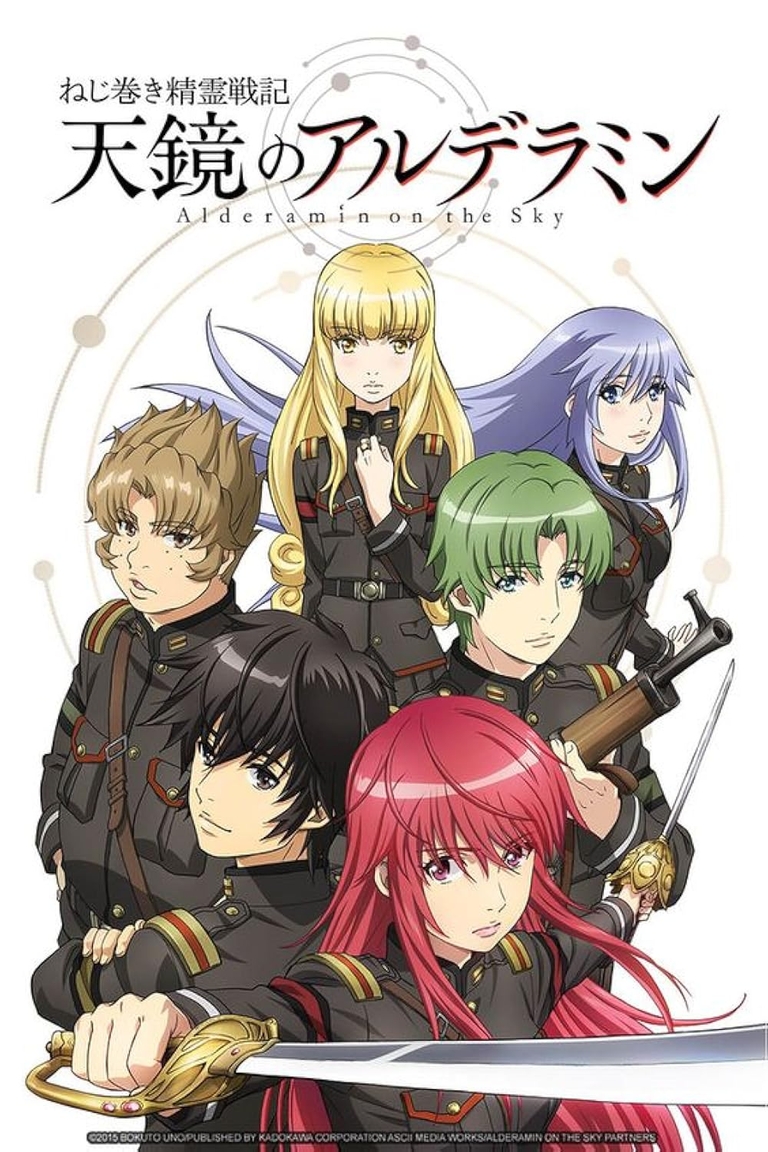
Now for the bad news that everyone who watches this show complains about. The Alderamin on the Sky anime plot and strategy build up to a massive confrontation that never happens in the animated version. The show covers roughly the first three light novels, ends on a cliffhanger that sets up a major political shift and a new antagonist, and then just stops. Madhouse never made a second season despite the first one doing decent numbers and ending with a tease that made fans furious.
This means you're watching 13 episodes of careful setup without payoff. Character arcs get cut short just as they're getting interesting. Plot threads dangle in mid-air. The final episode introduces a betrayal and a new conflict and then rolls credits like that's a satisfying ending. It's not. It feels like reading half a book and then finding out the library burned the rest. Some fans have noted that the adaptation cuts substantial information from the source material while still including elements that rely on missing context.
Apparently the light novels go much deeper into political thriller territory, with Ikta and Yatori eventually ending up on opposite sides of a conflict due to their different philosophies about duty versus survival. The anime gives you the training wheels version of the story and then yanks them away before you learn to ride. If you want the full Alderamin on the Sky experience, you'll have to read the light novels or the manga, because the anime is essentially a long advertisement for the books that forgot to include the ending.
The Animation Quality Rollercoaster
Production-wise, this is a Madhouse show from 2016, so mostly it looks solid with bright colors and detailed backgrounds. The character designs are crisp, the military uniforms look appropriately European-inspired with fantasy touches, and the action scenes are easy to follow without shaky camera nonsense. But there are moments, especially early on, where the CGI for large groups of soldiers looks like it came from a PlayStation 2 game. It's jarring when you've got this serious discussion about supply lines cutting to blocky figures marching in perfect robotic synchronization.
That said, when it matters, like during the sniper sequences or the close combat where Yatori cuts through enemy lines, the animation pops and flows beautifully. The tactical movements are clear because the show bothers to show you the terrain and positioning rather than hiding everything behind speed lines and flashes of light. According to some reviews, the second half improves visually, though the CGI never fully disappears.
The Verdict on Strategy and Story
Is Alderamin on the Sky worth watching if you care about military strategy? Yeah, but with serious reservations. The tactics are smarter than 90% of anime warfare, treating battles like puzzles with limited resources rather than power level contests or spirit bomb competitions. Ikta's approach to warfare, using science and logistics in a world that worships tradition and honor, creates genuine tension that you don't see in other shows.
However, you have to stomach a protagonist who occasionally acts like a creep toward women, and you have to accept that the story doesn't end. It's a fragment of a larger tale that teases you with brilliant setup and then vanishes. If you can handle reading the light novels after, or if you just want to see a different take on military anime that cares more about counting bullets than giving speeches about justice, it's solid.
The Alderamin on the Sky anime plot and strategy deliver a messy, incomplete look at how wars are actually won by quartermasters and planners more than heroes charging into gunfire. It's annoying, it's brilliant, the protagonist needs a lesson in boundaries, and it deserved more episodes to finish what it started. But for thirteen episodes of realistic military fantasy that treats war like the ugly logistics problem it is, you could do a lot worse.