
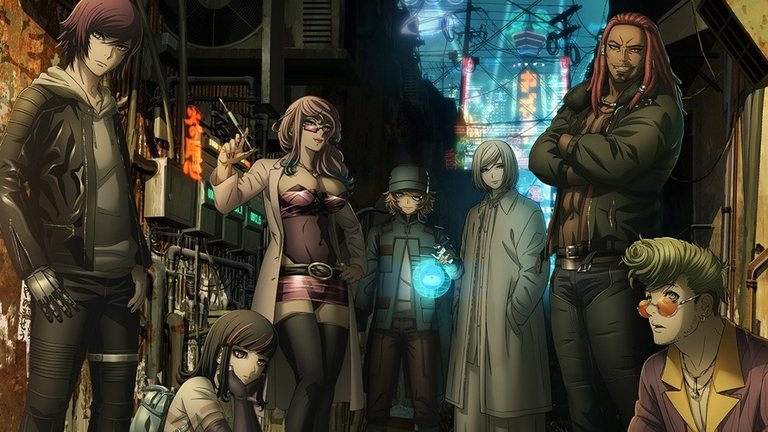
Akudama Drive anime cyberpunk heist plot hits different because it stops pretending megacorporations are the enemy and starts looking at what happens when the cops get unlimited power. Most cyberpunk stories get stuck on evil CEOs and neon billboards, but this show from Studio Pierrot and Too Kyo Games (yeah, the Danganronpa people) goes straight for the throat of authoritarian control. It's messy, it's bloody, and it doesn't care if you think the protagonist is likeable.
The setup looks generic at first. Seven criminals get blackmailed via bomb collars into pulling a heist on a bullet train. You've seen this movie before, right? Wrong. Because within three episodes, the akudama drive anime cyberpunk heist plot morphs into something way nastier than a simple robbery. The creators Kazutaka Kodaka and Tomohisa Taguchi weren't interested in making Ocean's Eleven with anime hair. They wanted to talk about who gets labeled a criminal and why, wrapped in a package where people get decapitated by laser swords.
Kansai Is a Police State Dressed Like a Carnival
The setting is Kansai, which lost a war against Kanto and got nuked into submission decades ago. Now it's a vassal state that looks like someone poured neon paint over Osaka and installed surveillance cameras on every corner. The streets are filthy, the air is brown, and everyone watches public executions on giant screens for fun. It's cyberpunk without the aesthetic filter, the kind of place where the poverty isn't gritty-cool, it's just gross.
Kanto sits across a nuclear wasteland, supposedly a utopia that nobody's allowed to visit. The only connection is the Shinkansen, a train that runs through the irradiated dead zone and checks cargo with plasma shields. The show builds this geography fast, throwing you into a world where the class divide isn't metaphorical, it's literally a radioactive crater.
What makes the setting hit hard is how the police function. They aren't corporate security or private armies. They're the Execution Division, government officers with license to kill anyone labeled an "Akudama" on sight. No trials, no arrests, just immediate lightsaber-through-the-torso justice. The show treats this as terrifying rather than cool, which is rare in anime where cops usually get portrayed as either heroes or incompetent jokes.
The Seven Criminals Who Aren't Really a Team
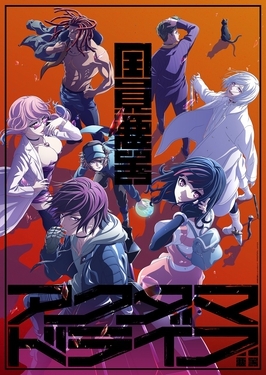
The character dynamics are where the Danganronpa DNA really shows up. You've got seven people who don't have real names, just job descriptions that match their prison sentences. Courier rides a motorcycle that shoots lasers and doesn't talk much. Brawler is pure muscle with a death wish who punches robots until they break. Hacker is a smug kid who treats reality like a video game. Doctor is a pink-haired surgeon who can reattach her own head and views human anatomy like a puzzle. Cutthroat is a serial killer obsessed with the color red who acts like a child on a sugar high. Hoodlum is a small-time yakuza who lied his way into the group and spends most of his time panicking.
Then there's Swindler, who isn't a criminal at all. She's just an ordinary girl who tried to return change to Courier at a takoyaki stand and got mistaken for a con artist. She spends the first episode pretending to be a mastermind just so the actual killers don't murder her for being useless. It's a ridiculous premise that works because the show commits to how unfair her situation is. One minute she's buying dinner, the next she's got a bomb collar and a bounty on her head.
None of these people trust each other. They bicker, they threaten to kill each other, and when the heist goes wrong (which it does immediately), they scatter like roaches. The chemistry isn't friendly, it's transactional and survival-based, which makes the moments where they actually cooperate feel earned rather than forced.
The Shinkansen Job and Why It Falls Apart
The heist itself is supposed to be simple. Break into the Shinkansen during its one stop in Kansai, steal a specific package from the vault, get out. The client is a talking black cat robot who promises a billion yen payout. Standard Suicide Squad setup, right? Except the security isn't just guards with guns. It's energy shields, plasma barriers that vaporize unauthorized cargo, and an EMP field that bricks electronics.
The infiltration sequence in episode three is pure mechanical problem-solving. The team has to hit two switches simultaneously on different floors of the station, which means splitting up and trusting timing instead of communication. Cutthroat runs out of knives trying to break through force fields. Brawler smashes the machinery generating the shields. Swindler throws a drone at the last second to trigger the final mechanism. It's tense, it's creative, and it establishes that these people are good at their jobs even when they hate each other.
But the job was never the point. The black cat is actually Brother, a mysterious child who needed the Akudama to break him and his Sister out of Kanto's control. The heist was cover for a kidnapping, and suddenly the show isn't about money anymore, it's about protecting two kids from a government that wants them dissected.
Executioners Are the Real Monsters Here
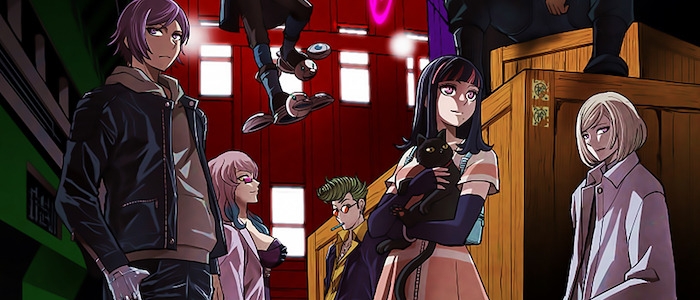
While the Akudama are running around being chaotic criminals, the Executioner Division is hunting them with religious fervor. Master and Pupil are the main pair, teacher and student who wield energy blades and genuinely believe they're purging evil from society. They aren't corrupt cops taking bribes. They're true believers, which makes them way scarier.
The show uses them to ask who exactly gets to define "criminal." Swindler was innocent until the system decided she wasn't. Peaceful protesters get labeled Akudama for holding signs. The term becomes a catch-all for anyone who doesn't fit Kanto's imposed order, whether they're mass murderers or just poor people in the wrong place.
There's a specific scene where the Executioners manipulate public opinion using propaganda mascots (Bunny and Shark) to turn a crowd against the Akudama. The citizens start demanding blood, cheering for executions, completely unaware that the people being killed include a girl who just wanted to return some loose change. It's heavy-handed, sure, but cyberpunk is supposed to be blunt. The genre was never about subtlety.
When the Heist Becomes a Road Trip Through Hell
About halfway through the twelve episodes, the structure shifts. The Shinkansen heist ends, but the bomb collars don't come off because the job isn't actually finished. The Akudama have to escort Brother and Sister across the nuclear wasteland to safety while the entire Kansai police force hunts them. The pacing accelerates into pure action-horror, with bodies dropping every episode.
Cutthroat goes from comic relief to genuine threat when he decides Swindler's blood is the "reddest" thing he's ever seen and starts stalking her. Doctor reveals she's been experimenting on herself to achieve immortality and has some weird gender commentary baked into her philosophy about bodies being temporary shells. Hacker jacks himself into the Kanto mainframe and discovers the region isn't a city at all, it's a floating debris field where human minds are stored in a digital server, living in simulated perfection while their bodies rot.
The show keeps twisting. Hoodlum, the useless coward, ends up having the most significant arc when he bonds with Brawler and learns courage isn't about being strong, it's about standing up when you're terrified. Courier never stops being a stone-cold professional, but he develops this weird protective instinct toward Swindler that makes no sense logically but works emotionally because they've been through hell together.
The Visuals Are Doing Heavy Lifting
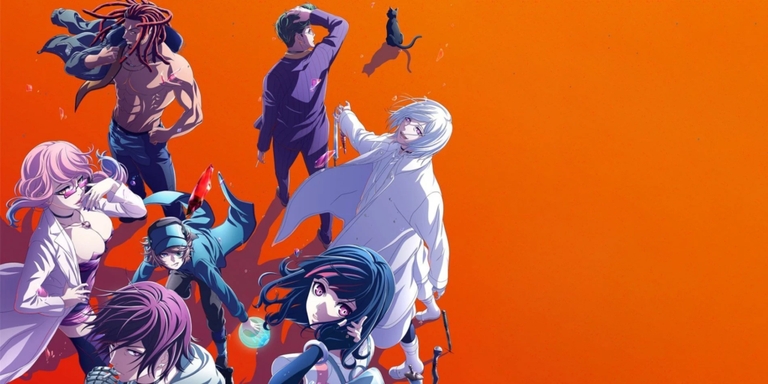
Rui Komatsuzaki's character designs (adapted by Cindy H. Yamauchi) are doing so much work here. Everyone has a distinct silhouette and color palette that tells you their personality before they speak. Courier's dreadlocks and metal hand scream "lone wolf mercenary." Swindler's white coat and pink hair make her look soft and out of place among the criminals. Cutthroat's all-white outfit with red accents is basically a warning label.
The animation during action scenes is fluid in a way that Studio Pierrot doesn't usually manage with their long-running shonen stuff. Courier's motorcycle stunts involve him swinging between skyscrapers like Spider-Man while shooting laser blasts that destroy tanks. Brawler fights the Executioners in a brutal hand-to-hand combat that lights up the screen with dynamic camera angles. Even the gore is stylized, with decapitations and blood sprays treated as visual punctuation rather than edgy spectacle.
The cyberpunk aesthetic avoids the usual trap of just being dark and rainy. Kansai is bright, almost garish, with neon signs advertising products you'll never see and holograms playing over slum housing. The contrast between the flashy surface and the rotting underneath is the whole point. This isn't a future where technology failed, it's one where technology was used to build a really pretty prison.
Why the Ending Works Despite Being a Mess
The final episodes get chaotic. Characters die in quick succession, sometimes off-screen. The plot revelations about Kanto being a server and the children being experiments come fast and don't always get fully explained. But the emotional throughline stays intact because it was never about the sci-fi logistics, it was about Swindler choosing to become the criminal they labeled her as.
She starts the show terrified of Akudama, convinced they're monsters. By the end, she's leading them, protecting the kids with the same tenacity she used to protect that stray cat in episode one. She adopts the identity of Swindler fully, not because she's evil, but because the system forced her into a box and she decided to own it. The opening credits change midway through to include her, which is a visual trick that signals she's no longer the audience surrogate, she's the protagonist.
The finale goes for broke with imagery of a blood-soaked cross surrounded by police drones, religious symbolism cranked up to eleven as Courier sacrifices himself to get Brother and Sister to the island of Shikoku. We don't see what happens to the kids after they escape. The screen goes white. It's a frustrating ending if you want closure, but perfect for a show about cycles of violence. The system is still running, Kanto is still controlling Kansai, but two kids got out. That's the win. It's small, it's bitter, and it's real.
The Tarantino and Danganronpa Cocktail
You can't talk about this show without mentioning the influences. Every episode title is a film reference, from "Se7en" to "Reservoir Dogs" to "The Shining." The dialogue scenes where criminals argue in a circle are pure Tarantino, all overlapping conversations and sudden violence. But the DNA from Danganronpa (Kodaka's previous franchise) is just as strong, with the talking animal mascot, the color-coded characters, and the theme of ordinary people trapped in killing games.
It shouldn't work. Mixing hyper-stylized anime aesthetics with Western neo-noir dialogue and social commentary about police states sounds like a recipe for disaster. But the show commits so hard to every element that it somehow clicks. The jagged tone shifts from heist comedy to body horror to political thriller feel intentional rather than sloppy, like the creators are challenging you to keep up.
Why It Deserves More Attention
Akudama Drive came out in Fall 2020 and got overshadowed by bigger franchises, which is a crime because it's one of the few original anime (not based on a manga or light novel) that tells a complete story in twelve episodes without filler. It doesn't waste time. Every scene moves the plot or the characters forward, and when people die, it matters because the cast is small enough that you feel the absence.
The akudama drive anime cyberpunk heist plot works because it understands that cyberpunk isn't about the gadgets or the neon, it's about the desperation. These characters aren't fighting for justice or freedom in the abstract. They're fighting to survive the night, to protect one kid, to get one delivery finished. The scope is small even when the explosions are big, and that keeps it grounded.
If you skipped this because it looked like another edge-fest with characters wearing bomb collars, go back and watch it. It's smarter than the premise suggests, angrier than the visuals imply, and more emotionally devastating than anything with a talking cat robot has any right to be. The heist is just the hook. The real robbery is how thoroughly it steals your attention once the Executioners start drawing their swords.