Akame ga Kill! anime analysis of characters and themes always gets stuck on the body count. Fans keep calling it the Game of Thrones of anime because main characters drop like flies, but that comparison misses why this show hits different. It isn't about political intrigue or shocking twists. It's about how revolution eats its young and morality turns gray when you're fighting a system that's already rotten to the core.
The show doesn't care if you like Tatsumi. It doesn't care if you wanted Mine to survive. That's the whole point. Takahiro wrote this story as a bloodbath on purpose, not because he hates his characters, but because he wanted to show that changing the world costs everything. Most shonen anime let the hero win through friendship and determination. Akame ga Kill laughs at that idea. You bring a sword to a war, you die. Simple as that.
But here's where it gets weird. For all its nihilistic posturing, the show is weirdly sentimental about bonds and loyalty. It wants to have it both ways. It wants to be the edgy murderfest that kills its cast for shock value, but also wants you to cry when those characters remember their friends. That tension is what makes the show memorable and frustrating at the same time.
Why Tatsumi is a Plot Device Wearing a Protagonist's Skin
You probably think Tatsumi is the main character because the show starts with him. You are technically correct but spiritually wrong. Tatsumi exists to show the audience how the Empire corrupts innocence. He starts as a naive village kid who thinks he can join the military and fix poverty through hard work. Within three episodes he watches his friends get tortured to death by a rich girl who collects human trophies. That's not character development. That's a setup.
His evolution throughout the series isn't about becoming stronger or finding his true power. It's about accepting that he is disposable. Tatsumi's metamorphosis symbolizes his journey through trials, sure, but more importantly it shows him realizing that Night Raid doesn't need a hero. They need another body to throw at the Empire until something breaks. When he dies stopping the Emperor's super weapon, he isn't achieving his dream of saving his village. He's completing the narrative function he was always meant to serve. The story prioritizes its themes about revolution over his survival, and that's exactly how it should be.
Akame is Not the Hero You Think She Is
The title puts her name front and center, but Akame is barely the protagonist. She's the survivor. The show should have been called Night Raid's Body Count with Special Guest Akame. She spends most of the series as an emotional void, a human weapon trained by the Empire to kill without thinking. Her entire character arc is about learning to feel things again after the Empire stripped her humanity away.
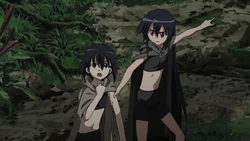
She's soft-spoken but exceptionally powerful, which challenges typical anime conventions where loud protagonists get the biggest swords. Akame doesn't need to yell to cut you in half. Her reserved nature comes from severe brutal training under the Empire alongside her sister Kurome. They were sold by their parents and forced to survive a forest full of Danger Beasts, emerging as the only survivors from a group of one hundred children. That trauma doesn't make her edgy. It makes her hollow.
Her relationship with Kurome drives the only real emotional throughline in the series. Two sisters forced to fight on opposite sides of a war, both victims of the same system. When Akame finally defeats Kurome, she doesn't kill her. She fakes her sister's death so Kurome can live peacefully with Wave. That's the only happy ending Akame allows herself. She takes the curse of Murasame and walks east to find a cure, alone. She survives, but survival is all she gets.
The Teigu System Makes No Sense and That is Fine
Let's talk about the Imperial Arms. The show establishes early that Teigu are rare weapons created from Danger Beast parts and mysterious technology lost to time. Fine. Cool premise. Then it breaks its own rules constantly. One episode says Teigu users are fated to die in battle against each other. Then Tatsumi and Wave fight multiple times and both walk away alive. Chelsea gets killed by a Teigu user despite not having one herself, which contradicts the supposed balance.
The powers are inconsistent too. Some Teigu let you freeze time. Others let you turn invisible. One is just a giant pair of scissors. The power scaling is all over the place because the writers cared more about cool visuals than a coherent magic system. But here's the thing. That messiness works for the story. War doesn't have fair rules. The Empire has better weapons and more resources. The rebels have to make do with what they have. The broken logic of the Teigu system mirrors the broken logic of revolutionary warfare. Sometimes you get the sword that kills with one cut. Sometimes you get a sniper rifle that runs on emotion. You don't get to choose.
Esdeath is a Sociopath and the Anime Ruined Her
General Esdeath is the best villain in the series and the anime adaptation butchered her ending. In the manga, she dies as a possessive monster. Her only regret is that Tatsumi never smiled at her. She sees people as objects to collect or break. The detailed analysis of her psychology shows she fits the clinical definition of a sociopath. She lacks empathy, feels no remorse, and views the world through a lens of survival of the fittest that her father drilled into her after her mother died.
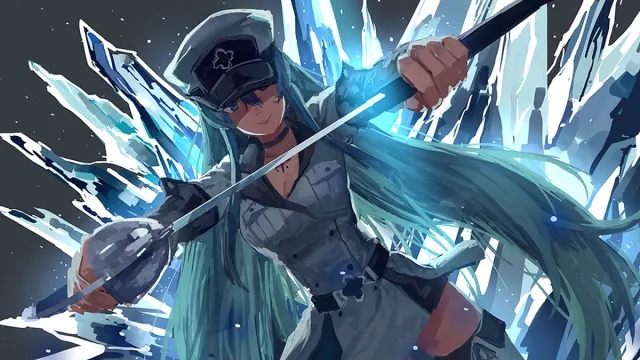
She grew up in the arctic hunting Danger Beasts. Her dad told her the weak die and that's just nature. She internalized this so deeply that she tortured prisoners for fun and called it efficiency. When she falls for Tatsumi, it isn't love. It's obsession. She wants to own him, break his spirit, and make him her pet. The manga makes this clear. The anime softens her into a tragic figure who dies embracing Tatsumi's corpse and wishing they could be together. That's garbage. It removes her agency and makes her seem capable of selfless love, which she absolutely is not.
The anime also cut several of her more sadistic moments, like specific torture scenes and her callous reaction to Seryu's death. This creates a disconnect. You can't have a character who freezes entire villages to death for fun and then try to make her a romantic tragic figure in the final episode. Pick a lane. Esdeath is compelling because she is irredeemable. She knows the Empire is corrupt and doesn't care. She enjoys the chaos. Making her sympathetic at the last second insults the viewer's intelligence.
Night Raid are Murderers Not Heroes
The show wants you to root for Night Raid because they fight a corrupt government that lets nobles hunt peasants for sport. But let's be clear. These people are assassins. They kill targets in their sleep. They blow up buildings with people inside. They are terrorists by any definition. The analysis of the show's broken morality explains why this works thematically even if it makes the characters hard to like.
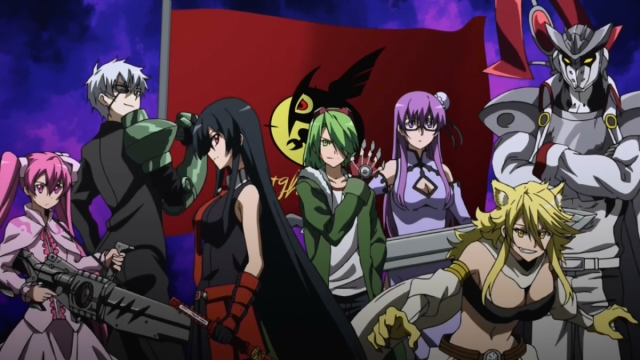
They acknowledge early on that they are criminals and murderers. They say the ends justify the means. Then the show spends the rest of its runtime trying to convince you they are actually the good guys because the other side is worse. That's a cop out. Real moral complexity would show Night Raid making hard choices that haunt them. Instead, they get sad backstories right before they die so you feel bad for them. It's manipulative and cheap.
The one exception is Chelsea. She shows up late, acts like a professional, and gets decapitated immediately. Her death is pure shock value. She gets a flashback about her mentor during the same episode she dies. That's not good writing. That's a checklist. Introduce character, give quirk, add tragic past, kill character, move on. After the third time it happens, you stop caring.
Why the Gore Feels Hollow
People remember Akame ga Kill for the blood. Characters get cut in half, dissolved in acid, crushed by rubble, and eaten alive. The show throws gore at you like it proves how mature it is. It doesn't. Real maturity would be showing the psychological weight of that violence. Instead, we get fanservice shots of female characters in the same episodes where their friends die.
The tonal whiplash is severe. One minute you're watching a comedy scene where Akame eats too much meat. The next minute Bulat is bleeding out from poison. The show never lets you sit with the grief. It cuts to a joke before the blood dries. This happens because the source material is a manga that had more room to breathe, but the anime rushed to cover everything in 24 episodes. The result is a story that wants to be taken seriously but keeps undercutting itself.
Some viewers point out that the personalities of the characters are treated as insignificant compared to the themes. That's accurate. The show cares more about the idea of sacrifice than the people doing the sacrificing. When Sheele dies, Akame cries for one scene and then it's back to business. Real trauma doesn't work that way. But this isn't a story about real trauma. It's a story about a revolution that consumes everyone involved, and in that context, the lack of lingering grief makes a sick kind of sense. You don't have time to mourn when you're next on the list.
Christian Themes in a Cynical World
For all its nihilism, the show sneaks in some interesting moral questions. There are pronounced Christian themes about compassion and redemption buried under the bloodshed. Tatsumi shows mercy to enemies even when it costs him. Mine falls in love despite being a weapon. Akame seeks atonement for her sins as an Imperial assassin. These aren't subtle. The show wants you to know that even in a world where the strong eat the weak, choosing to care about others is a radical act.
The Empire represents pure capitalist exploitation mixed with feudal brutality. The rebels represent chaotic good at best and utilitarian terrorism at worst. But the individual characters keep choosing kindness. Lubbock dies protecting his friends. Leone dies smiling because she saved people. Tatsumi dies knowing he stopped a massacre. Their deaths matter because they chose to die for something. That's the Christian influence showing through. Sacrifice as redemption. Love as resistance.
The Animation Saves the Script
White Fox did the animation, and they deserve credit for making this watchable. The fight scenes are fluid and the color palette is vibrant when it needs to be and grim when the scene calls for it. Taku Iwasaki's soundtrack hits hard, especially the second opening Liar Mask. The music carries emotional weight that the writing sometimes fails to deliver.
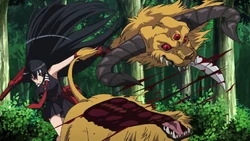
The character designs are distinct. You can tell who everyone is even in silhouette. Esdeath's ice effects look great. Murasame's red glow is iconic. When the show focuses on action instead of trying to make you care about backstories introduced five minutes ago, it works. It's a solid shonen action series with pretty visuals. It only falls apart when it tries to be something deeper without putting in the work to earn those emotional beats.
Why It Still Matters
Akame ga Kill is a mess. The themes contradict the tone. The deaths stop mattering after a while. The morality is black and white despite pretending to be gray. But it captures a specific feeling that safer anime won't touch. It captures the desperation of fighting a system that is too big to fail. It shows that good people die in revolutions. It shows that loving a monster doesn't save them. It shows that surviving is sometimes worse than dying.
The story prioritizes overarching themes over individual character arcs, and that's why it sticks with you. Tatsumi isn't special. He's just the guy who was there when the final battle happened. Akame isn't a hero. She's a killer trying to sleep at night. The show doesn't give you a happy ending because revolutions don't have happy endings. They have survivors and statistics.
If you want a show that respects its characters, watch something else. If you want a show that respects the brutality of political change and the cost of dismantling corrupt power, Akame ga Kill delivers. It delivers messily, angrily, and without apology. That honesty counts for something, even when the writing falls short.