
91 Days anime mafia drama and story hits different because it refuses to glamorize the violence it shows. Most revenge tales let the hero win something tangible at the end. They get the girl, they save their soul, they find peace in knowing the bad guys paid. This show gives you none of that comfort. It starts with a seven-year-old Angelo Lagusa crawling through a window while his family gets shot to pieces in the next room, and it ends with him bleeding out on a beach wondering why he even bothered to survive childhood. That's the whole thematic point condensed into twelve episodes.
The series takes place in Lawless, a town living up to its name during Prohibition-era America. Bootleggers run the streets, cops are either paid off or too scared to intervene, and the Vanetti family sits at the top of the pile controlling the flow of illegal liquor. When Angelo returns under the fake name Avilio Bruno, he isn't some super-soldier or genius detective with unlimited resources. He's just a guy with a gun and a list of names, willing to smile at the men he plans to kill while he slowly poisons their organization from within. You can read the full series overview here. The show tracks exactly 91 days of his infiltration, and every single one of them feels like it's rotting him from the inside out.
What makes this show work isn't the action scenes or the plot twists, though it has plenty of both. It's the slow, grinding realization that revenge isn't a fuel that keeps you going when everything else is gone. It's a poison that eats everything you touch, including the hands that hold the weapon. Angelo doesn't get stronger or wiser as he checks names off his list. He just gets emptier, quieter, and more detached from the boy he used to be. By the time he reaches the final name, there's nothing left of him but the hate, and even that has started to taste like ashes.
The Opening Massacre Sets The Tone Permanently
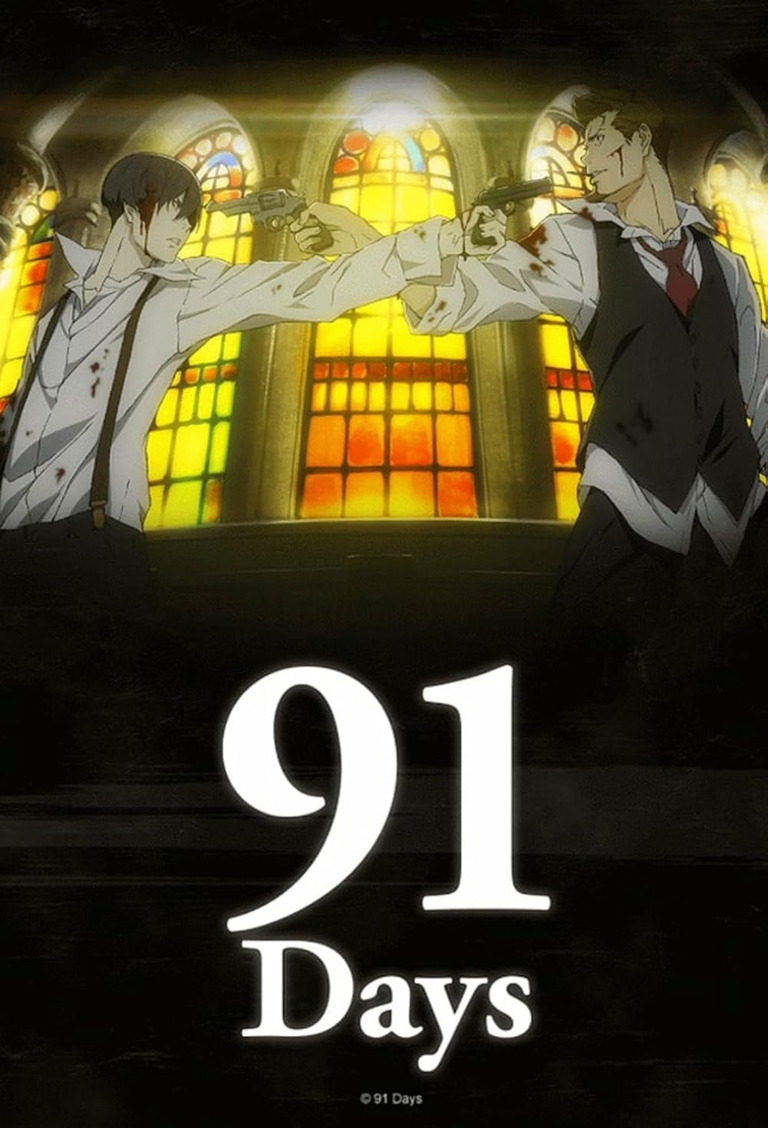
Most anime would ease you in with some exposition or a flash-forward. 91 Days opens with a birthday party turning into a slaughter in under three minutes. Young Angelo watches Don Vincent Vanetti and his men gun down his father Testa, his mother Elena, and his little brother Luce while the kid hides in a closet clutching a birthday present. The animation doesn't shy away from the blood pooling on the floor or the look on Angelo's face as he realizes he can't breathe without making a sound that will get him killed. It's raw and ugly and it happens fast, establishing immediately that this 91 days anime mafia drama won't be pulling punches when it comes to depicting how cheap life is in this world.
This isn't a flashback you can forget between episodes. It hangs over every scene like a bad smell that won't air out. When Angelo returns seven years later as Avilio, he's carrying that image with him in every interaction. The show wants you to remember that he isn't doing this for justice or to clean up the town for the greater good. He's doing it because he can't sleep at night without seeing his brother's face staring back at him with empty eyes. The massacre isn't just backstory flavor text. It's the only thing driving him forward, and the show treats it like a handicap and a sickness rather than a source of power or motivation.
Avilio's Calculated Infiltration Of The Vanetti Family
Angelo's plan looks simple when you write it down on paper but it turns messy and complicated the moment human emotions get involved. He gets close to Nero Vanetti, the don's eldest son, by saving his life during a botched liquor deal that Angelo himself helped set up to fail. From there he works his way into the inner circle, playing the role of the loyal, quiet friend while setting up dominoes to fall in exactly the right order to cause maximum damage. He manipulates the Vanettis into open war with the Orco family, feeds selective information to the Galassias to keep them agitated, and quietly assassinates anyone who might recognize him from that night seven years ago or who stands in the way of his access to Don Vincent.
The guy is patient in a way that seems almost inhuman. He'll spend weeks setting up a single kill, smiling through dinners and drinking parties while he plans how to frame someone else for the murder or make it look like an accident. It's uncomfortable to watch because he's scarily good at it. He learns how Nero thinks, how he drinks when he's stressed, what jokes make him laugh, which buttons to push to get him angry. The friendship becomes completely real on Nero's end, which makes Angelo's betrayal sharper and more tragic when it finally comes to light. He isn't just killing faceless enemies. He's killing friends who genuinely love him and don't know they're targets yet.
Nero Vanetti And The Friendship Trap That Snaps Shut
Nero represents the heart of the Vanetti family, or at least what's left of it after Angelo's machinations take their toll. He's loud, loyal to a fault, and truly believes in the whole "family first" code that the mafia preaches in public while violating in private. He trusts Avilio completely within a few episodes, bringing him into every secret deal, private conversation, and family dinner. Watching Nero slowly realize he's been harboring a viper in his nest is brutal because you see exactly how much it breaks his ability to trust anyone ever again.
Their relationship is the engine that drives the whole show forward. Angelo needs Nero to get close enough to the don to execute his final plan, but he also can't help but get attached to the guy despite his better judgment. Nero represents everything Angelo lost when he was seven: the big brother figure, the easy laughter, the sense of belonging to something bigger than yourself. The show keeps asking whether Angelo will actually pull the trigger on Nero when the time comes, or if he's lost his nerve and his edge because of their bond. By the end, the question isn't whether Nero deserves to die for his part in the original massacre. It's whether Angelo can afford to let him live after everything he's sacrificed to get there.
Corteo's Tragic Loyalty And The Price Of Revenge
Corteo stands as Angelo's last link to his humanity, his childhood friend and the only person in Lawless who knows his real identity. He's also the show's moral compass, which means he's marked for death from the moment he appears on screen. Corteo brews the high-quality liquor that keeps the Vanetti operation running smoothly, and he only does it to help Angelo get close to his targets, not because he believes in the mafia cause. He watches his friend turn into a cold, calculating monster and tries repeatedly to pull him back from the edge before it's too late.
Their final confrontation in the later episodes is one of the hardest scenes to sit through in the entire series. Nero orders Angelo to kill Corteo to prove his loyalty to the family, not knowing that Corteo is Angelo's oldest friend and the only innocent person left in his life. Angelo pulls the trigger because he has to maintain his cover, but the look on his face says he's killing the last good part of himself along with Corteo. Corteo dies thinking Angelo chose the mafia and his revenge over their friendship, which isn't exactly wrong but it's more complicated than simple betrayal. With Corteo gone, Angelo has no anchor left to reality. This review discusses their relationship in more detail.
Fango And The Chaos He Brings To The Table
Every mafia story needs a wild card, and Fango fills that role with disturbing enthusiasm. He's a capo in the Orco family who operates more like a rabid dog than a professional gangster, mixing sadistic violence with unpredictable mood swings that make everyone nervous. Fango doesn't care about codes of honor or family loyalty. He cares about power, pleasure, and causing pain. His presence screws up Angelo's careful plans because you can't predict what a lunatic will do next.
Fango's arc culminates in one of the most memorable scenes in the show when he finally overthrows Don Orco not by shooting him, but by feeding him to his own men while laughing about cannibalism. It's gross, it's over the top, and it serves as a reminder that for all the talk of honor among thieves, these are still violent criminals who will eat each other alive the second they smell weakness. Fango's unpredictability makes him dangerous to everyone, including Angelo, who can't control him with logic or manipulation.
When The Animation Works And When It Falls Apart
Let's be completely real about the production values because they swing wildly between impressive and embarrassing. Studio Shuka did a decent job with the backgrounds and the overall atmosphere. Lawless looks like a grimy 1930s industrial town, all brick buildings, narrow alleys, and yellow streetlights that cast long shadows. The character designs are distinct and memorable, with Angelo's pale, hollow, almost ghostly look contrasting sharply against Nero's warmer, more expressive features and the grotesque designs of characters like Fango.
But the animation itself is wildly inconsistent from episode to episode. Episode four, which introduces the one-off assassin Goliath, looks particularly rough with characters going noticeably off-model and movement feeling stilted and unnatural. Walking cycles look robotic, and there are weird continuity errors like food disappearing between shots, the time of day changing illogically, or scars moving around on Don Vanetti's face. The CGI cars used for the period vehicles are distracting and pull you out of the scene whenever they appear. When the show needs to deliver though, like during the chaotic theater shootout or the quiet final beach scene, it pulls itself together and focuses on the emotional weight rather than fluid motion, which mostly works.
The Soundtrack Of Betrayal And Whispers

The music in 91 Days is weird in the best possible way. The opening track "Signal" by TK uses these hushed, whispered vocals over dramatic orchestral backing that sounds like it's taunting the listener with secrets. It shouldn't work for a grounded, realistic crime drama but somehow it fits the mood perfectly, capturing the tension of Angelo's double life. The ending theme "Rain or Shine" by ELISA is softer, more melancholy and acoustic, fitting the show's overall mood of lost opportunities and rainy days.
During the episodes themselves, the score uses a lot of classical guitar and woodwind instruments to give it that Italian-American flavor without being too on the nose or stereotypical. When things get tense, the music drops out completely or uses discordant strings to make your skin crawl and your heart race. It's not the most hummable or memorable soundtrack in anime history, but it knows when to shut up completely and let the sound of gunshots or breathing do the heavy lifting instead. See this analysis of the show's audio design.
That Ambiguous Ending And What It Really Means
The finale frustrates a lot of viewers because it refuses to give you a clean answer or a satisfying conclusion. Angelo and Nero drive to a remote beach after the chaos dies down. Angelo finally admits his real name and tells Nero he didn't kill him "simply because he didn't want to." Then Nero shoots him, or maybe he doesn't. Angelo lies on the sand bleeding out, or maybe he's already dead. Nero walks away down the beach, or maybe he turns back. The screen fades to black with no confirmation.
The ambiguity isn't laziness. It's the entire point of the story. Angelo spent exactly 91 days destroying everything and everyone around him to get his revenge, and when he finally has the chance to complete the cycle by killing the last man on his list, he can't do it. Not because he's forgiven Nero, but because killing him wouldn't bring his family back or fill the hole inside him. It would just be another body added to the pile. Nero shooting Angelo makes sense from his perspective too. He's lost his entire family, his criminal empire, his best friend, and his innocence. He's got nothing left but the gun in his hand and the betrayal burning in his chest. Whether Angelo dies on that beach or lives on as an empty shell doesn't matter anymore. The revenge cycle ends with both of them broken beyond repair.
Why Revenge Leaves You Empty Handed

91 Days isn't subtle about the message it's driving home but it delivers that message with enough style and character work that you don't mind being hit over the head with it. Every single character who chases vengeance as their primary motivation ends up worse off than when they started. Angelo loses his humanity and his only friend. Nero loses his family and his birthright. Fango, the wild card who seems to enjoy the violence for its own sake, gets betrayed and eaten by his own men. The show argues that the mafia code of blood for blood isn't noble or tragic in a romantic, Shakespearean way. It's just stupid and wasteful and leaves everyone dead or wishing they were.
Angelo starts the series as a hollowed-out shell of a person and ends it as a corpse, either physically or spiritually. He gets his revenge in the technical sense. Most of the Vanettis die by his hand or because of his schemes. But he doesn't get satisfaction. He doesn't get closure or peace. He just gets a bullet and a quiet death on a beach, realizing too late that he traded his soul for a pile of bodies that means nothing. That's the honest truth the title promises. It's not a fun watch, and it won't leave you feeling good about the world, but it's a real and uncompromising look at what hatred does to a person.
91 Days anime mafia drama and story stands out in a crowded field because it respects the crime genre enough to show the ugly, unglamorous parts without flinching. It doesn't want you to root for the mafia lifestyle or think that revenge is a cool, empowering fantasy. It wants you to see a kid lose his family and then slowly lose himself trying to fix a past that can't be changed. The animation is spotty in places, the pacing drags slightly in the middle episodes, and the ambiguous ending will definitely annoy anyone who wants clear answers and moral clarity. This article explains why it's considered the most honest take on the genre.
But if you want a crime story that treats violence like the waste of human life that it actually is, this is the one to watch. Angelo and Nero's tragedy isn't that they died young or that they got caught by the police. It's that they survived long enough to see what they had become in the name of family loyalty and vengeance. The show doesn't give you a happy ending because people like Angelo don't get happy endings. They get 91 days of blood and then a quiet spot on the sand. That's more honest than most stories ever manage to be.